
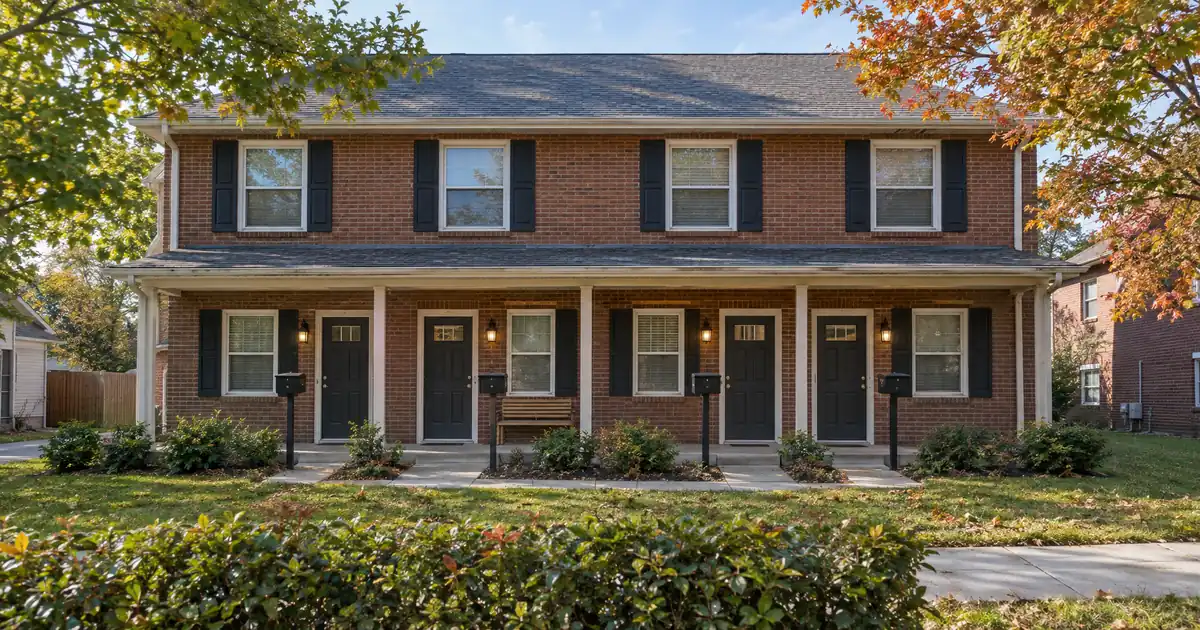
The Quick Read: Within a single county, the FHA limit steps up with each unit you add. A duplex has a higher cap than a one-unit home, a triplex higher than a duplex, and a fourplex is highest. HUD sets each number by county, and the limit caps the base loan FHA will insure, not the price you pay. County loan limits apply, and the borrower’s file still has to qualify on its own.
Key Takeaways
- Each unit count is its own row in the county’s limit table. One county, four numbers.
- The limit is set by the county where the property sits, not where the buyer lives now.
- The limit caps the base loan amount. It does not cap the sale price.
- FHA financing for two to four units requires that you live in one of the units.
- Three- and four-unit homes face extra tests that a duplex does not.
Why Does the Limit Go Up With Each Unit?
The limit goes up because a building with more units costs more to buy, and HUD scales the cap to match. The multi-unit steps follow the same pattern used for conforming loan limits. They are not a separate bonus FHA hands out.
FHA payment estimate
Starting assumptions reflect an example price and the FHA minimum investment. Replace them with your own figures.
Editable benchmark: 7.32% as of October 22, 2026 · Freddie Mac 30-year average via FRED®. A conventional market reference, not an FHA loan quote.
Illustrative starting assumptions: a $350,000 price, the FHA minimum investment as the down payment, a thirty-year term at the current Freddie Mac benchmark, and property taxes and insurance estimated at typical national rates. Every field is editable.
Illustrative estimate only — not a Loan Estimate, approval, quote, or commitment to lend. The rate field carries the weekly Freddie Mac thirty-year conventional benchmark, a market reference and not an FHA loan quote; your rate is set by the lender at lock. FHA mortgage insurance follows HUD’s published schedule for the term, leverage and loan size entered; taxes, insurance and dues are editable estimates; closing costs are not included; county loan limits are not checked here. Licensed in sixteen states for consumer mortgages. Lendmire is not affiliated with or acting on behalf of FHA, HUD, or the federal government.
Here is the mechanic. HUD starts with a one-unit limit for each county. That one-unit figure sits between a national floor and a national ceiling. Counties with modest home prices get the floor. Counties with high prices get a figure tied to local median prices, up to the ceiling. Then the two-, three-, and four-unit rows scale up from that same base.
HUD’s own release shows the pattern at the national level. In HUD’s announcement of the 2026 FHA limits, the one-unit floor is $541,287 and the two-unit floor is $693,050. The one-unit ceiling is $1,249,125 and the two-unit ceiling is $1,599,375. Dividing the two-unit floor by the one-unit floor gives roughly 1.28, which shows the duplex row is a fixed step up, not a guess.
A small point that confuses people: the word “rise” can mean two things. It can mean the limit rises as you add units, which is what this article explains. It can also mean the limits rise each year. Both are true, and both are covered below.
Key Terms Defined
FHA loan limit: The most FHA will insure as a base loan on a property in a given county and unit count.
Floor: The lowest FHA limit, which applies in counties where local home prices are modest.
Ceiling: The highest FHA limit, which applies only in the most expensive counties.
High-cost area: A county where the local median price is high enough that its limit sits above the floor.
Base loan amount: The loan amount before the financed upfront mortgage insurance premium is added.
Case number: The FHA identifier assigned to your file. Its assignment date decides which year’s limits apply.
How Is One County’s Limit Set?
A county lands between the floor and the ceiling based on its median home price. The floor applies where 115% of the area’s median price falls below the floor. Areas above that line are treated as high-cost and get limits that vary with local prices, topping out at 150% of the national conforming limit for one unit. Those formula points are laid out in HUD’s 2026 limits announcement.
The 2026 floor itself is 65% of the one-unit conforming limit of $832,750, per HUD Mortgagee Letter 2025-23. That letter also confirms the limits are set by metropolitan statistical area and county. Not by city. Not by state.
So the walk from one-unit to fourplex in a single county looks like this:
1. Find the county’s one-unit limit. It is the floor, the ceiling, or a figure in between.
2. Read the two-unit row. It is a step above the one-unit figure.
3. Read the three-unit row. It is a further step up.
4. Read the four-unit row. That is the highest cap for the county.
5. Compare the right row to the base loan amount you would need.
Notice what moves together. A county at the floor has a floor-level duplex, triplex, and fourplex. A high-cost county has high-level rows across all four. The unit-count rows move as a set with the county.
How Do You Look Up Your County’s Number?
Use HUD’s own lookup tool, then confirm with your loan officer. HUD publishes a county-by-county FHA limit lookup that returns the one- through four-unit limits for any county. Handbook 4000.1 points lenders to the same tool, and the mortgagee letter repeats that pointer.
A clean way to use it:
1. Pick the state and county where the property sits.
2. Read the row for your unit count: two, three, or four.
3. Note which year’s table you are viewing.
4. Compare that figure to the base loan amount you need.
5. Ask the lender how the financed upfront premium is treated against the limit.
That last step matters. Whether the financed premium counts against the cap depends on how the loan is structured, so the lender confirms how it is treated on your file.
A word on third-party pages. Calculator sites and blogs often show stale numbers or slightly different rounding. Some list limits for a few sample counties and treat them as typical. They are not typical. Use HUD’s tool as the authority, and treat everything else as a rough guide.
Where Does the Date Come In?
The effective year is fixed by the day the FHA case number is assigned. HUD’s mortgagee letter for 2026 applies to case numbers assigned on or after January 1 of that year, as noted on HUD’s FHA lender page. A file with a case number assigned before the reset uses the older table.
Limits reset every calendar year. For 2026, the one-unit floor rose from $524,225 to $541,287, according to Scotsman Guide’s coverage. That is the second sense of “rise.” The county’s duplex number can move up from one year to the next even if you add no units.
What the Limit Does Not Decide
The limit is a ceiling on the property’s base loan. It is not a promise you can borrow that much. Your own file still has to qualify.
Across the wholesale programs Lendmire places FHA files with, the purchase envelope is the same for every unit count: maximum financing of 96.5% with a 3.5% minimum investment at a decision score of 580 or higher. That minimum investment is figured on the lesser of the price or the appraised value. Ratios start at 31/43 with no compensating factors, and documented factors can reach 40/50 at the top tier. The automated finding governs most files. All of this is subject to lender guidelines and full file review, and nothing here is a commitment to lend.
Mortgage insurance applies at every unit count. There is an upfront premium of 1.75% of the base loan, which is financed, plus an annual premium that depends on term, loan amount, and LTV. On a thirty-year loan above 90% LTV, the annual premium lasts for the term. At or below 90% LTV it ends after eleven years. The exact numbers vary by lender and program and follow a full review of property, leverage, and credit.
So picture a buyer eyeing a fourplex. The county row might allow a large base loan. But that buyer’s income, debts, and the property’s condition decide how much the file supports. The limit is the outer wall. The file is what fits inside it.
Where the General Rule Breaks
The county mechanic is clean. The edge cases are where files get tangled.
Duplex versus three- or four-unit
A duplex is underwritten on the borrower’s income and any rent the guidelines allow. The extra property test that applies to three- and four-unit homes does not apply to a duplex.
For three and four units, HUD’s older reference guide says net rental income must be at least the projected monthly payment. It defines net rent as the appraiser’s market rent for all units, including the borrower’s own, less vacancy and maintenance factors. That wording is archived and older, so have your lender confirm the current handbook language. The point that holds is that this is a property test. A strong borrower income does not cure a failure.
Reserves step up
Under HUD Mortgagee Letter 2023-17, three- and four-unit purchases require verified reserves of three months of the full housing payment after closing. The duplex reserve picture is less clear-cut, so the lender confirms what applies to a two-unit file.
The unit-count trap
Unit count is not always what the listing says. Under the same letter, a one-unit home with a single accessory dwelling unit stays a one-unit property. But on a property that already has two or more units, a separate additional dwelling unit counts as another unit. A duplex with a basement apartment can be treated as a triplex. That changes which limit row applies, which reserve rule applies, and whether the three- and four-unit test comes into play.
Commercial-space income is also excluded from the rent that counts. A fourplex with a storefront is not a clean fourplex on paper.
Rent only partly counts
When rent helps you qualify, only a portion counts. The letter’s treatment is 75% of the market rent. Rent from your own unit is not income for your debt ratios, though it does count in the three- and four-unit property test. With no rental history, the lender documents proposed rent with an appraisal that includes a fair market rent analysis. The form is the Small Residential Income Property Appraisal Report. Leases are used if available.
Special exception areas
Alaska, Hawaii, Guam, and the U.S. Virgin Islands are adjusted further for higher construction costs. HUD names them in its 2026 limits release. They are a named exception, not part of the standard county mechanic.
Five or more units, and reverse mortgages
FHA’s owner-occupied program covers one to four units. Five or more units fall under a different HUD program. Reverse mortgage limits are published separately and are not part of the forward-mortgage unit table. If your property or goal sits in either bucket, the table above does not apply.
Refinances
Streamlines and cash-out refinances follow their own rules. On a cash-out, rent from an accessory unit cannot be counted as effective income.
What If the Price Is Above the Limit?
The limit caps the loan, not the price. A home can sell for more than the loan limit allows. You then have to cover the gap yourself. In plain terms, the cash you bring has to make up the difference between the price and the capped base loan, on top of the minimum investment.
Here are the options a buyer weighs:
| Situation | What it means | What the buyer can do |
|---|---|---|
| Price fits under the county row | Limit is not the constraint | Qualify on the file |
| Price above the row | Base loan is capped | Bring more cash or negotiate |
| Cap too low for the target | County is the issue | Shop a different property or county |
| Need exceeds any FHA row | Wrong loan type | Compare other loan options |
Choosing a different county is a real lever, because the county of the property governs, not the county where you live. A buyer who is flexible on location can sometimes find a better fit between price and cap.
Putting It Together for a Real Decision
Say a buyer wants to live in one unit of a fourplex and rent out the other three. The decision runs in a clear order.
1. Confirm the property’s county and unit count in HUD’s lookup.
2. Compare the base loan you would need to the four-unit row.
3. Check the file against the 96.5% maximum financing and 3.5% minimum investment, at a decision score of 580 or higher.
4. Expect the three- and four-unit property test and the reserve requirement. Each figure is subject to lender guidelines and a complete review of property type, leverage, and credit.
5. Ask the lender how the financed premium and the 75% rent treatment affect the numbers. Final terms depend on the lender’s guidelines, the property type, and the borrower’s complete credit picture.
For a buyer weighing this path, Lendmire’s article Can a House Hacker Use an FHA Loan to Live in One Unit of a Fourplex? goes deeper on the owner-occupancy side.
Occupancy is the line that keeps this a home loan. FHA financing requires you to live in one of the units as your principal residence. Higher multi-unit limits do not turn it into a financing option for a property you will not occupy.
Lendmire’s FHA loan programs page lays out how these purchase files are structured. Across the wholesale lenders it works with, the limit row is one of the first things checked, because a file that misses it cannot be fixed with a stronger credit score.
One more habit worth having. Vacancy is real. The payment is due even when a unit sits empty. A cap that technically fits does not mean the monthly budget does.
Frequently Asked Questions
Is the FHA limit the same for every unit count in one county?
No. Each unit count has its own row, and the numbers rise as you add units. A county’s duplex, triplex, and fourplex limits sit above its one-unit limit and move together as a set when HUD resets them.
Does the limit cap the price I can pay for a duplex?
No. It caps the base loan FHA will insure. A home can sell for more, but the buyer then covers the difference in cash. Your file also has to support the loan on its own income, ratios, and property review, subject to lender guidelines.
Which county’s limit applies, mine or the property’s?
The property’s county. HUD sets limits by county or metropolitan area where the home sits, not by where the buyer lives now. The case number’s assignment date decides which year’s table applies.
Does a duplex have to pass the self-sufficiency test?
No. That extra property test applies to three- and four-unit homes. A duplex is underwritten on the borrower’s income and any allowed rent. Reserve requirements also step up at three units, so confirm current rules with the lender. Leverage, reserves, and pricing vary by lender and program; the final terms follow the full file review.
Can I use this loan if I do not plan to live in the home?
No. The owner-occupied FHA program requires a principal residence in one of the units. Five or more units fall under a different HUD multifamily program, so a four-unit limit does not apply to them.
If you are buying a home and want to see whether an FHA loan fits your file, Lendmire can help you compare the options and what each one asks of the file.
For your own numbers, request a scenario review with Lendmire.
About Lendmire
Lendmire (NMLS# 2371349) is a mortgage broker licensed for consumer lending in 16 states. Lendmire arranges FHA, VA, conventional and jumbo purchase and refinance loans through wholesale lenders; every file is underwritten by the lender under the applicable program guidelines.
Scotsman Guide named Lendmire a Top Mortgage Workplace in 2026.
Get Started
Ready to find the right loan for you?
In about two minutes you can review financing options available for your home or investment property. No commitment required.
Informational only. Not a Loan Estimate, approval, or commitment to lend. Program availability and eligibility are subject to lender guidelines, credit approval, property review, and underwriting.
References
1. HUD FHA Announces 2026 Loan Limits
2. HUD Mortgagee Letter 2025-23
3. HUD FHA Mortgage Limits lookup
6. HUD Archives reference guide on rental income
7. HUD Mortgagee Letter 2023-17
This article is part of Lendmire’s FHA loan program — full qualification details, guidelines, and scenarios live on the program page.
Related reading: How to Get an FHA Loan From Application to Closing · Can You Apply for an FHA Loan Before Choosing a Home? · FHA Loan vs Jumbo Loan for a Buyer Over the County Limit
Brandon Miller
Founder & CEO, Mortgage Loan Originator, Lendmire LLC
- Mortgage Loan Originator · NMLS# 1129696 · Verify on NMLS Consumer Access
- North Carolina Real Estate Broker · License# 343312 · Verify on NCREC
- North Carolina Insurance Producer · License# 19053198 · Property, Casualty, Life, Health · Verify on NAIC SBS
- Lendmire LLC · Firm NMLS# 2371349 · Verify firm licensure
Compliance and disclosures. Lendmire (NMLS# 2371349) is a licensed mortgage broker and is not a direct lender, depository institution, financial advisor, or tax professional. Content in this article is general market analysis and educational information — not financial, legal, or tax advice for any specific situation. Lendmire does not guarantee loan approval; every transaction is subject to underwriting by the funding lender. Mortgage pricing and loan program guidelines are subject to change at any time without notice and vary by borrower characteristics, property type, and state regulations. Lendmire complies with Equal Housing Opportunity. Licensure verification: NMLS Consumer Access.