
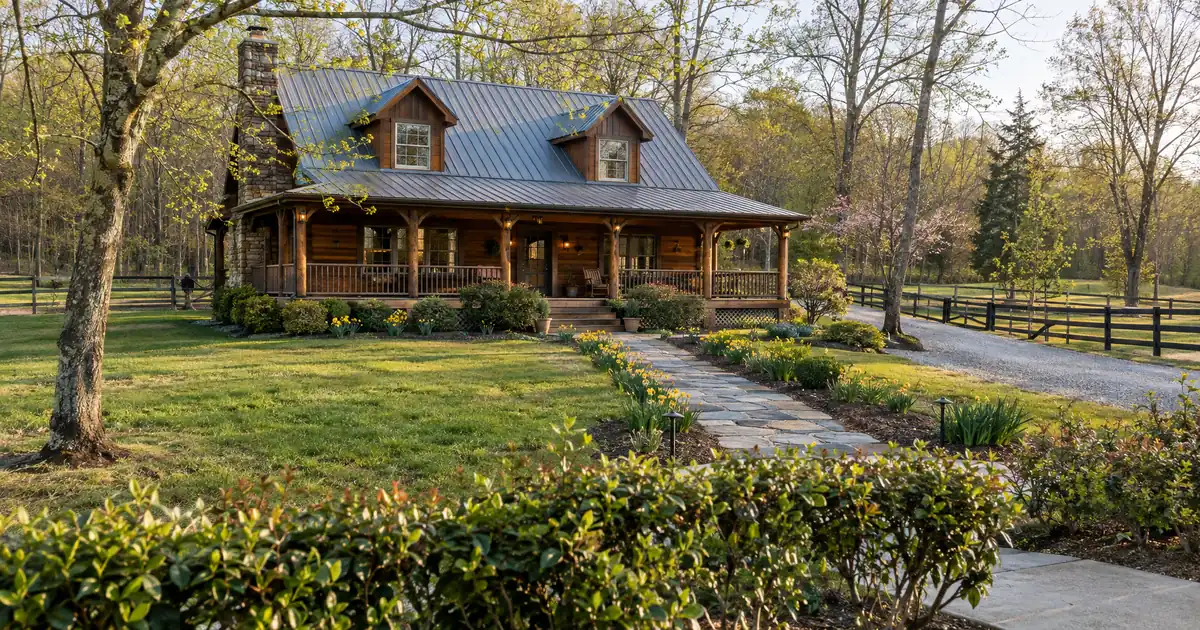
The Quick Read: The two caps are built differently, and in most rural counties the conventional cap is far higher. A rural FHA cap sits at its lowest setting, roughly two-thirds of the conventional baseline. Even so, many rural purchase prices land under both caps, so credit, down payment and mortgage insurance often decide the loan more than the cap does. FHA tends to fit buyers who need a small down payment and some credit flexibility. Conventional tends to fit buyers with stronger credit, more cash or a larger loan.
Lendmire arranges FHA loan programs for owner-occupant buyers through wholesale lenders. In practice, the same file often gets run against a conventional option side by side. That comparison is what this page walks through.
Key Takeaways
- The cap applies to the loan amount, not the price of the home.
- Your limit follows the county where the property sits, not where you live now.
- In a low-cost county, the FHA cap usually sits at its floor while the conventional cap does not move.
- If your loan fits under both caps, compare mortgage insurance, credit and cash to close.
- If your loan is above the FHA cap, a bigger down payment or a conventional loan is the usual path.
FHA payment estimate
Starting assumptions reflect an example price and the FHA minimum investment. Replace them with your own figures.
Editable benchmark: 7.32% as of October 22, 2026 · Freddie Mac 30-year average via FRED®. A conventional market reference, not an FHA loan quote.
Illustrative starting assumptions: a $350,000 price, the FHA minimum investment as the down payment, a thirty-year term at the current Freddie Mac benchmark, and property taxes and insurance estimated at typical national rates. Every field is editable.
Illustrative estimate only — not a Loan Estimate, approval, quote, or commitment to lend. The rate field carries the weekly Freddie Mac thirty-year conventional benchmark, a market reference and not an FHA loan quote; your rate is set by the lender at lock. FHA mortgage insurance follows HUD’s published schedule for the term, leverage and loan size entered; taxes, insurance and dues are editable estimates; closing costs are not included; county loan limits are not checked here. Licensed in sixteen states for consumer mortgages. Lendmire is not affiliated with or acting on behalf of FHA, HUD, or the federal government.
Side-by-Side
| Factor | FHA | Conventional |
|---|---|---|
| Who sets the cap | HUD, by county | FHFA, national baseline |
| Typical rural cap | At the floor, about 65% of baseline | At the national baseline |
| Maximum financing, purchase | 96.5% LTV | Varies by program and score |
| Credit floor | 580 decision score in these programs | Usually higher |
| Mortgage insurance | Upfront 1.75% plus annual premium | Private, varies, cancels with equity |
| Occupancy | Owner-occupied, 1 to 4 units | Primary or second home |
| Documentation | 31/43 base, up to 40/50 with factors | Full file, automated findings |
LTV means loan-to-value: the loan as a percentage of the home’s value or price. All figures are subject to lender guidelines and full file review, and nothing here is a commitment to lend.
How the Two Caps Are Built
The FHA cap is a slice of the conventional cap, which is why the two move together. They differ in most counties and converge only in the highest-cost ones. Conventional “conforming” limits come from the FHFA. FHFA’s annual announcement sets a national baseline. In pricier counties, the limit rises to 115% of the local median home value, up to a ceiling of 150% of the baseline. The limit is also not reduced when house prices fall.
FHA works from that number. As trade press covering HUD’s annual limit letter describes it, the FHA floor is 65% of the national conforming baseline. The ceiling is 150%, the same ceiling conventional uses. Counties in between get 115% of the local median price. HUD’s single-family lender page names the current limit letter and points to its county lookup tool. Both agencies reset their numbers every year, so check the current figures before you shop.
Here is the part rural buyers care about. Most counties are not high-cost. In those counties, the FHA cap sits at the 65% floor. The conventional cap sits at the full baseline. Same county, same house, and FHA caps the loan at about two-thirds of what conventional allows.
Two rules save confusion. First, the cap controls the amount you borrow, not the price you pay. Second, the lower of the price and the appraised value sets the starting loan amount, and the cap then trims it if needed.
What the Cap Means in a Rural County
For many rural buyers, the cap is not the problem. Home prices in lower-cost counties often sit well under both limits. When that is true, the cap is a footnote and the real comparison is cost, credit and cash.
Picture three buyers in three floor counties.
Buyer one is buying a home priced at about half the FHA cap. Both loans fit with room to spare. The decision is about down payment, credit and mortgage insurance.
Buyer two is buying near the FHA cap with 3.5% down. The loan is 96.5% of the price, so there is almost no cushion. A low appraisal or a financed premium can push the file against the limit. This buyer should run conventional numbers too. Eligibility is subject to lender guidelines and a complete review of property type, leverage, and credit.
Buyer three is buying above the FHA cap but under the conventional one. FHA only works with a larger down payment. Conventional is likely the cleaner path.
Multi-unit homes scale the same way. Both programs raise the cap with the unit count, and the FHA floor rises with it. A rural duplex you plan to live in is a different math problem than a single-family house.
When FHA Is the Better Fit
FHA earns its place when the borrower, not the house, is the tight part of the file. Across the wholesale programs Lendmire places FHA files with, the common pattern is a buyer with limited cash or a credit history that is still rebuilding.
- Small down payment. FHA allows financing up to 96.5% with a 3.5% minimum investment from a 580 decision score. Seller or interested-party contributions can reach 6% of the price.
- Credit flexibility. The programs Lendmire works with start at 580. HUD sets lower tiers, but these wholesale programs do not reach below 580. If a past foreclosure or bankruptcy is in the picture, HUD’s own waiting periods apply: two years from a Chapter 7 discharge and three from a foreclosure.
- Ratio room. The base pair is 31/43 (housing to total debt, as a share of income). Documented compensating factors can stretch it to 40/50 at the top tier, and the automated finding governs most files.
- A co-borrower who won’t live there. FHA allows a non-occupant co-borrower, which can help a young buyer with a parent on the loan.
- Price comfortably under the FHA cap. Then the lower cap costs you nothing.
The trade-off is mortgage insurance. FHA charges an upfront premium of 1.75% of the base loan, which is financed, plus an annual premium between 0.15% and 0.75% of the balance. Which end you land on depends on term, loan amount and LTV. On a thirty-year loan above 90% LTV, the annual premium lasts for the term. At or below 90%, it ends after eleven years. These are program mechanics, not a price quote. Final terms follow the full file review. Each figure is subject to lender guidelines and a complete review of property type, leverage, and credit.
When Conventional Is the Better Fit
Conventional wins when the loan is larger, the credit is strong, or the cash is there. It is also a common path when the price sits above the FHA cap in a floor county.
- Loan above the FHA cap. The conventional baseline is much higher, so a rural buyer with a bigger purchase has headroom FHA does not offer.
- Strong credit. The CFPB notes that private mortgage insurance varies with down payment and credit score. It is generally cheaper than FHA insurance for borrowers with good credit, and it is mostly paid monthly with little or no upfront charge.
- Insurance that can come off. Conventional mortgage insurance can be removed once you build enough equity. FHA premiums follow the schedule above.
- A different kind of income file. Some self-employed borrowers weigh documentation closely. Lendmire’s piece FHA vs Conventional for a Self-Employed Buyer covers that fork.
- Other occupancy. Conventional also reaches second homes. FHA is for the home you live in.
The trade-off runs the other way. Conventional programs usually ask for a higher credit score, and some lenders set their own floor above the program minimum. Your cash needs depend on the program and your score.
Rural Property Factors That Change the Math
Rural homes bring questions that urban homes rarely do. Two are worth knowing before you pick a loan.
Acreage. Conventional is not capped by acreage alone, but the appraisal must reflect the whole site. The Fannie Mae Selling Guide gives an example: an appraiser may not value only 5 acres of an unsubdivided 40-acre parcel. The value must reflect all 40. Land zoned agricultural is a separate problem, and lender overlays vary.
Condition and systems. An FHA appraisal does two jobs. It sets market value, and it checks that the home is safe, sound and secure. If the property fails HUD’s minimum standards, the loan cannot be insured until the problems are fixed. Repairs involving the roof, water or septic may need to be paid for or negotiated with the seller. A private well and septic system are not a deal-breaker by themselves. They need to be working and to meet the local health department’s requirements.
Thin comparable sales add one more risk. Rural appraisers sometimes have few recent sales to work from. A lower appraisal shrinks the loan on either program.
Here is a practitioner’s read. In rural files, the property often decides which loan works before the borrower’s numbers do. Run the property questions early. Not late.
What If the Price Is Over the FHA Cap?
You have three practical moves.
1. Put more down. A larger down payment shrinks the loan. If the loan drops under the cap, FHA works again.
2. Switch to conventional. The higher baseline absorbs most rural prices.
3. Ask about other rural programs. Government-backed rural loans exist, and the CFPB’s mortgage insurance page mentions USDA loans alongside FHA. Eligibility is its own question, and this page does not cover it.
If the loan exceeds even the conventional limit, it becomes a jumbo loan and falls outside the Fannie Mae and Freddie Mac framework. Lendmire’s piece High-Balance Conventional vs. Jumbo Loan Above the County Limit explains that boundary.
How to Look Up Your County’s Limits
1. Find the property’s county. The limit follows the property, not your current address.
2. Check the FHA limit. HUD’s county lookup is linked from its lender page. Pick the right unit count.
3. Check the conventional limit. FHFA publishes a county table with each annual announcement.
4. Compare to your loan, not your price. Subtract your down payment first.
5. Confirm with a loan officer. The case-number date matters for FHA, and the limit in force when it is assigned governs.
Key Terms Defined
Conforming loan: a conventional loan within the FHFA limit, which Fannie Mae or Freddie Mac can buy.
Loan limit: the largest loan amount a program allows in a given county.
Mortgage insurance: coverage that protects the lender if you default. You pay for it, either as FHA premiums or as private mortgage insurance.
Jumbo loan: a loan above the conforming limit.
The Verdict
Neither loan is the better one in the abstract. If you are buying in a low-cost county with limited cash or a bruised credit file, FHA is built for you, and the lower cap is rarely the obstacle. If your credit is strong, your down payment is bigger, or your price runs near or above the FHA cap, conventional probably gives you more room and cheaper insurance over time.
It is a genuine toss-up when the price sits just under the FHA cap. There, the cap, the appraisal and the insurance schedule all push on the same file. Run both before deciding.
If you are buying a home and want to see whether an FHA loan fits your file, Lendmire can help you compare the options and what each one asks of the file.
Frequently Asked Questions
Is the FHA limit lower than the conventional limit in a rural county?
Yes, in most cases. In a floor county, the FHA cap is about 65% of the national conventional baseline. The two are tied by formula, but they are separate numbers set by separate agencies, and they converge only at the high-cost ceiling.
Why would my county’s FHA limit differ from the next county’s?
FHA limits follow local median home prices between the floor and the ceiling. A county above the floor gets 115% of its median price. A lower-cost neighbor stays at the floor. The conventional baseline does not change county to county except in high-cost areas.
Does the limit apply to the price or the loan?
The loan. A home can be priced above the cap if your down payment brings the loan under it. Ask how your lender counts any financed mortgage insurance premium against the cap.
Does a well or septic system rule out an FHA loan?
Not by itself. The systems need to work and meet local health department requirements, and the appraiser checks the property against HUD’s minimum standards. Repairs may be required before the loan can be insured.
Do the limits change every year?
Yes. FHFA and HUD both update them annually, and old figures keep circulating online. Check current numbers before you set a budget.
For your own numbers, request a scenario review with Lendmire.
About Lendmire
Lendmire, NMLS# 2371349, is a mortgage brokerage with consumer lending licenses in 16 states. FHA, VA, conventional and jumbo purchase and refinance loans are arranged through wholesale lending partners, and each application is reviewed individually by the lender. Scotsman Guide named Lendmire a Top Mortgage Workplace in both 2025 and 2026.
Get Started
Ready to find the right loan for you?
In about two minutes you can review financing options available for your home or investment property. No commitment required.
Informational only. Not a Loan Estimate, approval, or commitment to lend. Program availability and eligibility are subject to lender guidelines, credit approval, property review, and underwriting.
References
1. FHFA: Conforming Loan Limit Values
2. Scotsman Guide: HUD FHA and HECM Loan Limits
3. HUD: FHA Lenders, Single Family
4. CFPB: What Is Mortgage Insurance and How Does It Work
This article is part of Lendmire’s FHA loan program — full qualification details, guidelines, and scenarios live on the program page.
Related reading: FHA Loan vs Conventional Loan for a Home Needing Repairs · FHA Loan vs Jumbo Loan for a Buyer Above the County Limit · FHA vs Conventional Loan for a First-Time Buyer: What Decides
Brandon Miller
Founder & CEO, Mortgage Loan Originator, Lendmire LLC
- Mortgage Loan Originator · NMLS# 1129696 · Verify on NMLS Consumer Access
- North Carolina Real Estate Broker · License# 343312 · Verify on NCREC
- North Carolina Insurance Producer · License# 19053198 · Property, Casualty, Life, Health · Verify on NAIC SBS
- Lendmire LLC · Firm NMLS# 2371349 · Verify firm licensure
Disclosure information. Lendmire is a state-licensed mortgage brokerage under NMLS# 2371349. Lendmire is not a depository institution, direct lender, or financial advisor — all loans referenced are placed through wholesale lender partners and are subject to each lender's underwriting standards. This article is provided for general informational purposes and is not a commitment to lend, nor does it constitute financial, legal, or tax advice. Loan programs, terms, rates, and qualification standards change without notice and depend on borrower profile, property type, and the state in which the subject property is located. Equal Housing Opportunity provider. NMLS Consumer Access: nmlsconsumeraccess.org.