
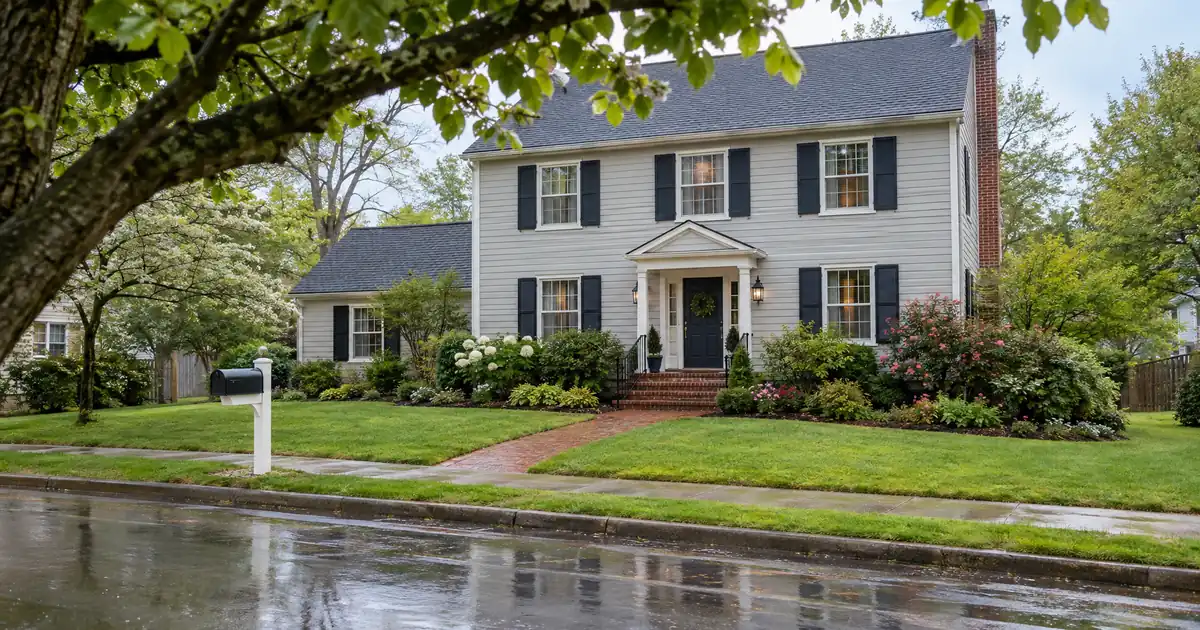
The Quick Read: Both loans are built for the home you actually live in, but they handle a late move-in very differently. VA gives you a written path to a later date if you can name the date and the event that makes it possible. Conventional loans lean on a fixed move-in covenant with narrow exceptions. If your move-in will slip, VA is usually the more forgiving structure, and conventional is the better fit when the move-in is firm.
Key takeaways
- Both programs treat the home as your primary residence, so you certify that you intend to live there.
- VA allows a later move-in with a certified date and a specific triggering event. Conventional has narrow documented exceptions, such as military orders.
- VA’s clock starts at loan closing, not at the purchase contract.
- VA offers 100% financing with no mortgage insurance. Conventional leverage and mortgage insurance depend on your down payment and the loan.
- A misstated occupancy plan is a bigger problem than a late one. Disclose a delay before closing.
VA payment estimate
Starting assumptions reflect an example price with no down payment and a first-use funding fee. Replace them with your own figures.
Editable benchmark: 7.32% as of October 22, 2026 · Freddie Mac 30-year average via FRED®. A conventional market reference, not a VA loan quote.
Illustrative starting assumptions: a $350,000 price, no down payment with full entitlement, a first-use funding fee financed into the loan, a thirty-year term at the current Freddie Mac benchmark, and property taxes and insurance estimated at typical national rates. Every field is editable.
Illustrative estimate only — not a Loan Estimate, approval, quote, or commitment to lend. The rate field carries the weekly Freddie Mac thirty-year conventional benchmark, a market reference and not a VA loan quote; your rate is set by the lender at lock. The funding fee follows VA’s published table for the use and down payment entered; the residual-income figure is VA’s guideline for the region and family size, and the rough residual shown subtracts only the housing payment and the debts entered, while VA also deducts taxes, maintenance and utilities. Taxes, insurance and dues are editable estimates; closing costs are not included. Licensed in sixteen states for consumer mortgages. Lendmire is not affiliated with or acting on behalf of the Department of Veterans Affairs.
Side-by-Side
Here is the quick comparison. VA program figures are the ones Lendmire sees across the wholesale programs it places VA loans with, subject to lender guidelines and full file review.
| Factor | VA Loan | Conventional Loan |
|---|---|---|
| Down payment | 100% financing available | Varies; usually some down payment |
| Credit floor | VA sets none; wholesale floor 580 | Set by lender and loan type |
| Mortgage insurance | None | Often required on lower down payments |
| Occupancy | Primary residence, certified | Primary residence, signed covenant |
| Delayed move-in | Allowed with certified date and event | Narrow exceptions; otherwise a waiver |
| Documentation | Occupancy certification; orders or letter | Occupancy declaration; orders if military |
Two things matter here. VA and conventional loans both require you to say you will live in the home. They differ on what happens if “I will live there” takes longer than expected.
For a veteran who wants to see the full picture, Lendmire’s VA loan programs page covers the benefit itself.
Key Terms Defined
Occupancy is how you will use the home. Lenders sort it into primary residence, second home, or investment property.
Primary residence is the home where you live as your main address. Both programs here are built around it.
Reasonable time is VA’s phrase for how long you can take to move in after closing.
Intent to occupy is your signed statement that you plan to live in the home. It is the core promise in both loans.
Residual income is what is left of your monthly income after taxes, debts, and a set allowance for living costs. For VA it is the controlling test.
Funding fee is a one-time VA charge that can be financed into the loan. It is waived for exempt borrowers, such as veterans receiving compensation for a service-connected disability.
How the VA Rule Works
VA defines “reasonable time” to move in as within 60 days after closing. That definition comes from the VA Lenders Handbook, Chapter 3. You certify your intent at application and again at closing, where you sign VA Form 26-1820.
The same handbook allows more than 60 days, but only when two conditions are met:
1. You certify a specific date after closing when you will personally move in.
2. A particular future event makes that date possible.
The handbook also sets an outer edge. Occupancy more than 12 months after closing generally cannot be considered reasonable. People often misread that 12-month figure as a minimum stay. It is the outer limit on a delayed move-in date.
Here is the practical part. A lender will want the event to be real and documented. Typical triggers include PCS orders, a retirement date, or repairs that must finish first. The handbook text sets the test. What documents satisfy it is lender practice.
Spouses and children matter too. For a veteran on active duty who cannot move in within a reasonable time, a spouse’s or dependent child’s occupancy, or intent to occupy, can satisfy the requirement. A dependent child’s certification comes from the veteran’s attorney-in-fact or the child’s legal guardian. That carve-out is tied to active duty. A retired or separated veteran should not assume it applies.
If the delay comes from a military move, Lendmire’s piece VA Cash-Out Occupancy Rules for an Active-Duty PCS Move walks through that situation.
One more point on the clock. For VA, it runs from loan closing. Signing the purchase contract does not start it.
How the Conventional Rule Works
Conventional loans are less flexible on timing, and the rule sits in the loan documents. The standard conventional mortgage paperwork generally asks you to move in within 60 days of signing and stay at least a year, with permitted exceptions. Read the security instrument you are actually signing, because it governs your loan.
Freddie Mac’s Single-Family Guide treats a loan as secured by a primary residence when at least one borrower occupies all or part of the property as a primary residence. For a manually underwritten loan above 90% loan-to-value (LTV, the loan amount as a percentage of the home’s value), every borrower whose income or financial strength is used to qualify must occupy. That matters if you planned for one spouse to move in later.
Freddie Mac also carves out active-duty borrowers who cannot occupy because of military service. The file needs the military orders showing the borrower is temporarily unable to move in. That is a narrow exception for service members, not a general delay allowance.
Fannie Mae’s occupancy bulletin sorts occupancy into three types: principal residence, second home, and investment. It treats principal residence as the lowest risk. It also notes that quality-control reviews can re-check occupancy after closing.
The takeaway is simple. Outside military orders, a conventional delay is not a right. It is a conversation, and the answer depends on the lender and investor.
When VA Is the Better Fit
VA is the stronger choice when your move-in date is uncertain but explainable. Think of a veteran buying near a new duty station before orders take effect, or a buyer whose home needs substantial repairs before anyone can sleep there. The VA path asks you to name a date and the event behind it, which is a clearer process than hoping for a waiver.
It also wins on cost structure for many buyers. VA offers 100% financing, meaning no down payment as long as the price is not above the appraised value. There is no mortgage insurance of any kind. With full entitlement there is no VA loan limit. If you have remaining entitlement from an earlier VA loan, a down payment may be required, so speak with a loan officer about your case.
Credit and underwriting are different too. VA sets no minimum credit score. The wholesale programs Lendmire places VA loans with start at a 580 decision score. Residual income is the controlling test. The 41% debt-to-income figure is a guideline, not a cap. A ratio above it needs residual income well above the table.
The cost is the funding fee. It runs from 1.25% to 3.3% depending on use and down payment, and it can be financed. It is waived for exempt borrowers. Here are the tiers:
- First use: 2.15% with less than five percent down, 1.5% with five to under ten percent down, 1.25% with ten percent or more down.
- Subsequent use: 3.3% with less than five percent down. The 1.5% and 1.25% tiers apply above that.
Eligibility starts with your certificate of eligibility (COE). VA decides it, and service requirements are VA’s rules.
The catch is the paper trail. A delayed VA move-in needs a certified date and a documented event. If you cannot name either, the VA path does not stretch to cover you.
When Conventional Is the Better Fit
Conventional works best when your move-in is firm and you do not qualify for VA, or when you want to bring a larger down payment. A buyer with a closing and a move-in a few weeks apart faces no real occupancy friction. In that case the signed covenant is easy to meet.
It also fits buyers who are not eligible for VA at all. Eligibility is a VA decision, and not everyone has the service history. Conventional financing is open to a broader group, subject to credit and income review. Lenders usually structure the down payment and mortgage insurance around your leverage, so a larger down payment can change the cost picture. Specifics depend on the lender and the loan.
Conventional can also suit a buyer who has the money and does not want to deal with a funding fee. That tradeoff is individual. Run both options before deciding.
The weak spot is delay. Outside the military-orders exception, a late move-in can leave you out of compliance with a covenant you signed. A closing that slips or a renovation that drags is exactly where conventional gets tight. If either looks likely, raise it with the lender before you sign.
Delayed Move-In Scenarios, Side by Side
Here is how typical situations tend to play out. These are general patterns, not promises, and each lender and file are different.
| Situation | VA Loan | Conventional Loan |
|---|---|---|
| Repairs delay move-in | Possible with certified date and event | Needs lender waiver |
| PCS orders arrive | Spouse or child can satisfy the rule | Orders can support an exception |
| Buying before selling | Works if the date is certified | Tight if outside the signed window |
| Retirement date ahead | Can qualify as the triggering event | No general exception |
| Seller rent-back | Usually fine inside the window | Usually fine inside the window |
A rent-back is when the seller stays on briefly after closing. It generally works only if you still move in within the allowed window. Longer than that and it starts to look like a different occupancy plan.
Across the wholesale programs Lendmire places VA loans with, the files that go smoothly share one habit. The borrower tells the loan officer about the delay at application, with the reason in writing. Surprises at closing tend to cause the problems. A planned delay that is documented up front tends not to.
The Paperwork for a Delayed Move-In
If your move-in will be late, gather these before closing:
- A written explanation of why you cannot move in within the standard window.
- Orders, a repair contract, or a retirement notice, whichever applies.
- A specific move-in date you are willing to certify.
- The spouse or dependent information, if the active-duty carve-out applies.
- A plan for carrying two housing costs during the gap.
That last item is practical, not procedural. A household may carry two housing payments while the delay runs. Build the budget before you commit, not after.
What If Plans Change After Closing?
A genuine change of plans is different from misrepresentation. If you honestly intended to move in and your circumstances changed, that is a life event. If you never planned to live there, that is a different problem.
The practical lesson is plain: state your real plan, document any delay, and talk to your loan officer before closing rather than after.
Two myths are worth clearing up.
“VA requires one year of living there.” The handbook text speaks to when you move in, not to a minimum stay. A lender or loan document may add its own expectation, and some lenders describe 12 months as their practice. That is not the same as a VA mandate.
“Conventional has no occupancy rule.” In fact, conventional loans do carry one. Occupancy is a signed covenant, and the lender can verify it after closing.
If you later move out and want to tap equity, Lendmire’s explainer VA Cash-Out Refinance Occupancy Rules After You Move Out covers that situation. Rental or investment use is a different loan category from the one here. In short, occupancy decides the leverage.
A Balanced Verdict
Pick VA if you are eligible and your move-in date might slip for a reason you can document. The structure was built for that, and the financing terms are strong. Pick conventional if you are not VA-eligible, your move-in is firm, or a larger down payment suits your plan. Neither is better in every case. The right answer depends on your date, your documents, and your eligibility.
Where to Go From Here
If you are buying a home and want to see whether a VA loan fits your file, Lendmire can help you compare the options and what each one asks of the file. Lendmire is a mortgage broker, so it arranges these loans through wholesale lenders rather than lending directly. All program terms are subject to lender guidelines and full file review, and nothing here is a commitment to lend.
Frequently Asked Questions
Can I buy with a VA loan if I cannot move in for several months?
Possibly. VA treats 60 days after closing as the baseline for reasonable time. A longer delay can be reasonable if you certify a specific move-in date and a particular event makes it possible. Lenders typically want orders or other documents behind the date.
Does my spouse’s occupancy count for a VA loan?
It can, if you are on active duty and cannot move in within a reasonable time. The spouse’s or dependent child’s occupancy, or intent to occupy, can satisfy the requirement. The carve-out is tied to active duty, so retired or separated veterans should not assume it applies to them.
Does a conventional loan allow a delayed move-in?
Only in narrow cases. Freddie Mac’s guide allows an active-duty borrower who cannot occupy because of military service, with orders in the file. Beyond that, the standard conventional documents generally call for a move-in within 60 days and a stay of at least a year, with permitted exceptions. Anything else depends on the lender or investor.
Does VA require me to live in the home for a year?
The handbook text addresses when you move in, not a minimum stay. The 12-month figure is the outer limit on a delayed move-in date. A lender or loan document may set its own stay expectation, so ask your loan officer what applies to your file.
What happens if I misstate my move-in plans?
Industry sources treat misstating occupancy as mortgage fraud, and a lender can re-check occupancy after closing. If your timing changes before closing, tell your loan officer and document the reason. A disclosed, documented delay is a very different situation from an undisclosed one.
For your own numbers, request a scenario review with Lendmire.
About Lendmire
Lendmire is a mortgage brokerage (NMLS# 2371349) licensed for consumer mortgage lending in 16 states, arranging FHA, VA, conventional and jumbo purchase and refinance loans through a wholesale lending network. Eligibility is determined by the lender on each file. Scotsman Guide named Lendmire a Top Mortgage Workplace in both 2025 and 2026.
Get Started
Ready to find the right loan for you?
In about two minutes you can review financing options available for your home or investment property. No commitment required.
Informational only. Not a Loan Estimate, approval, or commitment to lend. Program availability and eligibility are subject to lender guidelines, credit approval, property review, and underwriting.
References
1. VA Pamphlet 26-7, Lenders Handbook, Chapter 3: The VA Loan and Guaranty
2. Freddie Mac Single-Family Guide, Section 4201.11
3. Fannie Mae occupancy bulletin
This article is part of Lendmire’s VA loan program — full qualification details, guidelines, and scenarios live on the program page.
Related reading: VA Loan Rules for Buying Again With Remaining Entitlement · How to Work Out a VA Loan Down Payment Before an Active-Duty PCS Move · Can You Get a VA Jumbo Loan Above the County Limit?
Brandon Miller
Founder & CEO, Mortgage Loan Originator, Lendmire LLC
- Mortgage Loan Originator · NMLS# 1129696 · Verify on NMLS Consumer Access
- North Carolina Real Estate Broker · License# 343312 · Verify on NCREC
- North Carolina Insurance Producer · License# 19053198 · Property, Casualty, Life, Health · Verify on NAIC SBS
- Lendmire LLC · Firm NMLS# 2371349 · Verify firm licensure
Required disclosures. Lendmire (NMLS# 2371349) operates as a licensed mortgage broker, not a direct lender or depository. The discussion in this article is general in nature and should not be relied upon as financial, legal, or tax advice — every investment scenario is unique and should be reviewed by a qualified professional. Any loan inquiry is subject to lender underwriting, and this article is not a commitment to lend or a guarantee of approval. Mortgage rates, loan terms, and program guidelines vary by borrower, property, and state, and may change without notice. Equal Housing Opportunity. Verify licensure at NMLS Consumer Access.