
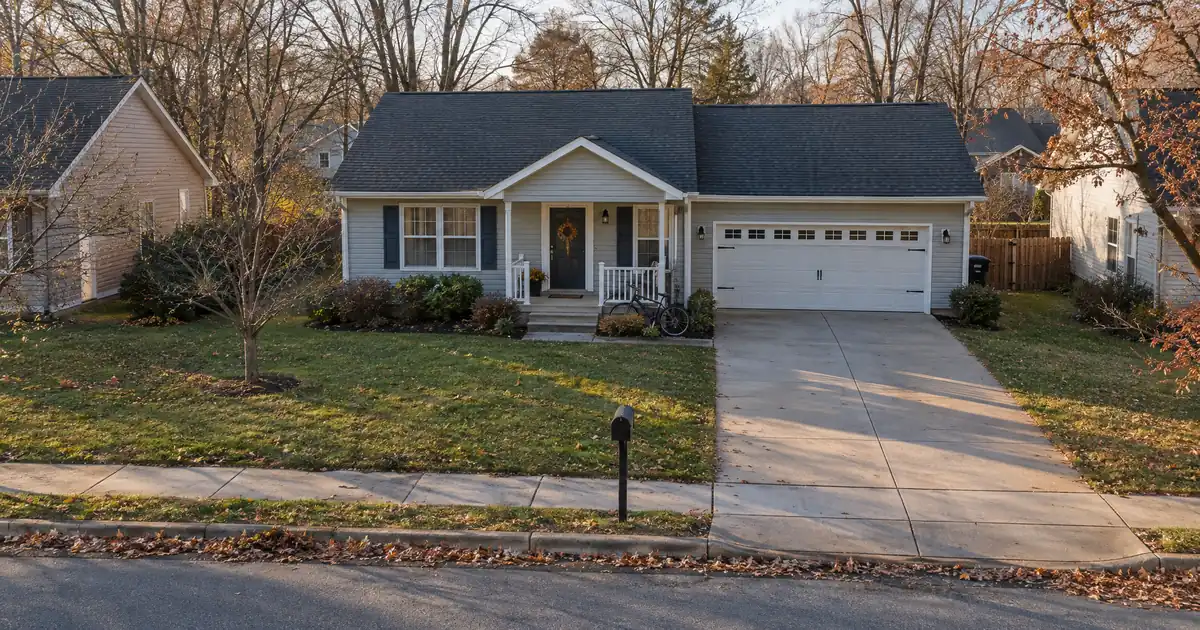
The Quick Read: An heir who inherits a home the family lived in can usually keep the existing conventional loan. Federal law generally stops the lender from demanding full payoff just because the owner died. You do not usually have to refinance or re-qualify. You do have to tell the servicer, prove your ownership interest, and keep the loan current while you do.
Here is the part most people miss. Keeping the payments going and legally taking over the debt are two different things. Which one you pick shapes your options later.
Key Takeaways
- The loan does not disappear at death. It stays attached to the home until it is paid off or title passes.
- A relative who lives in the home generally gets protection from a “pay it all now” demand.
- Taking over the loan does not usually mean new underwriting. Refinancing into your own loan does.
- Formally assuming the loan makes you personally liable. An assumption is also what gets signed alongside a loan modification if you cannot afford the payment.
- Non-relatives, non-occupants, and investment properties sit outside the general rule.
Conventional payment estimate
The starting figures are an example price at the first-time buyer’s minimum down payment. Replace them with yours.
Editable benchmark: 7.32% as of October 22, 2026 · Freddie Mac 30-year average via FRED®. A conventional market reference, not a conventional loan quote.
Estimate seeded at the low end of Fannie Mae’s published range (0.58%–1.86% a year); the insurer prices the actual premium on the score and the leverage. Applies only above 80% loan-to-value.
Illustrative starting assumptions: a $350,000 price, the first-time buyer’s minimum down payment, a thirty-year term at the current Freddie Mac benchmark, mortgage insurance at the low end of Fannie Mae’s published range, and property taxes and insurance estimated at typical national rates. Every field is editable.
Illustrative estimate only — not a Loan Estimate, approval, quote, or commitment to lend. The rate field carries the weekly Freddie Mac thirty-year conventional benchmark, a market reference and not a conventional loan quote; your rate is set by the lender at lock. The mortgage insurance figure is an editable estimate seeded from Fannie Mae’s published typical range, not a premium quote; the insurer prices the actual premium, and the cancellation month assumes scheduled payments with no extra principal and no change in value. Taxes, insurance and dues are editable estimates; closing costs are not included. Conforming loan limits apply by county. Licensed in sixteen states for consumer mortgages.
What Does It Mean to Take Over a Loan After Someone Dies?
It means you step into the existing mortgage, with its balance and terms, instead of getting a new one. Nobody gets that loan automatically. The estate stays responsible for payments until title passes to the heir, usually through an executor or administrator.
Think of three layers:
1. Payment: someone keeps the loan current.
2. Recognition: the servicer accepts you as the person with an interest in the home.
3. Liability: you become personally responsible for the debt, or you do not.
Many heirs only need the first two. The third is a choice with a real trade-off, covered below.
A servicer is the company that collects payments and handles the account. It may not be the company that originally made the loan. All your paperwork goes to the servicer.
Why Can’t the Lender Just Call the Loan Due?
Most mortgages carry a due-on-sale clause. It lets the lender demand full payoff when the home changes hands. Federal rules carve out exceptions for homes the borrower lived in, and a transfer to a relative after the borrower’s death is one of them.
This is why an heir who is a child, spouse, or other relative and who lives in the home is generally on solid ground. The same exceptions cover a surviving joint owner who takes the home by operation of law. The federal regulation lists these transfers in 12 CFR 191.5, and the protection applies to homes the borrower occupied or was going to occupy.
Fannie Mae’s servicing rules line up with this. Its Servicing Guide section D1-4.1-02 lists a relative of the deceased borrower as an exempt transferee, as long as that relative occupies the property. The servicer confirms the transfer is exempt. It does not get to treat the transfer as a new loan application.
That is the legal footing. The practical question is what you do with it.
Who Qualifies? A Quick Lookup
Your situation decides which rules apply. This table gives the general picture. Facts in your file can change it.
| Your situation | What generally applies | What to confirm |
|---|---|---|
| Surviving co-borrower | Loan continues in your name, same terms | Death certificate sent to servicer |
| Spouse not on the loan | Treated as a successor in interest | Your name on title or ownership proof |
| Child or other relative living in the home | Protected from a payoff demand | You occupy the home |
| Relative not living in the home | Occupancy condition may not be met | Servicer’s position on exemption |
| Friend, partner, or other non-relative | General protection usually does not apply | Whether the lender will enforce payoff |
| Home in a trust | Depends on the trust’s terms | Who is beneficiary and occupant |
A successor in interest is a person who receives an ownership interest in the home from a borrower, including by inheritance. Federal servicing rules treat a confirmed successor as a borrower for servicing purposes. Your rights to information and to ask for help follow from that. The rule text is in 12 CFR Part 1024, Subpart C.
One point deserves its own line. Being confirmed does not make you liable for the debt. Under that same rule, a successor who was not on the loan is liable only if they assume the obligation under state law.
Keep the Loan or Refinance? What Each Path Asks
This is the real decision. Many heirs treat it as one choice when it is really three or four.
| Factor | Keep existing loan | Formally assume | Refinance in your name |
|---|---|---|---|
| New underwriting | Generally none | Varies by servicer and investor | Full review |
| Terms | Stay as written | Stay as written | Reset to new loan |
| Appraisal | Generally none | Generally none | Yes |
| Personal liability | Not unless you assume | Yes | Yes |
| Modification help | Review available as a borrower; assumption signed with it | Yes, if you qualify | Not applicable |
| Closing costs | Generally none | Fewer than a refinance | Yes, as with any refinance |
Keeping the existing loan preserves the payment and terms the owner had. A new loan resets them to market levels. That can help or hurt. If the old terms were good, a refinance gives them up. If the old loan was a poor fit, a refinance may be the cleaner fix.
In the files Lendmire arranges, the refinance route is ordinary conventional underwriting. The lender looks at your credit, income, debts, and an appraisal. The wholesale conventional programs generally start at a 620 decision score. The automated finding governs most files, with a total debt-to-income ceiling of 50%. A rate-and-term refinance on a one-unit principal residence can reach 95% loan-to-value, which means a 5% equity cushion. Mortgage insurance applies above 80%.
Those figures are subject to lender guidelines and a full file review. Nothing here is a commitment to lend.
If you are weighing this, Lendmire’s conventional loan programs page explains how these loans are structured. Refinancing and keeping the old loan are not either-or forever. Some heirs keep the loan for a while, settle the estate, and refinance later.
Step by Step: How to Do It
Here is the order that tends to work.
1. Tell the servicer about the death. Send the death certificate. Servicers are expected to have procedures for identifying and talking with a deceased borrower’s successor. Ask which department handles it.
2. Ask to be confirmed as a successor in interest. You can send a written request. The servicer may ask only for documents reasonably needed to confirm who you are and what interest you hold.
3. Wait for the servicer’s answer. It will say one of three things: you are confirmed, it needs more documents, or you are not a successor in interest. Get this in writing.
4. Gather proof of your interest. This typically means the death certificate plus one or more of these: a will, probate letters, a deed, or a survivorship deed. The right mix depends on how the home is titled.
5. Keep the loan current. The estate stays responsible until title passes. Missed payments during probate can create a bigger problem than the paperwork. An executor or administrator generally manages this.
6. Choose your path. Keep paying as a confirmed successor, formally assume, refinance, or sell. Make the choice with the facts about your own budget in hand.
Document checklist
| Item | Who supplies it | Why it matters |
|---|---|---|
| Death certificate | Family or estate | Starts the process |
| Photo ID | You | Confirms identity |
| Will, probate letters, or deed | Estate attorney or court | Shows ownership interest |
| Proof you live in the home | You | Supports the relative exemption |
| Insurance in your name or the estate’s | You or the agent | Keeps the home covered |
What Happens After the Servicer Responds?
Once you are confirmed, you are treated as a borrower for servicing purposes. You can get account information and ask about options. If you stay a successor without assuming, you keep paying but you are not personally on the debt.
Servicer handling varies. The CFPB’s Issue Spotlight on problems after divorce or death describes homeowners getting long delays. It also reports some being told wrongly that they must qualify, must refinance, or that investors forbid assumptions. In many cases those claims are false.
If the servicer stalls or asks for the wrong documents:
- Put every request in writing and keep copies.
- Ask the servicer to cite the guideline it is relying on.
- Ask for the name of the department that handles successors.
- Bring in an estate attorney if the answers stay unclear.
Do You Have to Qualify to Keep the Loan?
Generally no. The CFPB confirmed that adding an heir’s name to the mortgage after a borrower dies does not usually trigger the federal ability-to-repay requirement. Its announcement on helping surviving family members says so. The rule is a few years old, but the logic has held.
That does not mean zero questions. When an assumption is processed, the investor’s guidelines set the details, including timelines, allowed fees, and any underwriting. Those vary. Treat “no qualification” as the general rule, not a promise for your servicer.
Where the Rule Breaks: Special Situations
Non-relative heir. A friend or unmarried partner does not get the relative exception. The lender may be able to enforce the payoff clause. That does not mean it will, but you should plan for the possibility.
Non-occupant relative. The exemption is tied to occupancy. A relative who inherits and lives elsewhere may not fit it. A second home or rental property is generally outside the protection, because it covers homes the borrower occupied.
Surviving co-borrower. This is the simplest case. The loan continues in your name on the same terms. No assumption is needed.
Loan already in default. The servicer reviews the heir for a loan modification as if they were a borrower. Under Fannie Mae’s rules, if the heir meets the modification requirements, the assumption agreement is signed together with the modification.
Trust. The exception for transfers into a living trust generally works when the borrower stays a beneficiary and occupant. Transfers into an irrevocable trust may fall outside it. Trust language matters here, so an attorney should read it.
Several heirs. One loan has one payment. If three siblings inherit, someone has to keep it paid and decide who stays. Buying out the others usually means refinancing, because the buyout needs funding. Lendmire’s piece Does FHA Treat an Heir’s Buyout of a Co-Owner as Cash-Out? walks through that structure for a government-backed loan.
No will. State law decides who inherits. The servicer will still want proof of your interest, so the court paperwork becomes the key document.
Other loan types. FHA, VA, and USDA loans have their own assumption rules. Reverse mortgages work differently too and generally become due after the last borrower dies. This article covers conventional loans only.
Three Hypothetical Scenarios
These are illustrations, not predictions. They use no dollar figures.
The daughter who stays. A mother dies. Her daughter lives in the home and inherits it. The daughter sends the death certificate and her deed, gets confirmed, and keeps paying. The loan keeps its terms. She decides later whether to assume or refinance.
The brothers who split. Two brothers inherit a family home. One wants to keep it. He plans a refinance to pay out his brother, which means full underwriting on his own credit and income, plus an appraisal. If he needs cash out for the buyout, conventional cash-out generally caps at 80% loan-to-value on a one-unit principal residence. The usual seasoning on cash-out has exceptions for inheritance.
The heir who cannot afford the payment. A son inherits a home with a loan that is behind. He cannot afford the payments as written. As a confirmed successor, he is reviewed for a modification as if he were a borrower. If he meets the requirements, he signs an assumption agreement together with the modification. That makes him personally liable, so he weighs that risk before signing.
Assume or Not? The Trade-Off
Assuming makes you the borrower of record. The cost is personal liability for the debt. An assumption also does not release the estate from the loan unless the creditor agrees.
Not assuming keeps you out of the debt for now. You can still ask to be reviewed for help as a confirmed successor. But if the review ends in a modification, the assumption is signed along with it, so the liability question comes back at that point.
If you plan to stay and the payment fits your budget, many heirs hold off on assuming and see how things go. If the loan is behind or the payment is a stretch, the modification route may be worth the liability. An estate attorney can weigh that with you.
What About Mortgage Insurance?
If the original loan had mortgage insurance, it follows the loan. By law the servicer must end it automatically when the balance reaches 78% of the original value. You can ask to cancel at 80% with a good payment history, no second liens, and no drop in value. If you refinance, a new loan above 80% loan-to-value brings a new mortgage insurance requirement.
Key Terms Defined
Successor in interest: a person who gets an ownership interest in a home from a borrower, such as by inheritance, and whom the servicer has confirmed.
Due-on-sale clause: a loan term that lets the lender demand full payoff when the home is transferred.
Assumption: a legal step where a new person takes on responsibility for an existing loan, keeping its terms.
Servicer: the company that collects payments and manages the loan account day to day.
Loan modification: a change to the loan’s terms to make the payment affordable, usually for a borrower in trouble.
Loan-to-value (LTV): the loan balance as a percentage of the home’s value.
When to Call an Attorney
Bring in an estate attorney when title is unclear, when there is no will, when a trust is involved, or when siblings disagree. State law governs probate and title. The loan rules above are federal and general.
If you have inherited a home and want to see whether keeping the loan or refinancing into your own conventional loan fits your file, Lendmire can help you compare the options and what each one asks of the file.
Frequently Asked Questions
Do I have to refinance when I inherit a house with a conventional loan?
No, not as a rule. A relative who occupies the home generally can keep the existing loan. Refinancing is a choice, not a legal requirement. It makes sense when you want to remove co-heirs, change the terms, or fund a buyout.
Am I personally responsible for the loan if I inherit the house?
Not unless you assume it, refinance, or were already on it. A confirmed successor in interest is treated as a borrower for servicing but is liable only by assuming the debt. The estate stays responsible for payments until title passes.
What if the servicer says I must qualify first?
Push back politely and ask for the guideline in writing. The CFPB reports servicers making this claim wrongly in many cases. Occupancy, relationship, and ownership proof matter more than a credit review for an assumption. Servicer practice varies, though, so keep records of every exchange.
Can a friend or partner take over the loan?
Generally the protection does not extend to non-relatives. A refinance in your own name is the usual route, with full conventional underwriting.
What credit do I need if I refinance instead?
The wholesale conventional programs generally start at a 620 decision score, with a 50% total ratio ceiling on automated findings. Waiting periods after bankruptcy or foreclosure follow agency rules. Every figure is subject to lender guidelines and full file review.
For your own numbers, request a scenario review with Lendmire.
About Lendmire
Lendmire, NMLS# 2371349, is a mortgage brokerage with consumer lending licenses in 16 states. FHA, VA, conventional and jumbo purchase and refinance loans are arranged through wholesale lending partners, and each application is reviewed individually by the lender. Scotsman Guide named Lendmire a Top Mortgage Workplace in both 2025 and 2026.
Get Started
Ready to find the right loan for you?
In about two minutes you can review financing options available for your home or investment property. No commitment required.
Informational only. Not a Loan Estimate, approval, or commitment to lend. Program availability and eligibility are subject to lender guidelines, credit approval, property review, and underwriting.
References
1. 12 CFR 191.5, Preemption of state due-on-sale laws
2. Fannie Mae Servicing Guide D1-4.1-02, Allowable Exemptions Due to the Type of Transfer
3. eCFR 12 CFR Part 1024, Subpart C (Regulation X servicing rules)
4. CFPB Issue Spotlight: Homeowners face problems after divorce or death of a loved one
5. CFPB clarifies mortgage lending rules to assist surviving family members
This article is part of Lendmire’s conventional loan program — full qualification details, guidelines, and scenarios live on the program page.
Related reading: How to Qualify for a Conventional Loan Using Dividend Income · How a Conventional Loan Appraiser Flags Property Repairs · How to Get PMI Cancelled on a Conventional Loan Under the HPA
Brandon Miller
Founder & CEO, Mortgage Loan Originator, Lendmire LLC
- Mortgage Loan Originator · NMLS# 1129696 · Verify on NMLS Consumer Access
- North Carolina Real Estate Broker · License# 343312 · Verify on NCREC
- North Carolina Insurance Producer · License# 19053198 · Property, Casualty, Life, Health · Verify on NAIC SBS
- Lendmire LLC · Firm NMLS# 2371349 · Verify firm licensure
Disclosures. The information presented in this article is general market commentary, not financial, legal, or tax advice. Lendmire is a mortgage brokerage (NMLS# 2371349) — not a direct lender or depository institution — and loan placement is subject to lender underwriting. Nothing in this content represents a commitment to lend. Loan terms, pricing, and program availability vary based on borrower qualifications, property characteristics, and state of subject property, and are subject to change at any time. Lendmire complies with Equal Housing Opportunity requirements. Consumer access: nmlsconsumeraccess.org.