
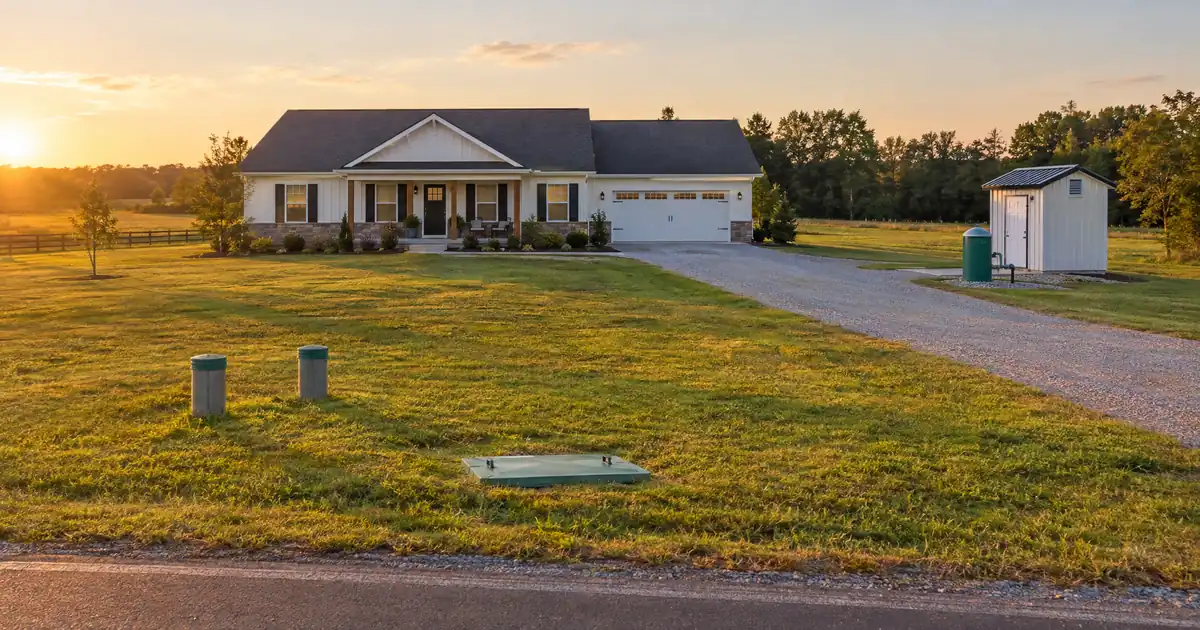
The Quick Read: On a standard conventional loan, a well or septic test is usually not automatic. Fannie Mae and Freddie Mac require the home’s utilities to meet community standards, and a test or repair usually comes up only when something gets flagged. To pass, show that your systems are in service, typical for the area, legally yours to use, and free of visible problems. Then handle any lender condition with a clean report.
Key Takeaways
- Conventional rules ask for working, area-typical systems, not a national test protocol.
- A test is usually hazard-triggered. Anyone tied to the deal can raise a hazard, and the appraiser can too.
- Shared or off-site systems need a binding, enforceable agreement. A handshake does not count.
- Passing is mostly a paperwork problem. Clear reports and a complete packet prevent most delays.
- The lender’s check protects the collateral. It does not tell you the water is safe to drink.
What Does a Conventional Lender Actually Check?
A conventional lender checks that the home has working water and sewage that fit the neighborhood. Freddie Mac’s Guide says an eligible property must have utilities and mechanical systems that meet community standards, plus legal access and suitability for year-round living. It also says the seller (the lender selling the loan) decides whether the property is eligible and whether the appraisal is acceptable. So the lender owns the judgment call, not the agency.
Conventional payment estimate
The starting figures are an example price at the first-time buyer’s minimum down payment. Replace them with yours.
Editable benchmark: 7.32% as of October 22, 2026 · Freddie Mac 30-year average via FRED®. A conventional market reference, not a conventional loan quote.
Estimate seeded at the low end of Fannie Mae’s published range (0.58%–1.86% a year); the insurer prices the actual premium on the score and the leverage. Applies only above 80% loan-to-value.
Illustrative starting assumptions: a $350,000 price, the first-time buyer’s minimum down payment, a thirty-year term at the current Freddie Mac benchmark, mortgage insurance at the low end of Fannie Mae’s published range, and property taxes and insurance estimated at typical national rates. Every field is editable.
Illustrative estimate only — not a Loan Estimate, approval, quote, or commitment to lend. The rate field carries the weekly Freddie Mac thirty-year conventional benchmark, a market reference and not a conventional loan quote; your rate is set by the lender at lock. The mortgage insurance figure is an editable estimate seeded from Fannie Mae’s published typical range, not a premium quote; the insurer prices the actual premium, and the cancellation month assumes scheduled payments with no extra principal and no change in value. Taxes, insurance and dues are editable estimates; closing costs are not included. Conforming loan limits apply by county. Licensed in sixteen states for consumer mortgages.
Here is the plain version. If neighbors use wells and septic tanks because public lines don’t reach the street, your private systems are normal. They are not a strike against the home. Both agencies expect private systems where public ones are unavailable.
Across the wholesale programs Lendmire places files with, the deals that stall are rarely about having a well. They stall because something was flagged late, a report was unclear, or a shared system had no paper behind it.
When Will a Lender Ask for a Test?
A lender asks for a test when a hazard or defect shows up, not by default. Fannie Mae’s guidance on septic and well inspections says that when a broker, seller, buyer, or any other party reports an environmental hazard, the lender must tell the appraiser, note the file, and disclose it to the borrower. The appraiser then comments on the hazard’s effect on value and marketability.
That is why “usually not required” is not the same as “never.” The common triggers look like this:
| Trigger | Who raises it | Likely result |
|---|---|---|
| Sewage discharge or odor | Appraiser | Lender may condition on inspection or repair |
| Disclosed hazard or defect | Seller, buyer, agent | Lender must pass it on and note the file |
| Unclear or missing system information | Appraiser | Lender may request more documents |
| Lender’s own overlay | Lender | Test required whatever the appraiser sees |
The last row matters. Fannie Mae and Freddie Mac set principles. Testing specifics, such as who tests and what gets tested, come from lender overlays, local health authorities, and program rules. Some lenders ask for little. Others set stricter conditions. Both statements can be true at once, which is why you ask your loan officer early.
Typical warning signs on a lot include slow drains, a wet or smelly area over the drain field, cloudy water, and low pressure from the pump. None of these is a rule. They are the things that tend to get noticed and written down.
What Does “Passing” Mean for a Well and for Septic?
Passing means the system works, is common for the area, and shows no hazard. Four different checks get mixed up, so define them first.
Key Terms Defined
- Community standards: The system is in service and typical for homes in that area.
- Septic inspection: A professional review of the tank, drain field, and related parts to judge whether the system works.
- Water-quality test: A lab analysis of a well sample for contaminants such as bacteria and nitrates.
- Legally binding access and maintenance agreement: A written, enforceable right to use and maintain a system you do not own outright.
- Legal non-conforming (grandfathered) use: A use that was legal when built but no longer matches current zoning.
- Overlay: An extra requirement a lender adds on top of agency rules.
A general home inspection is not the same thing. It may note the pump or tank lid, but it does not stand in for a septic inspection or a lab water test.
For a septic system, a clean result means the tank and drain field work and nothing is discharging where it shouldn’t. Common fail causes are a failed drain field, backups, and surface sewage.
For a well, a clean result means safe lab results and a pump system that delivers water. Common fail causes are bacteria, high nitrates, and a pump or pressure failure. Use a certified lab with a proper sample, not a home kit.
Step by Step: How to Pass
1. Ask your loan officer about overlays up front. Do this before you write an offer. You want to know whether the lender adds anything beyond the agency baseline.
2. Sort out ownership and access. Confirm the system sits on the property and serves only your home. If it is shared or off-site, get the agreement documents now.
3. Let the appraisal happen. The appraiser records whether water and sewer are public or private. Freddie Mac’s appraisal notice lists sewer type and public or private utilities among the items recorded.
4. Decide on a voluntary test. More on this below. Decide before your contingency window closes.
5. If something is flagged, get the right report. Use a licensed septic professional or certified lab, and get the lender’s expectations in writing first.
6. Hand the lender a complete packet. Send the reports, repair receipts, and agreements in one clean set.
7. Clear the condition and move on. The underwriter weighs the appraisal, disclosures, inspection findings, and any overlay together.
Timing varies by file and lender, so this article makes no promise on how long any step takes.
How Do You Get a Report the Lender Will Accept?
A lender-ready report is complete, readable, and clear about pass or fail. Reports tend to get rejected for fixable reasons. Fix these before you submit:
- The report doesn’t identify the system type or its condition.
- The language is vague. “Seems fine” is not a finding.
- The inspector’s credentials or the lab’s certification are missing.
- A home test kit was used instead of a certified lab.
- The report contradicts what the appraiser saw and nobody explained the gap.
- The report is stale. Ask your loan officer whether the lender sets an expiry window.
Your documentation packet should include the inspection or lab report, any repair invoices with a follow-up retest, any recorded sharing agreement, and proof the system serves the property. Handing this over before the underwriter asks is an easy way to pre-clear questions about the system.
What If a Check Fails?
A failed check is a problem to solve, not the end of the deal. A failing system can mean the home isn’t acceptable collateral until it is fixed. The lender can make repair or testing a condition of approval. Your usual options are:
| Option | How it works |
|---|---|
| Repair and retest | Seller or buyer fixes the issue, then a new report shows a pass |
| Renegotiate | Price changes to reflect the repair |
| Seller credit | Seller contributes toward cost, subject to lender limits |
| Escrow holdback | Funds held until repair is done, if the lender allows it |
| Cancel under contingency | Buyer walks away using the inspection contingency |
Consider a hypothetical. Say the appraiser notes a wet, smelly patch over the drain field. The lender conditions approval on a septic inspection. The inspector finds a failing drain field. The buyer asks the seller to repair it, the seller agrees, a licensed contractor does the work, and a retest comes back clean. That report goes into the packet, and the condition clears. The costs and delays depend on the repair, and they can be real. If the seller refuses, the contingency lets the buyer cancel or renegotiate.
Should You Test Even If the Lender Doesn’t Require It?
Often yes, because the lender’s check and your health are different questions. The CDC says well owners are responsible for testing, and EPA public-water rules do not apply to private wells. It advises testing at least once a year for coliform bacteria, nitrates, total dissolved solids, and pH. The EPA says more than 15 million Americans use private wells as their main drinking water source. It adds that these wells are usually not regulated or inspected for radionuclides, and it recommends testing for them every three years.
That leaves a real tension. A voluntary inspection can surface a hazard that then gets documented and passed to the lender. Honestly, it’s a toss-up for some buyers on paper. In practice, most would rather know before closing than after. If you inspect, do it with eyes open: know the contingency language, and know what your options are if the result is bad. A good agent or attorney can help word the contingency.
Where Does the General Rule Break?
The “usually not required” rule bends in a few named cases:
- Shared or off-site systems. Private facilities are generally expected on the property itself. Off-site or shared ones need recorded, enforceable agreements covering access and maintenance. Neighbors agreeing verbally does not meet the standard.
- Grandfathered use. The appraisal must say whether the use is legal conforming, legal non-conforming, illegal, or subject to no local zoning. Under the Fannie Mae Selling Guide, a non-conforming use is purchasable only if the appraisal reflects any adverse effect on value and marketability.
- Land-use limits. Fannie Mae won’t buy a loan on a property where rules such as coastal tideland or wetland laws block rebuilding or maintaining the improvements after damage.
- Housing agency overlays. Some state housing finance agencies layer on their own rules. One example requires a potability test on individual water systems and bars shared septic. Those are program rules, not Fannie Mae or Freddie Mac rules.
- Special systems. Community systems, mound systems, cesspools, and shared wells draw more questions. Local health departments set many of the rules, so call the county early.
Government-backed loans (FHA, VA, USDA) are more prescriptive about testing.
How Does This Fit a Conventional File?
Well and septic checks sit beside the rest of the loan. They don’t change the leverage rules. On a principal residence, conventional purchase loans reach 97% LTV (3% down) when at least one borrower is a first-time buyer with a fixed rate, and 95% LTV (5% down) otherwise. Mortgage insurance applies above 80% LTV. You can request cancellation at 80% of the original value, and the servicer must end it automatically at 78%. The wholesale conventional programs start at a 620 decision score, and the automated finding governs most files with a 50% total ratio ceiling. All of this is subject to lender guidelines and full file review.
If you’re buying a home in the country, conventional loan programs work on the same math as any other purchase. The utility check is one more box, not a different loan. For deeper reading, Lendmire’s piece Can a Home on Well and Septic Qualify for a Conventional Loan? covers the eligibility question.
What Should You Ask Your Lender?
Bring these questions to your loan officer before you make an offer:
- Does this lender add any well or septic overlay?
- If the appraiser flags something, what report will you accept?
- Do you set an expiry window on reports?
- Is this a shared or off-site system, and what documents do you need?
- If we repair after a failed check, can the file proceed on a retest?
If you are buying a home and want to see whether a conventional loan fits your file, Lendmire can help you compare the options and what each one asks of the file.
Frequently Asked Questions
Is a well or septic inspection part of a regular home inspection?
No. A general home inspection may note visible items, but a septic inspection and a lab water test are separate. Ask your inspector whether they offer each one or can refer a specialist.
Can I use a home test kit for the lender?
Generally not. Lenders that want a water test look for a certified lab and a properly collected sample. A kit can still give you a rough personal read, but it won’t stand in for a lab report.
Who pays for a required test or repair?
It is negotiable between buyer and seller, so it depends on your contract. Costs and responsibility are usually settled through the inspection contingency, a price change, or a seller credit, subject to lender limits.
Can I close with a failed test?
Usually not until the lender’s condition is cleared. A failing system can leave the home as unacceptable collateral until it is repaired and retested, or until the deal is restructured under your contract terms.
What if the system is old but working?
Age alone isn’t the test. The questions are whether it is in service, typical for the area, and free of visible hazards. An older system that works and shows no flags can pass, though a lender may look closer if the appraiser has concerns.
For your own numbers, request a scenario review with Lendmire.
About Lendmire
Lendmire, NMLS# 2371349, is a mortgage brokerage with consumer lending licenses in 16 states. FHA, VA, conventional and jumbo purchase and refinance loans are arranged through wholesale lending partners, and each application is reviewed individually by the lender. Scotsman Guide named Lendmire a Top Mortgage Workplace in both 2025 and 2026.
Get Started
Ready to find the right loan for you?
In about two minutes you can review financing options available for your home or investment property. No commitment required.
Informational only. Not a Loan Estimate, approval, or commitment to lend. Program availability and eligibility are subject to lender guidelines, credit approval, property review, and underwriting.
References
1. Freddie Mac Seller/Servicer Guide 5601.1, Property eligibility requirements
2. Freddie Mac’s appraisal notice
3. CDC, Guidelines for Testing Well Water
4. EPA, Natural Radionuclides in Private Wells
This article is part of Lendmire’s conventional loan program — full qualification details, guidelines, and scenarios live on the program page.
Related reading: Can an Unemployed Person Get a Conventional Loan? · Can a Repeat Buyer Get a Homeready Conventional Loan? · Conventional Loan Well and Septic Requirements for a Rural Home
Brandon Miller
Founder & CEO, Mortgage Loan Originator, Lendmire LLC
- Mortgage Loan Originator · NMLS# 1129696 · Verify on NMLS Consumer Access
- North Carolina Real Estate Broker · License# 343312 · Verify on NCREC
- North Carolina Insurance Producer · License# 19053198 · Property, Casualty, Life, Health · Verify on NAIC SBS
- Lendmire LLC · Firm NMLS# 2371349 · Verify firm licensure
Legal disclosures. Lendmire (NMLS# 2371349) is a state-licensed mortgage brokerage that arranges financing through wholesale lender relationships. Lendmire is not a direct lender, depository institution, or registered financial advisor. The discussion above is general informational content about real estate financing — it is not financial, legal, or tax advice, and readers should consult licensed professionals for guidance on their individual circumstances. Loan inquiries are subject to lender underwriting; this article does not represent a commitment to lend. Loan terms, rates, and qualification standards vary by borrower, property, and state, and are subject to change at any time. Equal Housing Opportunity. NMLS Consumer Access: nmlsconsumeraccess.org.