
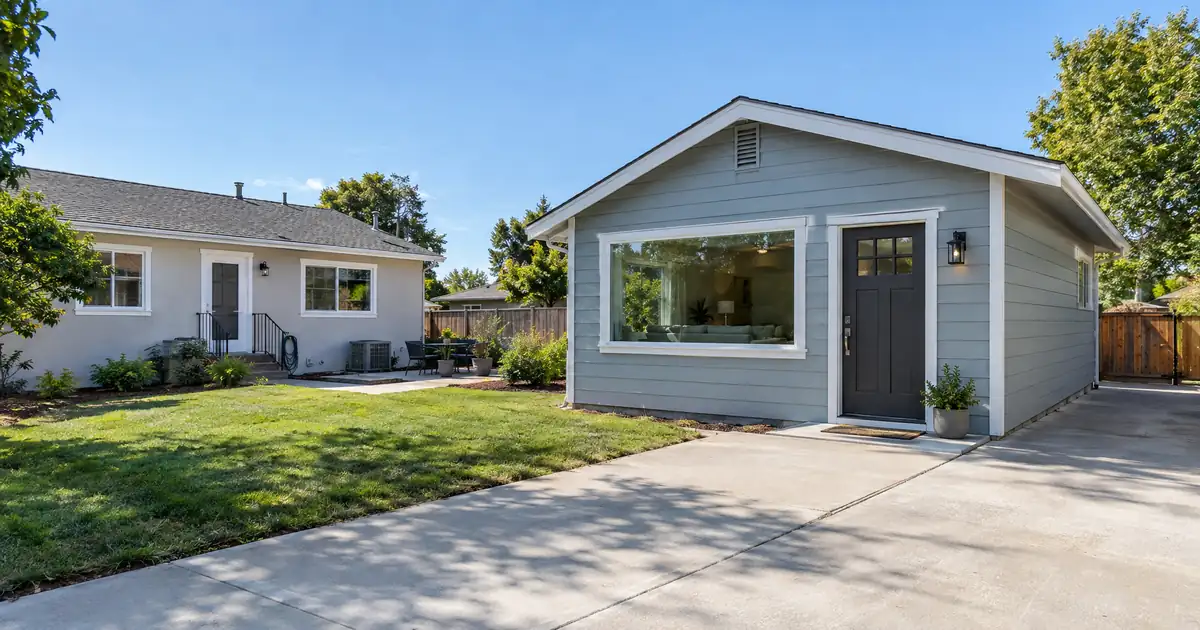
The Quick Read: No single program is best, because the right one depends on how you paid for the conversion and what loan you carry now. For most owner-occupants with a finished garage ADU, a conventional cash-out refinance is the main lane, with leverage capped at 80% of value on a one-unit principal residence. Veterans, FHA borrowers, and anyone whose ADU is unfinished or unpermitted land on different paths. Everything below is subject to lender guidelines and full file review.
Key Takeaways
- Paying off a HELOC or construction loan from a new first mortgage generally makes the loan a cash-out refinance, not a rate-and-term one.
- Conventional cash-out tops out at 80% LTV on a one-unit primary home. The first mortgage must be at least 12 months old, and a borrower must have been on title for six months.
- A VA IRRRL and an FHA Streamline cannot put cash in your hand. Veterans who want cash need the VA cash-out path.
- Whether the ADU is legal and permitted shapes the appraisal, and the appraisal shapes everything else.
- Ask which program fits your file. A broker who shops multiple wholesale lenders can match the scenario to the right one.
What a Cash-Out Refinance Does After the Garage Is Finished
A cash-out refinance replaces your current first mortgage with a larger one and hands you the difference. The new loan is based on your home’s appraised value, which now includes the finished ADU. That is the whole appeal: you built value, and the refinance converts some of it into money.
Cash-out refinance estimate
The starting figures are an example value with a balance and a cash request in proportion. Replace them with yours.
Editable benchmark: 7.18% as of November 5, 2026 · Freddie Mac 30-year average via FRED®. A conventional market reference, not a cash-out refinance quote.
Illustrative starting assumptions: a $350,000 home value, a $193,000 current balance, the agency cap on a one-unit principal residence, a thirty-year term at the current Freddie Mac benchmark, and property taxes and insurance estimated at typical national rates. Every field is editable.
Illustrative estimate only — not a Loan Estimate, approval, quote, or commitment to lend. The rate field carries the weekly Freddie Mac thirty-year conventional benchmark, a market reference and not a cash-out refinance quote; a cash-out loan is priced by the lender at lock. The cash available is the loan the program cap allows less the balances paid off, before closing costs, which are not included. The HELOC line is the program’s combined loan-to-value ceiling applied to the same value and balance. Taxes and insurance are editable estimates. Licensed in sixteen states for consumer mortgages.
The money can reimburse you for construction you paid out of pocket. It can pay off the HELOC, personal loan, or construction loan that funded the build. Use of proceeds is not restricted to the ADU.
Here is the catch. The new loan replaces your whole first mortgage, not just the new money. If your current loan has terms you like, the refinance resets all of it. A CFPB guide to using home equity also warns that a cash-out refinance can lengthen your payoff time and raise your monthly payment. Weigh that before you sign anything.
Lendmire’s cash-out refinance programs page lays out how this lane works. Lendmire is a mortgage broker, so it arranges these loans through wholesale lenders rather than lending directly.
Why “Rate-and-Term” Usually Isn’t an Option Here
Many homeowners assume paying off the ADU HELOC counts as a simple, limited refinance. It usually doesn’t.
A rate-and-term refinance (also called limited cash-out) pays off your existing first mortgage and closing costs. It can also pay off a second lien that was used to buy the home. Only incidental cash comes back. The leverage ceiling is higher, at 95% LTV on a one-unit principal residence, because the lender isn’t putting new equity in your pocket. Final terms depend on lender guidelines, property type, leverage, and the borrower’s complete credit picture.
A HELOC that paid for a garage conversion was not used to buy the home. The loan has to go through as a cash-out refinance instead. The same logic generally applies to a construction loan or personal loan from the build.
So if your plan was “roll the ADU debt into a cheap rate-and-term loan,” expect the file to be classified as cash-out. That means the 80% LTV ceiling, the seasoning rules, and cash-out pricing. These specifics are subject to lender guidelines and a full review of property, leverage, and credit.
One exception worth knowing about: Freddie Mac’s ADU fact sheet describes a CHOICERenovation option that allows a no-cash-out refinance to pay off short-term financing used for an ADU completed before the note date. It is narrow, and not every lender offers it. Ask whether your scenario fits.
How the Conventional Cash-Out Program Is Underwritten
Conventional cash-out is the usual route for owner-occupants who want to pay off ADU construction debt. Here is how a file moves through it, step by step.
Step 1: Classify the loan. The lender looks at what is being paid off and what you’re taking home. Anything beyond incidental cash back, or any payoff of a non-purchase second lien, makes it cash-out.
Step 2: Check leverage. The standard cap is 80% LTV on a one-unit principal residence. Two- to four-unit principal residences, second homes, and investment properties cap at 75%. If your property has an ADU, the question of whether it’s a one-unit with an ADU or a multi-unit property matters, and I cover it below. Terms depend on the lender’s guidelines, the property type, the leverage, and a full review of the credit profile.
Step 3: Check seasoning. The first mortgage being paid off must be at least 12 months old, measured note date to note date. At least one borrower must have been on title for six months. Freddie Mac’s Guide section 4301.5 spells out both tests, and a property owned free and clear still counts as cash-out. Exceptions exist for delayed financing, inheritance, and legal awards.
Step 4: Credit and ratios. The wholesale conventional programs start at a 620 decision score. The automated underwriting finding governs most files, with a total debt-to-income ceiling of 50%. Manually underwritten loans run tighter, at 36% or 45% depending on reserves and score factors.
Step 5: Appraisal. This is where the garage conversion earns or loses its money. More on that next.
Step 6: Pricing and disclosure. Cash-out loans carry their own pricing adjustments. Fannie Mae’s cash-out refinance rules note that cash-out pricing applies. You’ll see the real numbers on your Loan Estimate, and the Closing Disclosure shows the final terms.
How an Appraiser Treats a Converted Detached Garage
The appraisal is the make-or-break step. A converted garage has to be described and valued as part of the property, and the report must analyze how it affects value. Fannie Mae’s appraisal FAQs address how ADUs appear in the report.
Several details drive the result:
- What counts as an ADU. An accessory dwelling unit has its own living, sleeping, cooking, and bathroom facilities, sits on the same parcel, and is subordinate in size. It needs its own entrance. A second kitchen alone doesn’t make an ADU, and pulling out the stove doesn’t change the classification.
- One-unit with ADU versus multi-unit. Separate utility meters, a unique postal address, and whether the unit can legally be rented all feed into whether the property is a one-unit with an ADU or a two- to four-unit property. The classification changes your leverage cap.
- Lost garage value. Converting a detached garage may leave you with a smaller garage or none. The appraiser decides what the finished unit adds and what the lost garage subtracts. No one can promise a number.
- Comparable sales. Appraisers look for similar homes with ADUs. Where few exist, the value conclusion gets harder to support.
- Manufactured-home ADUs. These are only acceptable under narrow conditions, including a permanent foundation and a HUD data plate documented in the report. Rare for garage conversions, but it comes up.
Don’t assume the appraisal will credit what you spent. It values the result, not your receipts. Improvements need not add dollar-for-dollar value, and a low appraisal is a real risk.
Where the General Rule Breaks: Named Edge Cases
The conventional cash-out lane works for most owner-occupants. These situations send you elsewhere.
Your current loan is FHA
An FHA Streamline refinances an existing FHA loan with limited credit review and no appraisal. It is not a cash-out tool. It pays off the existing FHA lien and transaction costs, and a net tangible benefit is required. If you want cash for the ADU debt, you need a full FHA cash-out, a conventional cash-out, or another program, each with a full appraisal.
HUD also treats ADU rent differently. Per HUD Mortgagee Letter 2023-17, rental income from an ADU cannot be used as effective income to qualify on an FHA cash-out. You’d qualify on your other income.
Your current loan is VA
A VA IRRRL refinances an existing VA loan. It carries a 0.5% funding fee unless you’re exempt, needs no VA appraisal, and requires a net tangible benefit and seasoning of the later of 210 days and six payments. It cannot deliver cash.
A veteran with ADU construction debt who wants it paid off generally needs the VA cash-out path. That path can pay off liens of any type and provide cash, and it requires full underwriting and an appraisal.
The ADU is still being built
If the garage isn’t finished, a standard cash-out refinance doesn’t fit. The appraiser can’t value a unit that doesn’t exist. Renovation loans exist for this, such as Fannie Mae’s HomeStyle Renovation, which uses an as-completed appraisal and a final inspection. For refinances, Fannie’s product sheet ties the limit to 75% of the as-completed value. It fits a partly built project and is a poor fit once the ADU is done and paid for.
The ADU is unpermitted
This is the one that surprises people. Fannie Mae may allow an ADU that zoning does not permit, but only under conditions: the use conforms to the neighborhood and market, the home is appraised on its current use, the report states the illegal use, and the report shows at least two comparable sales with the same non-compliant use. Freddie Mac does not allow rental income from an illegal ADU. Lender overlays can be stricter than either agency.
Don’t assume it can’t be financed. Don’t assume it can, either. Get your permit and final inspection status in order before you apply.
Your loan is above the conforming limit
Above the conforming limit, jumbo lanes take over. The jumbo programs start at a 660 decision score, with a 50% ratio ceiling on fixed lanes. Cash-out rules differ by lender, so this one needs a file review.
You live in Texas
A cash-out on a Texas homestead, a Section 50(a)(6) loan, is capped by the state constitution at 80% of the home’s value. The wholesale no-mortgage-insurance cash-out lane described below is not written on a Texas homestead.
The Higher-Leverage Wholesale Lane
One lane deserves a mention for borrowers with strong files. A wholesale program reaches 89.99% LTV with no mortgage insurance on a thirty-year fixed, primary residence, conforming balance. It needs a 680 score and a 50% ratio, with its own six months of seasoning. The exact numbers vary by lender and program and follow a full review of property, leverage, and credit.
That is meaningfully more equity than the standard 80% cap. It won’t suit every file, and not every property type qualifies. But if your appraisal comes in strong and your credit is solid, it is worth asking about. This is a good example of why shopping by program matters more than shopping by brand.
Choosing the Right Program: A Decision Table
The best program for your situation follows from your existing loan and the state of the project. Use this as a starting map.
| Your situation | Likely lane | Watch for |
|---|---|---|
| Conventional loan, ADU finished and paid for | Conventional cash-out | 80% LTV cap, seasoning |
| ADU paid with HELOC or construction loan | Conventional cash-out | Counts as cash-out |
| Strong credit, high equity | 89.99% LTV no-MI lane | 680 score, 50% ratio |
| Existing FHA loan, wants cash | FHA or conventional cash-out | No ADU income credit |
| Existing VA loan, wants cash | VA cash-out | IRRRL gives no cash |
| ADU unfinished | Renovation loan | As-completed appraisal |
| Loan above conforming limit | Jumbo lane | 660 score |
No table replaces a file review. Treat it as a way to ask better questions.
Cash-Out Refinance Versus Keeping Your First Mortgage
Sometimes the best refinance is no refinance. If you like your current first mortgage, a cash-out replaces it entirely. A HELOC or home equity loan leaves it alone. Here is the tradeoff.
| Option | First mortgage | Tradeoff |
|---|---|---|
| Cash-out refinance | Replaced | Resets terms on the whole balance |
| HELOC or home equity loan | Kept | Second lien, separate payment |
| Renovation loan | Replaced | Fits unfinished projects |
Think about how much of the new loan is truly new money. If the cash you need is small relative to your balance, you are resetting a large loan to fund a small need. If the cash is large, the reset matters less. The math is yours to run on a Loan Estimate, not mine to quote here.
A Borrower Scenario
Picture a homeowner with a one-unit primary residence and a conventional first mortgage that is well past 12 months old. She converted a detached garage into a legal, permitted ADU using a HELOC. The ADU is finished, with its own entrance, kitchen, and bath.
She wants to pay off the HELOC and pull a little extra for a roof repair. Her loan gets classified as cash-out because the HELOC wasn’t purchase money. Leverage caps at 80% of the appraised value. The appraiser values the finished ADU against comparable homes and subtracts what the lost garage was worth. If her credit and ratios clear, the deal works forward subject to lender guidelines.
Now change one detail. The ADU is unpermitted. The appraisal gets harder, the comparable-sale requirement tightens, and some lenders decline outright. Same house, different path.
What the Lender Wants to See
Prepare this before you apply. It prevents most delays.
- Permits and final inspection sign-off for the conversion
- Contractor invoices and proof of payment
- Payoff statements for any HELOC, construction loan, or personal loan
- Your current mortgage statement, showing the note date
- Proof of how long you’ve been on title
- Income and asset documents for the automated underwriting review
- Any rental lease or rent information if you plan to use ADU income, where the program allows it
Rental income from the ADU may help you qualify under conventional rules, subject to legal status and a rental analysis. It does not count toward an FHA cash-out.
Common Mistakes
Assuming the HELOC payoff is “no cash-out.” It usually isn’t.
Skipping the permit check. An unpermitted unit can sink the value conclusion.
Using a streamline for cash. FHA Streamlines and VA IRRRLs don’t provide it.
Forgetting what you give up. A new first mortgage replaces the old one, terms and all.
Refinancing too early. If your first mortgage is under 12 months old, conventional cash-out generally isn’t available.
Counting on the appraisal to match the budget. It values the result. It doesn’t reimburse the cost.
Key Terms Defined
Cash-out refinance: A new, larger first mortgage that pays off your current one and gives you the difference as cash.
Rate-and-term refinance: A refinance that pays off your existing first mortgage and closing costs without giving you meaningful cash back. Also called limited cash-out.
ADU (accessory dwelling unit): A self-contained living unit on the same parcel as the main home, with its own sleeping, cooking, and bathroom facilities.
LTV (loan-to-value): The loan balance divided by the home’s appraised value, shown as a percentage.
Seasoning: The minimum time a loan or title must be in place before a refinance is allowed.
Subordinate lien: A loan, like a HELOC, that sits behind your first mortgage in repayment priority.
IRRRL: The VA’s streamlined refinance for an existing VA loan. It does not provide cash.
Frequently Asked Questions
Can I use a cash-out refinance to pay for a garage conversion I already finished?
Yes, in most cases. Use of proceeds is generally not restricted, so you can reimburse yourself or pay off the loan that funded the build. The loan is underwritten as cash-out, with an 80% LTV cap on a one-unit primary residence, subject to lender guidelines.
Will the appraisal count the full cost of my ADU?
Not necessarily. The appraiser values the finished property against comparable sales and accounts for any lost garage. Improvements need not add dollar-for-dollar value. A permitted, legal ADU with strong comparables fares best.
Does ADU rental income help me qualify?
It can on conventional loans, if the ADU is legal and the appraisal includes a rental analysis. It does not count for an FHA cash-out. Freddie Mac bars income from an illegal ADU. Each lender’s overlays may differ.
Can I get cash with a VA IRRRL or FHA Streamline?
No. Both are streamlines for existing government-backed loans and are not built to deliver cash. Veterans who want cash generally need a VA cash-out, and FHA borrowers can look at an FHA or conventional cash-out.
How long must I wait after buying or refinancing?
For conventional cash-out, the first mortgage being paid off must be at least 12 months old, and a borrower must have been on title for six months.
Next Steps
If you are weighing a cash-out refinance against keeping the loan you have, Lendmire can help you compare the programs and the equity each one reaches.
A finished, permitted ADU is the strongest version of this deal, and the paperwork you gathered during construction is exactly what the appraisal and underwriting will ask to see.
For your own numbers, request a scenario review with Lendmire.
About Lendmire
As a mortgage broker (NMLS# 2371349), Lendmire helps homeowners and home buyers in 16 states with FHA, VA, conventional and jumbo purchase and refinance loans arranged through wholesale lenders. Lendmire is never the lender; program terms are set by the lender and the agency guidelines. Scotsman Guide named Lendmire a Top Mortgage Workplace in both 2025 and 2026.
Get Started
Ready to find the right loan for you?
See your offer in seconds. No credit pull, no obligation.
Informational only. Not a Loan Estimate, approval, or commitment to lend. Program availability and eligibility are subject to lender guidelines, credit approval, property review, and underwriting.
References
1. CFPB guide to using home equity
3. Freddie Mac Guide 4301.5, Cash-Out Refinance
4. Fannie Mae Selling Guide B2-1.3-03, Cash-Out Refinance Transactions
6. HUD Mortgagee Letter 2023-17
7. Fannie Mae HomeStyle Product Sheet
This article is part of Lendmire’s cash-out refinance program — full qualification details, guidelines, and scenarios live on the program page.
Related reading: How Much Cash Comes Out of a Cash-Out Refinance After Adding a Co-Borrower? · How to Qualify for a Cash-Out Refinance to Build an ADU
Brandon Miller
Founder & CEO, Mortgage Loan Originator, Lendmire LLC
- Mortgage Loan Originator · NMLS# 1129696 · Verify on NMLS Consumer Access
- North Carolina Real Estate Broker · License# 343312 · Verify on NCREC
- North Carolina Insurance Producer · License# 19053198 · Property, Casualty, Life, Health · Verify on NAIC SBS
- Lendmire LLC · Firm NMLS# 2371349 · Verify firm licensure
Required disclosures. Lendmire (NMLS# 2371349) operates as a licensed mortgage broker, not a direct lender or depository. The discussion in this article is general in nature and should not be relied upon as financial, legal, or tax advice — every investment scenario is unique and should be reviewed by a qualified professional. Any loan inquiry is subject to lender underwriting, and this article is not a commitment to lend or a guarantee of approval. Mortgage rates, loan terms, and program guidelines vary by borrower, property, and state, and may change without notice. Equal Housing Opportunity. Verify licensure at NMLS Consumer Access.