
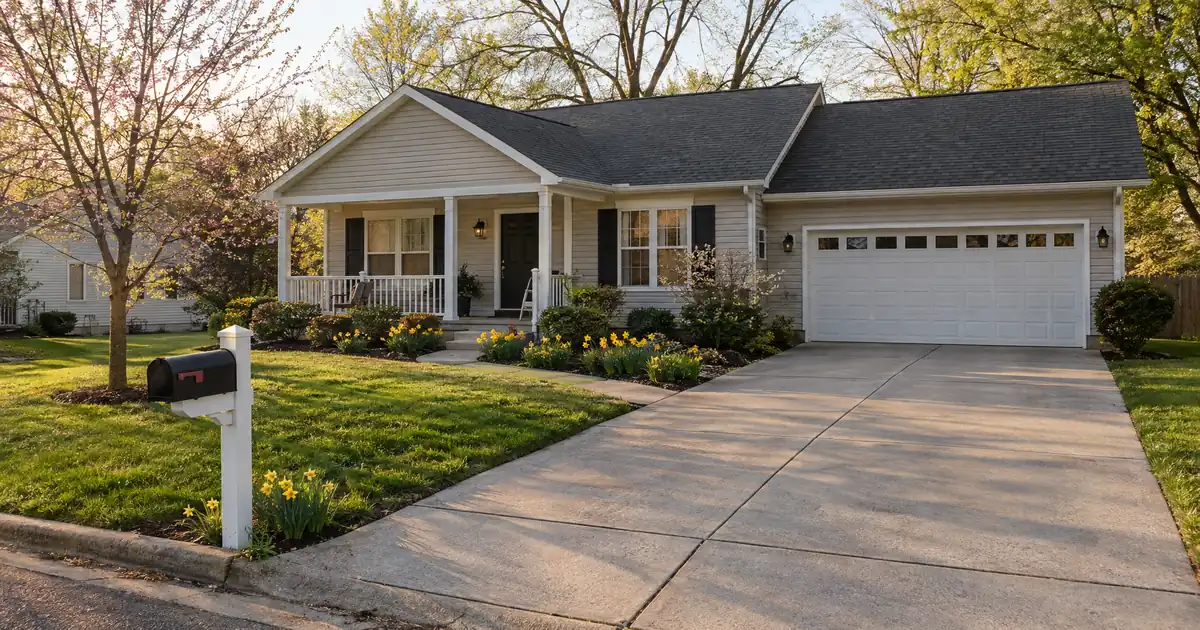
The Quick Read: It depends on the loan you hold now, how you use the home, and how much equity you want to reach, not on the trust. A revocable living trust is generally not a barrier on the programs that allow it, because the lender underwrites you as the person who created the trust. For most trust-held primary residences, the conventional cash-out lane is the working answer, subject to lender guidelines and full file review.
How Is the “Best” Program Chosen When the Home Is in a Trust?
The best program for your situation is the one that fits your existing loan, your occupancy, and the cash you need. The trust is a title detail. It rarely decides the program.
Cash-out refinance estimate
The starting figures are an example value with a balance and a cash request in proportion. Replace them with yours.
Editable benchmark: 7.24% as of October 29, 2026 · Freddie Mac 30-year average via FRED®. A conventional market reference, not a cash-out refinance quote.
Illustrative starting assumptions: a $350,000 home value, a $193,000 current balance, the agency cap on a one-unit principal residence, a thirty-year term at the current Freddie Mac benchmark, and property taxes and insurance estimated at typical national rates. Every field is editable.
Illustrative estimate only — not a Loan Estimate, approval, quote, or commitment to lend. The rate field carries the weekly Freddie Mac thirty-year conventional benchmark, a market reference and not a cash-out refinance quote; a cash-out loan is priced by the lender at lock. The cash available is the loan the program cap allows less the balances paid off, before closing costs, which are not included. The HELOC line is the program’s combined loan-to-value ceiling applied to the same value and balance. Taxes and insurance are editable estimates. Licensed in sixteen states for consumer mortgages.
Here are the three questions that decide it:
- What loan do you have now? A conventional, FHA or VA loan points you toward different paths.
- Do you actually want cash? If you only want a new term or a lower payment structure, a rate-and-term refinance or a government streamline may fit better.
- Is the trust revocable? Revocable trusts you control fit the agency rules. Other trust types usually need extra steps.
Across the wholesale programs Lendmire places files with, the trust rarely changes the leverage cap, the credit floor or the ratios. It changes the paperwork and the title review. The lender that writes your file depends on your property type, credit profile, equity and documents, which is why a broker that shops several wholesale lenders can matter more than any one program label.
Lendmire’s cash-out refinance programs page lays out the lanes in more detail.
Key Terms Defined
Revocable living trust: A trust you create, control and can change or cancel while you are alive.
Settlor: The person who creates the trust and puts the home into it. Also called the grantor or trustor.
Trustee: The person who holds legal title for the trust. Often the settlor.
Vesting: How title is held. With a trust, title is vested in the trustee.
Seasoning: How long you have owned the home and how old your current first mortgage is.
Cash-out refinance: A new, larger first mortgage that pays off the old one and gives you the difference in cash.
How Does a Lender Underwrite a Home Held in a Living Trust?
The lender underwrites you, not the trust. Your credit, income, reserves and equity decide the result. The trust is an eligible way to hold title.
Fannie Mae normally accepts only individuals as borrowers. It makes an exception for homes held in inter vivos revocable trusts created by credit-qualifying borrowers. Freddie Mac’s living trust rules are similar: the settlor must be a primary beneficiary and must keep the power to revoke or amend the trust.
Here is the file path, step by step:
1. Confirm the trust type. It must be revocable and created by one or more people, with you as a primary beneficiary.
2. Underwrite the individual. At least one settlor must qualify on credit and income. For a primary residence, a settlor generally occupies the home and signs.
3. Collect the trust documents. Freddie Mac allows the full trust agreement or a certification or abstract of it. Lenders and title companies commonly want the pages showing revocability, trustee powers and who the settlor is.
4. Order the appraisal. Title in a trust does not change the valuation or the leverage cap.
5. Review title. The title insurer must insure the home with title vested in the trustee.
6. Close. Signatures follow the trust requirements. They typically include the trustee’s capacity and the exact trust name.
Some lenders choose not to close trust files at all. Ask early.
What Leverage and Credit Limits Apply to a Cash-Out With a Trust?
The limits are the same as for a home you own personally. On a conventional cash-out, the cap is 80% LTV on a one-unit principal residence. It is 75% on two- to four-unit principal residences, second homes and investment property. Fannie Mae’s eligibility matrix shows the same cash-out caps by unit count. Terms vary by lender guidelines, property type, leverage, credit profile, and full file review.
Other conventional parameters, all subject to lender guidelines:
- The wholesale conventional programs start at a 620 decision score. The automated finding governs most files, with a total ratio ceiling of 50%.
- Manually underwritten loans use 36% or 45% ratios with the reserve and score factors of the Eligibility Matrix.
- One wholesale lane reaches 89.99% LTV with no mortgage insurance. It needs a 680 score, a 50% ratio, a thirty-year fixed rate, a primary residence and a conforming balance. It has its own six months of seasoning.
- In Texas, a cash-out on the homestead is capped by the state constitution at the agency figure, and that wholesale lane is not written there.
A common mix-up: the 95% and 97% figures belong to refinance and purchases, not to cash-out. Cash-out leverage is lower because you are taking equity out.
How Does the Six-Month Ownership Clock Work With a Trust?
Moving a home into your revocable trust does not have to restart the clock. Under Fannie Mae’s cash-out rules, a borrower must have owned the property for six months before the loan is disbursed. If a revocable trust owned the home first, the trust’s time counts when you are the trust’s primary beneficiary.
A second test runs separately. The existing first mortgage being paid off must be at least 12 months old, measured note date to note date. Both tests must be met.
There are exceptions. Delayed financing covers a recent cash purchase. Inheritance and legal-award situations also have their own treatment. Fannie Mae also lists an initial purchase by an eligible revocable trust, where you are both the creator and the beneficiary, as a cash-purchase exception to the six-month rule.
Freddie Mac’s guide does not clearly spell out trust-time credit the way Fannie Mae’s does. If your lender sells loans to Freddie Mac, ask how it treats a recent transfer.
Do I Have to Deed the Home Out of the Trust First?
Not necessarily. Fannie Mae and Freddie Mac both have explicit living-trust provisions that allow closing with the trust on title. Some lenders still prefer, or require, that you deed the home out and back in. Others close in the trust’s name.
| Path | How it works | Where it fits |
|---|---|---|
| Close in the trust | Trustee signs; title stays in the trust | Lenders with trust-friendly overlays |
| Deed out, refinance, deed back | You retitle personally, close, then re-deed | Lenders that won’t close trust files |
The deed-out path has a trap. If you forget to re-deed after closing, the home sits outside your estate plan. Talk to an estate attorney before you choose, because retitling is a legal decision, not just a mortgage step. Federal law, the Garn-St Germain Act, generally bars a lender from calling a loan due when you transfer your home into a revocable trust where you remain a beneficiary and keep living there.
What If My Trust Isn’t a Plain Revocable Trust?
The general rule breaks in a few named cases.
- Irrevocable trusts. They fall outside the revocable-trust exception because you no longer control them. The usual fix is to retitle in an individual’s name before closing, which is a legal and tax decision to make with an attorney.
- Land trusts. Fannie Mae treats these as a separate, negotiated category. They are not interchangeable with a revocable living trust.
- Trusts that turn irrevocable at death. While you are alive and in control, these generally read as revocable. Lenders look at the document’s terms.
- Manufactured homes. Fannie Mae’s product matrix says single-width homes are not eligible for cash-out on a principal residence, and multi-width cash-out is capped lower. Confirm current terms, since the matrix is updated periodically.
- Rental or second home in a trust. One sentence settles it: occupancy decides leverage, so the 75% cash-out cap applies instead of 80%.
Is Cash-Out Even the Right Program for a VA or FHA Owner?
Sometimes not. The existing loan often drives the choice more than the trust does.
| Your current loan | Streamline option | Cash back? |
|---|---|---|
| FHA | FHA Streamline | Very limited |
| VA | VA IRRRL | None |
| Conventional | None | Yes, via cash-out |
The FHA Streamline refinances an existing FHA-insured loan with limited credit documentation. The loan must be current, and the refinance must produce a net tangible benefit. Cash in excess of $500 may not be taken out, and closing costs cannot be rolled into the new balance. “Streamline” describes the underwriting, not the cost.
The VA IRRRL works only on an existing VA loan. It carries a 0.5% funding fee unless you are exempt, needs no VA appraisal, requires a net tangible benefit, and has seasoning of the later of 210 days and six payments. VA also offers cash-out refinances that can turn a non-VA loan into a VA loan, with full underwriting.
If you want real cash from an FHA or VA loan, expect full cash-out underwriting. FHA cash-out requires owner occupancy. FHA and VA trust treatment is generally permitted under each agency’s handbook, but it is subject to lender policy, so confirm with the lender before you apply.
What Does the Decision Look Like in Practice?
Picture a homeowner with a conventional loan more than a year old, a primary residence held in a revocable trust, and a plan to pay off high-balance debt. The conventional cash-out lane fits. Leverage tops out at 80% of value. The homeowner’s credit and income are underwritten, and the title company insures the trustee’s title.
Now picture a veteran with a VA loan who wants a new term and no cash. The IRRRL usually fits better than a cash-out, with no cash back.
Then picture a homeowner with a strong score, a thirty-year fixed on a primary residence, a conforming balance and plenty of equity. The 89.99% no-mortgage-insurance wholesale lane may be worth testing, if the six-month seasoning is met.
The CFPB’s research on cash-out borrowers found that people often use the cash to pay down other debts, and that credit card balances trended back up in the year afterward. A cash-out replaces your first mortgage with a larger one, so the payment and accumulating interest both rise. The real question is what the cash replaces. Tax treatment can depend on your situation; borrowers should speak with a qualified tax professional before relying on any deduction or credit.
Common Mistakes to Avoid
- Assuming the trust is reviewed on its own. Your credit and income do.
- Deeding out without telling your estate attorney.
- Mixing up the 97% rate-and-term figure with cash-out leverage.
- Expecting cash from an IRRRL or a Streamline.
- Skipping a title and trust-document check before applying.
- Treating a trust as a way around underwriting. It is not.
Frequently Asked Questions
Can I get a cash-out refinance if my home is in a revocable living trust?
Generally yes, on programs that allow trust vesting, subject to lender guidelines. Fannie Mae and Freddie Mac both have living-trust rules, and the settlor’s credit, income and equity decide the result. Some lenders don’t write trust files, so a broker that shops multiple wholesale lenders can help match the file to one that does.
Does moving my home into a trust restart the six-month ownership clock?
Not under Fannie Mae’s cash-out rules. The trust’s time counts toward the six months when you are the trust’s primary beneficiary. The separate 12-month age test on the existing first mortgage still applies.
What happens with an irrevocable trust?
It generally falls outside the revocable-trust exception. The common fix is retitling in your own name before closing. Because retitling has legal and tax consequences, review it with an attorney first.
Can I take cash out on an FHA Streamline or a VA IRRRL?
No. HUD limits Streamline cash to $500 or less, and the IRRRL allows no cash back. If you want meaningful cash from an FHA or VA loan, the path is a fully underwritten cash-out refinance.
Does a trust change how much I can borrow?
No. Leverage depends on occupancy, unit count and transaction type. For a conventional cash-out on a one-unit principal residence, the cap is 80% LTV whether the home is in a trust or in your name. Exact terms depend on the lender’s guidelines, property type, leverage, and a full review of the borrower’s file.
Where to Go From Here
If you are weighing a cash-out refinance against keeping the loan you have, Lendmire can help you compare the programs and the equity each one reaches. Program details are subject to lender guidelines and full file review, and nothing here is a commitment to lend.
For your own numbers, request a scenario review with Lendmire.
About Lendmire
Lendmire is a mortgage brokerage (NMLS# 2371349) licensed for consumer mortgage lending in 16 states, arranging FHA, VA, conventional and jumbo purchase and refinance loans through a wholesale lending network. Eligibility is determined by the lender on each file. Scotsman Guide named Lendmire a Top Mortgage Workplace in both 2025 and 2026.
Get Started
Ready to find the right loan for you?
See your offer in seconds. No credit pull, no obligation.
Informational only. Not a Loan Estimate, approval, or commitment to lend. Program availability and eligibility are subject to lender guidelines, credit approval, property review, and underwriting.
References
1. Fannie Mae Selling Guide B2-2-05: Inter Vivos Revocable Trusts
2. Freddie Mac Guide Section 5103.5: Living Trust
3. Fannie Mae Eligibility Matrix
4. Fannie Mae Selling Guide B2-1.3-03: Cash-Out Refinance Transactions
5. HUD FHA Streamline Refinance
6. CFPB press release on cash-out refinance borrowers
This article is part of Lendmire’s cash-out refinance program — full qualification details, guidelines, and scenarios live on the program page.
Related reading: Best Cash-Out Refinance Program to Pay for a Roof Replacement · Best Cash-Out Refinance Program to Pay Off Maxed-Out Credit Cards · How to Apply for a Cash-Out Refinance on Your Primary Home
Brandon Miller
Founder & CEO, Mortgage Loan Originator, Lendmire LLC
- Mortgage Loan Originator · NMLS# 1129696 · Verify on NMLS Consumer Access
- North Carolina Real Estate Broker · License# 343312 · Verify on NCREC
- North Carolina Insurance Producer · License# 19053198 · Property, Casualty, Life, Health · Verify on NAIC SBS
- Lendmire LLC · Firm NMLS# 2371349 · Verify firm licensure
Important disclosures. Lendmire (NMLS# 2371349) is a licensed mortgage brokerage. Lendmire is not a direct lender, depository institution, or financial advisor. All loan inquiries are subject to lender underwriting; this article does not constitute a commitment to lend. Rates, terms, and program guidelines are subject to change without notice and vary by borrower profile, property type, and state. Information in this article is general in nature and is not financial, legal, or tax advice. Equal Housing Opportunity. NMLS Consumer Access: nmlsconsumeraccess.org.