
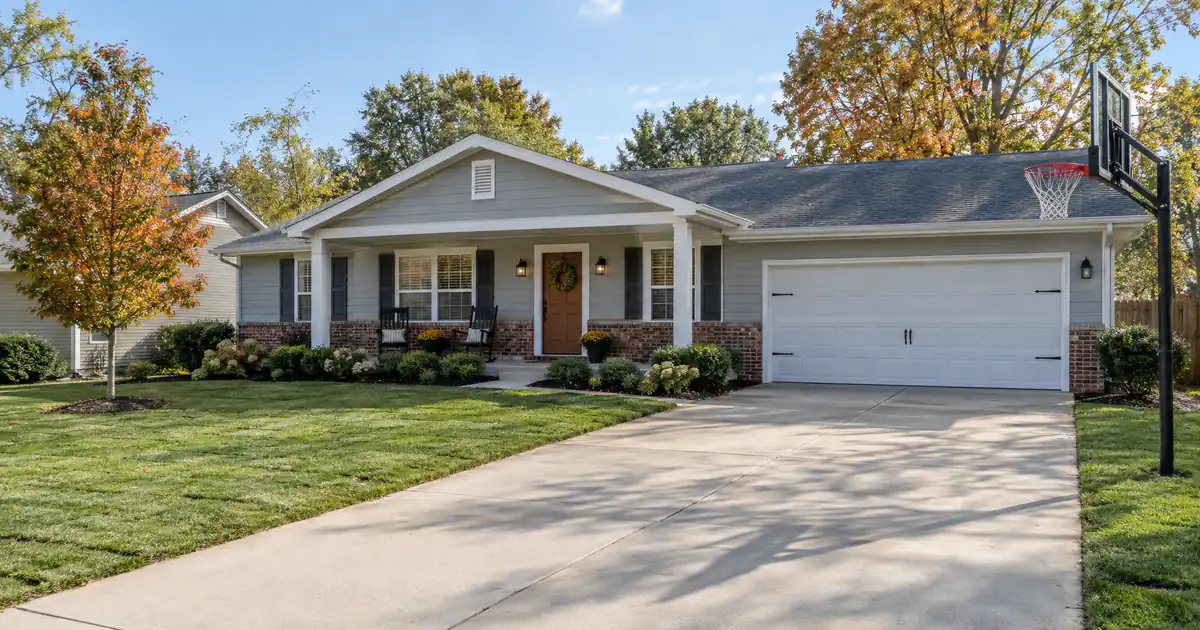
The Quick Read: The best program for your situation depends on whether you want unrestricted cash or a loan tied to the construction project. FHA has no single addition-or-ADU product, so the real choice is between two paths. The FHA cash-out refinance hands you the money at closing, sized on what the home is worth today. The FHA 203(k) renovation refinance holds project money in escrow and releases it in stages, but it is not a cash-out.
What Does FHA Actually Offer for an Addition or ADU?
FHA offers two different tools, and mixing them up is a common mistake homeowners make. One gives you cash with no strings. The other gives you construction money with a lot of oversight.
FHA cash-out estimate
Seeded with an example value, a balance to match, and a round cash request; change any field.
Editable benchmark: 7.24% as of October 29, 2026 · Freddie Mac 30-year average via FRED®. A conventional market reference, not an FHA cash-out refinance quote.
Illustrative starting assumptions: a $350,000 home value, a $193,000 current balance, the FHA cap on a principal residence with the upfront premium financed, a thirty-year term at the current Freddie Mac benchmark, and property taxes and insurance estimated at typical national rates. Every field is editable.
An illustration, not a Loan Estimate, an approval, a quote, or a commitment to lend. The rate shown is the weekly Freddie Mac thirty-year conventional benchmark, used as a market reference; an FHA cash-out is priced by the lender at lock, and this is not an FHA cash-out refinance quote. HUD’s cap limits the base loan; the upfront premium is financed on top of the capped base loan; the monthly premium for the first year follows the snapshot’s schedule. Cash available means the base loan the cap permits less the balances retired, before closing costs, which this calculator leaves out. The line figure applies the line program’s combined loan-to-value ceiling to the same value and balance. Taxes and insurance are estimates you can edit. Licensed in sixteen states for consumer mortgages.
Path A is the FHA cash-out refinance. A new FHA loan replaces your existing mortgage. It pays off the old lien, and the difference comes to you as cash. The CFPB describes a cash-out refinance the same way: a bigger mortgage replaces the old one, and you take the difference in cash. Closing costs often apply. Nothing in the loan requires you to spend the money on a particular project. You hire the contractor, pull the permits, and manage the budget yourself.
Path B is the FHA 203(k) rehabilitation refinance. HUD’s 203(k) program page describes a loan that rolls your current mortgage and the renovation cost into one. Additions, finished attics and basements, garages, and building an eligible accessory dwelling unit all appear on HUD’s list of eligible work. The money sits in escrow and moves out in draws.
Here is the catch. HUD’s program comparison sheet lists the 203(k) as “no cash-out refinance.” You cannot pull spending money out of it. It pays for the project, period.
Lendmire’s FHA cash-out refinance program page covers the first path in more detail. The rest of this article helps you decide which path fits your build.
Cash-Out vs. 203(k): Side by Side
| Factor | FHA Cash-Out | FHA 203(k) |
|---|---|---|
| Use of funds | Unrestricted | Tied to the project |
| How money is paid | Lump sum at closing | Escrow, released in draws |
| Sizing basis | Current home value | Project-based, as-completed value considered |
| Oversight | None from FHA | HUD-approved consultant, inspections |
| Cash in your pocket | Yes | No |
| Complexity | Lower | Higher |
The sizing row matters most for big builds. A standard cash-out looks only at the home as it stands at closing. The appraiser does not credit you for an addition that does not exist. A 203(k) can consider the value after the work is complete. HUD’s sheet addresses this, but the exact formula is best confirmed with your loan officer file by file.
How the FHA Cash-Out Refinance Is Underwritten, Step by Step
Across the wholesale programs Lendmire places FHA files with, the sequence is consistent. Here is how it runs.
1. Ownership and occupancy check. The FHA cash-out reaches 80% LTV on a home you owned and occupied for 12 months before the case number is assigned. It must be your principal residence. Leverage, reserves, and pricing vary by lender and program; the final terms follow the full file review.
2. Payment history review. The lender looks at how you have paid your current mortgage.
3. Full appraisal. The appraiser sets the value of the home as it exists today.
4. The 80% cap. HUD moved the maximum LTV and combined LTV for a cash-out to 80%, as recorded in the Handbook 4000.1 update transmittal. Older 85% materials are out of date. That cap means you keep at least 20% equity in the home as it stands.
5. Credit review. Across the programs Lendmire places FHA loans with, the credit floor starts at a 580 decision score, and the network does not go below that.
6. Ratios. The base pair is 31/43 (housing to total debt) with no compensating factors. Documented compensating factors can reach 40/50 at the top tier. The automated finding governs most files.
7. Payoff and payout. The new loan clears the old lien. What remains comes to you.
8. Qualifying on the whole payment. You qualify on the new payment for the entire balance, using income you have now.
Every figure here is subject to lender guidelines and full file review. None of it is a commitment to lend.
Mortgage Insurance and Loan Limits
FHA loans carry mortgage insurance. There is an upfront premium of 1.75% of the base loan, which is usually financed into the balance. There is also an annual premium between 0.15% and 0.75% of the balance, depending on term, loan amount, and LTV. On a thirty-year loan above 90% LTV, the annual premium lasts for the term of the loan. At or below 90% LTV, it ends after eleven years.
Because a cash-out tops out at 80% LTV, a borrower using it will often land in the lower-LTV category. That is a mechanical fact, not a price quote. County loan limits apply and change every year, so the amount you can borrow also depends on where the home sits.
Can ADU Rental Income Help You Qualify?
Usually not on a cash-out, and this surprises people.
HUD’s Mortgagee Letter 2023-17 opened the door for some ADU rental income to count toward qualifying. But for a one-unit home, the letter does not allow that income to count as effective income on a cash-out refinance. Rules differ on purchases and on other refinance types, and two-to-four-unit properties are treated differently.
The same letter requires appraisals to analyze and report ADU rental history or market rent. It also sets ADU-specific reserve and income-cap provisions. Those details are best confirmed in the letter itself or with your loan officer, because they shift by transaction type.
The practical takeaway: if you plan to build an ADU and use its future rent to qualify, a cash-out will not help. You must qualify on the income you have today.
When the 203(k) Is the Better Fit
The 203(k) shines when the project is big relative to your equity. Because it is tied to the work and considers the finished value, it can support a build that an 80% cap on current value could not.
It also brings structure. A Standard 203(k) requires an FHA-approved consultant and all building permits must be obtained before work begins. The consultant writes the scope and cost estimate. The lender escrows the funds at closing. Draws come after the consultant certifies the work, and the lender issues a two-party check payable to you and the contractor.
HUD also confirms that an ADU is an eligible improvement under Standard 203(k). Additions and ADUs are structural, so they generally need the Standard version. The Limited 203(k) excludes major structural work.
The tradeoffs are real. There is more paperwork, more steps, and a need for a consultant, and availability of those consultants can be a bottleneck in some areas. If your project is small, your equity is ample, and you trust your contractor, the extra structure may not be worth it.
Which Path Fits Which Project?
| Project | Cash-out fit | 203(k) fit |
|---|---|---|
| Room addition | Works if equity is ample | Strong, especially if equity is thin |
| Attached ADU | Works; no ADU income to qualify | Eligible; ADU appraisal rules apply |
| Detached ADU | Works if current value supports it | Eligible as Standard 203(k) |
| Garage conversion | Often fits | Eligible; permits first |
Local zoning and permitting rules vary widely. Confirm your ADU is legal and meets FHA’s ADU definition before you commit to any loan. That definition centers on a habitable living unit with separate entry and exit, and the exact language lives in the HUD Handbook.
Where Cash-Out Wins and Where It Loses
Cash-out wins when:
- You have substantial equity and the project fits inside the 80% cap.
- You want full control over contractors, timing, and payment.
- The project is modest and does not need consultant oversight.
- You want to avoid the permit-first, escrow-first sequence.
Cash-out loses when:
- The build costs more than your current equity can fund.
- You cannot trust yourself, or your contractor, with a lump sum.
- You have a low existing first-mortgage rate you would give up.
That last point deserves its own look. A cash-out replaces your whole first mortgage. The new payment covers the entire balance, not just the cash you pulled. If your current loan carries terms you would struggle to replace, the refinance may cost more than it returns. A HELOC or home equity loan leaves the first mortgage in place, and the CFPB explains how those second mortgages differ. Those products fall outside FHA, but they belong in any honest comparison.
The Risk Nobody Mentions: Cost Overruns
With a cash-out, the money arrives in one lump sum. You carry the cost-overrun risk. If the addition runs over budget, nobody releases more funds. You find the gap yourself.
With a 203(k), money is held back and released as work is inspected. That protects you from paying for work that is not done. It also means you cannot start building first and fund later. Permits come first, and escrow comes at closing.
A practical rule for either path: build a contingency into the budget before you pick the loan. Project size should drive the program choice, not the other way around.
A Borrower Scenario, No Dollar Figures
Picture a homeowner who has owned and lived in the same house for several years. She wants a detached ADU. She has meaningful equity but a credit score near the lower end of the FHA range, which is why FHA appeals to her.
Her loan officer runs the numbers on current value at the 80% cap. If the equity left after payoff covers the whole build with room for overruns, the cash-out is simple and flexible. If it falls short, the 203(k) may stretch further because it considers the finished value. But she would need a consultant, permits upfront, and a draw schedule.
Neither answer is universally right. It depends on equity, project size, and how much oversight she wants.
Key Terms Defined
Cash-out refinance: A new, larger mortgage that pays off the old one and gives you the difference in cash.
LTV (loan-to-value): The loan balance as a percentage of the home’s appraised value.
CLTV (combined loan-to-value): All liens on the home added together, as a percentage of value.
203(k): An FHA renovation loan that finances a project through escrow and staged draws.
ADU (accessory dwelling unit): A separate, habitable living unit on the same property as a main home.
Draw: A staged release of escrowed renovation money after work is inspected.
Frequently Asked Questions
Can I use an FHA cash-out refinance to build an ADU?
Yes, because cash-out proceeds are unrestricted. FHA does not dictate how you spend the money. You are sized on the current value of the home, capped at 80% LTV, and you must qualify on existing income. The ADU’s future rent will not help on a one-unit cash-out. Each figure is subject to lender guidelines and a complete review of property type, leverage, and credit.
Does the FHA 203(k) give me cash back?
No. HUD lists it as a no-cash-out product. The money pays for the approved project and is released in draws after inspections. If you want spending money beyond the renovation, the cash-out refinance is the path that provides it.
How much equity do I need?
Enough that the new loan stays at or below 80% of the home’s appraised value after paying off your current mortgage. The home must also have been owned and occupied for 12 months before the case number. Exact eligibility depends on the lender, the appraisal, and your credit file.
Will the appraiser count the addition I plan to build?
On a standard cash-out, no. The appraisal reflects the home as it stands at closing. A 203(k) can take completed value into account, which is why it may stretch further on larger projects.
Should I choose cash-out or a HELOC?
It depends on your current first mortgage. A cash-out replaces it entirely, while a HELOC or home equity loan sits behind it. If your existing loan terms are hard to replace, compare both routes.
Choosing Your Path
The best program for your situation comes down to three questions. How big is the project relative to your equity? How much oversight do you want? How attached are you to your current first mortgage? Lendmire is a mortgage broker that works with a network of wholesale lenders, so one conversation can compare both FHA paths against the rest of your options.
If you are weighing a cash-out refinance against keeping the loan you have, Lendmire can help you compare the programs and the equity each one reaches. Whatever you choose, confirm local ADU and permit rules before you sign anything, because the loan can only fund what your city will let you build.
For your own numbers, request a scenario review with Lendmire.
About Lendmire
Lendmire is a mortgage brokerage (NMLS# 2371349) licensed for consumer mortgage lending in 16 states, arranging FHA, VA, conventional and jumbo purchase and refinance loans through a wholesale lending network. Eligibility is determined by the lender on each file. Scotsman Guide named Lendmire a Top Mortgage Workplace in both 2025 and 2026.
Get Started
Ready to find the right loan for you?
See your offer in seconds. No credit pull, no obligation.
Informational only. Not a Loan Estimate, approval, or commitment to lend. Program availability and eligibility are subject to lender guidelines, credit approval, property review, and underwriting.
References
1. CFPB: similar loans to a HELOC
3. HUD Handbook 4000.1 Update transmittal (7.5)
4. HUD Mortgagee Letter 2023-17
5. CFPB: home equity loan vs. HELOC
This article is part of Lendmire’s FHA cash-out refinance program — full qualification details, guidelines, and scenarios live on the program page.
Related reading: Best FHA Cash-Out Refinance Program With Social Security Income Grossed Up · Best FHA Cash-Out Refinance Program to Maximize Your Cash Out
Brandon Miller
Founder & CEO, Mortgage Loan Originator, Lendmire LLC
- Mortgage Loan Originator · NMLS# 1129696 · Verify on NMLS Consumer Access
- North Carolina Real Estate Broker · License# 343312 · Verify on NCREC
- North Carolina Insurance Producer · License# 19053198 · Property, Casualty, Life, Health · Verify on NAIC SBS
- Lendmire LLC · Firm NMLS# 2371349 · Verify firm licensure
Compliance and disclosures. Lendmire (NMLS# 2371349) is a licensed mortgage broker and is not a direct lender, depository institution, financial advisor, or tax professional. Content in this article is general market analysis and educational information — not financial, legal, or tax advice for any specific situation. Lendmire does not guarantee loan approval; every transaction is subject to underwriting by the funding lender. Mortgage pricing and loan program guidelines are subject to change at any time without notice and vary by borrower characteristics, property type, and state regulations. Lendmire complies with Equal Housing Opportunity. Licensure verification: NMLS Consumer Access.