
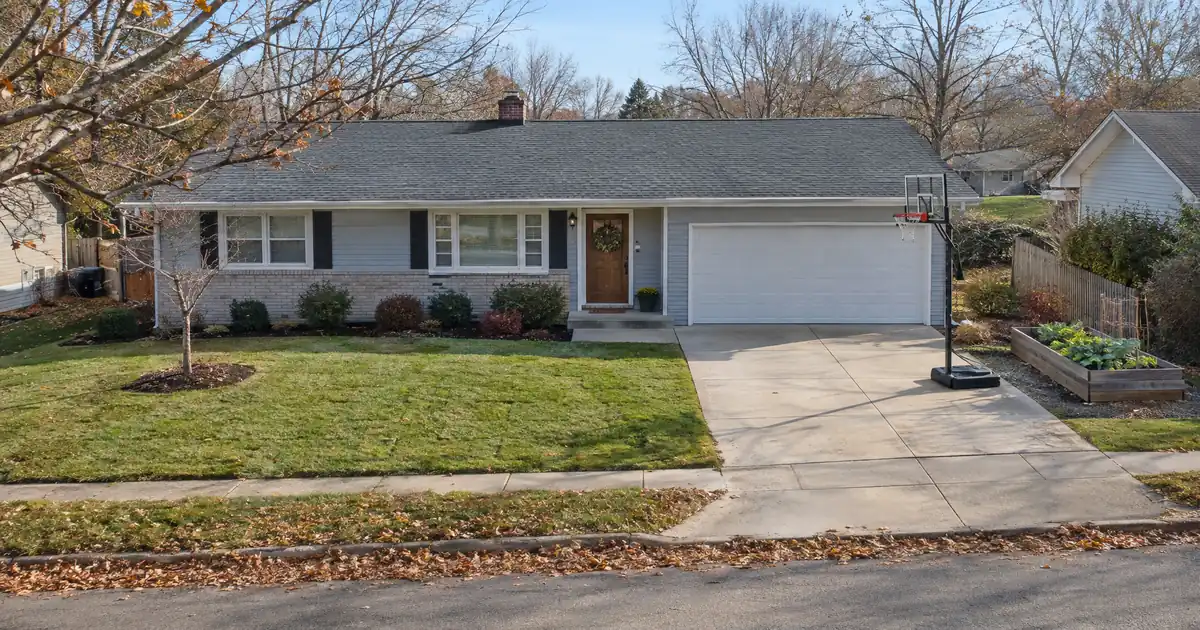
The Quick Read: The best program depends on what income your file can document, because lenders qualify retirees on money actually arriving, not on a paycheck. Social Security, pensions, annuities, ongoing retirement-account distributions, and interest and dividends can all count. On a true cash-out, conventional lenders look for income you are already receiving, and the rules for turning savings into income are narrower than most people expect. Every program is subject to lender guidelines and full file review.
Key Takeaways
- “No paycheck” does not mean “no income.” Retirement income that is documented and likely to continue can qualify you.
- A large savings balance does not automatically qualify you on a full cash-out. Asset-based qualifying is tied to specific loan purposes and account types.
- FHA and VA streamline refinances do not give you cash. They are for lowering a payment on an existing government loan.
- Conventional cash-out generally takes equity out of the home, so it leaves less equity than a rate-and-term refinance does. Expect a lower loan-to-value limit.
- The payment has to fit a fixed income for years, not just on approval day.
Key Terms Defined
Cash-out refinance: A new mortgage that pays off your current one and hands you the difference in cash, using your home equity.
LTV (loan-to-value): Your loan balance divided by the home’s appraised value, shown as a percentage.
Continuance: Proof that your income will keep arriving, usually for at least a few years after you apply.
Seasoning: The minimum time you must have owned the home, or held the current mortgage, before a lender will refinance it.
Net tangible benefit: A measurable gain from refinancing, such as a lower payment, that government streamline programs require.
Residual income: The money left each month after your bills, which VA loans test as a built-in check on affordability.
Cash-out refinance estimate
The starting figures are an example value with a balance and a cash request in proportion. Replace them with yours.
Editable benchmark: 7.24% as of October 29, 2026 · Freddie Mac 30-year average via FRED®. A conventional market reference, not a cash-out refinance quote.
Illustrative starting assumptions: a $350,000 home value, a $193,000 current balance, the agency cap on a one-unit principal residence, a thirty-year term at the current Freddie Mac benchmark, and property taxes and insurance estimated at typical national rates. Every field is editable.
Illustrative estimate only — not a Loan Estimate, approval, quote, or commitment to lend. The rate field carries the weekly Freddie Mac thirty-year conventional benchmark, a market reference and not a cash-out refinance quote; a cash-out loan is priced by the lender at lock. The cash available is the loan the program cap allows less the balances paid off, before closing costs, which are not included. The HELOC line is the program’s combined loan-to-value ceiling applied to the same value and balance. Taxes and insurance are editable estimates. Licensed in sixteen states for consumer mortgages.
Can You Get a Cash-Out Refinance With No Paycheck?
Yes, if you have other documented income. Lenders must make a good-faith check that you can repay the loan, and that check can rest on income or assets. Being retired is not a reason to be turned down.
The phrase “no income” causes confusion. A true no-income loan is rare. What retirees usually have is no wages. They may have Social Security, a pension, an annuity, or regular withdrawals from an IRA or 401(k). Each of those is a recognized income type.
Here is the part that trips people up. The value of the house you are borrowing against cannot be the thing that proves you can repay. Equity gets you the cash. Income or other assets prove you can carry the payment. Both have to be there.
What Income Counts, and How You Prove It
Income counts when you can document it and show it will continue. A short list covers most retirees.
| Income type | Typical proof | What the lender checks |
|---|---|---|
| Social Security | Award letter, bank deposits | That the benefit is ongoing |
| Pension or annuity | Award letter, statements | That payments continue |
| IRA or 401(k) distributions | Statements, 1099-R forms | That you already take them and they will last |
| Interest and dividends | Statements, tax returns | History and the balance behind it |
Fannie Mae treats annuity, pension, and retirement income as its own income category, with its own documentation rules. Distributions are the one to watch. The lender wants proof the withdrawals can keep going, which depends on how much is in the account.
Income that lands in three different accounts, or a pension letter with an old date, can slow a file. Pull your award letters, two or more months of statements, and your most recent 1099-R forms before you apply.
Can Your Savings Count as Income Instead?
Sometimes, but not on every loan. This is the biggest gap between what people assume and what the rules say.
Some programs let a lender convert retirement assets into qualifying income. Under Fannie Mae’s employment-related assets rule, the lender takes your documented assets and divides them across the loan’s amortization term in months. No minimum income history is required. The catch is what counts:
- Ordinary checking and savings balances generally do not count, unless the money came from an eligible employment-related source, such as a lump-sum retirement distribution or a severance package.
- Proceeds from selling real estate, an inheritance, lottery winnings, and divorce proceeds are ineligible.
- If your file does not fit that rule, the same assets may still be reviewed under the regular interest-and-dividend or retirement-income rules.
The other limit is loan purpose. Asset-as-income rules are generally built for purchases and for refinances that take little or no cash. On a full cash-out, plan on qualifying with income you are actually receiving. Freddie Mac’s version of the asset route has its own conditions: sole ownership or all owners on the loan, pledged assets subtracted, and no penalty for accessing the funds. Confirm the current text with your loan officer, since agencies update these sections.
One more trap: the same dollars cannot do three jobs. Money used to create qualifying income cannot also be your reserves and your cash-out funds. A lender will count it once.
Which Program Fits Which Retiree?
The best program for your situation follows your income mix and your goal. Here is how the common profiles sort out.
| Your profile | Likely fit | Watch-out |
|---|---|---|
| Steady pension and Social Security | Conventional cash-out | Equity must remain after the loan |
| Large IRA, small pension | Conventional cash-out with distributions documented | Distributions must be ongoing and likely to last |
| Existing FHA loan, wants a lower payment | FHA Streamline | No real cash back, no rolled-in closing costs |
| Existing VA loan, wants a lower payment | VA IRRRL | Needs a net tangible benefit |
| Veteran who wants cash | VA cash-out | Full income and residual income review |
| Mostly savings, little documented income | Rate-and-term or a purchase-style asset route | Asset rules rarely stretch to full cash-out |
Lendmire is a mortgage broker, not a lender, so it does not hand you one product. Its team shops the file across multiple wholesale lenders and matches your documents to the program that fits. You can see the options on Lendmire’s cash-out refinance programs page.
How a Conventional Cash-Out Is Underwritten, Step by Step
The path is the same for most retirees, and each step is where a file can succeed or stall.
1. Pick the purpose. A limited cash-out, or rate-and-term refinance, pays off your current loan and closing costs with only incidental cash back. A full cash-out gives you real cash but at lower leverage.
2. List your income. Name every source you actually receive, with amounts.
3. Check seasoning. For a conventional cash-out, the mortgage being paid off must be at least 12 months old, measured note date to note date, and you should have been on title for 6 months. Exceptions exist for delayed financing, inheritance, and legal awards. Fannie Mae explains the 12-month standard in its cash-out eligibility update.
4. Order the appraisal. The appraised value drives every LTV test. A lower value shrinks the cash available.
5. Run automated underwriting. The system returns findings the lender must follow. Those findings set your documentation and reserve requirements.
6. Close. The new loan pays off the old mortgage and required liens. You receive the net cash. Costs rolled into the loan reduce what you get. These specifics are subject to lender guidelines and a full review of property, leverage, and credit.
On leverage, conventional cash-out on a one-unit primary residence runs to 80% LTV. Two- to four-unit homes, second homes, and investment properties run to 75%. Fannie Mae publishes the limits by occupancy and transaction type in its Eligibility Matrix. A wholesale lane reaches 89.99% LTV with no mortgage insurance for a 680 score and a 50% ratio on a thirty-year fixed primary residence at a conforming balance, with its own six months of seasoning. In Texas, a cash-out on the homestead is capped by the state constitution at the agency figure, and that wholesale lane is not written there. Terms depend on the lender’s guidelines, the property type, the leverage, and a full review of the credit profile.
For credit, the wholesale conventional programs start at a 620 decision score. The automated finding governs most files, with a total debt-to-income ceiling of 50%. Manually underwritten loans use 36% or 45%, depending on reserves and score. All of it is subject to lender guidelines.
A Worked Example
Picture a retired couple in their late sixties. They live in their home as a primary residence, own it with a large amount of equity, and have no mortgage payments they struggle with. Their income is two Social Security benefits, one small pension, and regular IRA withdrawals they have taken for several years. They want cash for a roof and an accessibility remodel.
They own a one-unit home, so the cash-out limit is 80% of appraised value. They take the current loan balance, add the cash they want and the closing costs, and compare the total with 80% of the appraisal. If the total fits under that line, the deal works forward. If it does not, they take less cash.
Then the income test. The lender adds the Social Security and pension, then the IRA distributions if the statements show a history and enough in the account to continue. It divides total monthly debts, including the new mortgage payment, by that income. A ratio at or under 50% is the ceiling for most automated findings, subject to the findings themselves.
Their savings in a standard bank account will not raise their income number on a full cash-out. Only the documented, continuing income does. The couple’s real lever is lowering the cash they request.
Cash-Out vs. HELOC vs. Reverse Mortgage vs. Withdrawing Savings
A cash-out is one of four ways to get at your money. Each trades something different.
| Option | How it works | Main trade-off |
|---|---|---|
| Cash-out refinance | New mortgage replaces the old one | Resets your loan and adds to the balance |
| HELOC | Second lien, borrow as needed | Variable terms, and a payment on top of your mortgage |
| Reverse mortgage | Borrow against equity, no monthly payment | Balance grows; rules differ and need separate counseling |
| Retirement withdrawal | Take money from your own account | Reduces your portfolio; tax treatment can apply |
The CFPB’s guide to using home equity lays out the cost of a cash-out plainly. It can lengthen the time to pay off your mortgage, it can raise your monthly payment, and it turns equity into a debt you must repay.
Tax treatment can depend on your situation; borrowers should speak with a qualified tax professional before relying on any deduction or credit.
This is a genuine toss-up for many retirees. A cash-out can be the right call if you have stable income, plenty of equity, and a defined one-time need. It is the wrong call if the cash is meant to cover a recurring monthly shortfall. That is borrowing against your home to pay bills, and the payment never goes away.
Where the General Rule Breaks
Several edge cases change the answer.
- Streamlines are not cash-out. HUD’s Streamline page says the existing FHA loan must be current, the refinance must produce a net tangible benefit, cash back is limited to $500, and closing costs cannot be rolled into the new loan. The VA IRRRL is the parallel program for existing VA loans. It carries a 0.5% funding fee unless you are exempt, no VA appraisal, and seasoning of the later of 210 days and six payments. Both are lower-friction if your income is hard to document. Neither gives you meaningful cash.
- FHA cash-out has occupancy rules. It is for owner-occupied primary residences only. A non-occupant co-borrower’s income cannot be used to qualify, and rental income from an accessory dwelling cannot be used either.
- VA cash-out needs a full review. VA will not guarantee a refinance above 100% of reasonable value, and every VA cash-out must show a net tangible benefit. VA Circular 26-19-05 covers the rule. Many lenders set their own caps below the VA ceiling.
- Penalty-age accounts. If you are under 59½, early-withdrawal penalties can reduce or block the use of retirement funds as income. That depends on the program.
- Crypto. It is generally not accepted as income or as a retirement asset.
- Second homes. A second home or investment property has a lower leverage limit than your primary residence. Occupancy decides the cap.
- Non-agency options. Some programs sit outside agency rules and treat assets differently. They are not covered in the agency guides, and the same repayment-ability standard still applies.
Documents Checklist and Why Retiree Files Stall
Gather these early:
- Award letters for Social Security, pensions, and annuities
- Recent account statements for retirement and investment accounts
- Distribution history and 1099-R forms
- Tax returns where the lender asks for them
- Statements showing reserves
- Your existing mortgage statement and payment history
- A recent payoff statement for the current loan
Files usually stall for ordinary reasons. Documents are out of date. Income arrives in an account the statements do not show. A distribution has only a short history. The home’s appraised value comes in lower than expected. Or the file runs into seasoning on the loan being paid off.
Risks and When Not to Do It
Think hard about a cash-out when:
- Your income is fixed. A higher payment is felt more when nothing else rises. VA’s residual-income test exists for this reason.
- The term resets. A new 30-year loan can push your payoff date well past where you are now.
- You are drawing down a portfolio. If distributions are already shrinking your accounts, adding debt tightens things further.
- The cash covers a recurring gap. Borrowing once to cover a need is different from borrowing to cover a monthly shortfall.
- The home is your main asset. It is the collateral. Missing payments puts it at risk.
The CFPB’s cash-out research found that borrowers often use proceeds to pay down credit card and auto debt. That can make sense when it replaces high-cost debt with a lower-cost, longer one. It stops making sense if the cards fill back up.
If you have spouses or heirs in the picture, talk through who inherits the loan along with the home. A qualified attorney can help with that. Closing costs apply on any refinance, and costs financed into the loan reduce your cash back. Your Loan Estimate and Closing Disclosure show the actual costs.
What to Do Next
Start with the equity. Estimate the home’s value, subtract what you owe, and see whether 80% of value leaves room for the cash you want. Then list your income sources and gather the paper trail. If your income is thin on paper but your needs are small, a refinance or a streamline may fit better than a full cash-out.
If you are weighing a cash-out refinance against keeping the loan you have, Lendmire can help you compare the programs and the equity each one reaches.
Frequently Asked Questions
Can I get a cash-out refinance if I have no job at all?
Yes, when you have other documented income. Social Security, a pension, an annuity, and ongoing retirement distributions can all count. The lender has to verify the income and show it will likely continue. Qualification is subject to lender guidelines and full file review.
Does my age affect whether I qualify?
Age alone is not a reason to be declined. The lender looks at documented income, credit, debt ratios, equity, and occupancy. Age matters indirectly, since early-withdrawal penalties under 59½ can affect how retirement accounts are treated.
Can my savings count as income on a cash-out?
Only in limited cases. Asset-as-income rules are generally built for purchases and low-cash refinances, and ordinary checking and savings balances usually do not count. On a full cash-out, expect to qualify on income you are already receiving. Your loan officer can tell you how a specific program treats your accounts.
Can a Streamline or IRRRL give me cash?
No. The FHA Streamline limits cash back to $500 and does not allow closing costs to be rolled in. The VA IRRRL is also designed for payment improvement, not cash. Both apply only if you already have an FHA or VA loan.
Is a reverse mortgage or HELOC better for a retiree?
It depends on your income and your goal. A reverse mortgage removes the monthly payment but grows the balance over time. A HELOC adds a second payment. A cash-out replaces your mortgage with a new one. Compare the monthly payment, the loan term, and how long you plan to stay in the home.
For your own numbers, request a scenario review with Lendmire.
About Lendmire
Lendmire — NMLS# 2371349 — is a mortgage broker that arranges FHA, VA, conventional and jumbo home purchase and refinance financing in 16 states through wholesale lenders. Every option is subject to the lender’s guidelines and full underwriting. Scotsman Guide named Lendmire a Top Mortgage Workplace in both 2025 and 2026.
Get Started
Ready to find the right loan for you?
See your offer in seconds. No credit pull, no obligation.
Informational only. Not a Loan Estimate, approval, or commitment to lend. Program availability and eligibility are subject to lender guidelines, credit approval, property review, and underwriting.
References
1. Fannie Mae Selling Guide: Annuity, Pension, and Retirement Income
2. Fannie Mae Selling Guide: Employment Related Assets as Qualifying Income
3. Fannie Mae Cash-Out Refinance Eligibility Update
4. Fannie Mae Eligibility Matrix
5. CFPB: Using Home Equity Guide
6. HUD FHA Streamline Refinance
This article is part of Lendmire’s cash-out refinance program — full qualification details, guidelines, and scenarios live on the program page.
Related reading: Best Cash-Out Refinance Program to Purchase Another House With Existing Equity · How to Choose a Cash-Out Refinance Over a Personal Loan · Delayed Financing vs. a Traditional Cash-Out Refinance for a Cash Buyer
Brandon Miller
Founder & CEO, Mortgage Loan Originator, Lendmire LLC
- Mortgage Loan Originator · NMLS# 1129696 · Verify on NMLS Consumer Access
- North Carolina Real Estate Broker · License# 343312 · Verify on NCREC
- North Carolina Insurance Producer · License# 19053198 · Property, Casualty, Life, Health · Verify on NAIC SBS
- Lendmire LLC · Firm NMLS# 2371349 · Verify firm licensure
Disclosure information. Lendmire is a state-licensed mortgage brokerage under NMLS# 2371349. Lendmire is not a depository institution, direct lender, or financial advisor — all loans referenced are placed through wholesale lender partners and are subject to each lender's underwriting standards. This article is provided for general informational purposes and is not a commitment to lend, nor does it constitute financial, legal, or tax advice. Loan programs, terms, rates, and qualification standards change without notice and depend on borrower profile, property type, and the state in which the subject property is located. Equal Housing Opportunity provider. NMLS Consumer Access: nmlsconsumeraccess.org.