
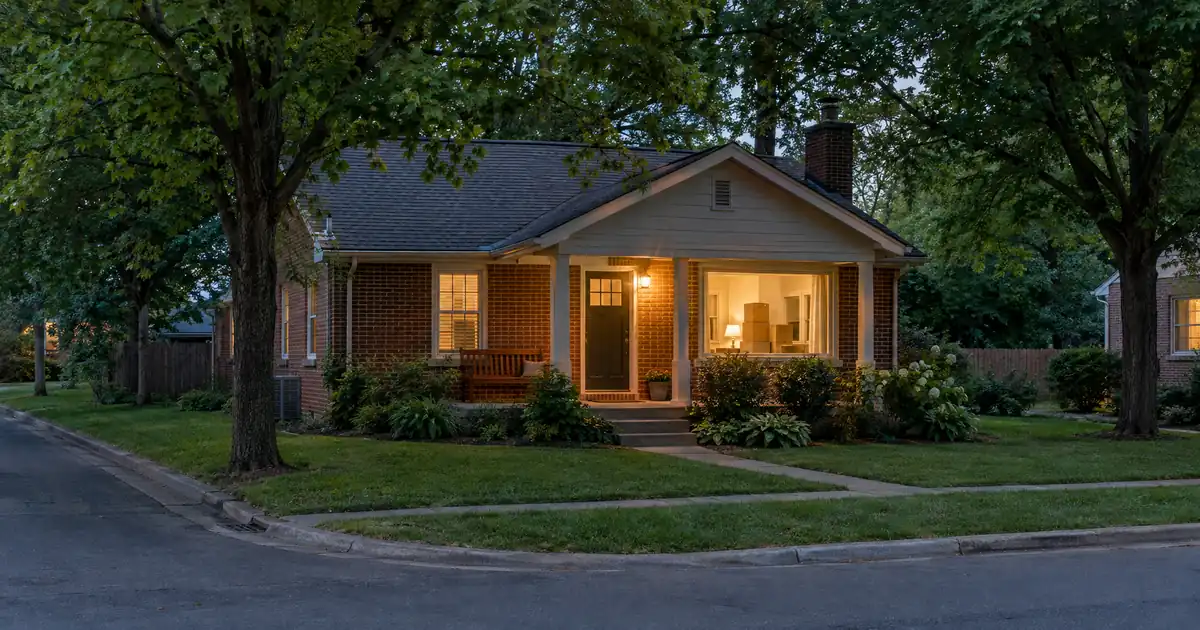
The Quick Read: VA cash-out refinance requirements for a roof come down to two things: qualifying for the loan and getting the roof past the appraisal. You need a Certificate of Eligibility, you must live in the home, and the file goes through full underwriting. VA does not require you to spend the cash on a roof. The roof matters because the VA appraiser checks the property’s condition, and a failing roof can become a repair condition on the loan.
What Is a VA Cash-Out Refinance, and Does It Pay for a Roof?
A VA cash-out refinance replaces your current mortgage with a new VA-backed loan that is larger than what you owe. The difference comes to you as cash. VA’s cash-out page lists home improvements among the allowed uses, so a roof is a legitimate reason to borrow.
VA cash-out estimate
Seeded with an example value, a typical balance, and a round cash request at the first-use fee; change any field.
Editable benchmark: 7.24% as of October 29, 2026 · Freddie Mac 30-year average via FRED®. A conventional market reference, not a VA cash-out refinance quote.
Illustrative starting assumptions: a $350,000 home value, a $193,000 current balance, the full-value VA cap with the first-use funding fee financed, a thirty-year term at the current Freddie Mac benchmark, and property taxes and insurance estimated at typical national rates. Every field is editable.
Illustrative estimate only — not a Loan Estimate, approval, quote, or commitment to lend. The rate field carries the weekly Freddie Mac thirty-year conventional benchmark, a market reference and not a VA cash-out refinance quote; a VA loan is priced by the lender at lock. The total loan, funding fee included, is capped at the program leverage on the reasonable value; the fee follows the tier chosen. The cash available is what the cap allows less the balances paid off and the fee, before closing costs, which are not included. The HELOC line is the line program’s combined loan-to-value ceiling applied to the same value and balance. Taxes and insurance are editable estimates. The debt-to-income figure is a guideline; residual income decides a VA file. Licensed in sixteen states for consumer mortgages.
Two points are worth knowing. First, VA does not lend the money. A private lender does, and a broker like Lendmire arranges the loan through wholesale lenders. Second, the rule isn’t “this loan is for roofs.” It’s “this loan is for any approved use, and the home must meet VA’s property standard.” That standard is where roofs get tested.
Lendmire’s VA cash-out refinance program page covers the program basics. The rest of this piece walks through the roof-specific mechanics.
What Are the Core Requirements?
The core requirements are eligibility, occupancy, full underwriting, an appraisal, and a net tangible benefit. Every figure below is subject to lender guidelines and full file review. None of it is a commitment to lend.
| Requirement | What it means | Why it matters for a roof |
|---|---|---|
| Certificate of Eligibility | VA decides your eligibility | No COE, no VA loan |
| Occupancy | You live in the home | A rental roof is a different conversation |
| Credit | Wholesale programs start at a 580 decision score | VA itself sets no minimum score |
| Income test | Residual income controls | Extra debt from roof cash must fit |
| Value ceiling | Up to 100% of appraised value, fee included | Appraised value caps your cash |
| Net tangible benefit | One of VA’s listed benefits must apply | The refinance needs a real purpose |
Across the wholesale programs we place VA files with, 580 is the usual starting floor. Some lenders set a higher one.
How Is the File Underwritten, Step by Step?
The deal works through eligibility, full underwriting, a VA appraisal, any roof repairs, the benefit test, and closing. Full credit underwriting applies to every VA cash-out file. Here is the order.
1. Eligibility and occupancy. You obtain a COE and confirm the home is your residence. Under 38 CFR Part 36, refinancing ties to a dwelling you own and occupy as a home. There is an exception for active-duty veterans whose spouse lives there.
2. Full underwriting. Credit, income, and debts get reviewed. Residual income, meaning what’s left each month after debts and living costs, is the controlling test. The 41% debt-to-income figure is a guideline, not a cap. A ratio above it needs residual income well above the table.
3. VA appraisal. The appraiser sets a value opinion and checks the property against VA’s minimum standards.
4. Roof finding. If the appraiser sees a leak, missing material, or a worn-out roof, the Notice of Value lists a repair condition.
5. Repair path. You repair the roof, or you request a waiver. The lender needs documentation that the condition was cleared.
6. Benefit test. At least one net tangible benefit must apply.
7. Closing. The new loan pays off the old one, and the remaining cash is released to you.
How Does the VA Appraiser Treat a Roof?
The appraiser treats the roof as part of VA’s Minimum Property Requirements, and a roof that fails becomes a repair condition on the file. VA created these standards to protect veterans, lenders, servicers, and VA itself. They live in Chapter 12 of the VA Lenders Handbook.
Three details from that chapter help you set expectations:
- The appraiser notes readily apparent repairs. That is not the same as a home inspection.
- The appraiser recommends repairs, not inspections, for conditions that don’t appear to meet the standards.
- The Notice of Value suggests the veteran consider getting a home inspection.
So a roof can pass the appraisal and still be near the end of its life. The reverse also happens. A roof with one visible leak gets flagged even if the rest is sound.
Many borrowers ask how many years of life the roof needs. Firm numbers deserve suspicion. Figures like two or three years circulate, and they sound like lender overlays or habit. VA frames the test as a roof that keeps moisture out and has reasonable remaining utility. Your lender may apply a stricter standard, so ask early.
If a roof does get flagged, the Chapter 12 materials include a process for requesting a waiver of a repair requirement. Waivers are the exception. Don’t plan around one.
Does the Roof Have to Be Fixed Before Closing?
It depends on the lender and the finding. Some lenders want the roof completed and documented before closing. Others allow a completion arrangement afterward. Ask your loan officer which applies before you sign a contractor.
Here is a modeled scenario, with no dollar figures. Say your home appraises with a roof condition. You get estimates, repair the roof, and send the lender the completion paperwork. The cash-out proceeds can then cover what you spent. If the repair is already finished and paid for, the refinance effectively reimburses you.
A practical point: get written estimates before the appraisal. If the appraiser flags the roof, you already know the scope and cost.
Does the New Loan Have to Pass a Net Tangible Benefit Test?
Yes. VA wants every refinance to leave you better off in a defined way. The list in 38 CFR 36.4306 includes eliminating monthly mortgage insurance, raising monthly residual income, and refinancing an adjustable-rate loan into a fixed one. The regulation also lists a new loan amount of 90 percent or less of reasonable value as an option, per the GovInfo edition of the same rule. Across the programs we place, the cash-out carries one of VA’s eight listed benefits.
One trap to avoid. The 36-month fee-recoupment test in that regulation applies to certain VA-to-VA refinances. The half-percent rate-reduction and fee-recoupment tests are streamline (IRRRL) rules. They do not apply to a VA cash-out in the programs we arrange. If someone tells you the roof refinance must “pay for itself in savings,” they are mixing the products.
For a roof-only goal, the benefit question is real. If you hold a non-VA loan, moving into VA can eliminate mortgage insurance. If you already hold a VA loan, the benefit has to come from another listed item.
What Are the Structure Variations?
The two main structures are Type I and Type II. VA Circular 26-19-05 defines them. A Type I refinance has a loan amount, funding fee included, that does not exceed the payoff of the loan being refinanced. A Type II loan exceeds the payoff, which is how cash gets to you. The same circular says VA no longer guarantees refinances above 100 percent of value.
Even a “no cash” Type I can still need a new appraisal and roof clearance, because cash-out files are fully underwritten.
Seasoning is the other variable. For a VA loan being refinanced, the cash-out carries the same seasoning as the IRRRL: the later of 210 days from the first payment and the sixth payment. The VA seasoning requirement does not apply when you are refinancing a non-VA loan into VA.
Where Does the General Rule Break?
Edge cases are where roof files get complicated. Treat these as reasons to ask questions, not as firm rules.
- Multiple shingle layers. A roof with several layers may need a full tear-off, so ask your lender and appraiser how they treat it.
- Snow-covered or hard-to-reach roofs. Appraisers generally don’t climb every roof. They explain how they judged it.
- Streamline contrast. An IRRRL has no cash back and no VA appraisal, so a roof problem usually doesn’t matter there. That’s why a roof can derail a cash-out and not a streamline. If your only goal is a lower payment and the roof is a separate problem, the streamline may fit better.
- Rentals. Cash-out requires the home to be your residence. Occupancy decides the leverage.
- Other programs. USDA‘s materials note that repair escrows may not suit roof, foundation, electrical, or plumbing work. That’s a contrast only. Don’t assume it applies to VA.
What Does It Cost, and What Does It Do to Your Budget?
A VA cash-out carries a funding fee of 2.15% for first use and 3.3% after that. Veterans receiving compensation for a service-connected disability, and the other exempt groups, have the fee waived. The fee can be financed into the loan. Reduced fee tiers for larger down payments don’t apply to refinances, per VA’s funding fee schedule. Confirm the current schedule on va.gov before you commit.
The new balance includes the roof money and any financed fee, so your balance rises and your payment typically does too. Compare it to your old payment and to other ways to fund a roof. There’s no monthly mortgage insurance on a VA loan.
Borrowing against your home means taking on a loan you must repay, and you could lose the home to foreclosure if you can’t. Borrow what the roof needs, not what the equity allows.
Key Terms Defined
Certificate of Eligibility (COE): The VA document confirming you qualify for a VA-backed loan.
Minimum Property Requirements: VA’s property standards, covering safety, soundness, and sanitation.
Notice of Value (NOV): The VA appraisal result, including value and any repair conditions.
Residual income: The money left each month after taxes, debts, and living costs.
Net tangible benefit: A specific, listed way the refinance leaves you better off.
Funding fee: A one-time VA fee that can be financed into the loan.
Who Should Skip It?
Skip it if a small repair is all you need and a smaller product fits. Think twice if your current loan is a VA loan you value, since a new loan resets your term. Skip it if you can’t meet residual income with a larger balance. For a roof that needs only a patch, a cash-out brings fees out of proportion to the job.
On the flip side, a cash-out fits when the roof is a full replacement and you want a single lump sum. The honest tradeoff is a bigger balance for a house that stays dry. It’s also worth asking whether an insurance claim covers part of it if a storm caused the damage.
One more myth. VA does not pay for a roof directly. The cash-out is a loan you repay.
Frequently Asked Questions
Does VA require a minimum roof age or remaining life?
VA does not set a specific minimum roof age or remaining life. VA looks at whether the roof keeps moisture out and has reasonable remaining utility. Lenders and appraisers apply judgment, and some set stricter overlays. Ask your loan officer what applies.
Is the VA appraisal the same as a home inspection?
No. The appraiser notes readily apparent repairs and recommends repairs, but the appraisal is not a home inspection. A roof can pass and still be near the end of its life. Consider hiring an inspector.
Can I use the cash for something other than the roof?
Yes. VA lists home improvements as one allowed use, and doesn’t limit it to roofs. The roof matters because of the property standard, not the loan purpose.
How much can I borrow?
The VA cash-out reaches 100% of appraised value, including the financed funding fee, subject to lender guidelines. Some lenders cap lower. Appraised value sets the ceiling.
Can I refinance a non-VA loan into a VA cash-out?
Yes. A VA cash-out refinances any loan type into VA, and VA seasoning applies only when the old loan is VA-backed. A net tangible benefit still applies.
Next Step
If you are weighing a cash-out refinance against keeping the loan you have, Lendmire can help you compare the programs and the equity each one reaches. For a related read, see Lendmire’s piece on the best VA cash-out refinance program to pay for a new roof.
For your own numbers, request a scenario review with Lendmire.
About Lendmire
Lendmire is a mortgage brokerage (NMLS# 2371349) licensed for consumer mortgage lending in 16 states, arranging FHA, VA, conventional and jumbo purchase and refinance loans through a wholesale lending network. Eligibility is determined by the lender on each file. Scotsman Guide named Lendmire a Top Mortgage Workplace in both 2025 and 2026.
Get Started
Ready to find the right loan for you?
See your offer in seconds. No credit pull, no obligation.
Informational only. Not a Loan Estimate, approval, or commitment to lend. Program availability and eligibility are subject to lender guidelines, credit approval, property review, and underwriting.
References
3. VA Lenders Handbook, Chapter 12
5. GovInfo edition of the same rule
7. USDA
This article is part of Lendmire’s VA cash-out refinance program — full qualification details, guidelines, and scenarios live on the program page.
Related reading: Best VA Cash-Out Refinance Program for a Roof or Storm Damage · How a VA Lender Sequences VA Cash-Out Refinance Approval · VA Cash-Out Refinance Options When Borrowing at a High LTV
Brandon Miller
Founder & CEO, Mortgage Loan Originator, Lendmire LLC
- Mortgage Loan Originator · NMLS# 1129696 · Verify on NMLS Consumer Access
- North Carolina Real Estate Broker · License# 343312 · Verify on NCREC
- North Carolina Insurance Producer · License# 19053198 · Property, Casualty, Life, Health · Verify on NAIC SBS
- Lendmire LLC · Firm NMLS# 2371349 · Verify firm licensure
Required disclosures. Lendmire (NMLS# 2371349) operates as a licensed mortgage broker, not a direct lender or depository. The discussion in this article is general in nature and should not be relied upon as financial, legal, or tax advice — every investment scenario is unique and should be reviewed by a qualified professional. Any loan inquiry is subject to lender underwriting, and this article is not a commitment to lend or a guarantee of approval. Mortgage rates, loan terms, and program guidelines vary by borrower, property, and state, and may change without notice. Equal Housing Opportunity. Verify licensure at NMLS Consumer Access.