
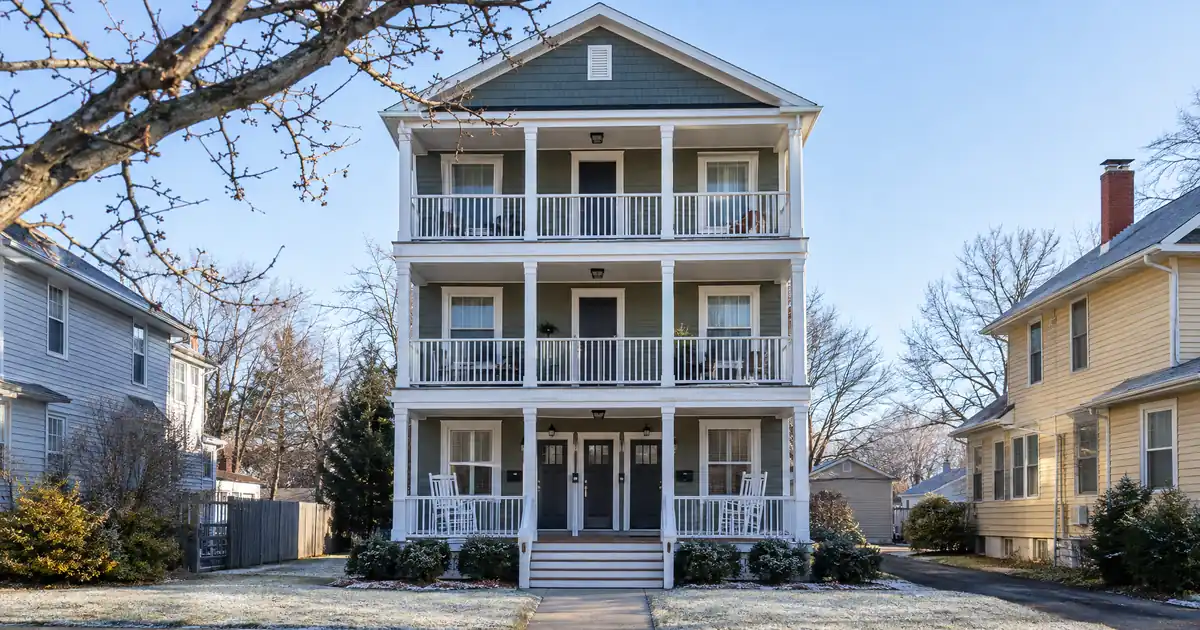
The Quick Read: It depends, and equity is rarely the first thing that stops you. A cash-out refinance can release real money from a home you own, but you can never pull all of it, and each pull uses up room that does not come back on its own. Conventional loans also cap how many financed properties one borrower can carry at ten, and a multi-unit building counts as one property, not several doors.
What Does a Cash-Out Refinance Actually Release?
A cash-out refinance replaces your current first mortgage with a larger one. You get the difference in cash at closing. It is not a second loan sitting beside the first. That is the key difference from a home equity loan or a HELOC (a home equity line of credit), which leave your original mortgage alone.
Cash-out refinance estimate
The starting figures are an example value with a balance and a cash request in proportion. Replace them with yours.
Editable benchmark: 7.24% as of October 29, 2026 · Freddie Mac 30-year average via FRED®. A conventional market reference, not a cash-out refinance quote.
Illustrative starting assumptions: a $350,000 home value, a $193,000 current balance, the agency cap on a one-unit principal residence, a thirty-year term at the current Freddie Mac benchmark, and property taxes and insurance estimated at typical national rates. Every field is editable.
Illustrative estimate only — not a Loan Estimate, approval, quote, or commitment to lend. The rate field carries the weekly Freddie Mac thirty-year conventional benchmark, a market reference and not a cash-out refinance quote; a cash-out loan is priced by the lender at lock. The cash available is the loan the program cap allows less the balances paid off, before closing costs, which are not included. The HELOC line is the program’s combined loan-to-value ceiling applied to the same value and balance. Taxes and insurance are editable estimates. Licensed in sixteen states for consumer mortgages.
The size of the new loan is capped by the home’s appraised value times a maximum loan-to-value ratio. Loan-to-value (LTV) is the loan balance divided by the home’s value. Across the conventional programs Lendmire places, a one-unit principal residence typically reaches 80% LTV on a cash-out. Two- to four-unit principal residences, second homes and investment property typically top out at 75%. Occupancy sets the leverage, and that is the only rental point this page needs. Everything is subject to lender guidelines and full file review.
Texas has its own rule. A cash-out on a Texas homestead (a Section 50(a)(6) loan) is capped at 80% of the home’s value by the state constitution.
The formula is simple:
1. Take the appraised value.
2. Multiply by the maximum LTV.
3. Subtract what you owe on the first mortgage.
4. Subtract closing costs.
What’s left is your net cash. It is always smaller than the headline equity number.
You can see the same idea in federal guidance. The CFPB’s older-Americans guide to using home equity notes that lenders typically require 10% to 20% of the home’s value to stay as equity. It also warns that a cash-out may lengthen your payoff time and raise your payment.
Why Equity Doesn’t Scale in a Straight Line
Think of it this way. A home worth 100 units with a balance of 50 units, under an 80% cap, has a gross gap of 30 units. Closing costs come off that. The rest is your net cash.
After the pull, the balance sits right under the cap. There is almost no room left. Room returns only when the home gains value or you pay the balance down. Both take time.
That is why “recycle it ten times” sounds smoother than it is. Each round needs the last round’s property to season, and each pull spends the room you would have used for the next one.
Closing costs also stack up. Every refinance replaces the loan again, so the costs repeat. Pulling the maximum every round is one way these plans can stall.
Seasoning matters too. On a conventional cash-out, the first mortgage being paid off generally has to be at least 12 months old, counted note date to note date. A borrower is generally on title for at least 6 months. Exceptions exist for delayed financing, inheritance and legal awards. You can’t chain refinances back to back.
A Cheaper-Looking Route: The No-Mortgage-Insurance Lane
Mortgage insurance is a monthly cost that protects the lender when you borrow above 80% LTV. On the agency path it cancels at your request at 80% of original value, and the servicer must end it at 78%. Every figure here varies by lender and program — guidelines, property type, leverage, and credit profile all apply.
One wholesale lane Lendmire places is the exception. It reaches 89.99% LTV with no mortgage insurance on a cash-out. It requires a 680 score, a 50% total ratio, a thirty-year fixed rate, a primary residence and a conforming balance. It also carries its own six months of seasoning. It is not written in Texas. Final terms depend on lender guidelines, property type, leverage, and the borrower’s complete credit picture.
If you qualify, that lane releases more of your equity from your own home. Whether you qualify is for the lender to decide after reviewing the full file. It is not a commitment to lend.
Counting to Ten: Doors, Properties and Financed Loans
“Ten doors” can mean three different things. Here is how they differ:
| Term | What it counts | Why it matters |
|---|---|---|
| Door | Each rentable unit | A fourplex is four doors |
| Property | Each building or parcel | A fourplex is one property |
| Financed property | Each property with a mortgage you signed | This is the count lenders cap |
The Fannie Mae Selling Guide’s rule on multiple financed properties sets the ceiling. For a second home or investment property run through its automated underwriting, the limit is 10 financed properties. The rule counts properties, not mortgages, so a multi-unit building is one property. It counts properties you are personally obligated on. Extra reserve requirements apply as the count rises. Freddie Mac has a comparable cap, but the counting details differ. These specifics are subject to lender guidelines and a full review of property, leverage, and credit.
Yet the cap is not always your first wall, since reaching ten doors can take as few as three or four buildings.
Your own principal residence is treated differently. The count cap does not apply to cash-out on the home you live in. That is the loan this page focuses on.
Past ten financed properties, conventional agency financing for second homes and investment properties stops. After that, borrowers need non-agency options. Those fall outside this page. Exact terms depend on lender and investor guidelines, credit profile, reserves, and property review.
The Door-by-Door Ladder
Here is a plain-English picture of how the climb works. Every step has a different limiting factor.
| Stage | Goal of the pull | What usually binds | Main risk |
|---|---|---|---|
| Doors 2–3 | First down payment | Equity in your own home | Pulling too much |
| Doors 4–6 | Next down payment plus repairs | Seasoning and payment size | Stacked payments |
| Doors 7–10 | Keep going | Reserves and the property count | Thin cash cushion |
Notice that equity matters most at the start. Later, reserves and the count do the squeezing. A lender who sees six financed properties wants to see more cash in the bank than one who sees two.
The Second Test: Can Your Budget Carry the Bigger Payment?
A bigger loan means a bigger payment, even if the term stays the same. The new payment counts against your income. Lenders test it against your total ratio, which is all your monthly debts divided by your monthly income. Across the conventional programs Lendmire places, the ceiling is generally 50% on an automated approval. Manually underwritten loans are held to 36% or 45%, depending on the credit and reserve factors in the program matrix.
Credit matters as well. The wholesale conventional programs generally start at a 620 decision score. Higher scores open up more leverage and more options.
Here is a picture without dollar figures. You pull cash from your home. Your payment on that home rises. Next, you add a property with its own payment. Your income now supports two obligations instead of one.
Rent from the new property may help, but lenders treat it with caution. How rent counts depends on the program and the paperwork. Many borrowers hit the debt-ratio wall before they hit the equity wall.
Cash-Out vs. HELOC vs. Waiting
| Option | How it works | Best when |
|---|---|---|
| Cash-out refinance | Replaces your first mortgage with a bigger one | Your current loan terms are no better than new ones |
| HELOC or home equity loan | A second loan beside your first | You want to keep a low existing first mortgage |
| Waiting and saving | Builds equity and cash slowly | Your ratios or seasoning aren’t ready |
The cash-out only makes sense when giving up your old loan is not a big loss. If your existing mortgage has terms you would not match today, a second loan may fit better. A standard refinance, by contrast, only changes the terms of your current loan. It does not release meaningful cash.
HUD’s FHA Streamline and the VA’s IRRRL are for rate reductions on existing government loans. They are not routes for pulling out equity. FHA and VA do have their own cash-out loans for owner-occupied homes, with separate rules. They are a different product from either streamline.
How the CFPB Describes Cash-Out Borrowers
The CFPB’s research on cash-out refinances confirms the basic structure: a cash-out replaces the first mortgage. The agency’s research test is that the new loan, plus related junior liens, is more than 5% larger than what it replaced. That is a research definition, not an underwriting rule.
Its credit report on cash-out borrowers found their scores rose at first and then slipped. They stayed above their pre-refinance levels. The study covered 2014 to 2021 and says nothing about buying more properties.
Mistakes That Stall People Before Ten
- Pulling the maximum every round. It leaves no room for value swings or repairs.
- Pulling without a plan for the cash. Idle cash costs interest on a larger balance.
- Ignoring reserves. Each added financed property raises the cash a lender wants you to keep.
- Forgetting closing costs. They come out of the gross release.
- Assuming equity alone decides it. The count, ratios and reserves also decide.
- Counting doors, not properties. The cap is counted in properties.
Can You Realistically Reach Ten This Way?
Run through this checklist honestly.
- Equity: After the cap and closing costs, is your net cash worth the larger loan?
- Ratios: Can your income carry the new payment under a 50% total ratio ceiling?
- Seasoning: Is your current first mortgage at least 12 months old, and have you held title for 6 months?
- Reserves: Could you cover several months of every property’s payments from cash?
- Count: How many properties are you personally obligated on today?
If most answers are yes, a staged plan may work. If equity is thin or the ratios are tight, the honest answer is “not yet.” Reading Lendmire’s piece on building enough equity for a conventional cash-out refinance can help you plan the wait.
Weighing It With a Broker
If you are weighing a cash-out refinance against keeping the loan you have, Lendmire can help you compare the programs and the equity each one reaches. Start with Lendmire’s cash-out refinance programs page. Every figure here is subject to lender guidelines and full file review, and none of it is a commitment to lend.
Key Terms Defined
Cash-out refinance: A new, larger first mortgage that pays off your old one and hands you the difference in cash.
Loan-to-value (LTV): Your loan balance divided by your home’s appraised value.
Seasoning: The minimum time you must hold a loan or title before you can refinance with cash out.
Financed property: A property with a mortgage you are personally obligated to repay.
Reserves: Cash or liquid assets a lender wants you to keep after closing.
Total ratio: Your monthly debt payments divided by your monthly income.
Frequently Asked Questions
Can I pull all of my equity out?
No. Lenders cap the new loan at a share of the home’s value, and the CFPB guide notes that lenders typically want 10% to 20% to stay as equity. On a one-unit principal residence the conventional cap is 80%, with one wholesale lane reaching 89.99% under stricter conditions. Closing costs then reduce the cash you actually receive.
Can I do a second cash-out right after the first?
Not usually. The loan you are paying off must generally be at least 12 months old, counted note date to note date. You also need enough new equity, since the first pull used up your room.
Is ten a hard limit?
For conventional loans on second homes and investment property, yes. The Fannie Mae guide caps financed properties at 10 under automated underwriting, and extra reserves apply as the count rises. Beyond ten, you would need non-agency financing.
Does a four-unit building count as four doors or one?
Four doors, but one property. The financed-property rule counts properties, not units. A fourplex uses one slot of the ten, which is why the door count and the loan count can differ.
Can I use a streamline to take cash out?
No. The FHA Streamline and VA IRRRL are for reducing the cost of an existing government loan. They are not equity-release tools. FHA and VA have separate cash-out loans for owner-occupied homes, each with its own rules.
For your own numbers, request a scenario review with Lendmire.
About Lendmire
Lendmire is a mortgage brokerage (NMLS# 2371349) licensed for consumer mortgage lending in 16 states, arranging FHA, VA, conventional and jumbo purchase and refinance loans through a wholesale lending network. Eligibility is determined by the lender on each file. Scotsman Guide named Lendmire a Top Mortgage Workplace in both 2025 and 2026.
Get Started
Ready to find the right loan for you?
See your offer in seconds. No credit pull, no obligation.
Informational only. Not a Loan Estimate, approval, or commitment to lend. Program availability and eligibility are subject to lender guidelines, credit approval, property review, and underwriting.
References
1. CFPB: Using home equity guide
2. Fannie Mae Selling Guide B2-2-03: Multiple Financed Properties for the Same Borrower
3. CFPB Office of Research: A look at cash-out refinance mortgages and their borrowers
4. CFPB: Cash-out refinance borrowers improve credit scores
This article is part of Lendmire’s cash-out refinance program — full qualification details, guidelines, and scenarios live on the program page.
Related reading: Best Cash-Out Refinance Program When Ending a Home Equity Investment Early · Best Cash-Out Refinance Program on One Income · Cash-Out Refinance Lenders to Fund Home Improvements With Home Equity
Brandon Miller
Founder & CEO, Mortgage Loan Originator, Lendmire LLC
- Mortgage Loan Originator · NMLS# 1129696 · Verify on NMLS Consumer Access
- North Carolina Real Estate Broker · License# 343312 · Verify on NCREC
- North Carolina Insurance Producer · License# 19053198 · Property, Casualty, Life, Health · Verify on NAIC SBS
- Lendmire LLC · Firm NMLS# 2371349 · Verify firm licensure
Important disclosures. Lendmire (NMLS# 2371349) is a licensed mortgage brokerage. Lendmire is not a direct lender, depository institution, or financial advisor. All loan inquiries are subject to lender underwriting; this article does not constitute a commitment to lend. Rates, terms, and program guidelines are subject to change without notice and vary by borrower profile, property type, and state. Information in this article is general in nature and is not financial, legal, or tax advice. Equal Housing Opportunity. NMLS Consumer Access: nmlsconsumeraccess.org.