
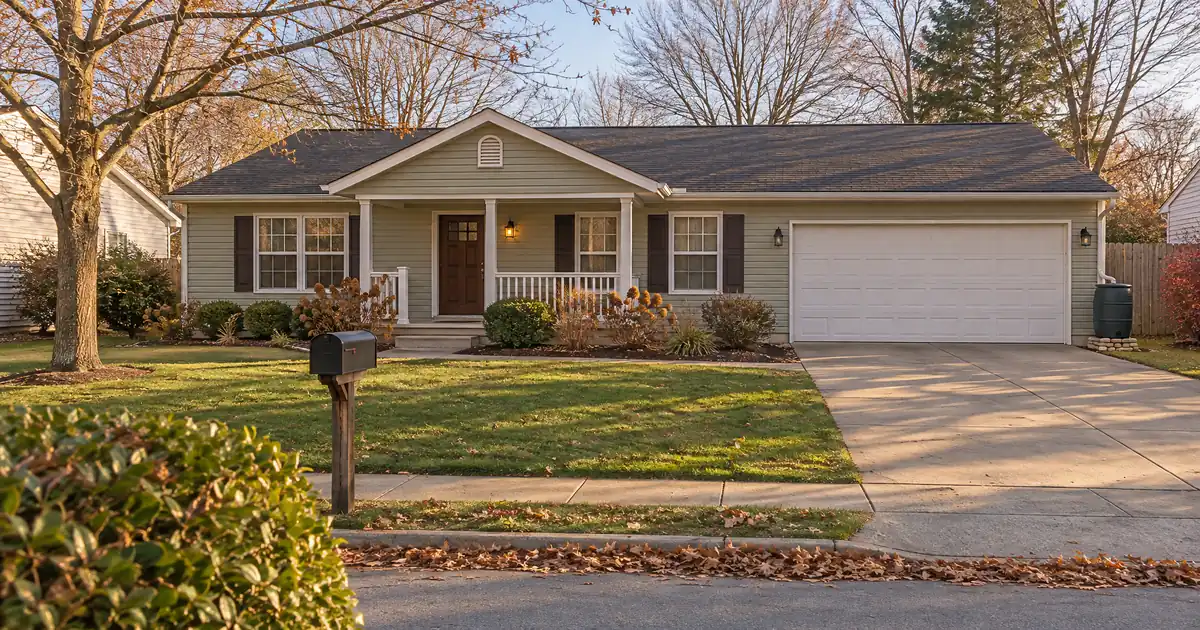
The Quick Read: An FHA cash-out appraisal values your home as it stands today, not as it will look after planned work. Unfinished or only-planned renovations add nothing to that value. Finished work counts only when it is visible and the market supports it through comparable sales. Your cash-out amount then comes from a cap of 80% of that value, so an ignored renovation can shrink your cash.
Key Takeaways
- The appraiser reports what is physically there on the day of the visit.
- Money you spent does not equal value. Comparable sales set the number.
- Planned work is valued under a different product, the FHA 203(k).
- The 80% cap applies to the value the appraiser reports, so a lower value means less cash.
- Finished, documented upgrades give the appraiser something to see and compare.
What Does an FHA Cash-Out Appraisal Actually Measure?
The appraisal does two jobs. It sets a value, and it checks condition. The two jobs are related, but they are not the same thing, and confusing them leads to wrong expectations about renovations.
FHA cash-out estimate
Seeded with an example value, a balance to match, and a round cash request; change any field.
Editable benchmark: 7.18% as of November 5, 2026 · Freddie Mac 30-year average via FRED®. A conventional market reference, not an FHA cash-out refinance quote.
Illustrative starting assumptions: a $350,000 home value, a $193,000 current balance, the FHA cap on a principal residence with the upfront premium financed, a thirty-year term at the current Freddie Mac benchmark, and property taxes and insurance estimated at typical national rates. Every field is editable.
An illustration, not a Loan Estimate, an approval, a quote, or a commitment to lend. The rate shown is the weekly Freddie Mac thirty-year conventional benchmark, used as a market reference; an FHA cash-out is priced by the lender at lock, and this is not an FHA cash-out refinance quote. HUD’s cap limits the base loan; the upfront premium is financed on top of the capped base loan; the monthly premium for the first year follows the snapshot’s schedule. Cash available means the base loan the cap permits less the balances retired, before closing costs, which this calculator leaves out. The line figure applies the line program’s combined loan-to-value ceiling to the same value and balance. Taxes and insurance are estimates you can edit. Licensed in sixteen states for consumer mortgages.
The value job asks what your home would sell for today. The appraiser walks the property, notes its size, features and condition, and compares it with recent nearby sales. The condition job asks whether the home meets FHA’s minimum property standards. A missing handrail or a leaking roof can matter here, even if the value looks fine.
Under HUD Mortgagee Letter 2025-18, which updates the FHA handbook, an appraisal with no conditions must report an as-is value. That is the home in its present, observable state. It is not a forecast.
A cash-out refinance replaces your current mortgage with a bigger one and hands you the difference in cash. Across the wholesale programs Lendmire places FHA files with, the FHA cash-out reaches 80% loan-to-value (LTV, the loan balance divided by the home’s value) on a home you have owned and lived in for 12 months before the case number is assigned. Those figures are subject to lender guidelines and full file review.
Key Terms Defined
As-is value: What the home is worth in its current, observable condition, with no credit for work that has not been done.
After-improved value: An appraiser’s opinion of value assuming repairs or upgrades have been completed. FHA’s handbook glossary ties this concept to the 203(k) renovation loan.
Subject-to appraisal: A report that values the home on the condition that certain repairs are finished before closing. The repairs are a requirement, not extra value.
Minimum property requirements: FHA’s baseline standards for safety, soundness and security. The appraiser flags problems; the lender decides what must be fixed.
Adjusted value: The value figure FHA uses when it applies the 80% cap on a cash-out.
Comparable sales (comps): Recent sales of similar nearby homes. They are the yardstick for what your upgrades are worth.
Why Does the Appraiser Ignore a Planned Renovation?
Because a cash-out loan is based on what exists. FHA does not lend against a hypothetical home. If the kitchen is still a set of drawings, the appraiser values the kitchen you have.
HUD’s handbook glossary defines After Improved Value as a value based on the hypothetical condition that repairs or alterations are complete. That concept belongs to 203(k), the renovation product. The glossary marks the related Adjusted As-Is Value entry as applicable only to 203(k). A cash-out does not borrow that logic.
Think of it like selling a car. A buyer pays for the car on the lot, not for the new engine you plan to install next month.
There is a second reason. Even when work is done, the appraiser does not add up your receipts. The CFPB’s consumer explainer describes how appraisers compare a home with recent sales and can add value for features like more bathrooms or a newer kitchen than other sold homes. Value flows from the comparison, not from what you paid a contractor.
When Does Finished Work Count?
Finished work counts when three things line up. It is complete, the appraiser can see it, and comparable sales show buyers pay more for it.
Run through a few pictures. A fully finished bathroom remodel, with the permits closed, in a neighborhood where updated baths sell for more, gives the appraiser a basis to adjust. A half-finished basement gives the appraiser almost nothing. A very expensive custom feature in a neighborhood with no similar sales may get little credit, because the market has not shown it will pay for it.
Cosmetic and structural work behave differently. Paint, flooring and fixtures show up in condition and quality ratings. Structural or system work, such as a new roof or updated electrical, tends to matter more for condition than for headline value. A new roof may keep a house from failing the condition check, yet barely move the price.
Whether the work was permitted, documented and built to an acceptable standard also shapes how it is treated. That is appraisal practice, and it varies by appraiser and market. So the honest answer to “will it count?” is “partly, and the comps decide.”
Also, if the appraiser uses contractor cost estimates, ML 2025-18 says those estimates must be reasonable and independently verified. Your contractor’s invoice alone does not set value.
What Happens Step by Step on a Cash-Out File?
Here is the sequence on a typical owner-occupied file. Details vary by lender, and everything here is subject to lender guidelines.
1. Eligibility check. FHA cash-out requires a home you live in as your principal residence. Across the programs Lendmire works with, you must have owned and occupied it for 12 months before the case number is assigned.
2. Case number and appraisal. A cash-out needs a full appraisal. FHA Streamlines of an existing FHA loan can skip one because they add no cash, but a cash-out cannot.
3. Inspection and comparison. The appraiser records condition, notes any property-standard issues, and compares the home with recent sales.
4. Value outcome. With no conditions, the report is as-is. With deficiencies, it is subject to repairs, which must be finished before closing.
5. The 80% cap. The new loan, covering your payoff, costs and any cash to you, must fit under 80% of adjusted value. County loan limits apply too.
6. Copy to you, then underwriting. You are entitled to a copy of the appraisal.
On that last point, the CFPB’s ECOA valuations factsheet explains that lenders must give applicants free copies of appraisals on first-lien dwelling loans. The lender can still charge a reasonable fee to cover the appraisal itself, and that fee is typically yours even if the loan does not close.
How Much Does an Ignored Renovation Cost You in Cash?
It costs you a slice of the cap. Cash to you equals 80% of adjusted value, minus your payoff and costs. Change the value and the cash moves with it.
Use an illustration with percentages only. Say your home appraises at 100 units of value as-is. The cap is 80 units. If your payoff and costs total 70 units, you can take roughly 10 units in cash. Now say you hoped the upgrades would push value to 110 units. The cap would have been 88 units, leaving about 18 units. When the appraiser gives no credit, you lose that 8-unit difference, which is 80% of the 10-unit value gap.
Run the same logic the other way. If your payoff and costs already sit near 80% of as-is value, an ignored renovation can leave you with little or no cash. That is why borrowers who count on renovation value sometimes find the cash-out does not work.
A bigger balance also raises your monthly cost. FHA mortgage insurance is part of that. Across the programs Lendmire places, the upfront premium is 1.75% of the base loan and is typically financed. The annual premium runs between 0.15% and 0.75% of the balance, depending on term, loan amount and LTV. Above 90% LTV on a thirty-year loan it lasts the term; at or below 90% it ends after eleven years. HUD’s ML 2023-05 sets the schedule, and the premium is a percentage of the outstanding balance, so a larger loan means a larger premium.
Why Is the Cap 80% Now?
The cap is 80% because HUD lowered it. ML 2019-11 cut the maximum LTV and combined LTV on FHA cash-out refinances to 80% for case numbers assigned on or after September 1, 2019. The old figure was 85%.
HUD’s announcement notes FHA had earlier cut the cap from 95% to 85%. The direction has been consistent: leave more equity in the home. At 80%, at least 20% equity stays put, which cushions against loss if a borrower later defaults.
For you, that means the appraised value does the heavy lifting. A small change in value moves a big piece of your available cash.
Where Do Condition Findings Fit In?
Condition findings can bite even when value ignores your project. The appraiser flags safety, soundness or security problems. The lender then decides whether repairs are required.
| Finding type | Effect on value | Repair required? |
|---|---|---|
| Visible safety hazard | May lower value | Usually yes |
| Roof or structure problem | May lower value | Often yes |
| Unfinished renovation | Little or no credit | May be flagged |
| Cosmetic wear | Small adjustment | Typically no |
| Completed, market-supported upgrade | May raise value | No |
This table is a general guide. Individual appraisers and lenders differ. When repairs are required, the loan can close “subject to” their completion. Required repairs are a closing condition, not added value.
An unfinished project is the awkward case. It adds no value, and it may also look like a safety or soundness issue, such as exposed wiring or open walls. Finish it, or be ready to explain it, before the appraiser arrives.
How Do You Document Finished Work?
Give the appraiser evidence they can verify. Appraisers work from what they see and what the market shows, so help them see it.
- Gather permits and final inspection sign-offs for any permitted work.
- Keep contractor invoices and a short written scope of what was done.
- Take dated before-and-after photos.
- List the upgrades with approximate completion dates.
- Point out features that are not obvious on a walkthrough, such as a new panel or plumbing.
- Note recent sales of similar upgraded homes nearby, if you know of any.
A clean folder does not guarantee credit. It does remove excuses. Unpermitted or undocumented work is the hardest to defend, and an appraiser may treat it cautiously.
What If You Disagree With the Value?
You can ask the lender about a reconsideration of value. Typically that means giving the lender additional recent comparable sales the appraiser may not have used, along with a clear explanation. Whether and how it is handled depends on the lender and the file.
Because you receive a copy of the appraisal, you can read it for factual errors: wrong square footage, missing features, comps that are far from your home. Correcting facts is more persuasive than arguing over opinion.
When Should You Use a Different Tool?
Match the tool to your timeline. If your renovation is still ahead, a cash-out may be the wrong product.
| Your situation | Likely better fit |
|---|---|
| Work already finished and documented | FHA cash-out may work |
| Work planned, need funds to do it | 203(k) renovation loan |
| Need cash but value would be low | Home equity loan or HELOC |
| Small repair needs | Smaller home-improvement loan |
| Unsure about value | Wait, finish work, then refinance |
The FHA 203(k) is the product that values planned work. The FDIC’s summary says the program covers acquisition, refinance and rehabilitation and uses the After Improved Value. On a refinance, HUD’s glossary says the lender must also get an as-is appraisal in certain cases, such as when existing debt plus repair cost exceeds the after-improved value. A 203(k) refinance is built to fund renovation, not to hand you unrestricted cash, so confirm the details with HUD’s program materials.
Sequence matters. Finish first, document, then refinance, and the appraiser can credit what is there. Refinance first and renovate after, and you get no credit for the work, and the cash you receive is limited by the 80% cap on the as-is value. Neither order is wrong. The mistake is expecting the loan to pay you for work that does not exist.
Edge Cases Worth Knowing
Homes owned under 12 months. FHA cash-out generally requires 12 months of ownership and occupancy before the case number. If you have not reached that point, a different product may fit better.
Appraiser-required repairs. These can be a “subject to” condition. They do not add value; they gate your closing.
Free-and-clear homes. A home with no mortgage can still be refinanced as a cash-out. The 80% cap and the as-is value rule apply the same way.
Hawaiian Home Lands. Mortgages on Hawaiian Home Lands fall under a separate FHA section, Section 247, and may be handled differently from standard FHA cash-out loans. If that is your situation, ask a lender how it is handled.
Rentals and second homes. FHA is for your principal residence, so occupancy decides the leverage available.
Common Mistakes
- Assuming the appraiser will credit what you spent.
- Counting on planned work to raise value.
- Leaving a project half-done on appraisal day.
- Skipping permits and paperwork.
- Forgetting that the 80% cap, not your hopes, sets the ceiling.
- Not reading the appraisal copy you are entitled to.
Frequently Asked Questions
Does an FHA cash-out refinance always need an appraisal?
Yes. A cash-out adds new money to the loan, so it needs a full appraisal. The FHA Streamline can skip one on an existing FHA loan because it adds no cash, but that is a different product with different rules.
Will the appraiser count a renovation that is not finished?
No. The appraiser reports an as-is value, so unfinished or planned work adds nothing. If you need planned work valued, a 203(k) renovation loan uses an after-improved value instead. Qualification is subject to lender guidelines and full file review.
Can I get the appraisal report?
Yes. Under the CFPB’s ECOA valuations rule, lenders give applicants a free copy of the appraisal on first-lien dwelling loans. The lender may still charge a reasonable fee for the appraisal itself, and that fee is typically yours even if the loan does not close.
Can I be required to make repairs even if the value ignores my project?
Yes. Condition and value are separate. The appraiser can flag safety or soundness issues, and the loan may close subject to repairs. Required repairs are a condition of closing, not extra value.
Does a low appraisal shrink my cash?
Yes. Because the cap is 80% of adjusted value, a lower value lowers the maximum loan, and the cash to you is what remains after payoff and costs. A big drop can leave little or none.
If you are weighing a cash-out refinance against keeping the loan you have, Lendmire can help you compare the programs and the equity each one reaches.
For your own numbers, request a scenario review with Lendmire.
For current guidelines and terms, see Lendmire’s FHA loan programs page.
About Lendmire
Lendmire (NMLS# 2371349) is a mortgage brokerage serving homeowners and home buyers in 16 states. FHA, VA, conventional and jumbo purchase and refinance loans are arranged through wholesale lending channels; Lendmire brokers the financing and the lender underwrites each application. Scotsman Guide named Lendmire a Top Mortgage Workplace in both 2025 and 2026.
Get Started
Ready to find the right loan for you?
See your offer in seconds. No credit pull, no obligation.
Informational only. Not a Loan Estimate, approval, or commitment to lend. Program availability and eligibility are subject to lender guidelines, credit approval, property review, and underwriting.
References
1. HUD Mortgagee Letter 2025-18
2. HUD Handbook 4000.1 Glossary
4. CFPB ECOA Valuations Rule coverage factsheet
5. ML 2023-05
6. HUD Mortgagee Letter 2019-11
This article is part of Lendmire’s FHA cash-out refinance program — full qualification details, guidelines, and scenarios live on the program page.
Related reading: FHA Cash-Out Refinance Requirements Before Your ARM Resets · Can You Get an FHA Cash-Out on a Home With a Solar Lien? · Can an FHA Cash-Out Refinance Pay Out an Ex After Divorce?
Brandon Miller
Founder & CEO, Mortgage Loan Originator, Lendmire LLC
- Mortgage Loan Originator · NMLS# 1129696 · Verify on NMLS Consumer Access
- North Carolina Real Estate Broker · License# 343312 · Verify on NCREC
- North Carolina Insurance Producer · License# 19053198 · Property, Casualty, Life, Health · Verify on NAIC SBS
- Lendmire LLC · Firm NMLS# 2371349 · Verify firm licensure
Legal disclosures. Lendmire (NMLS# 2371349) is a state-licensed mortgage brokerage that arranges financing through wholesale lender relationships. Lendmire is not a direct lender, depository institution, or registered financial advisor. The discussion above is general informational content about real estate financing — it is not financial, legal, or tax advice, and readers should consult licensed professionals for guidance on their individual circumstances. Loan inquiries are subject to lender underwriting; this article does not represent a commitment to lend. Loan terms, rates, and qualification standards vary by borrower, property, and state, and are subject to change at any time. Equal Housing Opportunity. NMLS Consumer Access: nmlsconsumeraccess.org.