
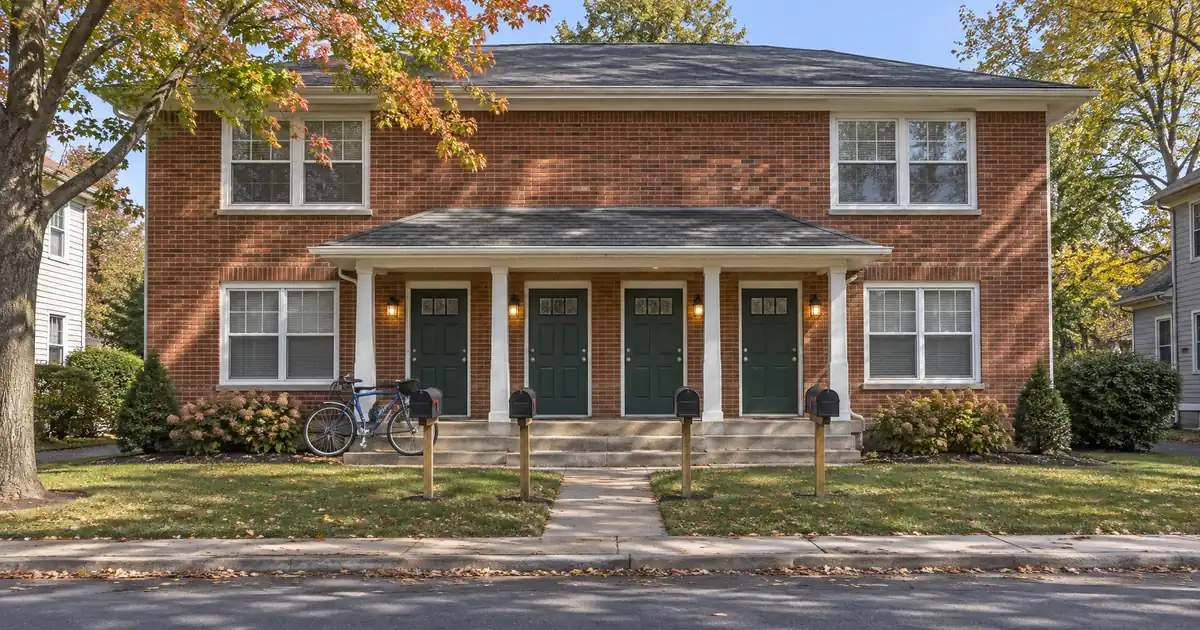
The Quick Read: An FHA cash-out on a fourplex is available to an owner who lives in one of the four units, and the new loan can reach 80% of the building’s appraised value across all liens combined. A low first mortgage helps because it leaves room under that cap. It does not remove the other tests: the building has to pass a rent-based test at the new, larger payment, and the borrower still has to qualify on credit and ratios. All of this is subject to lender guidelines and full file review.
What an FHA Cash-Out Actually Is
A cash-out refinance replaces your current mortgage with a new, larger one and pays you the difference in cash. The proceeds are not limited to a specific purpose. A no-cash-out refinance, by contrast, only pays off existing liens and the costs of the transaction. That distinction is in HUD’s Handbook glossary, and it matters on a fourplex because the cash-out rules are tighter.
FHA cash-out estimate
Seeded with an example value, a balance to match, and a round cash request; change any field.
Editable benchmark: 7.24% as of October 29, 2026 · Freddie Mac 30-year average via FRED®. A conventional market reference, not an FHA cash-out refinance quote.
Illustrative starting assumptions: a $350,000 home value, a $193,000 current balance, the FHA cap on a principal residence with the upfront premium financed, a thirty-year term at the current Freddie Mac benchmark, and property taxes and insurance estimated at typical national rates. Every field is editable.
An illustration, not a Loan Estimate, an approval, a quote, or a commitment to lend. The rate shown is the weekly Freddie Mac thirty-year conventional benchmark, used as a market reference; an FHA cash-out is priced by the lender at lock, and this is not an FHA cash-out refinance quote. HUD’s cap limits the base loan; the upfront premium is financed on top of the capped base loan; the monthly premium for the first year follows the snapshot’s schedule. Cash available means the base loan the cap permits less the balances retired, before closing costs, which this calculator leaves out. The line figure applies the line program’s combined loan-to-value ceiling to the same value and balance. Taxes and insurance are estimates you can edit. Licensed in sixteen states for consumer mortgages.
FHA treats a building with one to four units as a single-family property, but only when the borrower lives in one unit as a principal residence. That is why a fourplex can sit inside an owner-occupied program at all. This article covers the fourplex-specific mechanics.
A low first mortgage does not change the program. It changes the arithmetic. You owe less, so less of the new loan goes to the payoff and more of it can become cash, up to the cap.
Key Terms Defined
Adjusted Value: The appraised value, or a lower figure when the property was acquired within the past 12 months. FHA measures leverage against it.
LTV and CLTV: Loan-to-value is the base loan divided by Adjusted Value. Combined loan-to-value adds any other liens that stay in place.
Upfront mortgage insurance premium: A one-time FHA premium of 1.75% of the base loan, usually financed into the balance.
Annual mortgage insurance premium: A yearly FHA premium, paid monthly, that depends on loan term, loan amount and LTV.
Self-sufficiency test: A rent-based test for three- and four-unit properties. The new payment cannot exceed the building’s net rental income.
Reserves: Money you still hold in verified accounts after closing, measured in months of payment.
How the Loan Is Underwritten, Step by Step
Across the wholesale programs Lendmire places files with, a fourplex cash-out moves through the same sequence. Each step can stop the file.
1. Occupancy and payment history. The home must have been owned and occupied as your principal residence for the 12 months before the FHA case number is assigned. Mortgage payments in that period need to have been made within the month due. Lenders document occupancy with items like employment records or utility bills.
2. Case number and appraisal. The appraiser values the building and estimates market rent for all four units, including the one you live in. Two things hang on that report: the value for the leverage cap, and the rent figure for the self-sufficiency test.
3. Maximum loan. The ceiling is a percentage of Adjusted Value that HUD Mortgagee Letter 2019-11 lowered for cash-out transactions, and it also says combined first and subordinate debt cannot exceed the nationwide mortgage limit. County loan limits apply too. They are set by county and reset every year, so look yours up on HUD’s mortgage limits lookup.
4. Self-sufficiency test. The lender takes the appraiser’s rent, applies a vacancy and maintenance reduction, and compares the result with the new payment. More on this below.
5. Borrower qualification. Separate from the building. Your credit and debt ratios still have to meet FHA standards.
6. Reserves. The lender verifies and documents three months of payment in reserves after closing for any three- or four-unit property.
7. Signing and cancellation. After you sign, you get a cancellation window before funds are disbursed. The rules for that window appear later in this article.
Where a Low First Mortgage Helps (and Where It Doesn’t)
A low balance gives you the most room under the 80% cap. Picture a fourplex appraised at a round figure, with a first mortgage that is a small slice of that value. The new loan can be sized up to 80% of value, the old balance comes out of it, closing costs and the financed upfront premium come out next, and what remains is your cash. The smaller the old balance, the larger that remainder, up to the cap.
Here’s the catch. The cap is on combined debt. If a second lien stays in place, it counts against the 80%. It does not add room.
The second catch is bigger on a fourplex. Your old payment was small. The new one replaces it and is much larger, and the annual premium rides on top of it. The self-sufficiency test uses the new payment. A building that would have passed easily with the old loan can fail once the loan grows.
Another honest point: if your existing loan is cheap to carry, a cash-out gives that up. You trade a low balance for a large one. A second lien or a line of credit may leave the first mortgage alone, though it must fit the same combined cap if it stays in place. For some owners, leaving the first mortgage untouched is the better decision. For others, the equity need is large enough that the cash-out makes sense.
The Self-Sufficiency Test, Explained
A three- or four-unit property has to carry itself on paper. The lender works out the net rental income for the building and collects form HUD-92561 from the borrower. The new payment, which includes principal, interest, taxes, insurance and mortgage insurance, divided by that monthly net rent cannot exceed 100%.
Two points trip people up.
It uses market rent, not your leases. HUD’s reference guide on rental income ties net rental income to the appraiser’s fair market rent estimate for all units, including the owner’s, less vacancy, collection and maintenance factors. That is older guidance, so treat it as background and confirm the current figures with your lender. Because the test relies on the appraiser’s market rent, a lease set below market does not lower the result. A lease set above market does not raise it.
It applies to cash-out loans. HUD Mortgagee Letter 2009-08 states that the test stays in effect for cash-out refinances. The 85% leverage figure in that letter is out of date. The 80% cap above is the one that governs. Each figure is subject to lender guidelines and a complete review of property type, leverage, and credit.
A simple way to read a pass and a fail:
| Scenario | New payment vs. net rent | Result |
|---|---|---|
| Modest cash-out, strong market rents | Well under 100% | Passes |
| Maximum cash-out, average rents | Near or over 100% | Often fails |
| Smaller cash-out, same building | Drops back under 100% | Can pass |
When a file fails, the usual fix is a smaller loan, which means less cash. Passing this test also does not approve the borrower. Credit and ratios are a separate review.
Borrower Qualification Alongside the Building
The program envelope across the wholesale lenders Lendmire works with is narrower than HUD’s outer limits. Financing on a cash-out tops out at 80% LTV on a home you’ve owned and occupied for 12 months. The network starts at a 580 decision score. HUD itself allows lower scores on some FHA loans, but the wholesale programs Lendmire places with do not reach below 580. Leverage, reserves, and pricing vary by lender and program; the final terms follow the full file review.
Ratios start at a 31/43 base pair (housing over total debt) with no compensating factors. Documented factors can raise that to 40/50 at the top tier.
Mortgage insurance has two parts. The upfront premium is 1.75% of the base loan and is typically financed. The annual premium runs between 0.15% and 0.75% of the balance depending on term, loan amount and LTV. On a thirty-year loan above 90% LTV the annual premium lasts for the term. At or below 90%, it ends after eleven years. A cash-out sits at or under 80%, so confirm with your loan officer which tier and duration apply to your file. These are program facts, not prices, and all are subject to lender guidelines.
A non-occupant co-borrower cannot be added to qualify on a cash-out. That is different from a purchase, where one is allowed.
Where the General Rule Breaks
No existing mortgage. A free-and-clear fourplex is still a cash-out. Occupancy, credit, appraisal and the rent test all apply. A zero balance gives the maximum room under the cap.
Bought less than 12 months ago. Not eligible for a standard cash-out. The 12-month ownership and occupancy test comes first.
Inherited property. The occupancy rule has an inheritance exception, but sources describing it are dated. If the heir rents the unit out after inheriting, the heir needs to live there for 12 months first. Verify against the current Handbook.
Existing loan is not FHA. A conventional loan can be refinanced into an FHA cash-out. The FHA Streamline and Simple Refinance only apply to existing FHA loans, and neither pays cash out.
Rate-and-term instead. If you don’t need cash, an FHA rate-and-term refinance with an appraisal reaches 97.75% on a principal residence occupied for the previous twelve months. That is far higher leverage, because no cash comes out.
Second home or rental-only building. FHA cash-out is for the home you live in, and occupancy decides the leverage.
Subordinate liens. Any second lien that stays counts toward the 80% cap.
The Right to Cancel
On a principal-residence refinance you generally have three business days to cancel after signing. Business days include Saturdays but not Sundays or legal public holidays. The clock does not start until you have received the required notice and disclosures, per the CFPB’s explanation of the right of rescission. If you rescind, you still owe the original loan. Funds are typically disbursed after the window closes, so cash is not in hand the moment you sign. As a consumer mortgage, the file also carries a Loan Estimate and a Closing Disclosure.
What the Decision Looks Like in Practice
- Does the appraisal support enough value to leave real cash after payoff, costs and the financed premium?
- Does the new payment pass the self-sufficiency test against the appraiser’s rent?
- Will three months of payment remain in reserves after closing?
If all three look fine, the borrower’s credit and ratios come next. If the self-sufficiency test is tight, sizing down the loan usually works better than pushing for the cap.
Documents that tend to matter: occupancy proof for the 12-month test, a payment history, the rent schedule and any leases for the appraiser, reserve account statements, and the HUD-92561 form. Missing reserves documentation and unclear occupancy evidence are the preventable gaps.
On the other side, a few common misreadings:
- A low balance does not mean you can pull out nearly all your equity. At least 20% stays.
- A non-occupying co-signer cannot help you qualify on a cash-out.
- Passing the rent test does not mean you are approved.
- The upfront premium is not waived on a cash-out. Credits on that premium generally apply only to certain FHA-to-FHA refinances, so confirm with your lender.
If you are weighing a cash-out refinance against keeping the loan you have, Lendmire can help you compare the programs and the equity each one reaches.
Frequently Asked Questions
Can I use FHA cash-out on a fourplex I don’t live in?
No. FHA cash-out is limited to owner-occupied principal residences. You must have owned the property and lived in one of the units for the 12 months before the case number is assigned.
Does the self-sufficiency test use my actual rents?
It uses the appraiser’s market rent estimate for all four units, including yours, reduced for vacancy and maintenance. Your leases can inform the appraiser, but they do not set the figure. Confirm current reduction factors with your lender.
How much equity can I take out?
The new loan, plus any liens that remain, is capped at 80% of Adjusted Value, so at least 20% equity stays in the building. Cash to you is what’s left after the payoff, closing costs and the financed upfront premium. County loan limits can cap the loan sooner.
Are reserves required?
Yes. For three- and four-unit properties, the lender verifies and documents three months of payment in reserves after closing. Funds you take out in the cash-out itself are not a safe assumption for that, so ask how your lender counts them.
Can the cash be used for anything?
Cash-out proceeds are not limited to specific purposes under the Handbook definition. Lenders still verify the file, and the payoff and costs come out first.
What if my building fails the rent test?
A smaller loan lowers the new payment and can bring the building back under the 100% line. That means less cash out. A non-cash-out refinance is another route if you mainly want to change the loan structure.
For your own numbers, request a scenario review with Lendmire.
About Lendmire
As a mortgage broker (NMLS# 2371349), Lendmire helps homeowners and home buyers in 16 states with FHA, VA, conventional and jumbo purchase and refinance loans arranged through wholesale lenders. Lendmire is never the lender; program terms are set by the lender and the agency guidelines. Scotsman Guide named Lendmire a Top Mortgage Workplace in both 2025 and 2026.
Get Started
Ready to find the right loan for you?
See your offer in seconds. No credit pull, no obligation.
Informational only. Not a Loan Estimate, approval, or commitment to lend. Program availability and eligibility are subject to lender guidelines, credit approval, property review, and underwriting.
References
2. HUD Mortgagee Letter 2019-11
3. HUD FHA mortgage limits lookup
4. HUD archived reference guide: rental income
5. HUD Mortgagee Letter 2009-08
This article is part of Lendmire’s FHA cash-out refinance program — full qualification details, guidelines, and scenarios live on the program page.
Related reading: Best FHA Cash-Out Refinance Program on a Paid-Off Home With No Mortgage · Does an FHA Cash-Out on a Triplex Require Reserves? · Can You Get Approved for an FHA Cash-Out Refinance Replacing Your Mortgage?
Brandon Miller
Founder & CEO, Mortgage Loan Originator, Lendmire LLC
- Mortgage Loan Originator · NMLS# 1129696 · Verify on NMLS Consumer Access
- North Carolina Real Estate Broker · License# 343312 · Verify on NCREC
- North Carolina Insurance Producer · License# 19053198 · Property, Casualty, Life, Health · Verify on NAIC SBS
- Lendmire LLC · Firm NMLS# 2371349 · Verify firm licensure
Legal disclosures. Lendmire (NMLS# 2371349) is a state-licensed mortgage brokerage that arranges financing through wholesale lender relationships. Lendmire is not a direct lender, depository institution, or registered financial advisor. The discussion above is general informational content about real estate financing — it is not financial, legal, or tax advice, and readers should consult licensed professionals for guidance on their individual circumstances. Loan inquiries are subject to lender underwriting; this article does not represent a commitment to lend. Loan terms, rates, and qualification standards vary by borrower, property, and state, and are subject to change at any time. Equal Housing Opportunity. NMLS Consumer Access: nmlsconsumeraccess.org.