
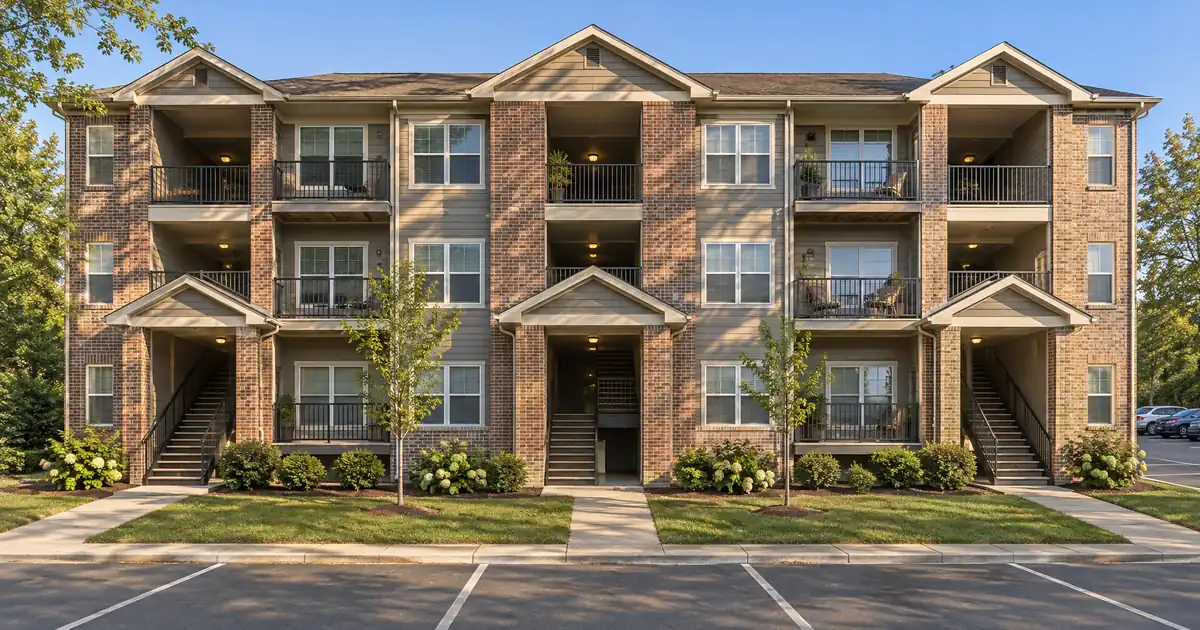
The Quick Read: On a condo cash-out refinance, the lender approves two things: you and the building. A strong borrower cannot rescue a building that fails its review, because the loan usually can’t be sold to Fannie Mae or Freddie Mac without a passing project. The review covers insurance, repairs, litigation, special assessments and unit delinquency. Any one of these can stop a file even when the borrower’s own credit and income are strong.
Why Does a Condo Loan Have Two Approvals?
The lender underwrites the borrower, then the building. A condo unit is not a stand-alone asset. Its value and its ability to be resold depend on the association’s finances, insurance and physical condition.
Cash-out refinance estimate
The starting figures are an example value with a balance and a cash request in proportion. Replace them with yours.
Editable benchmark: 7.18% as of November 5, 2026 · Freddie Mac 30-year average via FRED®. A conventional market reference, not a cash-out refinance quote.
Illustrative starting assumptions: a $350,000 home value, a $193,000 current balance, the agency cap on a one-unit principal residence, a thirty-year term at the current Freddie Mac benchmark, and property taxes and insurance estimated at typical national rates. Every field is editable.
Illustrative estimate only — not a Loan Estimate, approval, quote, or commitment to lend. The rate field carries the weekly Freddie Mac thirty-year conventional benchmark, a market reference and not a cash-out refinance quote; a cash-out loan is priced by the lender at lock. The cash available is the loan the program cap allows less the balances paid off, before closing costs, which are not included. The HELOC line is the program’s combined loan-to-value ceiling applied to the same value and balance. Taxes and insurance are editable estimates. Licensed in sixteen states for consumer mortgages.
Credit, income and equity get a file to the starting line. The building decides whether it finishes. A homeowner with a 740 score and plenty of equity can still be turned away if the association has a pending lawsuit about structural safety.
Cash-out makes this sharper. DSCR cash-out refinances are capped at 75% LTV, and the building has to be eligible at that leverage. Lendmire’s cash-out refinance programs page lays out how the equity side works. This article covers the building side. Terms depend on the lender’s guidelines, the property type, the leverage, and a full review of the credit profile.
Key Terms Defined
Project review: The lender’s check of the condo association itself, separate from your personal credit and income.
Condo questionnaire: A form the association or its management company completes, answering questions about budgets, insurance, litigation and ownership.
Warrantable: A building that meets agency eligibility rules, so loans on its units can be sold to Fannie Mae or Freddie Mac.
Unavailable: Fannie Mae’s status for a project it has determined ineligible. Units in it can’t be sold to Fannie Mae.
Special assessment: A one-time charge on owners, on top of regular dues, usually to fund a repair or shortfall.
Limited cash-out: A refinance that pays off the existing loan and closing costs with only incidental cash back. It is a different transaction from a true cash-out.
What Does the Lender Actually Read in the Building File?
The lender reads the questionnaire, budget, reserve information, insurance certificates and any inspection reports or lists of special assessments. Fannie Mae isn’t prescriptive about which documents lenders obtain to confirm there are no critical repairs, so the file varies by lender and building.
| Document | What the underwriter looks for | Red flag |
|---|---|---|
| Condo questionnaire | Unit count, owner mix, litigation | Pending suit on safety or habitability |
| Annual budget | Reserve funding, dues trend | Thin reserves, big dues jumps |
| Master insurance certificate | Adequate coverage on the building | Gaps or lapses in coverage |
| Inspection or engineering reports | Condition of structure and systems | Deferred maintenance, material deficiencies |
| Special assessment list | Levies passed or planned | Assessment funding unfinished critical repairs |
| Delinquency report | Share of owners behind on payments | A large share of units behind on assessments |
Fannie Mae’s ineligible projects rules name the biggest disqualifiers. Those are projects needing critical repairs, including material deficiencies and significant deferred maintenance, litigation tied to safety, structural soundness, habitability or functional use, and special assessments tied to repairs not yet completed. A project stays ineligible until the repairs are finished and documented.
Fannie Mae’s Condo Status Finder page says that, at the time of its data, about 3.6% of projects carried an ineligible status. The top two reasons were insufficient master property insurance and critical repair issues. So the common failures are not exotic. They are insurance and maintenance.
How Is the Review Done, Step by Step?
The lender classifies the loan, checks the building’s status, picks a review type, gathers documents, screens for disqualifiers, then underwrites you with the dues included.
1. Classify the transaction. Limited cash-out and true cash-out are treated differently. The waiver rules below apply to a narrow set of loans.
2. Identify the unit type. Attached, detached, or in a two- to four-unit project.
3. Check the project’s status. For conventional loans, the lender looks up the project in Fannie Mae’s Condo Project Manager (CPM) or Freddie Mac’s Condo Project Advisor. FHA and VA have their own approval lists.
4. Pick the review type. Fannie Mae uses full, limited or waived reviews. Freddie Mac uses established, new, reciprocal or exempt-from-review.
5. Collect the HOA documents. This step is where slow associations create delays.
6. Screen for disqualifiers. Critical repairs, litigation, assessments, insurance gaps, delinquency.
7. Order the appraisal. It values your unit. It is not the project review, and Freddie Mac has told sellers not to rely only on the appraisal to complete one.
8. Underwrite you with dues counted. Condo dues are usually paid to the association, not through the mortgage servicer. The CFPB notes they should be factored into whether you can afford a refinance, and lenders count them in the housing expense.
9. Decide. The building or the borrower can sink the file on its own.
Does a Cash-Out Get the Same Building Review as Other Refinances?
Not always, and this is the point most borrowers miss. Fannie Mae’s waiver of project review covers narrow cases: detached condo units, units in two- to four-unit projects, and a Fannie-to-Fannie limited cash-out refinance. A true cash-out refinance is not on that list. Plan on a normal project review, full or limited depending on the building and lender.
Even a waived review has conditions. The project can’t be “Unavailable” in CPM. For the limited cash-out waiver, there can be no unaddressed critical repairs and no evacuation orders. Fannie Mae’s lender letter LL-2026-03 extended the waiver to new and established projects with ten or fewer units.
Freddie Mac has its own version. Its condo FAQ lists established, new, reciprocal and exempt-from-review types, and the exempt categories apply to specific loan types and project sizes. Waiver requests on a single loan take extra time and aren’t guaranteed.
| Factor | Limited cash-out / rate-and-term | True cash-out |
|---|---|---|
| Building review waiver | Possible, Fannie-to-Fannie only | Not on the waiver list |
| Typical review | Waived or limited | Full or limited |
| One-unit primary residence leverage | Up to 95% | 80% |
If you aren’t sure which transaction you have, ask. Paying off a second lien that wasn’t used to buy the home can change the classification, and the lender decides it, not you.
Why Can a Building That Passed at Purchase Fail Now?
Buildings change. Reserves get spent, insurance renews at a thinner level, an engineer’s report turns up balcony or roof problems, a lawsuit is filed. The review looks at the building today, not the day you bought.
Picture an owner who bought years ago and now wants cash for renovations or debt payoff. The association has since passed a special assessment to fund repairs not yet finished. That assessment alone can make the project ineligible, because Fannie Mae treats an assessment tied to unremediated critical repairs as a disqualifier. The owner’s credit hasn’t changed. The building has.
Delinquency is the other quiet killer. A large share of units behind on special assessment payments can raise a flag, and so can unfunded repairs that are large relative to the number of units. The exact thresholds depend on the current rules, so confirm them with the lender.
Where the General Rule Breaks
Detached condos. Review is waived, but an “Unavailable” status still blocks sale to Fannie Mae.
Small projects. Ten or fewer units can qualify for waiver under Fannie Mae’s expanded rule. Larger buildings get the full treatment.
Agency approvals don’t transfer. Fannie Mae, Freddie Mac, FHA and VA each run their own approvals. Freddie Mac accepts reciprocal reviews from Fannie Mae or FHA approval with extra requirements, but an approval from one doesn’t carry over automatically.
FHA. FHA insures condo loans in an FHA-approved project or one that qualifies for single-unit approval. An FHA Streamline of an existing FHA loan allows at most $500 in cash, so it is not a cash-out tool. FHA also limits how many units in a project may be FHA-insured.
VA. The VA IRRRL is a VA-to-VA refinance and allows no cash proceeds except for energy improvements. A veteran wanting cash needs a separate VA cash-out refinance. VA regulations require condos to be acceptable to VA, and a condo acceptable to HUD may also be acceptable. “May” is the key word.
Government streamlines. A streamline keeps the existing loan type, so building rules differ from a conventional cash-out. If cash is the goal, a streamline won’t deliver it.
What Can You Do Before You Apply?
Check the building first. Fannie Mae’s Condo Status Finder invites unit owners and associations to look up their own project. Then work through this timeline:
1. Ask the lender to check the building’s status before ordering the appraisal. This saves an appraisal fee on a loan that can’t proceed.
2. Request the questionnaire and budget from the association early. Management companies can be slow to respond, and you don’t control their calendar.
3. Read your own file. Look for insurance gaps, pending special assessments, litigation and deferred repairs before the underwriter does.
4. Ask about special assessments, planned or approved. Even approved but not yet collected assessments can matter.
5. Know your dues. They can range from modest to quite substantial, per the CFPB, and they count in your housing expense.
If the Building Fails, What Are Your Options?
| Flag | Effect | Your options |
|---|---|---|
| “Unavailable” status | Conventional loan blocked | Wait for repairs and re-review; ask about other programs |
| Critical repairs unfinished | Project ineligible until documented complete | Wait for the association to finish; revisit later |
| Pending safety litigation | Likely ineligible | Wait for resolution |
| Insurance gap | Ineligible until coverage fixed | Press the association to correct coverage |
| Large special assessment | May make the loan ineligible | Wait for completion; confirm treatment with lender |
| Streamline of FHA/VA loan | No cash available | Use a true cash-out program if building passes |
A broker that shops multiple wholesale lenders can sometimes find a program with different building rules. The best program for your situation depends on the building’s problem, your leverage need and your documentation. Be wary of any promise that a failing building can be fixed with a different lender.
Frequently Asked Questions
Does my strong credit mean I’m approved on a condo?
No. Project eligibility is separate. Fannie Mae says “Unavailable” loans are ineligible regardless of review type, so a building problem can stop the file even when your credit and equity are strong. Approval is subject to lender guidelines and full file review.
Does the appraisal approve the building?
No. The appraisal values your unit. Freddie Mac has told sellers not to rely only on the appraisal to complete a project review. The building review is a separate step done through the questionnaire and HOA documents.
Are my condo dues part of my mortgage payment?
Usually not. Lenders still count them in your housing expense when deciding whether the loan fits your income, so higher dues can reduce what you can borrow.
Can I refinance if my building has a special assessment?
It depends on the assessment. One that funds critical repairs not yet completed can keep the project ineligible under Fannie Mae’s rules. Assessments for completed work or routine items are viewed differently. The lender reviews each one in the file.
Can an FHA Streamline or VA IRRRL give me cash on a condo?
No. FHA caps streamline cash at $500, and the VA IRRRL allows none except for energy improvements. Cash-out requires a cash-out program, which carries its own building review.
If you are weighing a cash-out refinance against keeping the loan you have, Lendmire can help you compare the programs and the equity each one reaches. Program details are subject to lender guidelines and not a commitment to lend.
Because the building review can stop a file on its own, a sensible first move is to look at the association’s records before you focus on the loan application.
For your own numbers, request a scenario review with Lendmire.
For current guidelines and terms, see Lendmire’s refinance programs page.
About Lendmire
Lendmire (NMLS# 2371349) is a mortgage brokerage serving homeowners and home buyers in 16 states. FHA, VA, conventional and jumbo purchase and refinance loans are arranged through wholesale lending channels; Lendmire brokers the financing and the lender underwrites each application. Scotsman Guide named Lendmire a Top Mortgage Workplace in both 2025 and 2026.
Get Started
Ready to find the right loan for you?
See your offer in seconds. No credit pull, no obligation.
Informational only. Not a Loan Estimate, approval, or commitment to lend. Program availability and eligibility are subject to lender guidelines, credit approval, property review, and underwriting.
References
2. Fannie Mae Selling Guide B4-2.1-03, Ineligible Projects
4. Freddie Mac has told sellers
5. CFPB: condo/HOA dues in mortgage payment
6. Fannie Mae Selling Guide B4-2.1-02, Waiver of Project Review
8. Freddie Mac Condominium Unit Mortgage FAQ
9. FHA-approved project or one that qualifies for single-unit approval
10. HUD FHA Streamline Refinance
This article is part of Lendmire’s cash-out refinance program — full qualification details, guidelines, and scenarios live on the program page.
Related reading: Cash-Out Refinance vs Business Loan for a Business Expansion · How a Lender Reads a Cash Purchase for Delayed Financing Cash-Out · How to Qualify for a Cash-Out Refinance on a Co-Living House
Brandon Miller
Founder & CEO, Mortgage Loan Originator, Lendmire LLC
- Mortgage Loan Originator · NMLS# 1129696 · Verify on NMLS Consumer Access
- North Carolina Real Estate Broker · License# 343312 · Verify on NCREC
- North Carolina Insurance Producer · License# 19053198 · Property, Casualty, Life, Health · Verify on NAIC SBS
- Lendmire LLC · Firm NMLS# 2371349 · Verify firm licensure
Required disclosures. Lendmire (NMLS# 2371349) operates as a licensed mortgage broker, not a direct lender or depository. The discussion in this article is general in nature and should not be relied upon as financial, legal, or tax advice — every investment scenario is unique and should be reviewed by a qualified professional. Any loan inquiry is subject to lender underwriting, and this article is not a commitment to lend or a guarantee of approval. Mortgage rates, loan terms, and program guidelines vary by borrower, property, and state, and may change without notice. Equal Housing Opportunity. Verify licensure at NMLS Consumer Access.