
The Quick Read: A lender does not count all of the rent from your other two units, only a reduced share of it, and only if you meet two tests. You must live in one unit, and the file must show you can handle the building as a landlord with cash set aside to carry it. The counted rent is added to your income for qualifying. It does not simply wipe out part of the payment. If rent can’t be used, you qualify on the full payment alone.
Key Takeaways
- Rent from the two units you don’t live in counts at 75% of the lease or rental amount, unless a higher share is documented.
- You must occupy one unit as your home, so a triplex you rent out entirely is outside this program.
- Counted rent needs a believable landlord profile and verified reserves. Home equity does not count as reserves.
- The counted rent feeds two tests: debt-to-income ratio and residual income. Residual income is the controlling one.
- A VA cash-out can reach 100% of the appraised value, including the financed funding fee. Lenders may set their own limits and overlays.
Does Rent From the Other Units Count at All?
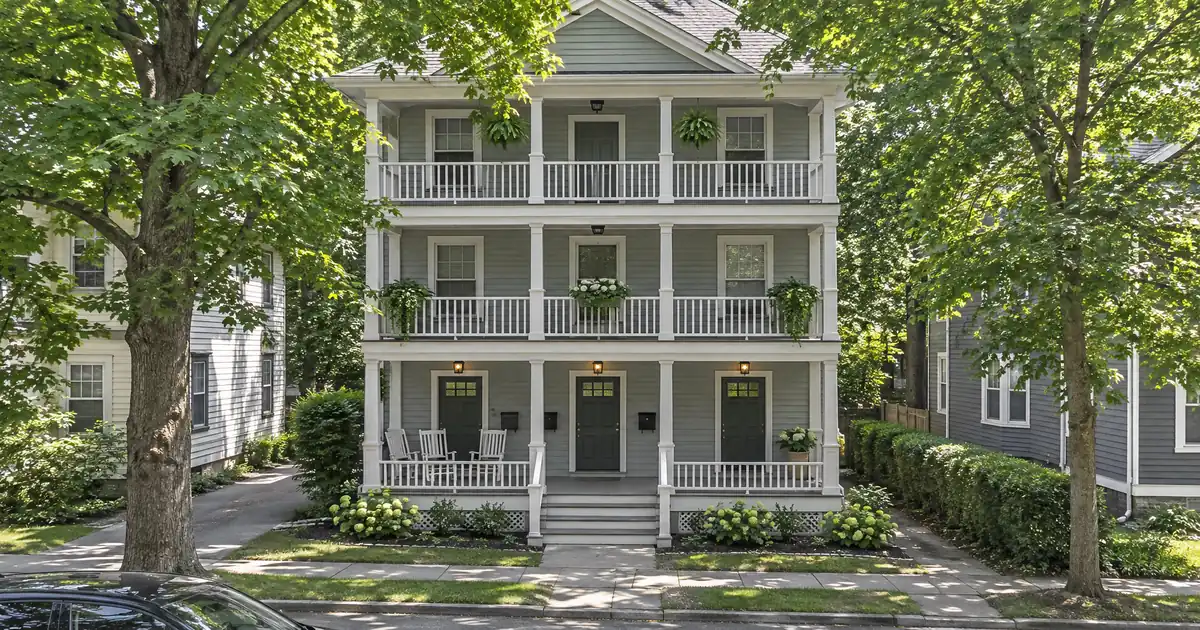
Yes, but with strings attached. A triplex is a three-unit home. VA allows you to buy or refinance it with VA backing as long as you live in one of the units. The other two units can help you qualify.
VA cash-out estimate
Seeded with an example value, a typical balance, and a round cash request at the first-use fee; change any field.
Editable benchmark: 7.18% as of November 5, 2026 · Freddie Mac 30-year average via FRED®. A conventional market reference, not a VA cash-out refinance quote.
Illustrative starting assumptions: a $350,000 home value, a $193,000 current balance, the full-value VA cap with the first-use funding fee financed, a thirty-year term at the current Freddie Mac benchmark, and property taxes and insurance estimated at typical national rates. Every field is editable.
Illustrative estimate only — not a Loan Estimate, approval, quote, or commitment to lend. The rate field carries the weekly Freddie Mac thirty-year conventional benchmark, a market reference and not a VA cash-out refinance quote; a VA loan is priced by the lender at lock. The total loan, funding fee included, is capped at the program leverage on the reasonable value; the fee follows the tier chosen. The cash available is what the cap allows less the balances paid off and the fee, before closing costs, which are not included. The HELOC line is the line program’s combined loan-to-value ceiling applied to the same value and balance. Taxes and insurance are editable estimates. The debt-to-income figure is a guideline; residual income decides a VA file. Licensed in sixteen states for consumer mortgages.
The help comes in a reduced form. The lender takes the rent from the units you don’t occupy and counts only part of it. The reduction is there because rent is not guaranteed. Units sit empty. Tenants pay late. Repairs eat income.
This matters more on a cash-out than people expect. A cash-out refinance replaces your current loan with a new, larger one and hands you the difference in cash. It can refinance any loan type into VA. The new payment is usually higher than the old one, so the rent math has to carry more weight. The basics of the loan itself are covered on the VA cash-out refinance program page from Lendmire.
Here is the practitioner view. Missing documents sink it. So do thin reserves and a borrower who can’t explain how the building runs.
Key Terms Defined
Effective income: Your qualifying monthly income after the lender decides what counts. Counted rent is added here.
Offset: A way of netting rent against a payment instead of adding it to income. VA uses the offset idea for a home you are leaving. For units inside the building you’re financing, the rent is counted as income.
Debt-to-income ratio (DTI): Your monthly debts divided by your monthly income. VA’s standard is 41% or less, and the figure is a guideline rather than a hard cap.
Residual income: What’s left each month after taxes, debts, and basic living costs. It is the controlling VA test. A DTI above 41% needs residual income well above the table.
Reserves: Cash you still hold after closing. Reserves show you can cover the mortgage if rent stops.
Reasonable likelihood of success as a landlord: VA’s phrase for whether you can realistically manage rental units. Lenders judge it from your history, your plan, and your cash.
How Does the Lender Work Through the Rent, Step by Step?
The order matters, because each step can end the rent credit. Here is how a lender works through it.
1. Eligibility and occupancy. You need a certificate of eligibility (COE) from VA. You also certify that you will live in the home. The VA Lenders Handbook, Chapter 4 states that the borrower must occupy one unit as a residence.
2. Appraisal. A cash-out needs a VA appraisal to set reasonable value. Each unit must meet VA’s minimum property requirements. On multi-unit homes, the appraiser often also gives an opinion of market rent. Lenders use that as a check on the leases.
3. Rent documentation. Existing leases or rental agreements are the starting figure. The underwriter must know the local rental market. Under 38 CFR 36.4340, in a strong market the lack of a lease should not automatically bar the rent from counting.
4. Apply the 75% factor. The lender takes 75% of the lease or rental amount from the units you don’t occupy. A higher percentage is allowed only if documented. The regulation spells this out in its multi-unit paragraph.
5. Landlord test and reserves. The regulation says prospective rent is not considered unless you show a reasonable likelihood of success as a landlord. Sufficient cash reserves must also be verified to carry the mortgage payments, meaning principal, interest, taxes, and insurance. The exact number of months is set by the current Handbook and the lender’s guidelines, so confirm it with your loan officer before you plan your cash.
6. Add the rent and run the ratios. The counted rent goes into effective income. Then the lender runs DTI against the new payment and checks residual income against VA’s table.
7. Closing. If you owe a funding fee, it can be financed, but only inside the 100% ceiling described below.
If the lender can’t use the rent, the Handbook says the full mortgage payment is considered, and reserves are no longer part of the rent test. You can still qualify. You just carry the whole payment on your own income.
What Does a Triplex Example Look Like?
Run the logic with placeholders, not dollars. Say the two units you don’t occupy each lease for the same monthly amount, called R. These are modeled assumptions for illustration, not market figures.
| Scenario | Rent counted | What changes |
|---|---|---|
| Both units leased | 75% of 2R | Full credit at the standard share |
| One unit vacant | 75% of R | Lender weighs appraiser’s rent opinion |
| One lease below market | 75% of the lease amount | Higher share needs documentation |
| No usable rent | 0 | Qualify on the full payment |
| Your own unit | 0 | You live there, so it earns nothing |
Two things stand out. First, in these examples the counted rent stays at three-quarters of what the other units bring in. Second, a vacant unit is not automatically zero, but the lender wants evidence. In a weak rental market, that evidence gets harder to produce.
The counted rent then competes with a bigger new payment. Because you cash out equity, the loan balance rises. A triplex that qualified comfortably on the old loan can look tight on the new one. That is where residual income does the work. If your DTI lands above 41%, residual income well above the table can still carry the file, subject to lender guidelines and full review.
What Paperwork Proves the Rent?
The documents depend on your situation.
Units are leased. Provide copies of current leases or rental agreements. Lenders may also ask for proof of deposits or payment history.
A unit is vacant. Expect the lender to lean on the appraiser’s market rent opinion and your read of the local market. A lender may also ask for a short explanation of your plan to fill the unit.
You’ve been renting by handshake. Written agreements help. Without them, you rely more on the appraisal and on your history as a landlord, and the file gets harder.
You own other rental property. The regulation requires cash reserves of three months of the payment on that rental property, plus documentation like a self-employed applicant. Depreciation can be added back. The Handbook says if you still show a rental loss after that, the negative income is deducted from your overall income.
What Does VA Require, and What Do Lenders Add?
VA sets the floor. Lenders can build on it. The 75% share, the landlord test, and the occupancy rule come from VA’s own text. Lenders may layer on top of that, such as counting less than 75% of the rent, asking for more reserves, or setting a higher credit score floor. VA sets no minimum credit score, and the wholesale programs I place VA loans with start at a 580 decision score. Some lenders set a higher floor on multi-unit homes.
That is why two lenders can look at the same triplex and reach different answers. It is also why a broker that shops several wholesale lenders can matter. The best program for your situation depends on your rents, your reserves, and your credit profile. Lendmire is a broker, not a lender, so it matches the file to a program rather than making the credit decision. Every figure here is subject to lender guidelines and full file review.
How Much Cash Can You Pull Out?
The VA cash-out can reach 100% of the appraised value, including the financed funding fee. The regulation at 38 CFR 36.4306 says the loan cannot exceed 100% of reasonable value. Any piece of the funding fee that would push the loan past that line must be paid in cash at closing.
The funding fee on a cash-out refinance is 2.15% for first use and 3.3% after. It is waived for veterans receiving compensation for a service-connected disability and the other exempt groups. VA explains the fee and the exemptions on its funding fee page. Your Loan Estimate shows the exact amounts.
Treat 100% as the ceiling, not the offer. Lenders may stop lower on a multi-unit home. The refinance also needs a net tangible benefit, which is one of VA’s eight listed benefits. Lendmire’s piece How a Lender Counts Seasoning on a VA Cash-Out Refinance covers the waiting-period side.
Where Does the General Rule Break?
Several situations change the answer.
Rent from a home you’re leaving. This is a different rule. Rent from a departing residence can be handled as an offset, while rent from units inside the building you’re financing is counted as income. Don’t mix the two.
Cash-out proceeds as reserves. The Handbook says equity in the property cannot be used as reserves. Whether the cash you pull out can count is a question to put to your lender directly. Don’t assume it can.
No landlord history. The regulation asks for a reasonable likelihood of success. It does not say first-time landlords are out. How a lender judges that varies, so ask what they want to see, such as a management plan.
A fully rented building. A triplex you don’t live in doesn’t fit a VA cash-out, because occupancy is certified. Occupancy decides the leverage, and an investment property is a different loan.
Unit count. A triplex is a three-unit dwelling, but the occupancy rule still applies in full. Living in one unit is the entry ticket.
An existing loan of any type. A VA cash-out can pay off a non-VA loan. If your current loan is a VA loan, the seasoning and benefit tests still apply. Lendmire’s article How a VA Lender Counts Cash Out Requested on an IRRRL shows how that comparison works.
Which Mistakes Derail Triplex Files?
- Assuming all the rent counts. Only 75% does, unless a higher share is documented.
- Assuming rent shrinks the payment. The rent is added to income. It is not subtracted from the payment.
- Skipping reserves. Without verified cash, the lender may count no rent at all.
- Counting equity as reserves. It doesn’t count.
- Leaving leases undocumented. Handshake deals leave the lender leaning on guesses.
- Reading 100% as 100% cash. The funding fee and closing costs come out of that ceiling.
- Ignoring residual income. A DTI near 41% can still work, and a DTI under it can still fail if residual income is thin.
What Should You Ask a Lender Before Applying?
- What share of the rent do you count: 75%, or less under your own rules?
- Do you use the lease, the appraiser’s rent opinion, or the lower of the two?
- How many months of reserves do you require, and can cash-out proceeds count?
- What do you want to see for landlord experience?
- What is your cap on cash-out for a three-unit home?
- Do you add a credit score minimum on multi-unit files?
- If rent can’t be used, do I still qualify on the full payment?
Ask for the answers in writing before you pay for an appraisal.
Your Next Step
If you are weighing a cash-out refinance against keeping the loan you have, Lendmire can help you compare the programs and the equity each one reaches. A broker that works with several wholesale lenders can show you which program treats triplex rent the way your file needs. Nothing here is a commitment to lend.
Frequently Asked Questions
Can I count rent from a unit that has no tenant yet?
Sometimes. The regulation tells the underwriter to know the local rental market, and a missing lease should not automatically bar the rent in a strong market. In practice, the lender leans on the appraiser’s rent opinion. A weak market or thin reserves can lead a lender to count nothing.
Does the rent from the unit I live in count?
No. You occupy that unit as your home, so it earns no counted income. Only the units you don’t occupy are considered, at the reduced share.
Is the 75% share set by VA or by my lender?
VA’s regulation sets 75% as the standard share, unless a higher percentage is documented. Lenders may add overlays and count less. That is why the same triplex can be treated differently from one lender to the next.
Do I still need reserves if rent isn’t used?
Per the Handbook, if rental income will not or cannot be used, the full mortgage payment is considered and the rent-related reserve test does not apply. Your lender may still ask for reserves under its own rules, so confirm before you apply.
Can I use a VA cash-out on a triplex I don’t live in?
No. A VA cash-out is for a home you occupy, and you certify that at closing. A fully rented triplex needs a different kind of financing.
For your own numbers, request a scenario review with Lendmire.
About Lendmire
As a mortgage broker (NMLS# 2371349), Lendmire helps homeowners and home buyers in 16 states with FHA, VA, conventional and jumbo purchase and refinance loans arranged through wholesale lenders. Lendmire is never the lender; program terms are set by the lender and the agency guidelines. Scotsman Guide named Lendmire a Top Mortgage Workplace in both 2025 and 2026.
Get Started
Ready to find the right loan for you?
See your offer in seconds. No credit pull, no obligation.
Informational only. Not a Loan Estimate, approval, or commitment to lend. Program availability and eligibility are subject to lender guidelines, credit approval, property review, and underwriting.
References
1. VA Lenders Handbook, Chapter 4 — Credit Underwriting
2. eCFR, 38 CFR 36.4340 — Underwriting standards, including multi-unit rental income
3. GovInfo, 38 CFR 36.4306 — Refinancing loans, 100% reasonable value limit
4. VA.gov — Funding fee and closing costs
This article is part of Lendmire’s VA cash-out refinance program — full qualification details, guidelines, and scenarios live on the program page.
Related reading: Can You Get Approved for a VA Cash-Out Refinance in Six Months? · VA Cash-Out Refinance Requirements on a Home You Own · VA Cash-Out Refinance Requirements When the Lender Must Document Tangible Net Benefit
Brandon Miller
Founder & CEO, Mortgage Loan Originator, Lendmire LLC
- Mortgage Loan Originator · NMLS# 1129696 · Verify on NMLS Consumer Access
- North Carolina Real Estate Broker · License# 343312 · Verify on NCREC
- North Carolina Insurance Producer · License# 19053198 · Property, Casualty, Life, Health · Verify on NAIC SBS
- Lendmire LLC · Firm NMLS# 2371349 · Verify firm licensure
Important disclosures. Lendmire (NMLS# 2371349) is a licensed mortgage brokerage. Lendmire is not a direct lender, depository institution, or financial advisor. All loan inquiries are subject to lender underwriting; this article does not constitute a commitment to lend. Rates, terms, and program guidelines are subject to change without notice and vary by borrower profile, property type, and state. Information in this article is general in nature and is not financial, legal, or tax advice. Equal Housing Opportunity. NMLS Consumer Access: nmlsconsumeraccess.org.