
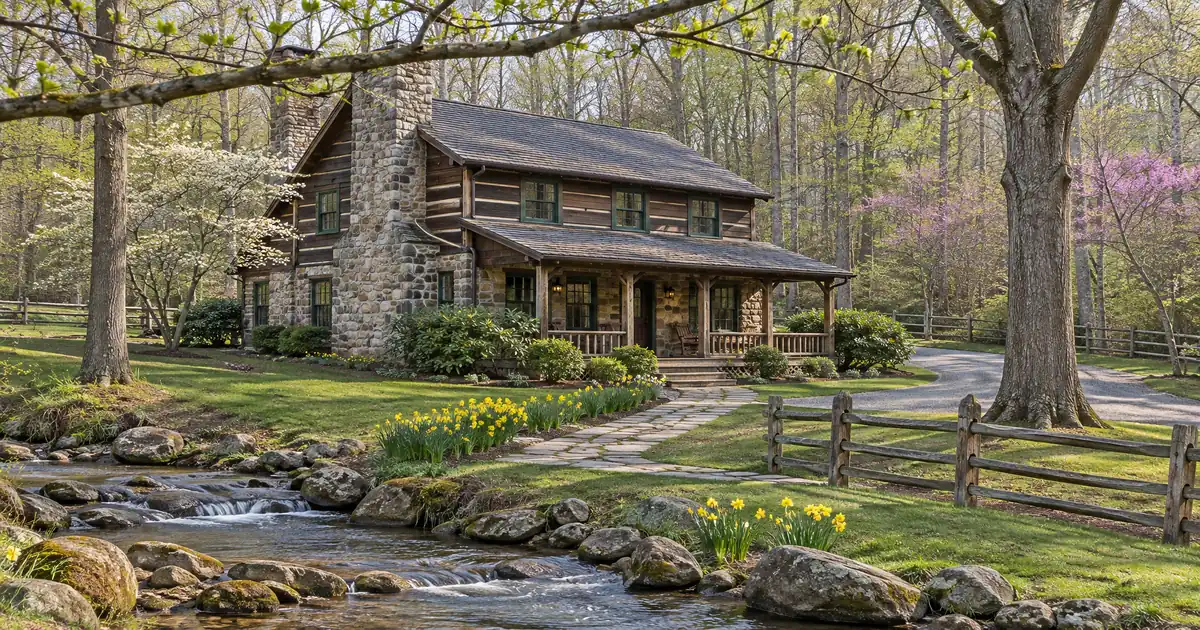
The Quick Read: Extra acres only count toward your cash-out if the appraiser treats them as part of the home’s normal site. Land that could be split off and sold on its own is typically left out of the value, so the 80% loan-to-value cap is applied to a smaller number. Land that supports the house but cannot be separated is generally included. What decides it is how the appraiser documents the land, so the work starts before the appraisal is ordered.
Key Takeaways
- FHA cash-out refinances reach 80% of the appraised value, on a home you have owned and occupied for 12 months before the case number is assigned. Program figures are subject to lender guidelines and full file review.
- HUD splits extra land into two kinds. Excess land is left out of the value. Surplus land is counted.
- When excess land is left out of the value, the 80% cap is applied to a smaller number, so your cash-out can shrink.
- Talk to your loan officer about the land before the appraiser walks the property.
What Does FHA Mean by Excess Land and Surplus Land?
The two terms sound alike, but they lead to different valuations. HUD’s Handbook 4000.1 glossary defines excess land as land not needed to serve or support the existing home. Its best use may differ from the house’s, and it may be saleable separately.
FHA cash-out estimate
Seeded with an example value, a balance to match, and a round cash request; change any field.
Editable benchmark: 7.18% as of November 5, 2026 · Freddie Mac 30-year average via FRED®. A conventional market reference, not an FHA cash-out refinance quote.
Illustrative starting assumptions: a $350,000 home value, a $193,000 current balance, the FHA cap on a principal residence with the upfront premium financed, a thirty-year term at the current Freddie Mac benchmark, and property taxes and insurance estimated at typical national rates. Every field is editable.
An illustration, not a Loan Estimate, an approval, a quote, or a commitment to lend. The rate shown is the weekly Freddie Mac thirty-year conventional benchmark, used as a market reference; an FHA cash-out is priced by the lender at lock, and this is not an FHA cash-out refinance quote. HUD’s cap limits the base loan; the upfront premium is financed on top of the capped base loan; the monthly premium for the first year follows the snapshot’s schedule. Cash available means the base loan the cap permits less the balances retired, before closing costs, which this calculator leaves out. The line figure applies the line program’s combined loan-to-value ceiling to the same value and balance. Taxes and insurance are estimates you can edit. Licensed in sixteen states for consumer mortgages.
Surplus land is also extra land. The difference is that it cannot be separated and sold off. It has no independent use of its own. In HUD’s Handbook, appraisers include surplus land in the valuation.
Here is the plain version:
| Factor | Excess Land | Surplus Land |
|---|---|---|
| Supports the home? | No | Extra, but part of the site |
| Can be sold separately? | Yes | No |
| Own best use? | Often yes | No |
| In the value? | Left out | Counted |
A rough rule of thumb from HUD’s older reference material: land is a candidate for excess when it is larger than what is typical and marketable in the neighborhood and capable of separate use. Both parts of that test matter. A big lot that cannot be divided does not fit it.
Is There an Acreage Cap on an FHA Cash-Out?
No simple acre limit shows up in the HUD material reviewed for this article. Lenders and summaries sometimes cite a number, but that is a lender choice, not a HUD rule. Some lenders set their own acreage or property-use limits on top of HUD’s. These overlays vary across the wholesale programs Lendmire uses for FHA loans, so a property that one lender declines on acreage may fit another’s guidelines.
The practical limits are these:
- How the appraiser classifies the land.
- Whether the property reads as a residence rather than a farm or business.
- The overlay of the specific lender reviewing the file.
On that second point, farm use deserves a flag. USDA’s rural program, which borrows HUD’s minimum property standards, requires a property to be residential in use, character and design, and rules out farm-income land and buildings. A garden or stored equipment does not disqualify. That is USDA’s rule, not FHA’s. For FHA, a working farm is a question to put to the lender and the appraiser before you order anything.
How the Appraisal Handles the Land, Step by Step
Here is the sequence on a typical file.
1. Case number and order. The lender assigns an FHA case number and orders a full appraisal from an FHA-roster appraiser. The cash-out refinance is appraised in full rather than skipping that step the way an FHA Streamline can.
2. Site description. The appraiser records the whole legal site. That includes any additional parcels or lots under the same legal description and ownership.
3. Highest and best use. The appraiser decides whether the extra land is excess (separable and usable on its own), surplus (extra but not separable), or just normal for the area. HUD’s Handbook requires this analysis in the report to support any conclusion that excess land exists. If you want the source, the Handbook 4000.1 is a large PDF. Search it for “Excess and Surplus Land.”
4. Valuation. For excess land, the appraiser describes it but does not value it. The report is built on a hypothetical condition that covers only the principal site and the house. Surplus land goes into the value.
5. Loan sizing. The lender applies the 80% cap to the adjusted value. HUD Mortgagee Letter 2019-11 set that cash-out cap at 80%, down from 85%. HUD now lists that letter as folded into the Handbook, so the cap lives there today. If excess land was carved out, the value being multiplied by 80% is smaller.
6. Collateral. HUD’s archived guidance says the whole property, including the excess land, is still pledged under the mortgage and note, while the maximum loan is calculated only on the non-excess portion. That archive predates the current Handbook, so treat it as background and confirm current treatment with your lender.
7. Review. You get a copy of the appraisal and can read how the land was treated.
What Pushes Land Into the “Excess” Column
The question the appraiser is really answering is simple: could someone legally split this off and sell it? Several facts feed that answer.
Separate platted lots. Two or more legally conforming lots under one legal description and one owner is the textbook trigger. The second lot can be divided or developed, so it is usually excess.
Zoning and minimum lot size. Acreage that falls short of the local minimum for a new lot, or that has no legal access, often cannot be separated. That points toward surplus.
Shape and access. A rear field with no road frontage or easement is hard to sell on its own. A strip with its own frontage is not.
Neighborhood norms. If comparable homes nearby sit on similar acreage, the extra land looks typical. The same acreage in a neighborhood of small lots looks excessive.
Unusable ground. Wetlands, steep slopes and similar ground do not read as developable. How such land is treated depends on the appraiser’s documentation.
If you hold several parcels, check the legal descriptions and the tax parcels. Fix a clerical mismatch before the appraiser sees it.
What It Does to Your Cash-Out
Most of the harm comes through the arithmetic. The 80% cap is applied to a smaller value, so the ceiling falls. The payoff of your current mortgage comes out of that ceiling first. What remains is your cash.
Picture a homeowner whose land is a large share of what they think the property is worth. If the appraiser treats most of it as excess, the house and its principal site carry the value. The homeowner feels land-rich but can only borrow against the house and its site. If the ceiling lands close to the existing payoff, there may be little or no cash left over. A larger loan also raises the monthly payment, so the benefit may not justify the refinance.
Two cases to compare, using no dollar figures:
| Scenario | Value used for loan | Effect on cash-out |
|---|---|---|
| Extra land is surplus | House plus whole site | Ceiling reflects full site |
| Extra land is excess | House plus principal site only | Ceiling falls, cash shrinks |
Mortgage insurance applies on top of this. On the programs Lendmire’s wholesale lenders offer, FHA carries an upfront premium of 1.75% of the base loan, usually financed, plus an annual premium. Both scale with the loan, so a smaller loan changes them too.
What to Do Before the Appraiser Arrives
Most of the control you have comes before the appraisal, not after. Run through this list.
- Tell the loan officer about the land first. Ask how the lender treats acreage, and whether it has any overlay on size or use.
- Gather the survey and plat. A clear map of lot lines, easements and road access helps the appraiser document what is and is not separable.
- Collect local zoning facts. Minimum lot size and subdivision rules decide whether land can be split. Your county or town planning office can tell you.
- Pull comparable sales with similar acreage. Recent sales of homes on similar-sized parcels show that your acreage is normal for the area.
- Note outbuildings and use. Garages, sheds and a garden are fine. Farm income or livestock operations raise a different question.
- Confirm the occupancy history. Cash-out needs the home to be your principal residence, owned and occupied for 12 months before the case number.
If the Value Comes In Lower Than You Expected
First, read the report. Look for errors in the site size, the lot lines, the comparables and the classification itself. The CFPB’s Regulation B requires the creditor to give you a copy of each appraisal promptly after completion, or at least three business days before closing, whichever comes first. The CFPB delivery factsheet adds that the creditor must tell you of your right to the copy within three business days of application. The copy is free.
Then think about what is realistic:
- Ask about a value review. If the report has a factual error or leaves out better comparables, your loan officer can ask whether the lender allows a reconsideration. Policies vary.
- Take a smaller cash-out. If the ceiling still covers a reduced amount, a smaller loan may do the job.
- Look at a different structure. Some borrowers compare a refinance that takes out no cash. Another loan type may weigh the land differently.
- Wait and rebuild the case. If the acreage classification depends on facts you can change, such as combining parcels or fixing a legal description, fixing it first can change the answer.
If the extra parcel is truly separate, some owners consider a lot split or a separate sale. That is a legal and tax question for a qualified professional.
Where the General Rule Breaks
Some situations do not follow the clean excess-versus-surplus split.
Two lots, one owner, one house. The second lot is excess, so the loan is based on the house and its principal site. The extra lot may still secure the mortgage.
Large acreage that cannot be divided. The land is surplus, so it counts toward value. A home on 20 landlocked acres may be valued very differently from a home next to a 20-acre parcel with its own road frontage.
Working farm or income-producing land. FHA wants a residential property. Farm income or a business operation can create eligibility questions that no appraisal classification will solve. Confirm with the lender.
Lender overlay. A lender may decline a property on size or use grounds even when HUD’s rules would not. A different lender may accept it.
Hawaiian Homelands. HUD’s 2019 cut to the cash-out cap did not apply to Section 247 mortgages. That is a narrow case.
Rate-and-term instead of cash-out. The 80% cap is specific to cash-out. A refinance with no cash taken out on a principal residence occupied for the previous twelve months can reach 97.75% LTV under the programs Lendmire places. A smaller appraised value hurts a cash-out more than it hurts that structure. Final terms depend on the lender’s guidelines, the property type, and the borrower’s complete credit picture.
Key Terms Defined
Excess land: Land not needed to support the home that could be sold separately, and that an FHA appraisal leaves out of the value.
Surplus land: Extra land that cannot be separated and sold, and that is included in the value.
Hypothetical condition: An appraisal assumption, such as valuing only the principal site and house, that is stated in the report.
Adjusted value: The value on which FHA applies its loan-to-value cap.
Encumbered: Pledged as security for the loan, even when the appraiser did not value it.
Frequently Asked Questions
Does FHA limit how many acres I can have on a cash-out refinance?
No simple acre limit appears in the HUD material reviewed here. Individual lenders may set their own size or use limits, and those overlays vary. Ask early which acreage a lender will accept.
Will the extra land be taken out of my mortgage collateral if it is not valued?
Usually not. HUD’s archived guidance says the entire property, including excess land, stays pledged while the loan amount is based on the non-excess portion. Confirm how your lender handles it.
Does my credit score change how much land value counts?
No. The land classification comes from the appraiser’s analysis, not from your score. Your decision score matters to eligibility. The programs Lendmire places FHA loans with start at a score of 580.
Can I challenge how the appraiser classified my acreage?
You can read the report and point out factual errors, then ask whether the lender allows a reconsideration. Surveys, plats, zoning facts and comparable sales with similar acreage are the evidence that helps most. Lenders set their own review policies.
Is the 80% cap the same as an FHA purchase?
No. An FHA purchase reaches 96.5% financing with a 3.5% minimum investment at a 580 decision score, subject to lender guidelines. The FHA cash-out is capped at 80% on a home you have owned and occupied for 12 months.
If you are weighing a cash-out refinance against keeping the loan you have, Lendmire can help you compare the programs and the equity each one reaches. Program figures are subject to lender guidelines and full file review, and nothing here is a commitment to lend.
For your own numbers, request a scenario review with Lendmire.
About Lendmire
Lendmire (NMLS# 2371349) is a mortgage brokerage serving homeowners and home buyers in 16 states. FHA, VA, conventional and jumbo purchase and refinance loans are arranged through wholesale lending channels; Lendmire brokers the financing and the lender underwrites each application. Scotsman Guide named Lendmire a Top Mortgage Workplace in both 2025 and 2026.
Get Started
Ready to find the right loan for you?
See your offer in seconds. No credit pull, no obligation.
Informational only. Not a Loan Estimate, approval, or commitment to lend. Program availability and eligibility are subject to lender guidelines, credit approval, property review, and underwriting.
References
1. HUD Handbook 4000.1 Glossary
2. USDA’s rule
4. HUD Mortgagee Letter 2019-11
5. CFPB Regulation B § 1002.14
6. CFPB Factsheet: Delivery of Appraisals
This article is part of Lendmire’s FHA cash-out refinance program — full qualification details, guidelines, and scenarios live on the program page.
Related reading: FHA Cash-Out Refinance Requirements to Go Fixed · How an FHA Cash-Out Works During a Divorce Buyout · How an FHA Cash-Out Appraisal Works When It Ignores a Renovation
Brandon Miller
Founder & CEO, Mortgage Loan Originator, Lendmire LLC
- Mortgage Loan Originator · NMLS# 1129696 · Verify on NMLS Consumer Access
- North Carolina Real Estate Broker · License# 343312 · Verify on NCREC
- North Carolina Insurance Producer · License# 19053198 · Property, Casualty, Life, Health · Verify on NAIC SBS
- Lendmire LLC · Firm NMLS# 2371349 · Verify firm licensure
Legal disclosures. Lendmire (NMLS# 2371349) is a state-licensed mortgage brokerage that arranges financing through wholesale lender relationships. Lendmire is not a direct lender, depository institution, or registered financial advisor. The discussion above is general informational content about real estate financing — it is not financial, legal, or tax advice, and readers should consult licensed professionals for guidance on their individual circumstances. Loan inquiries are subject to lender underwriting; this article does not represent a commitment to lend. Loan terms, rates, and qualification standards vary by borrower, property, and state, and are subject to change at any time. Equal Housing Opportunity. NMLS Consumer Access: nmlsconsumeraccess.org.