
The Quick Read: Reserves are the verified savings left in your accounts after you have paid everything due at closing. On a duplex you live in, the lender wants to see at least one month of the full proposed housing payment still sitting there. Cash you pull out in the refinance does not count toward it. Account statements, not promises, are what prove the number.
What Counts as Reserves on a Duplex Cash-Out?
Reserves are your own liquid money that remains after closing. The test is simple: take your verified liquid assets, subtract every dollar you need to bring to the table, and see what is left. If that leftover covers the required number of monthly payments, the reserve box is checked.
FHA cash-out estimate
Seeded with an example value, a balance to match, and a round cash request; change any field.
Editable benchmark: 7.18% as of November 5, 2026 · Freddie Mac 30-year average via FRED®. A conventional market reference, not an FHA cash-out refinance quote.
Illustrative starting assumptions: a $350,000 home value, a $193,000 current balance, the FHA cap on a principal residence with the upfront premium financed, a thirty-year term at the current Freddie Mac benchmark, and property taxes and insurance estimated at typical national rates. Every field is editable.
An illustration, not a Loan Estimate, an approval, a quote, or a commitment to lend. The rate shown is the weekly Freddie Mac thirty-year conventional benchmark, used as a market reference; an FHA cash-out is priced by the lender at lock, and this is not an FHA cash-out refinance quote. HUD’s cap limits the base loan; the upfront premium is financed on top of the capped base loan; the monthly premium for the first year follows the snapshot’s schedule. Cash available means the base loan the cap permits less the balances retired, before closing costs, which this calculator leaves out. The line figure applies the line program’s combined loan-to-value ceiling to the same value and balance. Taxes and insurance are estimates you can edit. Licensed in sixteen states for consumer mortgages.
That sounds easy. The trouble starts with the cash-out itself. A cash-out refinance hands you money at the table, so many borrowers assume that money is their cushion. It is not. Cash received at settlement is excluded from reserves. Think of it this way: a reserve is a safety net that exists before the new loan funds, not one the new loan creates.
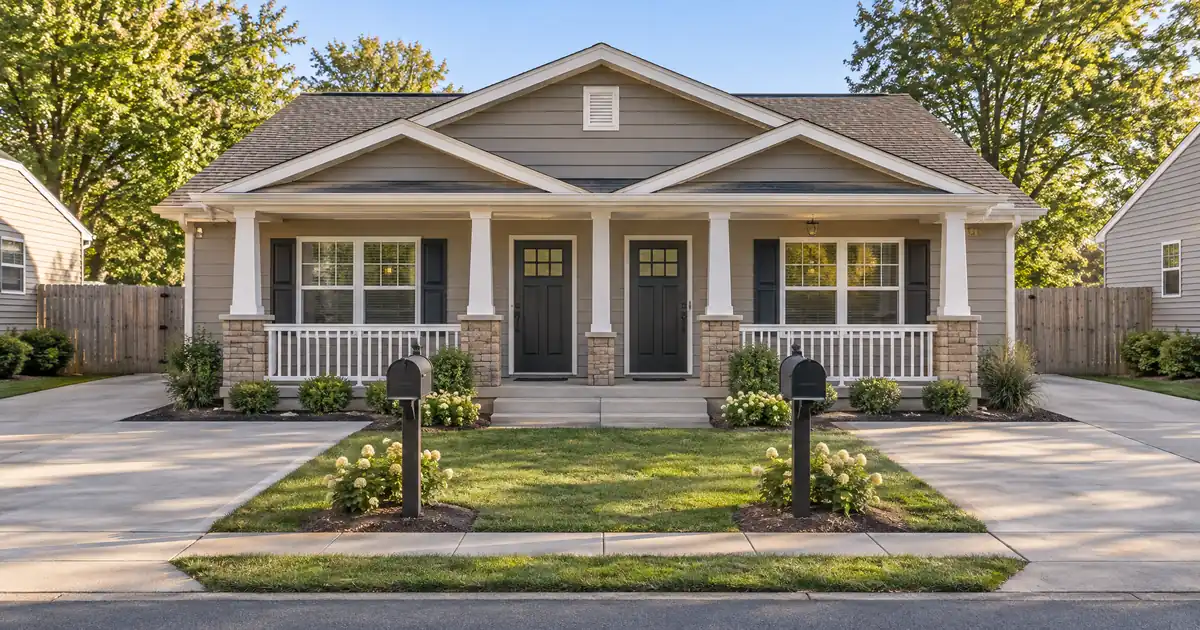
Here is where the duplex matters. You live in one unit and rent the other, so the file is an owner-occupied refinance of a two-unit home. That puts it in the one-to-two-unit group, which carries the lighter reserve requirement. Three- and four-unit homes carry a heavier one. Terms depend on the lender’s guidelines, the property type, the leverage, and a full review of the credit profile.
In short, the cash-out is capped at 80% loan-to-value on a home you have owned and occupied for the 12 months before the case number is assigned. The maximum financing figures you may see for purchases, such as 96.5%, do not apply to a cash-out. Across the wholesale programs Lendmire places FHA files with, a decision score of 580 or higher is the starting point. Everything here is subject to lender guidelines and full file review.
The reserve number, in plain words
For a one- or two-unit home, the requirement is one month of the full proposed housing payment. That payment means principal, interest, taxes and insurance. Lenders generally measure against the whole proposed payment, including the monthly mortgage insurance piece. Ask your loan officer to confirm how your file is counted.
Key Terms Defined
Reserves: Verified liquid assets you still hold after paying all funds required at closing.
PITI: Principal, interest, taxes and insurance, the core of your monthly housing payment.
Cash to close: The money you must bring, covering your payoff gap, closing costs and prepaid items.
Cash-out proceeds: The money you receive at settlement from the new, larger loan. These are not reserves.
Adjusted value: The appraised value as the lender adjusts it for FHA purposes, which sets the loan cap.
Compensating factor: A documented strength, such as savings, that can offset a weaker part of the file.
Seasoning: The length of time you have owned and lived in the home before the case number is assigned.
How to Show Reserves, Step by Step
The reserve check sits inside a longer underwriting sequence. Here is the order a typical duplex file follows.
1. Confirm eligibility. You own a two-unit home, live in one unit as your principal residence, and have met the 12-month own-and-occupy test. Your mortgage payment history is acceptable.
2. Let the appraisal set the cap. The new loan cannot exceed 80% of adjusted value. A low appraisal shrinks both the loan and the cash you can take.
3. Work out cash to close. This covers the payoff of your current loan plus closing costs, prepaids and any required items.
4. Document your liquid assets. The lender asks for statements. Reserves are your verified liquid assets minus the funds required at closing, which matches HUD’s handbook definition.
5. Strip out what does not count. Under HUD Mortgagee Letter 2023-17, the cash taken at settlement is not reserves. Money you spend on closing comes out of the total too.
6. Compare to the requirement. For a duplex, show at least one month of the full proposed payment left over.
7. Add rental income, if it is used. The second unit’s rent may count toward income, but only in part. More on that below.
8. Source any large deposits. Lenders ask where big, unusual deposits came from. Money that cannot be traced is left out of your available funds.
The same mortgagee letter is also the source for the duplex-versus-fourplex split. Reserve rules get amended from time to time, so a loan officer should confirm the current handbook language against your file. Do not assume the rule applies in only one underwriting mode, automated or manual.
Which Assets Count and Which Do Not
Statements for accounts you own, in your name, carry the most weight. The table below sorts the usual suspects.
| Asset | Counts as reserves? | Note |
|---|---|---|
| Checking and savings | Yes | Recent statements needed |
| Money market and CDs | Yes | Verify access to funds |
| Brokerage and mutual funds | Yes | Value as of statement |
| Retirement accounts | Partly | Discounted, may be excluded |
| Gift funds | Generally no | Confirm with your lender |
| Equity in another property | No | Not liquid |
| Cash-out proceeds | No | Excluded by HUD |
Retirement money deserves a closer look. HUD’s guidance discounts a vested balance to allow for taxes and early-withdrawal penalties, and subtracts any loan against it. If the plan allows withdrawals only at job termination, retirement or death, it may not count at all. Treat your full 401(k) balance as a ceiling, not the figure your lender will use. The longer-standing discount comes from HUD’s earlier retirement-asset guidance, so your lender will confirm the current factor.
A Worked Example, Measured in Months
Use payment-months instead of dollars, and the arithmetic stays clean. These figures are hypothetical and for illustration only.
Say you hold liquid savings equal to four months of your proposed payment. Your cash to close, after the payoff gap, costs and prepaids, absorbs the equivalent of two and a half months. You also plan to take cash out. Here is how the file reads.
| Line | Months of payment |
|---|---|
| Verified liquid assets | 4.0 |
| Less funds required at closing | 2.5 |
| Cash-out proceeds counted | 0.0 |
| Reserves remaining | 1.5 |
| Duplex requirement | 1.0 |
In that picture, the file clears with half a month to spare. Now change one thing: the closing costs rise to three and a half months. Reserves drop to 0.5, below the requirement, and the file fails even though the equity is there. That is the pattern worth planning around. A borrower with plenty of equity and thin savings can qualify on the loan size and still stumble on reserves.
A practical habit helps. Before applying, build a one-page worksheet with three lines: your liquid assets, your estimated cash to close, and the monthly payment. Subtract the second from the first, divide by the third, and compare to the requirement. Then add a personal buffer. The minimum is a floor, not a comfortable cushion, especially with a tenant in the other unit.
What Happens With the Rent From the Other Unit?
Rent from the second unit can help you qualify, but the lender discounts it. On a two- to four-unit home, rental income may count as effective income. When the subject property has limited or no rental history, the HUD letter calls for a reduced share of the rent, supported by an appraiser’s rent schedule and any leases. Confirm the exact formula for your history with your loan officer.
Two points matter for reserves. First, rental income eases your debt ratios, not your reserve requirement. The one-month figure stays the same. Second, the discount exists because vacancies and turnover are real. Plan your household budget as if the unit could sit empty for a stretch. Final terms depend on the lender’s guidelines, the property type, and the borrower’s complete credit picture.
How the Requirement Changes by Property and Path
The one-month figure is not universal. It shifts with unit count and with extra features on the property.
| Situation | Reserves required |
|---|---|
| One- or two-unit home | 1 month PITI |
| Three- or four-unit home | 3 months PITI |
| One unit plus accessory dwelling | 2 months PITI |
A duplex sits in the first row. If your home is a single-family house with a basement apartment or backyard cottage, the third row applies, and the cottage’s rent cannot count as income on a cash-out. If you own a triplex or fourplex, expect the larger figure plus a self-sufficiency test of the building’s income. That test is described in older HUD reference material, so ask your loan officer how it works today.
The underwriting path matters too. A file that gets downgraded to manual review can pick up added requirements. That is when savings can work as a compensating factor, with reserves of several payments helping a weaker ratio or credit profile. Keep this concept separate from the base duplex reserve. One is a minimum you must meet. The other is an extra strength you may choose to show.
Where the Rule Breaks
Several situations change the answer, so check whether yours is one of them.
- Non-occupant co-borrower. On a cash-out, income from a co-borrower who does not live in the home cannot be used to qualify. This differs from purchase loans, where a non-occupant co-borrower is allowed.
- Gift money. Gifts generally do not count as reserves. Do not plan on a relative’s transfer to pad the number.
- Borrowed funds. Money borrowed from any source is not an asset. Equity in another property is not liquid cash.
- Retirement accounts. Discounted, and sometimes unusable if access is limited.
- A recent large deposit. An unsourced deposit may be removed from your available funds. Keep the paper trail for any transfer between your own accounts.
- Inherited homes. Older HUD material treats inheritance as a special case for the occupancy test. That reference is archival, so confirm current treatment before relying on it.
- Hawaiian Home Lands. Section 247 properties are exempt from the 80% cap. This is a narrow carve-out.
A related trap is the order of spending. If you pay closing costs from savings, your reserves shrink dollar for dollar. If you use savings to pay off a credit card before closing, the same thing happens. Do the subtraction before you apply, not after.
What the Decision Looks Like in Practice
Reserves do not reduce your loan. They decide whether the file is approvable. So the real question is whether a cash-out suits you at all.
Start with the cap. Because the loan tops out at 80% of adjusted value, at least 20% equity stays in the home. HUD lowered the cash-out limit to reduce risk and line up with the conventional cash-out cap, as its press release on the change explains. Your duplex’s appraised value drives how much cash is available.
Then weigh the cost of the structure. An FHA loan carries an upfront mortgage insurance premium of 1.75% of the base loan, which is typically financed. The annual premium falls between 0.15% and 0.75% of the balance, depending on term, loan amount and LTV. On a cash-out loan, the LTV cap is 80%, so the annual premium ends after eleven years. These are program mechanics, not quotes. Your Loan Estimate shows what applies to you.
Think about what the cash is for. CFPB research found that paying off other debts was the most common reason borrowers took cash out. That can make sense if it replaces higher-cost debt. It is a different story if the cash funds spending that leaves nothing behind. A cash-out replaces your mortgage with a larger one. That can lengthen your payoff timeline and raise your monthly payment.
If you are comparing programs, a conventional cash-out has its own reserve logic.
Common Mistakes on a Duplex Reserve File
- Counting the cash-out as savings.
- Treating the duplex like a fourplex and assuming three months.
- Using a full retirement balance instead of the discounted figure.
- Planning on gift money for the cushion.
- Spending savings on debts or costs before the reserve math is done.
- Assuming all of the second unit’s rent counts as income.
- Moving large sums between accounts without a record.
- Measuring reserves on the application date instead of after closing.
Frequently Asked Questions
Do I need reserves if I have strong credit and a low balance?
Strong credit helps your file, but it does not remove the reserve requirement on a duplex. The one-month requirement applies to one- and two-unit homes based on property type and the loan structure, not on a credit-score tier. A strong profile can help with ratios and compensating factors, which is a separate question. Leverage, reserves, and pricing vary by lender and program; the final terms follow the full file review.
Can I use my cash-out proceeds to satisfy reserves?
No. Your reserves must come from assets you hold apart from the new loan, verified after your required closing funds are subtracted.
Does rental income from the other unit lower the reserves I need?
No. Rent can help your debt ratios, but the reserve figure stays at one month of the proposed payment for a duplex. The lender also counts only a discounted share of the rent when there is limited rental history.
What happens if I use my savings for closing costs?
Those funds come out of the reserve total. If the leftover falls below the requirement, the file does not meet it, even with ample equity. Running the subtraction before you apply tells you where you stand.
Do I need a separate account for reserves?
Not necessarily. Lenders look at verified balances in accounts you own, and reserves are what remains after closing funds are subtracted. A paper trail that shows ownership and source of funds matters more than a dedicated account.
Where to Go From Here
If you are weighing a cash-out refinance against keeping the loan you have, Lendmire can help you compare the programs and the equity each one reaches. Program figures are subject to lender guidelines and full file review, and nothing here is a commitment to lend. Reach the team at 828-256-2183 or request a quote through the mortgage quote page.
About Lendmire
Lendmire, NMLS# 2371349, is a mortgage brokerage with consumer lending licenses in 16 states. FHA, VA, conventional and jumbo purchase and refinance loans are arranged through wholesale lending partners, and each application is reviewed individually by the lender. Scotsman Guide named Lendmire a Top Mortgage Workplace in both 2025 and 2026.
Get Started
Ready to find the right loan for you?
See your offer in seconds. No credit pull, no obligation.
Informational only. Not a Loan Estimate, approval, or commitment to lend. Program availability and eligibility are subject to lender guidelines, credit approval, property review, and underwriting.
References
1. HUD Handbook 4000.1 Glossary
2. HUD Mortgagee Letter 2023-17
3. HUD Mortgagee Letter 2014-02
4. HUD press release on cash-out risk
This article is part of Lendmire’s FHA cash-out refinance program — full qualification details, guidelines, and scenarios live on the program page.
Related reading: How an FHA Cash-Out Works When Heirs Refuse to Sell · How an FHA Cash-Out Works on an Inherited Home for a Retiree · How an FHA Cash-Out Lender Counts S-Corp Distributions
Brandon Miller
Founder & CEO, Mortgage Loan Originator, Lendmire LLC
- Mortgage Loan Originator · NMLS# 1129696 · Verify on NMLS Consumer Access
- North Carolina Real Estate Broker · License# 343312 · Verify on NCREC
- North Carolina Insurance Producer · License# 19053198 · Property, Casualty, Life, Health · Verify on NAIC SBS
- Lendmire LLC · Firm NMLS# 2371349 · Verify firm licensure
Disclosures. The information presented in this article is general market commentary, not financial, legal, or tax advice. Lendmire is a mortgage brokerage (NMLS# 2371349) — not a direct lender or depository institution — and loan placement is subject to lender underwriting. Nothing in this content represents a commitment to lend. Loan terms, pricing, and program availability vary based on borrower qualifications, property characteristics, and state of subject property, and are subject to change at any time. Lendmire complies with Equal Housing Opportunity requirements. Consumer access: nmlsconsumeraccess.org.