
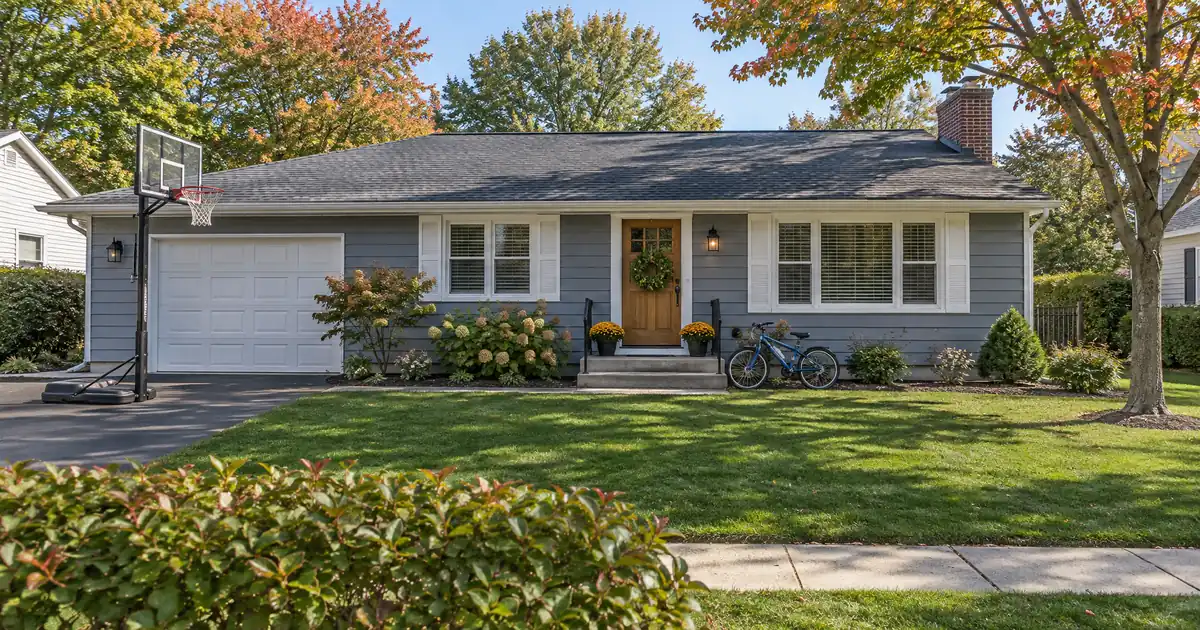
The Quick Read: The test is simple to state. You must have owned the home and lived in it as your main residence for the 12 months before your FHA case number is assigned. The count runs backward from that case-number date, not from your application or your closing. If you pass, FHA cash-out financing reaches up to 80% of the appraised value, subject to lender guidelines and full file review.
Key Takeaways
- The 12 months are counted back from the day the case number is assigned.
- At least one borrower on the loan must carry the full 12 months.
- Ownership, occupancy, and payment history are three separate checks.
- Second homes and rentals do not use the cash-out version of this loan.
What Is the Occupancy Clock, and Why Does It Exist?
It is a waiting period tied to where you live. FHA cash-out refinancing is built for people who live in the home they are borrowing against. The clock proves you do.
FHA cash-out estimate
Seeded with an example value, a balance to match, and a round cash request; change any field.
Editable benchmark: 7.18% as of November 5, 2026 · Freddie Mac 30-year average via FRED®. A conventional market reference, not an FHA cash-out refinance quote.
Illustrative starting assumptions: a $350,000 home value, a $193,000 current balance, the FHA cap on a principal residence with the upfront premium financed, a thirty-year term at the current Freddie Mac benchmark, and property taxes and insurance estimated at typical national rates. Every field is editable.
An illustration, not a Loan Estimate, an approval, a quote, or a commitment to lend. The rate shown is the weekly Freddie Mac thirty-year conventional benchmark, used as a market reference; an FHA cash-out is priced by the lender at lock, and this is not an FHA cash-out refinance quote. HUD’s cap limits the base loan; the upfront premium is financed on top of the capped base loan; the monthly premium for the first year follows the snapshot’s schedule. Cash available means the base loan the cap permits less the balances retired, before closing costs, which this calculator leaves out. The line figure applies the line program’s combined loan-to-value ceiling to the same value and balance. Taxes and insurance are estimates you can edit. Licensed in sixteen states for consumer mortgages.
A cash-out refinance replaces your current mortgage with a new, larger one. You receive the difference in cash. Your principal residence is the home you live in as your main address. FHA cash-out is limited to that kind of home.
The FHA case number is the file number the lender requests when your loan enters the FHA system. It is the date everything else is measured from. Hold that thought, because most mistakes on this topic come from using the wrong date.
People assume a few months of living in the house is enough. It is not.
Lendmire’s FHA cash-out refinance program page gives the full program picture.
How Do You Count the 12 Months?
Start with the date your case number will be assigned. Count back 12 full months. Every one of those months must show ownership and occupancy.
Here is a worked example using generic dates. Say your lender is ready to order the case number on the 20th of a month. The window opens on the 20th of that same month one year earlier. You needed to own the home and live in it as your main residence from that day forward.
Now say you moved into the home you bought eight months before that case-number date. You are four months short. Applying early does not help. Ordering the case number early locks in the wrong anchor date.
The practical steps look like this:
1. Pick the date you would like the case number assigned. 2. Count back 12 months to the same day of the month. 3. Check that you owned the home on that day. 4. Check that you lived there, as your main residence, the whole stretch. 5. If you are a few weeks short, wait before the lender orders the case number.
Step 5 is a practical read of the rule, not a quoted line from the agency. It is also the advice that saves the most frustration.
Notice what is not on the list. Your closing date on the new loan does not matter for the count. Neither does the day you submit an application. The case number is the anchor.
Ownership, Occupancy, Payment History: Three Different Tests
These are checked separately. Passing one does not excuse the others. A lender looks at each in turn.
| Test | What the lender checks | Does waiting fix it? |
|---|---|---|
| Ownership | You hold title to the home | Yes, with time |
| Occupancy | You live there as your main home | Yes, with time |
| Payment history | How you paid the current mortgage | Only with on-time payments |
Ownership is the easy one. Occupancy is the one that needs proof. Payment history is its own review of how the current loan has been paid, and recent late payments can stall a file even when the clock is satisfied. Lenders set their own details on that third test, so ask early.
Your credit and debt ratios are a fourth layer. Across the programs Lendmire works with, FHA files generally start at a 580 decision score. The base ratio pair is 31/43 (housing costs and total debts against income). Documented compensating factors can stretch that up to 40/50 at the top tier. Each of these is subject to lender guidelines.
Where Does the Rule Come From?
The rule lives in HUD’s FHA Single Family Housing Policy Handbook 4000.1, the document lenders underwrite to. HUD keeps the active version on its housing handbooks page. Policy changes arrive as numbered Mortgagee Letters, which are later folded into the handbook, as HUD’s own handbook overview points out.
Why does that matter to you? A lender confirms the current wording at the start of your file.
The federal archive of FHA reference material is consistent on the core idea. In its refinance reference guide, HUD describes cash-out as available on an owner-occupied home, and says a home owned free and clear can also be refinanced for cash. That archive is legacy material. Its older leverage ceiling has since changed, so use it for the concept only and take current figures from your lender.
Which Situations Pass and Which Wait?
Most borrowers fit one of the cases below. The table gives the short read. The sections after it explain the edge cases.
| Situation | Does the clock run? | What to do |
|---|---|---|
| Bought and moved in recently | Yes, from move-in | Wait for month 12 |
| Moved out and rented it | Not while rented | Talk to a lender first |
| Inherited, never rented | No separate waiting period | Confirm current handbook wording |
| Inherited, then rented | Resets to a 12-month stay | Live there 12 months |
| Home owned free and clear | Yes, same 12 months | Plan the case-number date |
| Second home or rental | Cash-out not available | Ask about other options |
On the last row, occupancy decides the leverage. A second home or rental cannot use cash-out. In the FHA world, those properties are limited to the Streamline refinance, which gives you no cash back.
Where Does the General Rule Bend?
It bends in a few named places. Most of them are narrower than people hope.
Inherited homes. If you inherit a home and have never treated it as a rental since, no separate waiting period applies. Rent it after inheriting, and that changes. You then need 12 months living in it as your principal residence. The handbook wording on this exception has changed over time, so a lender should confirm the current version before you count on it.
Mixed borrowers on the loan. At least one borrower must carry the 12 months. Say a couple applies and only one of them has lived in the home that long. The loan can still work on that borrower’s side of the clock. But income from a co-borrower who does not live in the home cannot be used to qualify for cash-out. That surprises people, because a non-occupant co-borrower is allowed on an FHA purchase. The cash-out rule is stricter.
Larger homes. FHA covers one to four units, so a home of up to four units can still be a principal residence for cash-out if you live in it. Details on multi-unit homes have changed over time, so ask your lender what applies today.
Certain borrowers are excluded. The handbook language bars nonprofit agencies and government entities from cash-out refinances. That rarely touches an individual homeowner. It is a reminder that this loan is built for people.
What About Moving Out, Moving Back, and Title Changes?
The honest answer is that these cases are decided file by file. The written rule is about ownership and occupancy during the 12 months. Anything that muddies either one deserves a conversation before you order a case number.
Say you lived in the home, moved for work, rented it for a season, then moved back. The stretch you rented is the problem. The safest read is that you need a clean 12 months of living there before the case-number date. A lender decides how it treats the gap, and the answer depends on the documents.
Temporary absences are murkier. A long hospital stay, a renovation that sent you to stay with family, or a military assignment may be treated differently from a lease to a tenant. The rule does not give a simple formula. Document the reason, keep the paper trail, and let the lender weigh in.
Title changes work the same way. Adding or removing a borrower, a quitclaim, a divorce, or a death can all change who carries the clock. Because at least one borrower must carry the 12 months, the person who stays on the loan matters. Bring the deed history to your first conversation.
One more case: buying out a co-owner. If you take any extra cash in that deal, you are in cash-out territory, and the occupancy test applies.
What Proof Does the Lender Want?
Expect to show that you lived there, not just that you owned it. An older handbook version describes lenders reviewing employment documents or utility bills to evidence occupancy. The current wording should be confirmed, but the idea holds. Lenders commonly look at:
- Utility bills at the property address, dated across the 12 months
- Pay stubs, bank statements, or tax documents showing that address
- A driver’s license or other ID with the address
- Mortgage statements and insurance paperwork for the home
What if the bills are not in your name? That happens when a relative handles utilities or a roommate pays them. Gather alternate proof early: bank statements, mail, and anything else that ties you to the address. Do not wait until the lender asks.
How Does This Compare With Other Refinances?
The clock applies differently depending on the loan you choose.
| Loan type | Occupancy test | Cash back? |
|---|---|---|
| FHA cash-out | 12 months owned and occupied | Yes, up to 80% LTV |
| FHA rate-and-term | 12 months for the top tier, 97.75% | No |
| FHA Streamline | Different rules, no appraisal | No |
| Conventional cash-out | Its own seasoning rules | Yes |
The rate-and-term row is worth a second look. On a principal residence occupied for the previous twelve months, the FHA rate-and-term loan reaches 97.75%. With fewer months behind you, it falls to a lower tier. The FHA Streamline refinances an existing FHA loan with no appraisal, a limited credit review, and a net tangible benefit, and the mortgage insurance premium continues.
Do not mix conventional seasoning rules with the FHA clock. They are separate systems with separate tests. A friend who refinanced with a conventional loan after a different waiting period is not describing your FHA path.
What Does Cash-Out Cost Beyond the Wait?
It costs you in the loan itself. The federal consumer agency explains that a cash-out refinance replaces your mortgage with a larger one. In its guide to using home equity, the CFPB notes that the monthly payment may rise and the payoff time may lengthen. It also notes that lenders typically require you to keep some equity in the home. On FHA cash-out, that shows up as the 80% ceiling.
FHA mortgage insurance is part of the picture. The program carries an upfront premium of 1.75% of the base loan, which is financed into the balance. It also carries an annual premium that ranges from 0.15% to 0.75% of the balance, depending on term, loan amount, and LTV. On a thirty-year loan at or below 90% LTV, the annual premium ends after eleven years. These are program mechanics, not prices, and exact costs appear on your Loan Estimate. These specifics are subject to lender guidelines and a full review of property, leverage, and credit.
People use cash-out for different reasons. In its report on cash-out borrowers, the CFPB found that paying off bills or debts was the most common reason. More than 50% of borrowers chose it each year in the earlier period the report covers, and more than 40% in the later two years. The same report found credit card balances trended back toward pre-refinance levels within a year. They did not return all the way, but the pull was there.
That is worth thinking through. Cash-out turns unsecured debt into debt secured by your home.
Common Mistakes and Myths
Most clock errors come from one of these beliefs:
- “The 12 months run from closing.” They run back from case-number assignment.
- “Any FHA refinance can give me cash.” Streamlines cannot.
- “A second home or rental can use cash-out.” It cannot.
- “An inherited rental qualifies right away.” Not if it was rented after inheritance.
- “A non-occupant co-signer’s income will get me approved.” For cash-out, that income cannot be used.
- “The limit is fixed.” The cash-out ceiling has changed over time, so use your lender’s current figure.
Key Terms Defined
Case number: The FHA file number a lender requests for your loan. It anchors the 12-month count.
Principal residence: The home you live in as your main address. FHA cash-out is limited to it.
Seasoning: The waiting period a lender wants before you can refinance. On FHA cash-out, it takes the form of 12 months of ownership and occupancy.
LTV (loan-to-value): The loan amount as a percentage of the appraised value. FHA cash-out reaches 80%.
Mortgage insurance premium: FHA’s insurance on the loan, paid partly upfront and partly annually.
How Should You Plan Your Start Date?
Work backward from the date you want. Mark the day you moved in. Add twelve months. Pick a case-number date after that. Then gather your proof.
If you are weighing a cash-out refinance against keeping the loan you have, Lendmire can help you compare the programs and the equity each one reaches. Reach the team at 828-256-2183.
Frequently Asked Questions
Does the clock start when I close on the purchase or when I move in?
It starts when you both own the home and live in it as your main residence. If you closed first and moved in later, the occupancy count begins at move-in. The 12 months are then measured back from the case-number date.
Can I apply before the 12 months are up and just wait?
The safer path is to wait before the case number is ordered, since the anchor date drives the test. A lender can tell you how it handles a file that has already started. Starting early on paper does not shorten the clock.
Does meeting the 12 months mean I get approved?
No. The clock is one test among several. Credit, debt ratios, payment history, the appraisal, and the 80% LTV ceiling all matter. Everything is subject to lender guidelines and full file review, and nothing here is a commitment to lend.
What if I inherited the home?
Older handbook versions describe an exception to the waiting period for an inherited home that was never treated as a rental. If you rented it after inheriting, you need 12 months living there. Because that language is dated, a lender should confirm the current rule.
Can my spouse or parent help me qualify if they do not live there?
Not for cash-out. At least one borrower must carry the 12 months, and income from a co-borrower who does not occupy the home cannot be used to qualify. A non-occupant co-borrower is allowed on an FHA purchase, which is a different rule.
For your own numbers, request a scenario review with Lendmire.
About Lendmire
Lendmire (NMLS# 2371349) is a mortgage brokerage serving homeowners and home buyers in 16 states. FHA, VA, conventional and jumbo purchase and refinance loans are arranged through wholesale lending channels; Lendmire brokers the financing and the lender underwrites each application. Scotsman Guide named Lendmire a Top Mortgage Workplace in both 2025 and 2026.
Get Started
Ready to find the right loan for you?
See your offer in seconds. No credit pull, no obligation.
Informational only. Not a Loan Estimate, approval, or commitment to lend. Program availability and eligibility are subject to lender guidelines, credit approval, property review, and underwriting.
References
1. HUD Housing Handbooks page (Handbook 4000.1)
2. HUD Handbook 4000.1 Overview
3. HUD Archives: HOC Reference Guide, Refinances
4. CFPB Older Americans Housing Guide
5. CFPB: CFPB Report Finds Cash Out Mortgage Refinance Borrowers Improve Credit Scores
This article is part of Lendmire’s FHA cash-out refinance program — full qualification details, guidelines, and scenarios live on the program page.
Related reading: How an FHA Cash-Out Works With a Non-Borrowing Spouse · How an FHA Cash-Out Works on an Inherited Home for a Retiree · Can You Get Approved for an FHA Cash-Out Refinance After Twelve Months of Occupancy?
Brandon Miller
Founder & CEO, Mortgage Loan Originator, Lendmire LLC
- Mortgage Loan Originator · NMLS# 1129696 · Verify on NMLS Consumer Access
- North Carolina Real Estate Broker · License# 343312 · Verify on NCREC
- North Carolina Insurance Producer · License# 19053198 · Property, Casualty, Life, Health · Verify on NAIC SBS
- Lendmire LLC · Firm NMLS# 2371349 · Verify firm licensure
Compliance and disclosures. Lendmire (NMLS# 2371349) is a licensed mortgage broker and is not a direct lender, depository institution, financial advisor, or tax professional. Content in this article is general market analysis and educational information — not financial, legal, or tax advice for any specific situation. Lendmire does not guarantee loan approval; every transaction is subject to underwriting by the funding lender. Mortgage pricing and loan program guidelines are subject to change at any time without notice and vary by borrower characteristics, property type, and state regulations. Lendmire complies with Equal Housing Opportunity. Licensure verification: NMLS Consumer Access.