
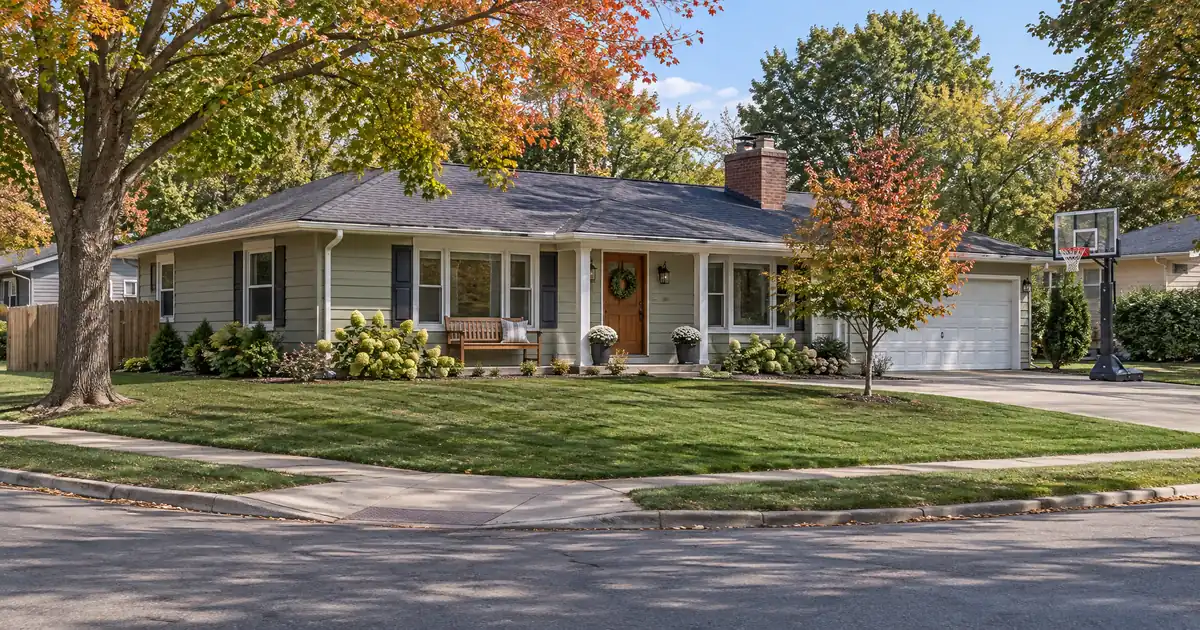
The Quick Read: The underwriter treats the new loan as a brand-new first mortgage, so the clock resets and the file is judged on the new, larger payment. Four things decide most files: how long you’ve owned and lived in the home, your mortgage payment history, the appraised value measured against an 80% cap, and whether your credit and debt ratios hold up on the new payment.
Key Takeaways
- An FHA cash-out refinance pays off your current mortgage with a new, larger one and hands you the difference.
- Reaching 80% LTV on the appraised value is the ceiling. Financed costs and mortgage insurance use up part of that room.
- The home must have been your principal residence, owned and occupied, for 12 months before the case number is assigned.
- A new 30-year term lowers the payment pressure on your ratios but stretches the payoff date. Final terms depend on lender guidelines, property type, leverage, and the borrower’s complete credit picture.
What Does “The Term Starts Over” Actually Mean?
The old mortgage disappears. A new first lien replaces it, and the new loan carries its own amortization schedule, typically 30 years. If you’re eight years into your current loan, you’re not “adding” cash to year nine. You’re starting at year one again.
FHA cash-out estimate
Seeded with an example value, a balance to match, and a round cash request; change any field.
Editable benchmark: 7.18% as of November 5, 2026 · Freddie Mac 30-year average via FRED®. A conventional market reference, not an FHA cash-out refinance quote.
Illustrative starting assumptions: a $350,000 home value, a $193,000 current balance, the FHA cap on a principal residence with the upfront premium financed, a thirty-year term at the current Freddie Mac benchmark, and property taxes and insurance estimated at typical national rates. Every field is editable.
An illustration, not a Loan Estimate, an approval, a quote, or a commitment to lend. The rate shown is the weekly Freddie Mac thirty-year conventional benchmark, used as a market reference; an FHA cash-out is priced by the lender at lock, and this is not an FHA cash-out refinance quote. HUD’s cap limits the base loan; the upfront premium is financed on top of the capped base loan; the monthly premium for the first year follows the snapshot’s schedule. Cash available means the base loan the cap permits less the balances retired, before closing costs, which this calculator leaves out. The line figure applies the line program’s combined loan-to-value ceiling to the same value and balance. Taxes and insurance are estimates you can edit. Licensed in sixteen states for consumer mortgages.
That reset cuts both ways. A longer schedule spreads the balance over more payments, which usually eases the debt-to-income picture. It also means more years of interest and a later payoff date, even if the balance only rose modestly. The CFPB’s guide to using home equity says plainly that a cash-out refinance replaces your mortgage with a larger one and may extend your payoff time and raise your payment.
It’s also not a second loan. A home equity loan or HELOC sits beside your existing mortgage and leaves its term alone. A cash-out refinance swaps the whole thing. For a homeowner holding a long-seasoned loan they like, that distinction matters more than anything else here.
How Is the Loan Underwritten, Step by Step?
Lenders work through the file in a consistent order. Across the wholesale programs Lendmire places FHA files with, the sequence looks like this.
1. Ownership and occupancy. The home must have been owned and occupied as your principal residence for the 12 months before the case number is assigned. Count back from the case number date, not from closing.
2. Payment history. The underwriter documents that your mortgage payments were made within the month due over the prior 12 months, or since you took the loan if that’s shorter. HUD’s handbook excerpt in Mortgagee Letter 2020-30 covers the evidence required, including a verification of mortgage when the loan isn’t on the credit report, and extra paperwork if the loan was in forbearance or modification within the last 12 months.
3. Appraisal and Adjusted Value. The appraisal sets the value the cap is measured against. Both LTV and combined LTV are tested on HUD’s “Adjusted Value,” not on whatever number you hoped to see.
4. The 80% cap. The new base loan, after financed costs, has to fit under 80% LTV. The upfront mortgage insurance premium is financed on top of that capped base loan.
5. Credit and ratios. The lender reviews credit, income and debts, then tests the new payment (principal, interest, taxes, insurance and FHA mortgage insurance) against your ratios.
6. Mortgage insurance and conditions. The new loan carries its own upfront and annual premium, and the underwriter clears any remaining conditions before the file goes to closing.
One practical point. A recent late payment doesn’t just ding the file. Because the test looks at a 12-month window, one late payment can hold up a cash-out until it ages out, even when your score looks healthy.
Where Does the 80% Cap Come From?
HUD lowered the cash-out maximum to 80% in Mortgagee Letter 2019-11, replacing the earlier 85% cap for case numbers assigned on or after September 1, 2019. HUD’s stated aim was a stronger equity position and smaller losses in a default. HUD’s press release on the change also notes that the 80% figure lines up with the government-sponsored enterprises’ cash-out maximum.
The takeaway for you: at least 20% equity stays in the home after closing. And because the upfront premium of 1.75% of the base loan is typically financed, it eats into the cap. Add financed closing costs and the cash you actually receive is smaller than a quick equity estimate suggests.
You’ll still see 85% on older web pages. Skip it. And don’t confuse this with the 97.75% figure, which belongs to the FHA rate-and-term refinance on a principal residence occupied for the previous 12 months. Cash-out is the lower tier.
How Do Credit and Ratios Work on the New Payment?
The new payment is what gets tested, not the old one. Across the FHA files Lendmire arranges, the wholesale programs start at a 580 decision score. HUD’s 500-579 tier, which carries a 10% minimum investment, is a HUD rule that the network does not reach below 580. Cash-out has its own overlays on top, so a lender may ask for more than the floor depending on your file.
The base ratio pair is 31/43 (housing payment over income, total debts over income) with no compensating factors. Documented compensating factors can stretch that to 40/50 at the top tier. All of this is subject to lender guidelines and full file review.
Here’s where the reset helps. Spreading a larger balance over a fresh 30-year schedule can keep the housing ratio in range when a shorter remaining term wouldn’t. Here’s the catch. FHA mortgage insurance is part of that payment. On a 30-year loan above 90% LTV the annual premium lasts for the term, and at or below 90% LTV it ends after 11 years. Because cash-out tops out at 80% LTV, the loan sits at or below 90% LTV, so the shorter premium schedule applies. The annual premium itself ranges between 0.15% and 0.75% of the balance depending on term, loan amount and LTV.
County loan limits apply to every FHA loan, so a high-balance home can run into the limit before it reaches the 80% cap.
Can You Choose a Shorter Term Instead?
Often, yes. A reset to 30 years is the default, not the requirement. Some borrowers take a shorter term to keep the payoff date close to where it was. Underwriting changes in one direction only: a shorter term raises the payment, which pushes the ratios up.
| Term choice | Effect on payment | Effect on ratios | Effect on payoff date |
|---|---|---|---|
| New 30-year | Lowest of the options | Easiest to meet | Pushed furthest out |
| Shorter fixed term | Higher | Harder to meet | Closer to your current date |
| 30-year plus extra principal | Flexible | Qualify on the lower payment | You control it |
That last row is a quiet favorite. Qualify on the 30-year payment, then send extra principal when budgets allow. You keep the ratio cushion without locking in the higher payment. The trade-off is that nothing requires those extra payments, so the payoff date moves only if you make them.
Where Does the General Rule Break?
Several situations change the answer.
- Owned less than 12 months. Standard cash-out isn’t available. A rate-and-term refinance follows a different set of leverage tiers.
- Inherited property. If you rent it out after inheriting it, the 12-month occupancy clock begins only when you move in. Check the current handbook wording on this one.
- Free-and-clear homes. A home with no mortgage can still be refinanced as a cash-out.
- Forbearance or modification in the last 12 months. The payment record isn’t enough alone. The lender needs the plan documents too.
- Manufactured homes. Additional rules apply, so don’t assume the site-built path carries over.
- Hawaiian Home Lands (Section 247). These mortgages are a special case, so the standard 80% cap may not apply the same way. Ask your broker to check the current handbook wording for your file.
- Second homes and rentals. Cash-out under this program is for the principal residence only. Occupancy decides the leverage.
- Existing FHA loan within 3 years. Refinancing an FHA loan into a new FHA loan within that window can earn a refund credit that reduces the new upfront premium. It’s a credit against the new loan, not cash back.
HUD’s handbook is updated periodically, so details on edge cases can shift.
When Does the Reset Hurt More Than It Helps?
Sometimes the loan you have is the better loan. A few signals point that way.
- Your current balance is small and you’re far along the schedule. Restarting at year one means a lot of early-year interest.
- Your existing loan carries terms you’d struggle to replace.
- You’d roll the cash into everyday spending. The CFPB’s report on cash-out borrowers also found credit card balances drifted back toward earlier levels afterward. Turning short-term debt into 30-year debt only helps if the habit changes too.
Then there’s the other side. If you’re consolidating high-cost balances, funding a repair that protects the home’s value, or you’d otherwise face a payment you can’t carry, the reset can be the right trade. It’s a genuine toss-up for many households, which is why comparing it against a HELOC (which leaves your first mortgage untouched) is worth the effort.
What Should You Have Ready Before Underwriting?
- Twelve months of mortgage payment records, plus forbearance or modification paperwork if either applies.
- Proof you’ve owned and lived in the home for at least 12 months.
- Income and asset documents, and a clear list of your monthly debts.
- A realistic number for how much cash you need, so you don’t borrow to the cap by default.
- A decision on term: the full 30 years, or a shorter one.
Key Terms Defined
Adjusted Value: The value HUD uses to measure the LTV cap, based on the appraisal rather than a raw estimate.
Case number: The FHA identifier assigned to your file; the 12-month ownership and occupancy test counts back from its date.
Upfront mortgage insurance premium: A one-time premium of 1.75% of the base loan, commonly financed into the balance.
Combined LTV: Total loans secured by the home compared with its Adjusted Value.
Amortization schedule: The payment plan that pays a loan down over its term; a cash-out refinance starts a fresh one.
Refund credit: A reduction in the new upfront premium when you refinance one FHA loan into another within 3 years.
Frequently Asked Questions
Does the new 30-year term make approval easier?
A longer schedule usually lowers the payment, which can ease your debt ratios. The lender still tests the full new payment, including mortgage insurance, against the base 31/43 pair or the higher limits that documented compensating factors can reach. Approval remains subject to lender guidelines and full file review.
Do I need an existing FHA loan to get an FHA cash-out refinance?
No. A conventional loan or a mortgage with no balance can be refinanced into an FHA cash-out loan if the occupancy, payment history and 80% LTV requirements are met. The 3-year refund credit only applies when the loan being paid off is itself an FHA loan.
Can I take out 100% of my equity?
No. The 80% cap leaves at least 20% equity in the home, and financed costs and the upfront premium count against that room. Your usable cash is the cap amount minus your payoff and those financed items.
What happens if I was late on a payment last year?
It depends on when. The payment history test looks back 12 months, so a recent late payment can stall the file until it ages out of that window. An older one outside the window usually doesn’t carry the same weight.
Is an FHA Streamline the same thing?
No. A Streamline refinances an existing FHA loan with no appraisal and a limited credit review, but it gives no cash back and it requires a net tangible benefit. Cash-out is a full-documentation loan with an appraisal.
If you are weighing a cash-out refinance against keeping the loan you have, Lendmire can help you compare the programs and the equity each one reaches.
For your own numbers, request a scenario review with Lendmire.
About Lendmire
Lendmire (NMLS# 2371349) is a mortgage broker licensed for consumer lending in 16 states. Lendmire arranges FHA, VA, conventional and jumbo purchase and refinance loans through wholesale lenders; every file is underwritten by the lender under the applicable program guidelines. Scotsman Guide named Lendmire a Top Mortgage Workplace in both 2025 and 2026.
Get Started
Ready to find the right loan for you?
See your offer in seconds. No credit pull, no obligation.
Informational only. Not a Loan Estimate, approval, or commitment to lend. Program availability and eligibility are subject to lender guidelines, credit approval, property review, and underwriting.
References
1. CFPB guide to using home equity
2. HUD Mortgagee Letter 2020-30 handbook excerpt
3. HUD Mortgagee Letter 2019-11
4. HUD press release on cash-out risk
5. CFPB newsroom: cash-out borrowers and credit scores
This article is part of Lendmire’s FHA cash-out refinance program — full qualification details, guidelines, and scenarios live on the program page.
Related reading: How FHA Cash-Out Refinance Seasoning Requirements Work · FHA Cash-Out Refinance Requirements Before Your ARM Resets · Cash-Out Refinance Lenders to Move From FHA to Conventional With 20 Percent Equity
Brandon Miller
Founder & CEO, Mortgage Loan Originator, Lendmire LLC
- Mortgage Loan Originator · NMLS# 1129696 · Verify on NMLS Consumer Access
- North Carolina Real Estate Broker · License# 343312 · Verify on NCREC
- North Carolina Insurance Producer · License# 19053198 · Property, Casualty, Life, Health · Verify on NAIC SBS
- Lendmire LLC · Firm NMLS# 2371349 · Verify firm licensure
Compliance and disclosures. Lendmire (NMLS# 2371349) is a licensed mortgage broker and is not a direct lender, depository institution, financial advisor, or tax professional. Content in this article is general market analysis and educational information — not financial, legal, or tax advice for any specific situation. Lendmire does not guarantee loan approval; every transaction is subject to underwriting by the funding lender. Mortgage pricing and loan program guidelines are subject to change at any time without notice and vary by borrower characteristics, property type, and state regulations. Lendmire complies with Equal Housing Opportunity. Licensure verification: NMLS Consumer Access.