
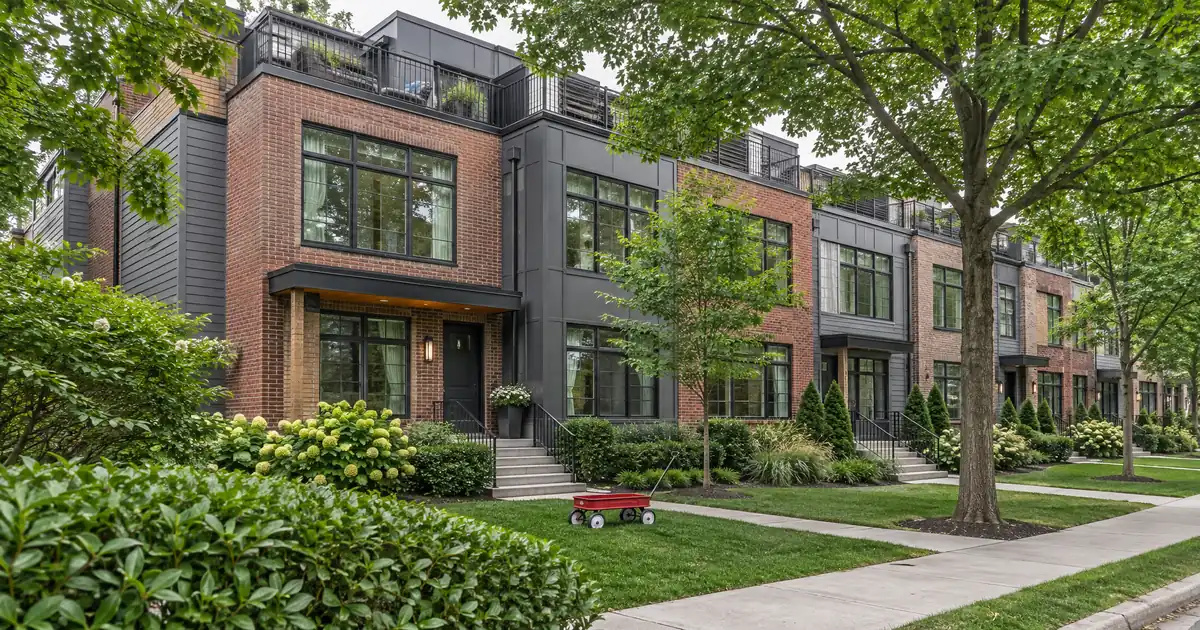
The Quick Read: An FHA cash-out puts one 80% ceiling on all the debt against your condo. A second lien that exists at closing shares that room. One added after closing is judged by a different lender, using that lender’s own rules, and by your condo building’s status. Both paths shrink your equity cushion, and neither adds borrowing room.
Key Takeaways
- On an FHA cash-out, the first mortgage plus every second lien that stays in place or is created at closing must fit under 80% of the home’s adjusted value.
- A home equity line left in place counts at its full credit limit, not at what you have drawn.
- A second lien added after closing falls outside that transaction’s 80% cap. The second lender’s guidelines, your recorded FHA documents and the condo project’s rules decide, and the added debt still shrinks your equity cushion.
- The building has to pass as well as you do. FHA insures loans only on units in approved projects or ones that meet single-unit approval.
- Standard FHA cash-out is for a home you live in as your main residence.
Is an FHA Cash-Out Itself a Second Mortgage?
No. A cash-out refinance replaces your current first mortgage with a new, larger first mortgage. You keep the difference as cash. There is still one first lien on the property.
FHA cash-out estimate
Seeded with an example value, a balance to match, and a round cash request; change any field.
Editable benchmark: 7.18% as of November 5, 2026 · Freddie Mac 30-year average via FRED®. A conventional market reference, not an FHA cash-out refinance quote.
Illustrative starting assumptions: a $350,000 home value, a $193,000 current balance, the FHA cap on a principal residence with the upfront premium financed, a thirty-year term at the current Freddie Mac benchmark, and property taxes and insurance estimated at typical national rates. Every field is editable.
An illustration, not a Loan Estimate, an approval, a quote, or a commitment to lend. The rate shown is the weekly Freddie Mac thirty-year conventional benchmark, used as a market reference; an FHA cash-out is priced by the lender at lock, and this is not an FHA cash-out refinance quote. HUD’s cap limits the base loan; the upfront premium is financed on top of the capped base loan; the monthly premium for the first year follows the snapshot’s schedule. Cash available means the base loan the cap permits less the balances retired, before closing costs, which this calculator leaves out. The line figure applies the line program’s combined loan-to-value ceiling to the same value and balance. Taxes and insurance are estimates you can edit. Licensed in sixteen states for consumer mortgages.
A second lien is a different animal. The Consumer Financial Protection Bureau describes a second mortgage as a loan secured by your house while you still have another loan secured by it. A home equity loan and a HELOC are the common examples. If you sell, the second gets paid after the first. When equity falls short, the second lender may not be repaid in full, so seconds often cost more to borrow than first mortgages.
Two different moments get blurred here, and mixing them up causes most of the confusion:
1. A second lien in place at the cash-out, or created at closing. HUD’s rules speak to this directly.
2. A second lien opened after the cash-out has closed. HUD’s rules say little. Other parties set the limits.
Keep those apart and the rest of this piece gets easier.
Key Terms Defined
Second lien. A loan secured by your home that sits behind the first mortgage in payoff order. A second lien is also called a junior lien.
CLTV (combined loan-to-value). Your first mortgage plus the balance of all second liens, divided by the home’s adjusted value. HUD’s Handbook 4000.1 glossary defines it this way.
Adjusted value. The figure HUD’s Handbook defines from the appraisal. The 80% cap is measured against it.
HELOC. A home equity line of credit. It works like a credit card secured by your home, and the payment moves with your balance.
Closed-end second. A home equity loan for a set amount, borrowed once.
Subordination. A written agreement where a second lender agrees to stay behind a new first mortgage. Without it, a refinance can stall.
Piggyback. A second loan made at the same time as the main mortgage, usually on a purchase. A later refinance can get tricky because the second lender has to agree to it.
How the FHA Cash-Out Gets Sized
Start with the mechanics, because the second lien question only makes sense once you see the container it goes in.
Step 1: Eligibility. The FHA cash-out refinance is available on a home you own and occupy as your principal residence, and it carries its own loan-to-value ceiling set by FHA. You must have owned it and lived in it for 12 months before the case number is assigned. A condo you rent out does not qualify for standard FHA cash-out. A second home does not either.
Step 2: The building gate. HUD’s FHA condominium page says FHA insures loans to buy or refinance a unit in an FHA-approved project. It also insures units in non-approved projects that meet single-unit approval requirements. Approval looks at insurance coverage, financial condition, title, pending legal action and physical condition. The building passes or fails on its own, apart from you.
Step 3: Appraisal. A full appraisal sets the value. Adjusted value comes from that work.
Step 4: Sizing. HUD’s Mortgagee Letter 2019-11 sets the maximum LTV and the maximum CLTV at 80% of adjusted value. Both are stated separately, and both are 80%. HUD’s press release says the change lines up with the cash-out cap set by Fannie Mae and Freddie Mac.
Step 5: Credit and ratios. Across these programs, the minimum decision score starts at 580. Debt ratios start at a base pair of 31/43 (housing and total debt as a share of income). Documented compensating factors can reach 40/50 at the top tier. The automated underwriting finding governs most files. Your condo’s HOA dues count in those ratios.
Step 6: Mortgage insurance. The upfront premium is 1.75% of the base loan, and it can be financed. An annual premium also applies, between 0.15% and 0.75% of the balance depending on term, loan amount and LTV. On a thirty-year loan with a higher LTV, that annual premium lasts for the full term. With a lower LTV, it ends after eleven years.
All of that is subject to lender guidelines and a full file review. Nothing here is a commitment to lend.
How Do You Stack a Second Lien on a Condo?
The answer depends on timing. This table splits it out.
| Moment | What governs the second lien | Who decides |
|---|---|---|
| Already on the home before cash-out | Counts toward the 80% combined cap | HUD rules, the FHA lender |
| Created at closing | Counts toward the 80% combined cap | HUD rules, the FHA lender |
| Opened after closing | Second lender’s own guidelines | The second lender |
A second lien that exists before the cash-out
You have three routes. The new first mortgage can pay the second off. The second can stay and be resubordinated, meaning its lender agrees to remain behind the new first. Or it can be restructured. Whichever you pick, the lien counts toward the combined 80%.
Paying off a second that was not used to buy the home generally makes the refinance a cash-out transaction. Some lenders go further with their own overlays, such as barring payoff of certain seconds from proceeds. That is a lender choice, not a HUD rule, so ask early.
A HELOC left in place counts at its maximum accessible credit limit. HUD’s Handbook refinance section sets that rule. A $0 balance on a large line still eats the same share of your 80%. If you plan to keep the line, consider whether the lender will want it reduced or closed.
A second lien opened after the cash-out
Here is the gap. HUD’s cash-out limit applies to the transaction, and the transaction is over once it closes, so it does not cap a later second lien. The limits that matter now come from three places.
- The second lender’s guidelines. That lender checks combined leverage, credit, income, debt ratios and its own condo-project rules. Many look at the FHA first mortgage, mortgage insurance included, when they size the combined position.
- Your recorded FHA documents. A junior lien needs a title search and a recorded position behind the FHA first. The second lender will want to see the first mortgage terms.
- The project. The condo building has its own health, covered below.
The cash-out also leaves you with less equity than you started with. A first mortgage sized near 80% of value means the second lender has limited room, and some will decline outright. Lenders differ on how much combined leverage they accept, so there is no single answer to quote.
A Worked Example
Say your condo’s adjusted value is 100 units of value, and you want cash out. These are modeled figures, not a quote.
At closing, stacking in the same transaction: The new first mortgage is 72% of adjusted value. You also keep a HELOC with a credit limit equal to 8% of value, drawn to zero. Combined, that is 80%. You are at the cap. The limit counts, not the draw. Every point the line holds is a point the cash-out cannot use.
After closing, adding a second: The FHA cash-out closed with the first mortgage at 78% of value. A second lender looks at what is left. It may cap combined leverage below what you hoped. It will also look at your new FHA payment with mortgage insurance, your HOA dues and your credit. You may be offered a small line, or none.
The payment stack: After a post-closing second, you carry a fixed FHA payment plus the HOA dues. You also carry a second payment that can change if it is a line. CFPB notes HELOC payments vary with the balance, and these lines usually carry adjustable pricing. Dollar figures are left out on purpose, since those depend entirely on your loan terms.
What the Condo Changes
A single-family home has one property to judge. A condo has two: your unit and the building around it. That makes three things worth knowing.
Project approval can move. An approved building can lose approval or slip out of compliance. A later second-lien lender may apply separate project tests, such as the share of owner-occupied units, the share of owners behind on dues, or open litigation. A building that worked for your FHA cash-out may not work for a second lender’s rules.
Single-unit approval has limits. It exists for projects that are not FHA-approved. Its specifics, like project size and concentration limits, change over time. Ask your loan officer for the current requirements instead of relying on an old summary.
Association liens can matter. In many states, unpaid association assessments can carry lien priority that affects mortgage holders. Rules vary by state, and lenders look at them differently. If you are behind on dues, expect a second lender to notice.
Where the General Rule Breaks
The 80% combined cap is a cash-out rule. These cases step outside it.
- FHA Streamline and rate-and-term refinances. These follow different rules. On a streamline, existing second liens generally must be resubordinated. New subordinate financing is allowed only in narrow cases, such as proceeds that reduce the FHA principal or cover closing costs. Don’t carry streamline ideas, or the higher leverage of a rate-and-term, into a cash-out. A rate-and-term on a principal residence you have occupied for the prior twelve months can reach 97.75%. Cash-out reaches 80%.
- Hawaiian Homelands. HUD’s change did not apply to loans insured under section 247 of the National Housing Act. That is a narrow exception.
- Mortgage limits. The combined first and second liens are also bounded by FHA mortgage limits. County loan limits apply and reset every year. Use HUD’s limits lookup and ask your loan officer.
- Lender overlays. Some lenders set stricter rules than HUD, such as a higher credit floor or tougher project tests. HUD’s minimums are not what every lender uses.
- Occupancy. If the condo becomes a rental, the standard FHA cash-out no longer fits at all.
Stack, Refinance Again, or Stop?
Here is how the choices compare for a condo owner who has already done the cash-out or is deciding now.
| Option | What you get | The catch |
|---|---|---|
| Stack a second lien | Added cash, FHA first stays | Second lender’s rules; two payments |
| New cash-out refinance | One loan, one payment | Still capped at 80% combined |
| HELOC alone | Flexible borrowing | Payment can change; counts at limit |
| Do nothing | Equity cushion intact | No new cash |
CFPB notes that, depending on terms, a cash-out refinance may cost more or less than a HELOC. There is no universal winner. The stronger play for many condo owners is the simplest one: size the cash-out to the need and skip the second lien. Others with a low-balance, low-cost existing second may find keeping it is worth the extra paperwork. This one is a genuine toss-up that turns on your terms.
Can an FHA cash-out go above its cap with a second lien? Short version: for liens in place at closing, no.
Risks Worth Naming
Less cushion. A thin equity margin reduces your future options. It also makes a later refinance harder if values dip.
Refinance friction. Refinancing the FHA first later means the second lender has to resubordinate. CFPB notes a second lien can make that trickier. It gets harder when values fall or when you are behind on payments.
Two lenders. You owe the FHA lender and the second lender. Closing costs apply to both loans.
Payment drift. A line’s payment can climb with the balance and with market changes. Your FHA payment stays steady, but your total monthly outlay may not.
Loss of the home. CFPB says that if you cannot repay a home equity loan or HELOC, you could lose your home, because the equity is the collateral.
What to Gather
Expect to produce:
- Payoff statements for any lien the new first will pay.
- A subordination agreement from the second lender, if it stays.
- Proof that a modified HELOC was permanently reduced, if that applies.
- The latest condo association documents, including budget, insurance and any litigation disclosures.
- Standard income, asset and credit documents.
Where to Go From Here
If you are weighing a cash-out refinance against keeping the loan you have, Lendmire can help you compare the programs and the equity each one reaches. A condo adds one more variable, so bring your association details to the first conversation.
Frequently Asked Questions
Can I add a HELOC right after an FHA cash-out on my condo?
Sometimes. HUD does not set a combined cap on a later second lien that I could find. The second lender decides, using its own combined-leverage limit, your credit and income, and its condo-project rules. With the FHA first sized near 80% of value, some lenders will pass. Ask a lender about its approach before you commit to the cash-out amount.
Does a HELOC count at the amount I have borrowed or the full limit?
The full limit. For an FHA cash-out, a line left in place counts at its maximum accessible credit limit. A line with a zero balance still uses up its share of the 80% combined cap. If keeping the line would block the cash you need, the line may have to be reduced or closed.
Can my existing second mortgage stay in place during the cash-out?
Yes, in many cases. It can stay if its lender signs a subordination agreement, which keeps it behind the new first. It still counts toward the combined 80% cap. Some lenders apply stricter rules, so confirm with yours.
Does my condo building need to be FHA-approved?
Either the project must be FHA-approved, or your unit must meet the single-unit approval requirements for projects that are not. The building is judged separately from you. A strong credit profile will not rescue a building that does not qualify.
Is stacking a second lien cheaper than a new cash-out refinance?
Not necessarily. A second lender underwrites on its own, and second liens often cost more to borrow than first mortgages. A new cash-out can be more or less expensive than a HELOC, depending on terms. Compare the full Loan Estimate for each path and look at total cost, not just the monthly payment.
For your own numbers, request a scenario review with Lendmire.
For current guidelines and terms, see Lendmire’s FHA loan programs page.
About Lendmire
Lendmire is a mortgage brokerage (NMLS# 2371349) licensed for consumer mortgage lending in 16 states, arranging FHA, VA, conventional and jumbo purchase and refinance loans through a wholesale lending network. Eligibility is determined by the lender on each file. Scotsman Guide named Lendmire a Top Mortgage Workplace in both 2025 and 2026.
Get Started
Ready to find the right loan for you?
See your offer in seconds. No credit pull, no obligation.
Informational only. Not a Loan Estimate, approval, or commitment to lend. Program availability and eligibility are subject to lender guidelines, credit approval, property review, and underwriting.
References
1. CFPB: second mortgage or junior lien
2. HUD Handbook 4000.1 glossary
4. HUD Mortgagee Letter 2019-11
6. CFPB
This article is part of Lendmire’s FHA cash-out refinance program — full qualification details, guidelines, and scenarios live on the program page.
Related reading: How an FHA Cash-Out Lender Reads Condo Litigation · Can You Pay Off a PACE Lien With an FHA Cash-Out Refinance? · FHA Cash-Out vs Selling an Inherited Home as a Retiree
Brandon Miller
Founder & CEO, Mortgage Loan Originator, Lendmire LLC
- Mortgage Loan Originator · NMLS# 1129696 · Verify on NMLS Consumer Access
- North Carolina Real Estate Broker · License# 343312 · Verify on NCREC
- North Carolina Insurance Producer · License# 19053198 · Property, Casualty, Life, Health · Verify on NAIC SBS
- Lendmire LLC · Firm NMLS# 2371349 · Verify firm licensure
Required disclosures. Lendmire (NMLS# 2371349) operates as a licensed mortgage broker, not a direct lender or depository. The discussion in this article is general in nature and should not be relied upon as financial, legal, or tax advice — every investment scenario is unique and should be reviewed by a qualified professional. Any loan inquiry is subject to lender underwriting, and this article is not a commitment to lend or a guarantee of approval. Mortgage rates, loan terms, and program guidelines vary by borrower, property, and state, and may change without notice. Equal Housing Opportunity. Verify licensure at NMLS Consumer Access.