
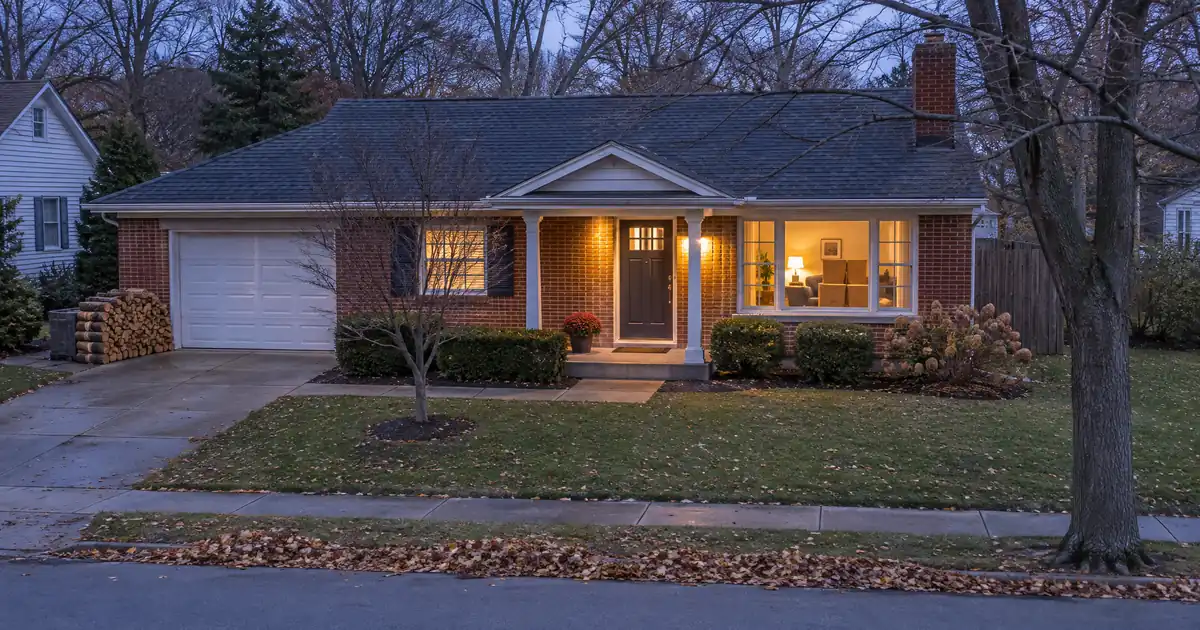
The Quick Read: Start with the project, not the equity. Get a written scope and contractor bids, add a cushion for overruns, and then size the new loan to that number. A cash-out refinance replaces your current mortgage with a larger one and hands you the difference as cash. On a conventional one-unit primary residence, leverage tops out at 80% of the home’s value, subject to lender guidelines and full file review.
That one sentence hides most of the planning. Cash-out money is not a free pool. Payoffs, closing costs, and the appraisal all shrink what you can actually spend. Here is how the process runs from start to finish, where the standard path breaks, and how to decide.
Cash-out refinance estimate
The starting figures are an example value with a balance and a cash request in proportion. Replace them with yours.
Editable benchmark: 7.18% as of November 5, 2026 · Freddie Mac 30-year average via FRED®. A conventional market reference, not a cash-out refinance quote.
Illustrative starting assumptions: a $350,000 home value, a $193,000 current balance, the agency cap on a one-unit principal residence, a thirty-year term at the current Freddie Mac benchmark, and property taxes and insurance estimated at typical national rates. Every field is editable.
Illustrative estimate only — not a Loan Estimate, approval, quote, or commitment to lend. The rate field carries the weekly Freddie Mac thirty-year conventional benchmark, a market reference and not a cash-out refinance quote; a cash-out loan is priced by the lender at lock. The cash available is the loan the program cap allows less the balances paid off, before closing costs, which are not included. The HELOC line is the program’s combined loan-to-value ceiling applied to the same value and balance. Taxes and insurance are editable estimates. Licensed in sixteen states for consumer mortgages.
What Is a Cash-Out Refinance, and Why Use It for Renovations?
A cash-out refinance is a new, larger mortgage. Part of it pays off your current mortgage, and the rest comes to you as cash. The CFPB’s research blog on cash-out refinances draws the key line: a cash-out refinance replaces your first mortgage, while a HELOC or home equity loan leaves it in place.
That difference drives everything. You get one loan, one payment, and one new term. You also give up the old loan’s terms, good or bad.
For a large renovation, the appeal is simple. A kitchen gut job, an addition, or a new roof is expensive. Equity you already own can fund it without a separate credit line. In the CFPB’s research, a refinance counted as cash-out when the new loan plus any junior liens was more than 5 percent larger than the old loans plus junior liens. That threshold screens out loans that only rolled in closing costs.
Cash-out is a good fit when:
- Your project is large and the scope is clear.
- You have meaningful equity after the loan.
- Your current mortgage has no special advantage you would hate to lose.
- The new payment fits your budget with room to spare.
It is a poor fit when the project is small, the scope is fuzzy, or your existing loan is better than anything you would get now.
Step 1: Scope and Bid the Project Before You Apply
Get written bids first. Size the loan to the project plus a contingency, never to the maximum equity available.
Walk through what a lender and a contractor will both want to see:
- A written scope of work, room by room or system by system.
- Two or three contractor bids for the same scope.
- Permit costs and design fees, if the project needs them.
- A contingency line for surprises behind the walls.
Set the contingency generously. Older homes hide wiring, plumbing, and structural problems that only show once demolition starts. A larger project deserves a larger cushion, and the cushion is part of the loan size, not an afterthought.
Also decide what else the cash must do. Some homeowners want to pay off a credit card or a prior second lien in the same transaction. That can work, but every dollar of debt payoff comes out of renovation money. Decide the split up front.
Step 2: Size the Loan and Find Your Real Net Cash
The cash you receive is the new loan minus your payoff, closing costs, and any other debts you pay at closing. That is much less than your equity.
Here is the order of operations:
1. Start with the appraised value of the home.
2. Apply the program’s maximum loan-to-value (LTV), the loan size as a percentage of value.
3. Subtract your current mortgage payoff.
4. Subtract closing costs, prepaid items, and any other liens or debts you pay off.
5. What is left is your renovation cash.
On a conventional cash-out, the wholesale programs we place files with cap leverage at 80% LTV on a one-unit principal residence. For two- to four-unit principal residences, second homes, and investment property, the cap is 75%. Occupancy sets the leverage. Texas homestead cash-outs have their own limit: the state constitution caps them at 80% of the home’s value. These specifics are subject to lender guidelines and a full review of property, leverage, and credit.
One more wrinkle: a plain cash-out uses the home’s as-is value. If your home is worth less today than it will be after the work, you are borrowing against the smaller number. That is why renovation products exist, covered below.
Closing costs can be financed within the loan limit. Financing them is convenient, but it raises the balance and trims your usable cash. Be wary of anything marketed as a “no-cost” refinance. The costs do not vanish. They are built into the rate or the balance.
Finally, check the budget gap. Compare your net cash against the project cost plus contingency. If net cash falls short, the plan needs a smaller scope, a different loan, or more savings.
Step 3: Check Eligibility and Seasoning
Eligibility turns on credit, ratios, time with the loan, and time on title. Cash-out is tighter than rate-and-term.
Across the wholesale conventional programs, here is the picture:
- Credit: programs start at a 620 decision score. The automated underwriting finding governs most files, with a total debt-to-income ceiling of 50%. Manually underwritten loans run at 36% or 45%, depending on score and reserves.
- Seasoning: the first mortgage you are paying off must be at least 12 months old, measured note date to note date. You also need to have been on title for 6 months. Exceptions exist for delayed financing (you bought with cash), inheritance, and legal awards.
- Credit events: agencies set waiting periods. They are four years from a chapter 7 discharge, seven from a foreclosure, and four from a short sale or deed-in-lieu. Documented extenuating circumstances can shorten them.
- Leverage and mortgage insurance: on the standard conventional path, a cash-out on a one-unit primary residence tops out at 80% LTV, and mortgage insurance is required above 80% LTV except in the wholesale no-mortgage-insurance cash-out lane. That lane is the one exception: it reaches 89.99% LTV with no mortgage insurance at a 680 score and a 50% ratio, on a thirty-year fixed, primary residence, conforming balance. It carries its own six months of seasoning and is not written in Texas.
Fannie Mae’s own guide covers true cash-out in Selling Guide section B2-1.3-03. It applies a loan-level price adjustment to certain cash-out loans based on LTV and credit score. In plain terms, higher leverage and lower scores cost more. It also names a delayed financing exception for borrowers who bought with cash.
Every figure here is subject to lender guidelines and full file review. None of it is a commitment to lend.
Plain Cash-Out or a Renovation Loan?
A plain cash-out gives you the money at closing. A renovation loan holds the money in escrow and releases it as work gets done. Which one fits depends on how you want to manage the project and how the home is valued.
| Feature | Plain cash-out | Renovation loan |
|---|---|---|
| Funds released | Cash at closing | Escrow, paid in draws |
| Appraisal basis | As-is value | Can use as-completed value |
| Paperwork | Light | Bids, plans, inspections |
| Who manages money | You | Lender releases draws |
| Best for | Clear scope, disciplined budgeter | Big scope, value-adding work |
Plain conventional cash-out. The money lands in your account. You pay the contractor on your own schedule. It is simple, but the discipline is on you.
Conventional renovation loans. Fannie Mae’s HomeStyle and Freddie Mac’s CHOICERenovation are the best-known examples. Funds sit in escrow and go out in draws against inspections. A renovation product can lean on the home’s as-completed value, which can support a larger loan from the same equity. When your project adds real value and your current equity is thin, this can beat a plain cash-out.
FHA 203(k). HUD’s 203(k) program insures a loan that covers a refinance and the rehab of a home at least a year old. For a refinance, part of the proceeds pay off your existing mortgage. The rest goes into escrow and is released as work is finished. The Standard 203(k) is for major rehab and requires a 203(k) consultant. The Limited version is for lighter repairs. Per HUD’s FHA Resource Center, Limited carries a total rehab cost cap of $75,000, and the total mortgage must stay within the FHA loan limit for the area. Luxury items and anything not a permanent part of the property are ineligible.
A separate FHA cash-out refinance exists for owner-occupied primary residences. It does not hold funds in escrow.
VA cash-out. A VA cash-out refinance can pay off a non-VA loan and provide cash. It needs a VA appraisal and full underwriting. The VA funding fee applies unless you are exempt.
Where the Standard Path Breaks
Several refinances look like they could fund a renovation and cannot. Knowing the edge cases saves you a failed application.
Streamlines cannot fund work. The FHA Streamline and the VA IRRRL are for existing government loans. They exist to lower friction, not to deliver cash. The FHA Streamline needs no appraisal and only a limited credit review, plus a net tangible benefit. The VA IRRRL carries a 0.5% funding fee unless you are exempt, no VA appraisal, a net tangible benefit, and seasoning of the later of 210 days and 6 payments. Neither one adds renovation cash. If you hold an FHA or VA loan and want money for work, you are looking at a different product.
Limited cash-out is not renovation money. Rate-and-term, or limited cash-out, pays off your existing first mortgage, closing costs, and a purchase-money second lien. Cash back is incidental. Fannie Mae allows the lesser of 2% of the new loan or $2,000. Freddie Mac allows the greater of 1% of the new loan or $2,000. That is not a project budget. The limited route can reach 95% LTV on a one-unit primary residence, and sometimes 97%, but it is the wrong tool when the cash is the point. Terms depend on the lender’s guidelines, the property type, the leverage, and a full review of the credit profile.
Paying off a HELOC or second lien. If you took out a second lien for something other than buying the home, paying it off pushes the deal into true cash-out territory. Fannie Mae’s limited cash-out guidance in B2-1.3-02 spells out how subordinate financing is treated. Expect cash-out pricing and the 80% leverage cap. The exact numbers vary by lender and program and follow a full review of property, leverage, and credit.
A favorable existing mortgage. This is the big one. A cash-out refinance replaces your whole first mortgage. If your current loan has terms you would not match today, a second lien or HELOC may serve you better, because it leaves the first mortgage intact. Pause on this one. It is a genuine toss-up for many homeowners, and the answer depends on how large the project is compared with the balance you would be giving up.
Construction-to-permanent. If you are rebuilding rather than renovating, a single-closing construction loan is processed as a purchase or limited cash-out, and a two-closing loan as limited cash-out or cash-out. Fannie Mae’s Eligibility Matrix is where the live leverage figures sit.
Disaster rebuilds. FHA’s 203(h) and 203(k) programs exist for disaster recovery, per DisasterAssistance.gov.
Step 4: Compare the Alternatives
Cash-out wins when you want one loan and one payment. It loses when your current mortgage is worth keeping.
| Situation | Often a better fit |
|---|---|
| Good first mortgage, moderate project | HELOC or home equity loan |
| Thin equity, big value-adding project | Renovation loan |
| Government loan, needs lower payment only | Streamline |
| Large project, loan terms are poor today | Cash-out refinance |
| Homeowner buying out a co-owner | Limited cash-out |
A HELOC or home equity loan keeps your existing mortgage. That protects a good loan, but it adds a second payment, and the second lien has its own terms. A renovation loan folds the project into one mortgage and manages the draws for you.
A practical test: write down what you lose by replacing your current mortgage, and what you gain by the new structure. If you cannot name the gain in a sentence, slow down.
Step 5: Apply, Appraise, and Close
The lender documents credit, income, employment, and assets, then orders an appraisal. The appraised value drives the maximum loan. An underwriter then reviews the full file, and some files are manually underwritten, which means a person applies the guideline limits for score, ratios, and reserves instead of relying only on the automated finding.
For FHA cash-out, income from a non-occupant co-borrower cannot be used to qualify. Confirm the current rules with the lender before relying on a co-borrower’s income, and use the official handbook rather than a summary.
Appraisal strategy matters for renovations. A plain cash-out is valued as-is. A renovation product can use as-completed value, based on your plans and bids. Neither is a promise of a number. The appraiser decides.
At closing, you will see a Loan Estimate early and a Closing Disclosure before signing. Read both line by line. Compare the full terms, not only the payment. On a plain cash-out, funds reach you after signing. On a renovation loan, funds go into escrow and release as inspections pass.
Step 6: Manage the Money and the Overrun Cushion
Treat the cash like a project budget, not a windfall. Park it in a separate account. Pay the contractor in stages tied to finished work. Keep every invoice.
A few habits protect you:
- Tie payments to milestones, not calendar dates.
- Hold back a final payment until the punch list is done.
- Track spending against the budget weekly.
- Keep the contingency untouched unless something forces your hand.
Draw schedules create a cash-flow gap. Under a 203(k), funds sit in escrow and release as work is completed, so plan for how you will cover early costs with your contractor.
Protect the equity you convert. The CFPB’s newsroom release on cash-out borrowers found borrowers’ credit scores rose sharply after the refinance and then gradually worsened. Credit card balances drifted back toward earlier levels, though not all the way within a year. Equity you spend on a project is equity you do not get back for free.
Experience From the Desk
Cash-out borrowers who arrive with a written scope and a number are in the strongest position. Borrowers who start with “how much can I take out?” and work backward are in the weakest. When a project runs over, those borrowers have no cushion, and the pressure to find money mid-build is real. Size to the project first, and the equity question answers itself.
When Not to Use a Cash-Out Refinance
Skip it in these cases:
- Your project is small enough that savings or a smaller loan would cover it.
- Your current first mortgage has terms you would struggle to replace.
- The new payment would leave you stretched, even before overruns.
- Your scope is still vague.
- You plan to use the cash for other spending that the budget cannot absorb.
A go/no-go checklist before you apply:
- Written scope and at least two bids in hand.
- Contingency built into the budget.
- Net cash calculated after payoffs and closing costs.
- Occupancy and program leverage cap confirmed.
- Your existing loan’s terms compared with what you would give up.
- A plan for staged contractor payments.
Key Terms Defined
Cash-out refinance: a new, larger mortgage that pays off your current one and gives you the difference as cash.
LTV (loan-to-value): the loan amount as a percentage of the home’s appraised value.
Seasoning: the minimum time you must have held the loan or the title before you can refinance with cash out.
As-is value: what the home is worth today, before any planned work.
As-completed value: what the home is expected to be worth after the planned renovation is finished.
Loan-level price adjustment (LLPA): a pricing add-on that Fannie Mae applies to certain loans, based on factors like LTV and credit score.
Draw: a scheduled release of escrowed renovation funds after an inspection confirms finished work.
Frequently Asked Questions
Can I use cash-out refinance money for any renovation?
On a plain conventional cash-out, the money is yours to spend, so the lender does not police the project. Renovation loans are stricter. A 203(k), for example, excludes luxury items and anything that is not a permanent part of the property.
How much equity do I have to leave in the home?
On a conventional one-unit primary residence, the cash-out cap is 80% LTV, so you keep at least 20% equity. Two- to four-unit homes, second homes, and investment property cap at 75%. Texas homestead cash-outs are capped at 80% by the state constitution. A wholesale lane reaches 89.99% with no mortgage insurance for qualifying borrowers, subject to lender guidelines.
Can I do a cash-out refinance soon after buying?
Usually not right away. The first mortgage being paid off generally must be at least 12 months old, and you need to have been on title for 6 months. Delayed financing, inheritance, and legal-award exceptions exist.
Can an FHA Streamline or VA IRRRL fund a renovation?
No. Both are for existing government loans and carry no cash-out component. If you want renovation money, look at a cash-out refinance, a 203(k), or a VA cash-out.
Is a cash-out refinance better than a HELOC for a big project?
It depends on your current mortgage. A cash-out replaces your first loan, while a HELOC leaves it intact, per the CFPB. If your current loan is one you would not want to give up, a HELOC may suit you better.
If you are weighing a cash-out refinance against keeping the loan you have, Lendmire can help you compare the programs and the equity each one reaches. Start with Lendmire’s cash-out refinance programs page.
For your own numbers, request a scenario review with Lendmire.
For current guidelines and terms, see Lendmire’s refinance programs page.
About Lendmire
Lendmire is a mortgage brokerage (NMLS# 2371349) licensed for consumer mortgage lending in 16 states, arranging FHA, VA, conventional and jumbo purchase and refinance loans through a wholesale lending network. Eligibility is determined by the lender on each file. Scotsman Guide named Lendmire a Top Mortgage Workplace in both 2025 and 2026.
Get Started
Ready to find the right loan for you?
See your offer in seconds. No credit pull, no obligation.
Informational only. Not a Loan Estimate, approval, or commitment to lend. Program availability and eligibility are subject to lender guidelines, credit approval, property review, and underwriting.
References
1. CFPB Office of Research blog on cash-out refinances
2. Fannie Mae Selling Guide B2-1.3-03, Cash-Out Refinance Transactions
4. HUD FHA Resource Center, 203(k) article
5. Fannie Mae Selling Guide B2-1.3-02 Limited Cash-Out Refinance
8. CFPB newsroom release on cash-out borrowers
This article is part of Lendmire’s cash-out refinance program — full qualification details, guidelines, and scenarios live on the program page.
Related reading: Cash-Out Refinance Requirements When You Are Relocating · How the Cash-Back Line Works on a Cash-Out Refinance · How a Lender Reads Large Deposits After a Cash-Out Refinance
Brandon Miller
Founder & CEO, Mortgage Loan Originator, Lendmire LLC
- Mortgage Loan Originator · NMLS# 1129696 · Verify on NMLS Consumer Access
- North Carolina Real Estate Broker · License# 343312 · Verify on NCREC
- North Carolina Insurance Producer · License# 19053198 · Property, Casualty, Life, Health · Verify on NAIC SBS
- Lendmire LLC · Firm NMLS# 2371349 · Verify firm licensure
Legal disclosures. Lendmire (NMLS# 2371349) is a state-licensed mortgage brokerage that arranges financing through wholesale lender relationships. Lendmire is not a direct lender, depository institution, or registered financial advisor. The discussion above is general informational content about real estate financing — it is not financial, legal, or tax advice, and readers should consult licensed professionals for guidance on their individual circumstances. Loan inquiries are subject to lender underwriting; this article does not represent a commitment to lend. Loan terms, rates, and qualification standards vary by borrower, property, and state, and are subject to change at any time. Equal Housing Opportunity. NMLS Consumer Access: nmlsconsumeraccess.org.