
The Quick Read: When the debt-to-income ratio runs high, the VA cash-out is the more flexible path for an eligible veteran, because VA treats DTI as a guideline and weighs residual income. A conventional file lives or dies on the DTI that automated underwriting returns, and a 2-4 unit gets a lower leverage cap than a one-unit home. How much equity you want to pull out matters on both paths. Everything below is subject to lender guidelines and full file review, and nothing here is a commitment to lend.
The Honest Answer First
The VA cash-out is built for veterans, service members and eligible survivors who hold a valid certificate of eligibility. The conventional cash-out is built for borrowers with a clean DTI, solid credit and enough equity to stay under a lower cap. Those groups overlap. The question is which test your file passes more cleanly.
VA cash-out estimate
Seeded with an example value, a typical balance, and a round cash request at the first-use fee; change any field.
Editable benchmark: 7.18% as of November 5, 2026 · Freddie Mac 30-year average via FRED®. A conventional market reference, not a VA cash-out refinance quote.
Illustrative starting assumptions: a $350,000 home value, a $193,000 current balance, the full-value VA cap with the first-use funding fee financed, a thirty-year term at the current Freddie Mac benchmark, and property taxes and insurance estimated at typical national rates. Every field is editable.
Illustrative estimate only — not a Loan Estimate, approval, quote, or commitment to lend. The rate field carries the weekly Freddie Mac thirty-year conventional benchmark, a market reference and not a VA cash-out refinance quote; a VA loan is priced by the lender at lock. The total loan, funding fee included, is capped at the program leverage on the reasonable value; the fee follows the tier chosen. The cash available is what the cap allows less the balances paid off and the fee, before closing costs, which are not included. The HELOC line is the line program’s combined loan-to-value ceiling applied to the same value and balance. Taxes and insurance are editable estimates. The debt-to-income figure is a guideline; residual income decides a VA file. Licensed in sixteen states for consumer mortgages.
On a high-DTI file, the tests are what matter. VA runs two: the ratio and residual income. Conventional runs one hard number. Same borrower, same duplex, different outcome.
Lendmire’s VA cash-out refinance program page covers the program basics. This piece covers the comparison.
Side-by-Side
| Factor | VA Cash-Out | Conventional Cash-Out |
|---|---|---|
| Leverage | Up to 100% of appraised value, fee included | Lower cap on 2-4 units than on one unit |
| Credit floor | 580 decision score on the wholesale programs Lendmire places | Set by lender and automated findings |
| Mortgage insurance | None | Often required above a set LTV, per lender and program |
| Occupancy | Borrower lives in the property | Primary residence for the best leverage |
| Debt test | 41% guideline plus residual income | Hard DTI ceiling from underwriting |
| Extra cost | VA funding fee, waived if exempt | Pricing adjustments tied to credit and LTV |
| Eligibility | COE from VA | Open to any qualified borrower |
The VA column comes from what the wholesale network Lendmire places files with actually runs. The conventional column is stated in plain terms on purpose, because lender overlays move it. For the exact leverage cap on 2-4 unit cash-outs, check the Fannie Mae Eligibility Matrix directly.
How a High DTI Plays Out on Each Path
VA: two tests, one flexible. The VA regulation sets a 41 percent DTI standard and a separate residual income standard. 38 CFR 36.4340 says failing one standard does not automatically disqualify a veteran. If the ratio runs above 41 percent and residual income clears the table by at least 20 percent, the extra supervisory review and written justification are not required. If residual income is short but the ratio is fine, an underwriter’s supervisor can approve with justification.
The 41 percent figure is a guideline, not a cap. A ratio above it needs residual income well above the table.
Meeting both tests does not mean approval is automatic either. The regulation also requires a satisfactory credit risk. Compensating factors can help: little or no increase in shelter expense, military benefits, a good homeownership history, and equity in a refinance.
Conventional: a ratio ceiling that depends on the underwriting method. Fannie Mae’s Selling Guide B3-6-02 sets a 50 percent maximum DTI for loans run through Desktop Underwriter. For manually underwritten loans, the base maximum is 36 percent, and a file with strong compensating factors can reach a ceiling of 45 percent. The same section notes the maximum may be lower for cash-out refinances on a DU file. A recalculated ratio above the applicable maximum makes the loan ineligible for delivery to Fannie Mae. Residual income does not rescue it.
The federal consumer-finance regulator defines DTI as all monthly debt payments divided by gross monthly income, and notes that products and lenders set different limits. That is the practical point. A ratio one product rejects can be workable on another.
When VA Cash-Out Is the Better Fit
Pick the VA path when these line up:
- You hold a COE and live in one of the units.
- Your DTI sits above the common benchmark, but income after taxes and living costs is healthy for your household size.
- You want to reach more equity than a 2-4 unit conventional cap allows.
- You want to avoid mortgage insurance.
- You are refinancing a non-VA loan into VA. VA says a cash-out can do that, and the loan comes through a private lender, not VA itself.
The cost to plan for is the funding fee. On the programs Lendmire places, the cash-out fee is 2.15 percent for first use and 3.3 percent for subsequent use. It can be financed, and it is waived for veterans receiving service-connected disability compensation and the other exempt groups. Because the VA cash-out reaches 100 percent of appraised value including the financed fee, the fee sits inside that ceiling.
Two more mechanics. The loan needs a net tangible benefit, meeting one of the eight benefits VA lists. And it carries seasoning: the later of 210 days from the first payment and the sixth payment. The half-percent rate-reduction and fee-recoupment tests belong to the IRRRL and do not apply to a VA cash-out. An IRRRL cannot produce cash at all.
The catch on a 2-4 unit
Rental income from the other units is where files get stuck. VA does not spell out how multi-unit rental income counts, so lenders apply their own overlays and documentation standards. Expect the lender to want leases and a clear picture of what the other units bring in. Missing lease evidence is a preventable gap. Build the packet before the file goes in.
When Conventional Cash-Out Is the Better Fit
Conventional wins when VA is not available or the ratio is not the problem:
- You have no COE, or your entitlement is tied up in a way that limits the loan.
- Your DTI is comfortably inside the ceiling and equity is deep enough that the lower leverage cap does not bite.
- You want to keep more equity in the home by design.
- You can accept mortgage insurance if the leverage triggers it, or you stay low enough to avoid it.
Conventional also does not carry a funding fee, but it has pricing adjustments tied to credit score and LTV. Those move with the file, so compare them on the Loan Estimate and not from a chart.
One trap: a limited cash-out transaction is not the same as a true cash-out. Fannie Mae treats them separately, and the 2-4 unit entry differs. Pulling cash for renovations or debt payoff changes which category you are in.
A Worked Comparison
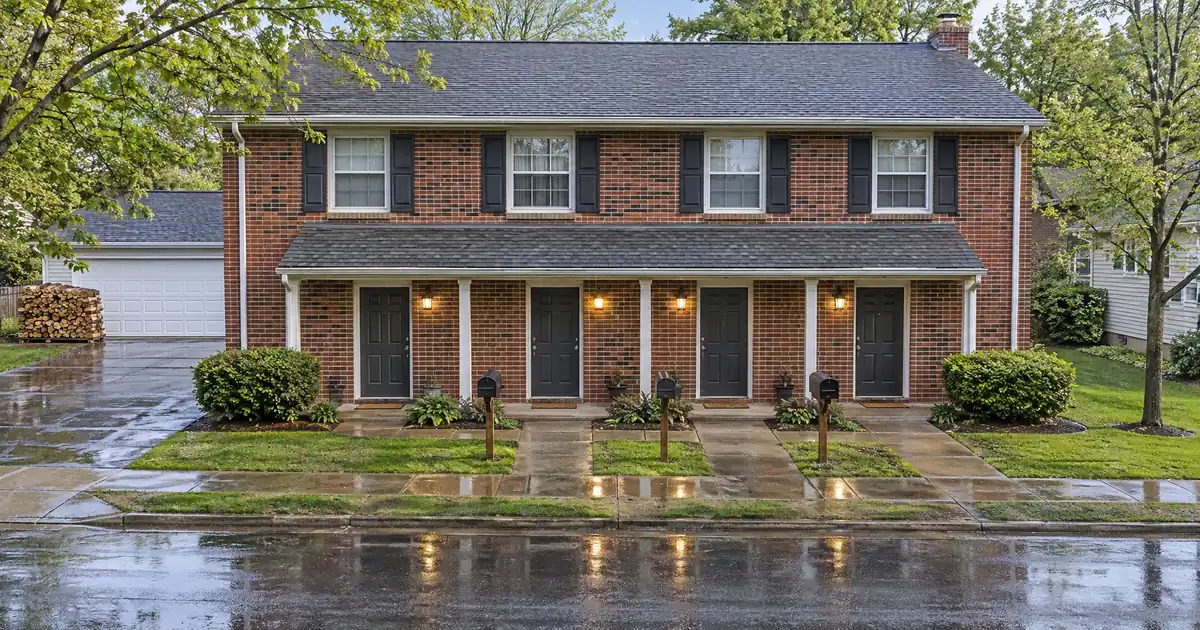
Picture a veteran who lives in one unit of a fourplex and rents the other three. After the cash-out, the new balance pushes DTI above 41 percent on the VA file and above the DU ceiling on a conventional file.
On the conventional file, DU returns a ratio over the limit. The options are to shrink the cash-out, pay down debts, or add a qualifying co-borrower. If none works, the file stops.
On the VA file, the underwriter checks residual income against VA’s table for the household size and loan amount. If residual income runs 20 percent or more above the table, the high ratio can clear without a justification memo. If it runs lower, the file needs compensating factors and supervisor sign-off. The same borrower can pass on VA and miss on conventional.
Reverse the case. A borrower with modest DTI, no COE and plenty of equity does better conventional.
Levers When the File Is Declined
Several moves help either path:
1. Pay off debts at closing. Debts paid from cash-out proceeds drop out of the ratio. This is often the cleanest fix because the payoff reduces monthly obligations.
2. Resize the cash-out. A smaller balance lowers the new payment, which feeds both DTI and residual income.
3. Add a co-borrower. Their income and debts join the file on either path, subject to lender guidelines.
4. Document rental income. Leases, deposits and a clear rent roll give the underwriter something to work with.
5. Gross up tax-free income. On VA, tax-exempt income may be grossed up for DTI if the analysis is documented. Residual income uses only actual income.
Look at the whole monthly budget, not just the ratio. A larger cash-out raises the payment, and a household can pass the ratio and still feel squeezed.
Key Terms Defined
Debt-to-income ratio (DTI): Your monthly debt payments divided by gross monthly income.
Residual income: What is left of monthly income after taxes, debts and shelter costs, measured against VA’s table.
Certificate of eligibility (COE): VA’s document showing you qualify for a VA-backed loan.
Entitlement: The amount of guarantee VA backs on your loan. Entitlement used on a prior VA loan carries into the new one, so confirm what remains.
Net tangible benefit: A VA test requiring the cash-out to deliver one of VA’s listed benefits.
Seasoning: The waiting period after a loan starts before it can be refinanced.
Frequently Asked Questions
Can residual income really offset a high DTI on a VA loan?
Yes, within limits. The regulation lets a ratio above 41 percent stand when residual income exceeds the table by at least 20 percent, and a supervisor can approve other cases with justification. Credit still has to be satisfactory, and lender overlays can be stricter than VA.
Does VA lend the cash-out money?
No. VA guarantees the loan and a private lender makes it. The lender sets its own overlays on score, DTI and cash-out size on top of VA’s rules.
Can I do a VA cash-out if my current loan is not a VA loan?
Yes. A VA cash-out can refinance any loan type into a VA loan. It gets full underwriting, a VA appraisal and the net tangible benefit test.
Do I have to live in the 2-4 unit?
Yes, for the owner-occupied programs covered here. Occupancy drives leverage on both paths, so a unit you do not live in changes the answer.
What does the VA funding fee cost compared with conventional costs?
The fee is 2.15 percent on a first-use cash-out and 3.3 percent after, financeable and waived for exempt veterans. Conventional has no funding fee but carries pricing adjustments and possible mortgage insurance. Compare them on the Loan Estimate.
If you are weighing a cash-out refinance against keeping the loan you have, Lendmire can help you compare the programs and the equity each one reaches. For a related read, see Lendmire’s piece Can Residual Income Offset a High DTI on a 2-4 Unit VA Cash-Out?.
Tax treatment can depend on your situation; borrowers should speak with a qualified tax professional before relying on any deduction or credit.
For your own numbers, request a scenario review with Lendmire.
About Lendmire
As a mortgage broker (NMLS# 2371349), Lendmire helps homeowners and home buyers in 16 states with FHA, VA, conventional and jumbo purchase and refinance loans arranged through wholesale lenders. Lendmire is never the lender; program terms are set by the lender and the agency guidelines. Scotsman Guide named Lendmire a Top Mortgage Workplace in both 2025 and 2026.
Get Started
Ready to find the right loan for you?
See your offer in seconds. No credit pull, no obligation.
Informational only. Not a Loan Estimate, approval, or commitment to lend. Program availability and eligibility are subject to lender guidelines, credit approval, property review, and underwriting.
References
1. Fannie Mae Eligibility Matrix
3. Fannie Mae Selling Guide B3-6-02: Debt-to-Income Ratios
4. CFPB
5. VA.gov: Cash-out refinance loan
6. Fannie Mae
This article is part of Lendmire’s VA cash-out refinance program — full qualification details, guidelines, and scenarios live on the program page.
Related reading: VA Cash-Out Refinance Requirements When Borrowing at a High LTV · Can a Veteran Use a VA Cash-Out to Buy Out a Partner? · How a VA Cash-Out Lender Sizes the Payoff Against a High DTI
Brandon Miller
Founder & CEO, Mortgage Loan Originator, Lendmire LLC
- Mortgage Loan Originator · NMLS# 1129696 · Verify on NMLS Consumer Access
- North Carolina Real Estate Broker · License# 343312 · Verify on NCREC
- North Carolina Insurance Producer · License# 19053198 · Property, Casualty, Life, Health · Verify on NAIC SBS
- Lendmire LLC · Firm NMLS# 2371349 · Verify firm licensure
Legal disclosures. Lendmire (NMLS# 2371349) is a state-licensed mortgage brokerage that arranges financing through wholesale lender relationships. Lendmire is not a direct lender, depository institution, or registered financial advisor. The discussion above is general informational content about real estate financing — it is not financial, legal, or tax advice, and readers should consult licensed professionals for guidance on their individual circumstances. Loan inquiries are subject to lender underwriting; this article does not represent a commitment to lend. Loan terms, rates, and qualification standards vary by borrower, property, and state, and are subject to change at any time. Equal Housing Opportunity. NMLS Consumer Access: nmlsconsumeraccess.org.