
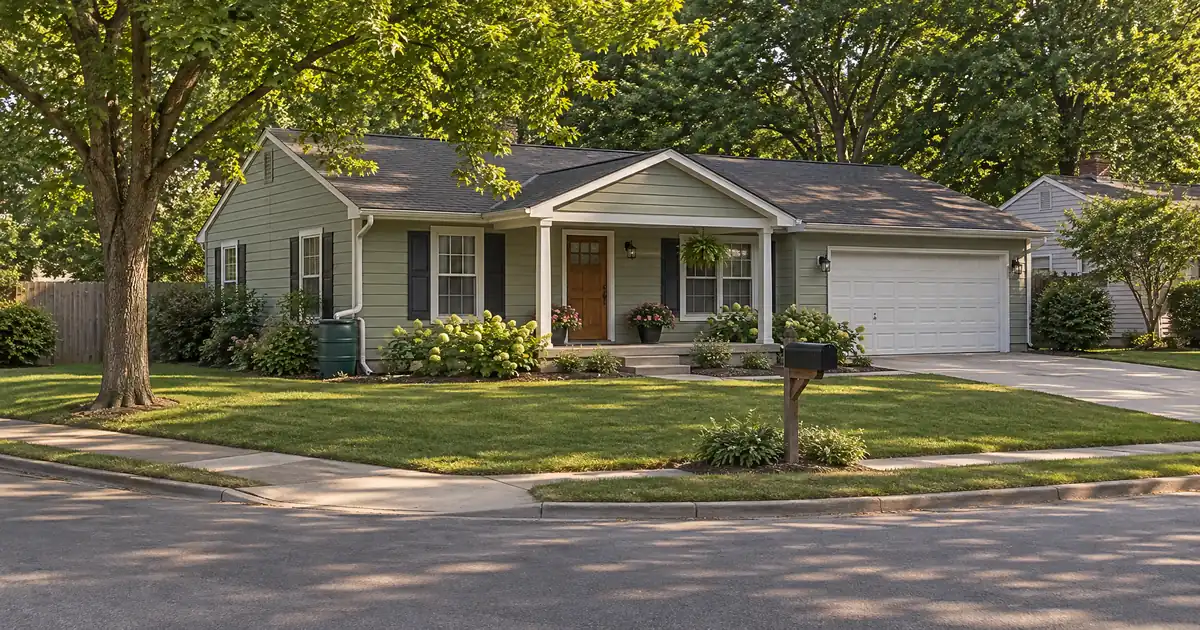
The Quick Read: Both loans can work once you pull a listing, but they fit different borrowers. FHA suits a homeowner with thinner credit who can prove twelve months of living in the home. Conventional suits a homeowner with stronger credit who wants to avoid FHA mortgage insurance. The real snag is timing. Conventional guidelines want the home off the market by the day the new loan funds, while many FHA lenders add a longer wait of their own.
Key takeaways
- The written conventional rule is about funding day: the listing must be gone by then.
- FHA’s published handbook text does not appear to set a delisting wait. Many FHA lenders add one anyway, and that is a lender rule, not a federal one.
- Listing status is only one clock. Ownership, occupancy and loan-age clocks run separately.
- On a one-unit primary home, both loans cap cash-out at 80% of the home’s value. FHA cash-out is for primary residences only, while the conventional cap drops for other occupancies. Leverage, reserves, and pricing vary by lender and program; the final terms follow the full file review.
FHA cash-out estimate
Seeded with an example value, a balance to match, and a round cash request; change any field.
Editable benchmark: 7.18% as of November 5, 2026 · Freddie Mac 30-year average via FRED®. A conventional market reference, not an FHA cash-out refinance quote.
Illustrative starting assumptions: a $350,000 home value, a $193,000 current balance, the FHA cap on a principal residence with the upfront premium financed, a thirty-year term at the current Freddie Mac benchmark, and property taxes and insurance estimated at typical national rates. Every field is editable.
An illustration, not a Loan Estimate, an approval, a quote, or a commitment to lend. The rate shown is the weekly Freddie Mac thirty-year conventional benchmark, used as a market reference; an FHA cash-out is priced by the lender at lock, and this is not an FHA cash-out refinance quote. HUD’s cap limits the base loan; the upfront premium is financed on top of the capped base loan; the monthly premium for the first year follows the snapshot’s schedule. Cash available means the base loan the cap permits less the balances retired, before closing costs, which this calculator leaves out. The line figure applies the line program’s combined loan-to-value ceiling to the same value and balance. Taxes and insurance are estimates you can edit. Licensed in sixteen states for consumer mortgages.
Side-by-Side
Here is the short comparison. Every row is a program fact or a general guideline, and all of it is subject to lender guidelines and full file review.
| Factor | FHA Cash-Out | Conventional Cash-Out |
|---|---|---|
| Maximum LTV | 80% | 80% one-unit primary; 75% for 2-4 units |
| Credit floor | 580 decision score (Lendmire’s network) | Often higher; varies by lender |
| Mortgage insurance | Upfront premium plus annual premium | Generally none at or below 80% LTV |
| Occupancy | Owner-occupied primary home only | Primary, second home or rental |
| Home history | 12 months owned and lived in | Loan age and time-on-title checks |
| Listing history | No federal wait found; overlays common | Off the market by funding day |
LTV means loan-to-value: the loan balance as a percentage of the home’s appraised value. If a number in the table matters to your plan, ask the lender to confirm it in writing before you pull or relist anything.
The rest of this piece shows how the two paths differ once a listing is in your history.
Key Terms Defined
Withdrawn listing: a listing the owner or agent pulls from the market before a sale. Canceled and expired listings are close cousins, and lenders usually want proof of the status, not just the label.
Cash-out refinance: a new, larger mortgage that pays off your current one and hands you the difference in cash.
Seasoning: the waiting period a lender wants before you can use a loan or a property for something new, such as owning the home, holding the loan, or making on-time payments.
Lender overlay: a rule a lender adds on top of the program’s minimum. Overlays are why two FHA lenders can give two different answers.
Case number: the file number assigned to an FHA loan. The occupancy test for FHA cash-out counts back from the day it is assigned.
LTV: loan-to-value, explained above.
What a Withdrawn Listing Actually Does to Each Loan
A withdrawn listing is a timing problem on conventional loans and an “ask your lender” problem on FHA loans. That difference shapes everything else.
On the conventional side, Fannie Mae’s Selling Guide on cash-out refinances ties eligibility to the listing status when the loan funds. Put plainly, the home must be off the market by funding day. You usually do not need to wait out a long cooling-off period. Lenders still ask for proof the listing ended, plus a short letter explaining why you pulled it.
FHA works differently. FHA’s rules sit in HUD Handbook 4000.1. Its refinance text does not appear to set a delisting waiting period. A wait still applies to you if your lender has one, but it is a lender rule, not a federal one.
So two FHA lenders can give two different answers on the same withdrawn listing. Shop for the answer before you shop for the loan.
Listing Status Is Only One of the Clocks
Pulling the listing does not start a refinance by itself. Several clocks run side by side.
- The listing clock. Is the home off the market, and can you prove it?
- The ownership clock. How long have you owned and lived in the home?
- The loan-age clock. How old is the mortgage you are paying off, and how long have you made payments?
FHA cash-out is built on the ownership and payment clocks. Across the wholesale programs Lendmire places FHA files with, cash-out reaches 80% LTV on a home you owned and occupied for 12 months before the case number. HUD also ties cash-out to payment history. HUD’s mortgagee letter on cash-out refinances calls for a minimum of six months of mortgage payment history on a home with a loan, and it allows cash-out on homes owned free and clear. Terms vary by lender guidelines, property type, leverage, credit profile, and full file review.
Conventional loans run on their own seasoning rules. These typically look at the age of the loan you are paying off and how long a borrower has been on title. The details differ by lender and file, so ask rather than assume.
When FHA Cash-Out Is the Better Fit
FHA cash-out fits you when your credit or debt ratios are the obstacle and you can document twelve months of living in the home. It is the more forgiving path on qualifying and the more expensive one on insurance.
Think about who benefits most.
Credit that has bruises. FHA programs start at a 580 decision score across the wholesale programs Lendmire works with. Conventional lenders often want more. If your score sits in the lower range, FHA may be the only one of the two that is realistic.
Debt ratios that run high. The base ratio pair on FHA is 31/43. That means housing costs at 31% of income and total debts at 43%. Documented compensating factors, such as reserves or strong payment history, can stretch the pair to 40/50 at the top tier. An automated underwriting finding governs most files. That flexibility is the main reason people choose FHA over conventional.
A failed sale that left you with little else. Say your sale fell through and you still need cash for repairs or to clear higher-cost debt. If you lived in the home the whole time you listed it, the occupancy test is easy to document. Employment records or utility bills can show it.
What it costs. FHA carries an upfront mortgage insurance premium of 1.75% of the base loan, which is usually financed into the loan. It also carries an annual premium between 0.15% and 0.75% of the balance, depending on term, loan amount and LTV. Because cash-out stops at 80% LTV, a thirty-year loan lands in the group where the annual premium ends after eleven years. Add that cost to your comparison. Do not skip it.
- If you rented the home out during the listing period, the twelve-month occupancy test can fail. FHA cash-out is for primary residences only.
- Your lender may impose a delisting wait that conventional does not.
- An FHA Streamline is a different product. It refinances an existing FHA loan with little paperwork and no meaningful cash back. It does not work for this goal.
When Conventional Cash-Out Is the Better Fit
Conventional cash-out fits you when your credit and ratios are comfortable, you want to skip FHA mortgage insurance, or the home is not your primary residence. Its leverage cap depends on occupancy, so the equity you can reach changes with how the home is used.
Stronger credit and cleaner ratios. If your file clears automated underwriting without compensating factors, conventional often costs less over the long run. At or below 80% LTV, conventional loans generally carry no private mortgage insurance. Compare that with the FHA mortgage insurance, which includes an upfront premium of 1.75% of the base loan and an annual premium.
The home is not a primary residence. If the property is a second home or a rental, the occupancy rule matters most. FHA cash-out is not available on those, while conventional is, with a leverage cap that depends on how the home is used. The Fannie Mae Eligibility Matrix shows 80% LTV for a one-unit principal residence and 75% for two to four units. Exact terms depend on the lender’s guidelines, property type, leverage, and a full review of the borrower’s file.
You recently bought with cash. Conventional guidelines include a delayed-financing exception for borrowers who recently paid cash. It is described in the same Selling Guide section. It follows its own conditions, and cash-out pricing still applies.
The listing is gone and you want a simple rule. Conventional ties the listing question to funding day. That is easier to plan around than an overlay that differs lender to lender.
- Reserves, meaning savings left after closing, can be required on cash-out loans run through automated underwriting when debt-to-income climbs past 45%, per the same Eligibility Matrix.
- Credit expectations are often tighter, so a score that clears FHA may not clear conventional.
- Thin equity after a failed sale can cap your proceeds under either loan. The appraisal sets the ceiling.
Walking Through a Withdrawn Listing
Picture a homeowner who lived in the home throughout a failed listing and owes about 65% of the appraised value. Under either loan, the cap is 80%, so the cash available is the gap between those two percentages. That gap is fifteen points of the home’s value, before costs and before anything the lender holds back.
Here is the sequence that homeowner would follow.
1. Document the listing. Get the listing dates and the withdrawal date from the agent or the MLS.
2. Ask each lender about its off-market rule. Get the answer in writing, and ask whether the wait is measured from application or from funding.
3. Check your own clocks. Confirm how long you have owned and lived in the home, and how old the current loan is.
4. Apply and appraise. The appraisal sets your ceiling. A low value shrinks your cash.
5. Review the Loan Estimate. Compare the two programs side by side, including mortgage insurance.
6. Sign, then wait out the right to cancel. Most refinances of a primary home carry a federal right to cancel after signing, per the CFPB. If you cancel, you still owe the original loan.
Documents to Have Ready
- Proof the listing ended, such as MLS history or a letter from the listing agent
- A short letter explaining why you pulled the home from the market
- Payoff statements for the current loan
- Pay stubs, tax returns or other income documents, depending on the program
- For FHA, utility bills or employment records that show you lived in the home
Questions to Ask Before You Pull Another Listing
These three questions save the most grief:
- Does your lender add a waiting period after a withdrawn listing, and from which date does it count?
- Do you have to explain why you pulled the home?
- Will you lose anything if you relist after funding?
That last one matters. A lender may ask about your plans, and occupancy intent is part of the file. Answer honestly, because a primary-residence loan assumes you live there.
Other Options Worth a Look
A cash-out refinance replaces your whole loan with a larger one. A different tool can fit better. A home equity line of credit adds a second loan and leaves your first mortgage alone. Keeping your current loan avoids closing costs altogether. Selling again may still beat borrowing against a home you were trying to leave.
Check your current loan for a prepayment penalty before you refinance. Missed payments on a larger loan put the home at risk of foreclosure, so borrow what you can repay. Tax treatment can depend on your situation; borrowers should speak with a qualified tax professional before relying on any deduction or credit.
The Balanced Verdict
Neither loan wins on every file. FHA tends to win when credit or debt ratios are the problem and you can document twelve months of living in the home. The withdrawn listing matters most as a timing issue, and it is where lender overlays create the biggest differences. Ask each lender for its delisting rule in writing, then compare programs on equity reached, qualifying flexibility and total cost.
If you are weighing a cash-out refinance against keeping the loan you have, Lendmire can help you compare the programs and the equity each one reaches. Lendmire is a mortgage broker, not a lender, so every program is subject to lender guidelines and full file review.
Frequently Asked Questions
Can I do a cash-out refinance right after I withdraw my listing?
Conventional can potentially work once the listing is off the market by funding day, provided your loan-age and title clocks are met. FHA may take longer if your lender adds an off-market wait. Pulling the listing alone does not satisfy the other clocks.
Does the listing need to be off the market at application or at funding?
Conventional guidelines focus on funding day. FHA lenders may set their own rule on this point. Ask each lender which date it uses.
Is a withdrawn listing treated differently from a canceled or expired one?
Lenders mainly want proof that the listing is over. Some ask about the reason, others only about the dates. Get the status confirmed in writing from the listing agent or the MLS, and be ready to explain why the home came off the market.
Can I switch from a conventional loan to an FHA cash-out, or the other way?
Yes, in principle, because a cash-out pays off whatever loan you have now. FHA cash-out requires a primary residence you owned and occupied for 12 months before the case number. An FHA Streamline only refinances an existing FHA loan and does not pay out meaningful cash.
Which one costs less?
It depends on your credit, equity and the program terms you are offered. FHA carries an upfront premium and an annual premium. Conventional generally carries no mortgage insurance at or below 80% LTV. Compare two Loan Estimates side by side before you choose.
For your own numbers, request a scenario review with Lendmire.
About Lendmire
Lendmire (NMLS# 2371349) is a mortgage broker licensed for consumer lending in 16 states. Lendmire arranges FHA, VA, conventional and jumbo purchase and refinance loans through wholesale lenders; every file is underwritten by the lender under the applicable program guidelines. Scotsman Guide named Lendmire a Top Mortgage Workplace in both 2025 and 2026.
Get Started
Ready to find the right loan for you?
See your offer in seconds. No credit pull, no obligation.
Informational only. Not a Loan Estimate, approval, or commitment to lend. Program availability and eligibility are subject to lender guidelines, credit approval, property review, and underwriting.
References
1. Fannie Mae Selling Guide B2-1.3-03, Cash-Out Refinance Transactions
2. HUD Handbook 4000.1, Update 18 transmittal
3. HUD Mortgagee Letter 2020-30
4. Fannie Mae Eligibility Matrix
5. CFPB: Right of rescission after a refinance
This article is part of Lendmire’s FHA cash-out refinance program — full qualification details, guidelines, and scenarios live on the program page.
Related reading: How a Conventional Cash-Out Replaces FHA Mortgage Insurance · How to Apply for an FHA Cash-Out When Your DTI Runs High · How an FHA Cash-Out Lender Reads Condo Litigation
Brandon Miller
Founder & CEO, Mortgage Loan Originator, Lendmire LLC
- Mortgage Loan Originator · NMLS# 1129696 · Verify on NMLS Consumer Access
- North Carolina Real Estate Broker · License# 343312 · Verify on NCREC
- North Carolina Insurance Producer · License# 19053198 · Property, Casualty, Life, Health · Verify on NAIC SBS
- Lendmire LLC · Firm NMLS# 2371349 · Verify firm licensure
Important disclosures. Lendmire (NMLS# 2371349) is a licensed mortgage brokerage. Lendmire is not a direct lender, depository institution, or financial advisor. All loan inquiries are subject to lender underwriting; this article does not constitute a commitment to lend. Rates, terms, and program guidelines are subject to change without notice and vary by borrower profile, property type, and state. Information in this article is general in nature and is not financial, legal, or tax advice. Equal Housing Opportunity. NMLS Consumer Access: nmlsconsumeraccess.org.