
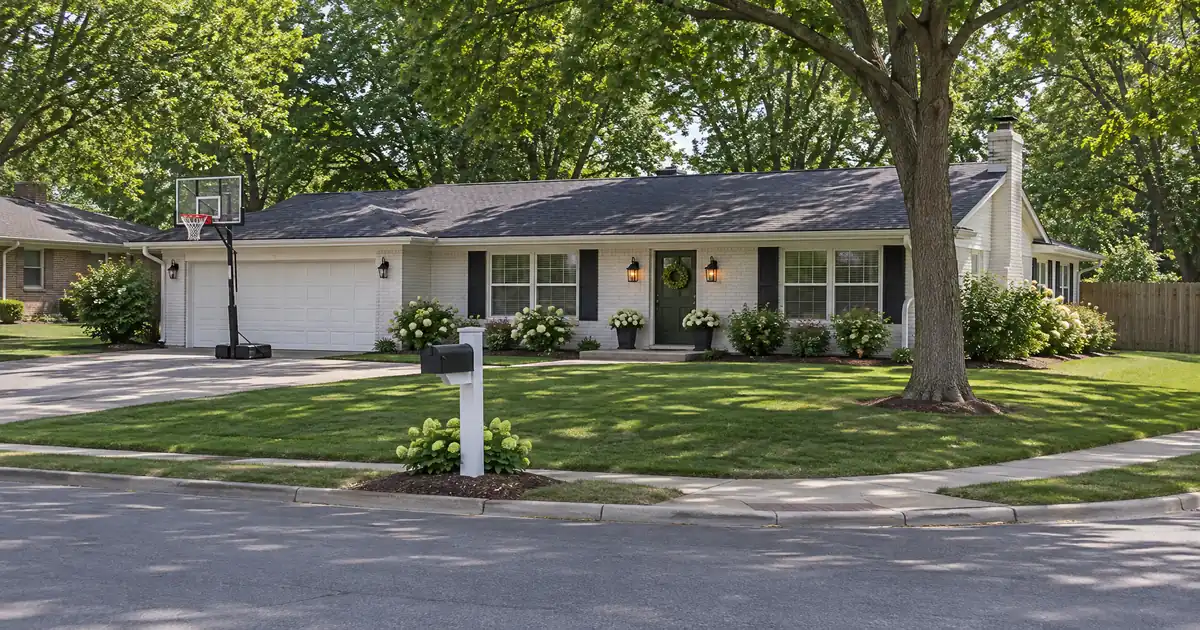
The Quick Read: For most heirs who want to keep the house and pay siblings out, a refinance is the cleaner route, and a home equity loan fits a narrower set of files. A refinance replaces the old loan, pays the siblings, and puts one new first mortgage on the house. A home equity loan adds a second lien on top of whatever is already there. Which one fits depends on whether a mortgage exists, who is on title, and how much equity the house can support. Program figures here are subject to lender guidelines and full file review, and nothing is a commitment to lend.
The Honest Answer First
A refinance is for the heir who wants one loan, one payment, and a clean ownership picture. A home equity loan is for the heir who already owns the home alone, holds a first mortgage worth keeping, and needs a lump sum to cover a smaller buyout.
Cash-out refinance estimate
The starting figures are an example value with a balance and a cash request in proportion. Replace them with yours.
Editable benchmark: 7.18% as of November 5, 2026 · Freddie Mac 30-year average via FRED®. A conventional market reference, not a cash-out refinance quote.
Illustrative starting assumptions: a $350,000 home value, a $193,000 current balance, the agency cap on a one-unit principal residence, a thirty-year term at the current Freddie Mac benchmark, and property taxes and insurance estimated at typical national rates. Every field is editable.
Illustrative estimate only — not a Loan Estimate, approval, quote, or commitment to lend. The rate field carries the weekly Freddie Mac thirty-year conventional benchmark, a market reference and not a cash-out refinance quote; a cash-out loan is priced by the lender at lock. The cash available is the loan the program cap allows less the balances paid off, before closing costs, which are not included. The HELOC line is the program’s combined loan-to-value ceiling applied to the same value and balance. Taxes and insurance are editable estimates. Licensed in sixteen states for consumer mortgages.
Here is the catch with the title. Agencies often don’t treat a sibling buyout as a true cash-out. Fannie Mae’s Selling Guide says buying out a co-owner under an agreement can qualify as a limited cash-out refinance, and it lists exceptions for inherited property to the usual joint-ownership test. Confirm the exact wording of that exception with your loan officer, because it controls the file.
The siblings’ payout counts as a payoff to a co-owner, not cash in your pocket. That changes the leverage the file can reach.
Key takeaways
- A buyout refinance can reach higher leverage than a true cash-out, because the agencies treat the buyout as limited cash-out.
- A home equity loan is a second lien. It leaves any first mortgage in place and does not clear siblings off title by itself.
- The keeping sibling must qualify alone, on credit, income and debts.
- A signed buyout agreement matters for both routes.
- Probate and a recorded deed come before either loan.
Lendmire’s cash-out refinance programs page lays out the first-mortgage options for homeowners who want to compare leverage by occupancy and property type.
Side-by-Side
| Factor | Refinance (buyout) | Home equity loan |
|---|---|---|
| Lien position | New first mortgage replaces old | Second lien added on top |
| Existing mortgage | Paid off at closing | Stays in place, if any |
| Leverage | Up to 95% buyout; 80% true cash-out | Set by each lender |
| Credit floor | 620 decision score, wholesale conventional | Set by each lender |
| Mortgage insurance | Above 80% LTV, except no-MI lane | No agency MI rule; lender-specific |
| Occupancy | Occupancy sets the leverage | Lender-specific |
| Documentation | Appraisal, written buyout, title release | Valuation, income, clear title |
| Sibling release | Handled at closing through title | Needs a separate release or deed |
Read the leverage row carefully. The 95% figure applies to a limited cash-out buyout on a one-unit principal residence, and the 80% figure applies to a true cash-out on that same kind of home. On a true cash-out, two- to four-unit principal residences, second homes and investment property sit at 75%.
Key Terms Defined
Buyout: one co-owner pays another for their share of the home, under a written agreement, and the departing owner signs off title.
Limited cash-out refinance: a refinance that pays off the old first mortgage, closing costs and approved items such as a co-owner’s buyout, with only incidental cash back.
Cash-out refinance: a refinance for more than the payoff and costs, where the borrower takes the difference as cash.
Home equity loan: a second mortgage paid out as a lump sum and repaid in equal monthly installments over a fixed term, as the FTC describes it.
HELOC: a revolving line of credit secured by the home, drawn as needed instead of paid out once.
Seasoning: the minimum time a loan or ownership must exist before a refinance of a given type is allowed.
How the Buyout Works Under Each Route
Start with title, because no loan fixes a messy one. A will alone does not move ownership. The estate usually goes through probate, and a deed is then recorded. Rules differ by state, so an estate attorney should confirm the steps before anyone orders an appraisal.
Next, put the deal in writing. Fannie Mae’s rule refers to a buyout “pursuant to an agreement.” A signed agreement that names the home’s value, each sibling’s share, the payout and the release is the document the lender and title company both want.
Then the appraisal sets the math. The value decides how much equity exists, and the new loan has to fit the leverage limit for the program and occupancy.
Refinance route
Picture an heir who inherited a house with an old mortgage and two siblings on title. The refinance pays off that mortgage, pays the closing costs and pays the two siblings their shares, all at one closing. The siblings sign a deed or release, and the title company confirms it before funds move.
The keeping sibling underwrites alone. On the wholesale conventional programs, the decision score starts at 620, the automated finding governs most files, and the total debt ratio tops out at 50%. A sibling who lives elsewhere cannot be counted on to help the keeper qualify. Program rules for non-occupant co-borrowers differ, so ask before assuming.
Cash back to the keeper stays small on a buyout. Fannie Mae limits incidental cash to the lesser of 2% of the new loan amount or $2,000, while Freddie Mac sets it at the greater of 1% of the new loan amount or $2,000. Name the agency whenever you quote either figure.
Home equity loan route
The first mortgage stays where it is. A new, separate loan adds its own monthly obligation. If the house is paid off, the equity loan becomes the only lien, and the CFPB notes that a second lien is paid second if the home is sold to cover debts, which is why second mortgages often cost more than first mortgages.
The mechanical problem is title. An equity loan lends against a home you own. It does not by itself remove your siblings from the deed. Before funds move, the recorded deed or a signed release has to show who owns the house. Many lenders won’t place a lien until that is clean.
Lendmire’s lane is first-mortgage refinancing. A home equity loan is a separate second-lien product from a different lender channel, so the comparison below is about structure, not a quote.
When a Refinance Is the Better Fit
A refinance is the stronger play when any of these is true:
- The house has no mortgage or a high-balance one you can replace. One new loan beats stacking a second on top.
- Siblings are still on title. The refinance closing is where the deed or release and the payout happen together.
- The buyout is large relative to the equity. The buyout structure can reach leverage that a true cash-out cannot.
- You want one payment on one set of terms. A refinance replaces everything. An equity loan adds a payment.
- You want mortgage insurance to end on a schedule. Mortgage insurance is required above 80% LTV on the agency path, except in the wholesale no-MI cash-out lane. On the agency path, you can request cancellation at 80% of the original value with good payment history, no subordinate liens and no decline in value, and the servicer must end it automatically at 78%. The wholesale no-MI lane reaches 89.99% LTV at a 680 score with a 50% ratio on a thirty-year fixed primary residence at a conforming balance, with its own six months of seasoning. That lane is a true cash-out, not a buyout. The exact numbers vary by lender and program and follow a full review of property, leverage, and credit.
Seasoning matters on true cash-out files. The first mortgage being paid off should be at least 12 months old, and the borrower should have been on title for 6 months. Inheritance and legal-award exceptions exist. That is why the inheritance carve-out is worth confirming early.
The live Freddie Mac Guide governs, so ask your loan officer which agency’s rules the file will follow.
On a jumbo balance, the jumbo lanes take over. The wholesale jumbo programs start at a 660 decision score, reach 90% leverage on some files and go to $5,000,000 in loan amount, subject to program terms. Final terms depend on the lender’s guidelines, the property type, and the borrower’s complete credit picture.
Texas has its own rule. A cash-out on a homestead there (a Section 50(a)(6) loan) is capped at 80% of the home’s value by the state constitution, and the wholesale no-MI lane is not written there.
When a Home Equity Loan Is the Better Fit
A home equity loan earns its place in a narrower set of files:
- You hold sole title already. Probate is done, the deed is recorded, and no siblings remain on it.
- You have a first mortgage you want to keep. The refinance would replace it, and there are reasons to leave it alone.
- The buyout is a gap, not the whole payout. Savings or other funds cover most of it, and a smaller lump sum finishes the job.
- The house is paid off and the buyout is modest. One new loan, with the equity as security.
- You can keep a real equity cushion. The FTC notes that many lenders prefer you borrow no more than 80 percent of your equity. That is lender practice, not an agency rule.
The costs and risks are real. The CFPB says home equity loans can carry upfront fees, so compare more than the monthly payment. It also warns that the lender can foreclose if you can’t repay. Second liens often cost more than first mortgages, as noted above, so a lower-cost-looking structure is not automatically cheaper once everything is added up.
A HELOC is the revolving cousin. It can cover a small gap but is a poor fit for a fixed, one-time payout to siblings, since a buyout is a single known number.
Thinking It Through (the Low-Balance Mortgage Case)
This one is a genuine toss-up. Say the inherited home carries a small first mortgage, and the buyout is a modest share of the equity. Keeping the old loan and adding a second may look tidy. But two liens mean two payments, two sets of closing costs, and a second lien that sits behind the first.
The refinance replaces both with one loan, at today’s terms. If the old loan is small, the refinance may be simple. If the old loan’s terms are strong and the buyout is small, the equity loan may win. No formula settles it. Compare the full cost of each, not just the payment. A Loan Estimate lets you do that side by side.
Common Mistakes on Inherited-Home Buyouts
1. Treating the will as the deed. A will does not move title. Probate and a recorded deed do.
2. Skipping the written agreement. Without it, neither route has a clean paper trail.
3. Assuming a refinance is always a cash-out. A buyout under a written agreement is limited cash-out at both agencies, with different leverage.
4. Confusing delayed financing with inheritance. Delayed financing covers recent cash purchases. Inheritance is its own exception.
5. Counting on a sibling’s income. The keeper has to qualify alone unless the program allows a co-borrower.
6. Borrowing to pay off debt and calling it solved. The CFPB points out that you are taking out one loan to repay another.
7. Forgetting an uncooperative sibling. A refinance cannot force a buyout. No signed release, no closing.
What the Lender Looks For
Whichever route you pick, the file needs the same core pieces:
- A recorded deed or probate documents showing who owns the home.
- A signed buyout agreement with each sibling’s share and release.
- An appraisal that supports the value used in the math.
- Income, credit and debt documentation for the keeping sibling.
- Payoff information for any existing mortgage or lien.
- Closing paperwork that routes the siblings’ payout through title.
Clean files move through review with fewer questions. Gaps are what get pended.
The Verdict
Choose a refinance when the house needs one clean loan, siblings still sit on title, or the buyout is large. Choose a home equity loan when you own the home alone, a first mortgage is worth keeping, and the buyout is smaller than the equity cushion you want to protect.
Neither is right if siblings won’t sign, if title isn’t clear, or if the keeper can’t qualify alone. In those cases the first step is the attorney and the title company, not a loan application.
If you are weighing a cash-out refinance against keeping the loan you have, Lendmire can help you compare the programs and the equity each one reaches.
Frequently Asked Questions
Can I borrow against an inherited home before probate closes?
Usually not on a clean basis. Lenders want to see who owns the house, and that means a recorded deed or probate documents. Until title is settled, neither a refinance nor a home equity loan has a clear lien position. An estate attorney can tell you what your state requires.
Does the sibling payout count as cash-out?
Often it does not. Fannie Mae treats a co-owner buyout under a written agreement as a limited cash-out refinance, with inheritance exceptions to its joint-ownership test. Because the label drives leverage, confirm which rules the file follows.
Will a home equity loan remove my siblings from the deed?
No. It is a second mortgage on a home you own. Removing siblings takes a deed or signed release, recorded and confirmed by the title company. Many lenders want that done before they place a lien.
Can I use a sibling’s income to qualify?
It depends on the program. The keeping sibling should expect to qualify alone on credit, income and debts. Some programs limit or bar a non-occupant co-borrower’s income, so ask before building the file around it.
What if the inherited home has no mortgage?
Then a home equity loan would be the only lien, and a refinance would be a new first mortgage on a paid-off home. Fannie Mae’s guide treats a new first mortgage on a property with no lien as cash-out, and it excludes a buyout from limited cash-out unless the 12-month joint ownership test is met. Read the exceptions in the guide with your loan officer.
For your own numbers, request a scenario review with Lendmire.
For current guidelines and terms, see Lendmire’s refinance programs page.
About Lendmire
Lendmire, NMLS# 2371349, is a mortgage brokerage with consumer lending licenses in 16 states. FHA, VA, conventional and jumbo purchase and refinance loans are arranged through wholesale lending partners, and each application is reviewed individually by the lender. Scotsman Guide named Lendmire a Top Mortgage Workplace in both 2025 and 2026.
Get Started
Ready to find the right loan for you?
See your offer in seconds. No credit pull, no obligation.
Informational only. Not a Loan Estimate, approval, or commitment to lend. Program availability and eligibility are subject to lender guidelines, credit approval, property review, and underwriting.
References
1. Fannie Mae Selling Guide B2-1.3-02: Limited Cash-Out Refinance Transactions
2. FTC: Home Equity Loans and Home Equity Lines of Credit
3. CFPB
4. Freddie Mac Single-Family Seller/Servicer Guide
5. CFPB: What Is a Home Equity Loan
This article is part of Lendmire’s cash-out refinance program — full qualification details, guidelines, and scenarios live on the program page.
Related reading: How to Prepare a Second Home Cash-Out Refinance for Funding · How to Qualify and Apply for a Cash-Out Refinance on a Rural Home With a USDA Loan · How to Plan and Use a Cash-Out Refinance for Small Home Improvements
Brandon Miller
Founder & CEO, Mortgage Loan Originator, Lendmire LLC
- Mortgage Loan Originator · NMLS# 1129696 · Verify on NMLS Consumer Access
- North Carolina Real Estate Broker · License# 343312 · Verify on NCREC
- North Carolina Insurance Producer · License# 19053198 · Property, Casualty, Life, Health · Verify on NAIC SBS
- Lendmire LLC · Firm NMLS# 2371349 · Verify firm licensure
Required disclosures. Lendmire (NMLS# 2371349) operates as a licensed mortgage broker, not a direct lender or depository. The discussion in this article is general in nature and should not be relied upon as financial, legal, or tax advice — every investment scenario is unique and should be reviewed by a qualified professional. Any loan inquiry is subject to lender underwriting, and this article is not a commitment to lend or a guarantee of approval. Mortgage rates, loan terms, and program guidelines vary by borrower, property, and state, and may change without notice. Equal Housing Opportunity. Verify licensure at NMLS Consumer Access.