
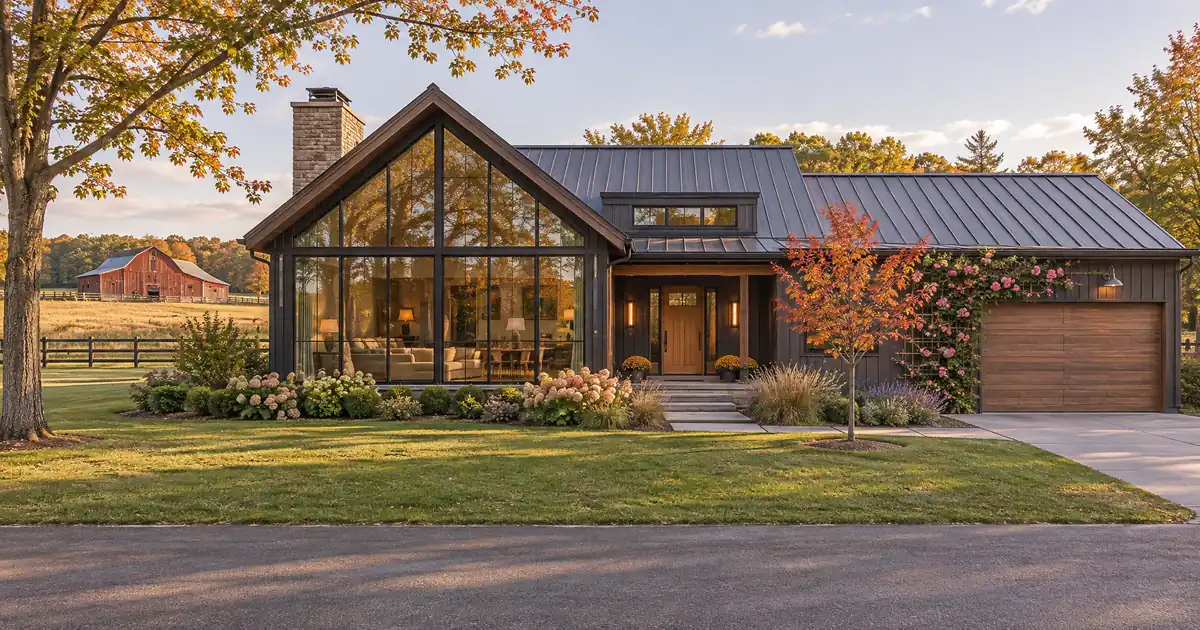
The Quick Read: VA cash-out suits an eligible veteran who wants the most equity out of a home they live in. Conventional cash-out suits a borrower who has no VA eligibility, or who wants to keep VA entitlement untouched and is comfortable leaving more equity in the house. Acreage itself rarely decides between the two. What decides it is whether the property reads as a home with land or as a working farm, and what the appraiser can support with nearby sales.
The Honest Answer on Who Each Option Is For
Think of it as two questions. First: do you hold a VA Certificate of Eligibility and live in the home? If not, VA is off the table. Second: how much equity do you want to pull out? VA reaches further than conventional, but it uses up some of the benefit you earned.
VA cash-out estimate
Seeded with an example value, a typical balance, and a round cash request at the first-use fee; change any field.
Editable benchmark: 7.18% as of November 5, 2026 · Freddie Mac 30-year average via FRED®. A conventional market reference, not a VA cash-out refinance quote.
Illustrative starting assumptions: a $350,000 home value, a $193,000 current balance, the full-value VA cap with the first-use funding fee financed, a thirty-year term at the current Freddie Mac benchmark, and property taxes and insurance estimated at typical national rates. Every field is editable.
Illustrative estimate only — not a Loan Estimate, approval, quote, or commitment to lend. The rate field carries the weekly Freddie Mac thirty-year conventional benchmark, a market reference and not a VA cash-out refinance quote; a VA loan is priced by the lender at lock. The total loan, funding fee included, is capped at the program leverage on the reasonable value; the fee follows the tier chosen. The cash available is what the cap allows less the balances paid off and the fee, before closing costs, which are not included. The HELOC line is the line program’s combined loan-to-value ceiling applied to the same value and balance. Taxes and insurance are editable estimates. The debt-to-income figure is a guideline; residual income decides a VA file. Licensed in sixteen states for consumer mortgages.
Acreage adds a third question. Both loan types want a residential property. A house on 40 acres with a few outbuildings can work under either program. A property whose value comes mostly from crops, livestock or commercial farming runs into trouble with both.
Eligible veterans on rural homes usually start with VA because of the leverage and the lack of mortgage insurance. Conventional comes in when eligibility is missing, when the appraisal splits house and land awkwardly, or when the borrower wants to hold entitlement back for a later purchase. Everything below is subject to lender guidelines and a full file review, and none of it is a commitment to lend.
Side-by-Side
| Factor | VA Cash-Out | Conventional Cash-Out |
|---|---|---|
| Leverage | Up to 100% of appraised value | Lower; set by occupancy and lender |
| Credit floor | 580 decision score on our wholesale programs | Set by lender and automated underwriting |
| Mortgage insurance | None | May apply with a thin equity cushion |
| One-time VA fee | Funding fee unless exempt | None |
| Occupancy | You must live in the home | Primary, second home or other, at differing leverage |
| Acreage limit | None set by VA | None set by Freddie Mac; lenders may add limits |
| Appraisal | VA-approved appraiser, property requirements | Standard appraisal, residential-use review |
| Eligibility paperwork | Certificate of Eligibility | None |
| Income test | Residual income controls | Debt-to-income ratio controls |
How VA Treats Land
VA says a cash-out refinance replaces your current loan with a new one on different terms, and it can also move a non-VA loan into a VA-backed one, per VA’s cash-out refinance page. You apply through a private lender, not through VA itself.
Acreage is where many veterans assume a wall exists. According to VA’s farm loan fact sheet, VA does not limit the number of acres on a guaranteed property. The same fact sheet draws firm lines elsewhere:
- There must be a farm residence on the land, and the veteran must live in it as a primary residence.
- The loan is for residential purposes, not for buying a business.
- Value cannot include livestock, crops, or farm equipment and supplies.
- Barns, sheds, corrals, stables and pastures are valued at fair market value.
- Underwriting is generally the same as for a non-farm home.
The appraisal is the pressure point. Appraising acreage should not be a problem when similar nearby properties recently sold primarily for residential use. Where those sales don’t exist, value gets harder to support, and that is a lender and appraiser problem more than a VA rule problem.
How Conventional Treats Land
Conventional loans follow the guides of Fannie Mae and Freddie Mac. Freddie Mac says it has no site size or acreage limitations. When a large parcel sits where commercial farms or ranches are typical, the seller must analyze the property further to confirm it is residential.
Fannie Mae’s Selling Guide takes a similar line. A loan must be secured by property that is residential in nature, and property used primarily for agricultural or commercial purposes is ineligible. The guide sets the test as residential character rather than a flat number of acres.
So the agency rules look alike on both sides. The practical difference is leverage. Conventional cash-out generally leaves more equity in the home, and the exact limits depend on occupancy and property type, so check the Fannie Mae Eligibility Matrix rather than trusting a figure from memory.
When VA Cash-Out Is the Better Fit
VA wins in a handful of situations.
You want the most equity out. The VA cash-out reaches 100% of the appraised value, including the financed funding fee. Conventional generally stops well short of that.
You want no monthly mortgage insurance. VA carries no mortgage insurance of any kind. A conventional cash-out with a thin equity cushion may add private mortgage insurance, and on a high-leverage cash-out that matters.
You are moving a non-VA loan into VA. A VA cash-out can refinance any loan type into a VA loan, including a conventional loan.
Your credit is bruised but workable. VA sets no minimum score of its own. The wholesale programs we place VA loans with start at a 580 decision score, and lenders can set higher floors. Conventional programs usually look at credit more tightly.
Your income picture is unusual. VA makes residual income the controlling test. That is the money left after your debts and living costs. Alongside it, VA uses a 41% debt-to-income figure as a guideline, not a cap. A higher ratio needs residual income well above the table, but it can still work.
Your property is a home first. Picture a three-bedroom house on 25 acres, with a barn used for hay storage and a few horses. The comparable sales are other rural homes, not farms. This is the profile VA’s fact sheet describes, and it tends to appraise cleanly when sales support it.
The cost is real. The funding fee on a cash-out refinance is 2.15% for first use and 3.3% for subsequent use, and it is financeable. Veterans who receive compensation for a service-connected disability, and a few other groups, are exempt. Mortgage balance goes up either way, and the fee stays in the loan unless you pay it at closing.
You also need to clear the VA cash-out tests. The loan carries seasoning, meaning the later of 210 days from the first payment on the loan being refinanced and the sixth payment. It also needs a net tangible benefit, which is one of VA’s eight listed benefits. The half-percent rate-reduction test and fee-recoupment test belong to the streamline (IRRRL) and do not apply to a VA cash-out.
When Conventional Cash-Out Is the Better Fit
Conventional makes more sense in these cases.
You don’t have VA eligibility. No Certificate of Eligibility, no VA loan. Many rural homeowners fall here, and conventional is the direct route.
You don’t live in the home. VA cash-out requires that you occupy the property. A conventional loan accepts second homes and other occupancy types, at lower leverage. If your rural acreage is a second home, that is a one-sentence answer: occupancy decides the leverage, and VA won’t cover it.
You want to protect your entitlement. If you have a smaller amount of cash-out in mind and plan to buy another home with VA later, keeping the conventional loan avoids using your benefit.
You’d rather not pay the funding fee. Conventional has no VA funding fee. If your equity cushion is thick enough to avoid mortgage insurance, the fee-free structure can be cleaner for a modest cash-out.
You prefer to leave a larger cushion. Lower leverage means more equity stays in the land and house. On rural property, where values can shift slowly and sales can take time to materialize, that cushion has real value. Rural markets can sit unsold longer than suburban ones, and that is a risk worth sizing.
Your manufactured home or unusual build is better handled conventionally. Conventional loans require the home to be classified as real property, and Fannie Mae’s matrix says manufactured housing must be underwritten through its automated system. VA also treats manufactured homes differently unless they are permanently affixed. Both sides get complicated here, so check early.
The tradeoff: with less equity out, conventional may not cover the debts or projects you had in mind. It also needs a credit and income profile that fits conventional underwriting, and a high debt-to-income ratio has less room to bend than it does with VA’s residual income test.
What Happens When the Property Looks Like a Farm
Both loan types stumble when the property looks agricultural. VA says some farm properties may not be eligible. Fannie Mae excludes property used primarily for agriculture, and Freddie Mac excludes property used primarily for agriculture, farming or commercial enterprise.
A few signals push the property toward the farm side of the line:
- Large commercial-style barns, silos or processing buildings.
- Income from the land that rivals or exceeds the home’s role.
- Comparable sales that are working farms, not rural homes.
- Acreage far larger than nearby residential sales.
If the property gets flagged, neither loan works as a home loan. A farm-operator loan or a different structure may fit instead. If you plan to use farm income to qualify under VA, the lender must verify your ability and experience as a farm operator, following the self-employment procedures in VA’s Lenders Handbook. That adds documentation.
Two property facts matter on both sides. VA’s appraiser checks minimum property requirements, which cover the home’s condition, water and septic. Conventional appraisals look at the same basics, though the standards differ. A bad well or a failing septic can stall either loan until it is fixed.
Low Appraisals and Thin Comps
A rural appraisal is often the hardest step. The appraiser has to value the actual site, not an imaginary smaller piece of it. Large adjustments are normal when comparable sales are miles away.
A low value hurts under both programs. The loan is capped by appraised residential value, so land value that nearby residential sales can’t support will not add borrowing power. Cash out shrinks right along with the number.
VA requires the appraisal on a cash-out, and a VA-approved appraiser determines reasonable value, per VA’s Buyer’s Guide. That guide is older, so treat it as a source for concepts.
If the value comes in short, you have three options: bring in less cash, wait for better comparable sales, or switch programs. The question is whether the other program reads the same property differently. It usually does not, but the lender’s overlays can differ, so asking a second lender costs little.
Questions to Ask a Lender Before You Apply
The acreage rule you hit will often be the lender’s, not the agency’s. Ask these in order:
1. Do you have an acreage limit or a rural overlay, and what is it?
2. What credit score floor do you set for rural VA or conventional files?
3. How do you treat outbuildings and the value of non-residential improvements?
4. What happens if the appraisal reads the property as agricultural?
5. Do you finance the VA funding fee, and does your cash-out maximum include it?
Lendmire is a mortgage broker, not a lender, and it works with several wholesale lenders. That matters on rural property, where one lender’s overlay can end a file another would take. The brokerage’s VA cash-out refinance program page lays out the program basics.
Cash-Out Cuts Both Ways
Taking cash out raises your loan balance and the interest paid over the life of the loan. It also replaces your current payment with one new payment. The CFPB’s research found that borrowers often use the money to pay down credit card and auto debt, and that credit scores improved sharply at first, then gradually worsened. Paying off debt and then running it back up is the trap.
Also be careful with refinance offers. VA itself warns on its cash-out page to be careful with home loan refinance offers.
If you hold a VA loan today and are weighing which kind of cash-out to use, Lendmire’s piece VA Cash-Out Refinance vs. Conventional Cash-Out Under VA Type 1 and Type 2 Refinance Rules goes deeper on the refinance categories.
Key Terms Defined
Certificate of Eligibility (COE): The VA document that confirms you qualify for a VA loan. It comes from VA, and service requirements are VA’s rules.
Cash-out refinance: A new loan that pays off your current one and gives you the leftover equity as cash.
Funding fee: A one-time VA charge on most VA loans, which can be financed into the loan and is waived for exempt borrowers.
Residual income: The money left each month after taxes, debts and living costs. VA treats it as the controlling test.
Seasoning: The waiting period a loan must age before it can be refinanced.
Overlay: A lender rule stricter than the agency’s own rule, such as a higher credit floor or an acreage limit.
Net tangible benefit: A concrete gain from the refinance, from VA’s list of eight, that the new loan must deliver.
The Balanced Verdict
For an eligible veteran living in a rural home on acreage, VA is usually the stronger starting point. It reaches up to 100% of appraised value, carries no mortgage insurance, and VA does not cap acreage. The price is the funding fee, the entitlement you use, and the need to live in the house.
Conventional wins when you lack eligibility, want the home as a second residence, or would rather keep entitlement and a deeper equity cushion. It asks for more equity and gives less cash.
On the other hand, neither loan will rescue a property that appraises as a farm. Start by deciding whether your land reads as residential, then pick the loan. In rural lending, the lender’s overlay is often a bigger obstacle than the agency rule.
If you are weighing a cash-out refinance against keeping the loan you have, Lendmire can help you compare the programs and the equity each one reaches.
Frequently Asked Questions
Is there an acreage limit on a VA cash-out refinance?
VA itself sets no limit on acres. The property needs a farm residence that you occupy as your primary home, and it must be used for residential purposes. Individual lenders sometimes add their own limits, so ask about overlays before you order an appraisal.
Do Fannie Mae or Freddie Mac cap acreage on a conventional cash-out?
Freddie Mac says it has no site size or acreage limitations. Fannie Mae requires residential property and excludes land used primarily for agriculture. The real test is residential character, and lender overlays can still apply.
Does livestock, crops or equipment count toward my value?
No on VA, which excludes them from value. Barns, sheds, corrals, stables and pastures count at fair market value. Conventional appraisals focus on residential character, so a property valued mainly for farm use can be ineligible.
Can I use a VA cash-out on a second home or rental?
No. A VA cash-out requires that you live in the home. Occupancy sets the leverage on conventional loans, so a second home generally means a conventional loan at lower leverage.
What if my appraisal comes in low?
Your cash out shrinks under either program, because the loan is capped by appraised residential value. You can take less cash, wait for better comparable sales, or ask another lender how it reads the same file. Subject to lender guidelines and full file review.
For your own numbers, request a scenario review with Lendmire.
About Lendmire
Lendmire, NMLS# 2371349, is a mortgage brokerage with consumer lending licenses in 16 states. FHA, VA, conventional and jumbo purchase and refinance loans are arranged through wholesale lending partners, and each application is reviewed individually by the lender. Scotsman Guide named Lendmire a Top Mortgage Workplace in both 2025 and 2026.
Get Started
Ready to find the right loan for you?
See your offer in seconds. No credit pull, no obligation.
Informational only. Not a Loan Estimate, approval, or commitment to lend. Program availability and eligibility are subject to lender guidelines, credit approval, property review, and underwriting.
References
1. VA – Cash-out refinance loan
3. Freddie Mac – Rural Properties FAQ
5. Fannie Mae Eligibility Matrix
6. VA – Home Loan Buyer’s Guide
This article is part of Lendmire’s VA cash-out refinance program — full qualification details, guidelines, and scenarios live on the program page.
Related reading: How Lenders Underwrite a VA Cash-Out Refinance With No Mortgage · How to Restore Entitlement Before a VA Cash-Out Refinance · How Lenders Underwrite a VA Cash-Out Refinance on Property With Accessory Dwelling Unit
Brandon Miller
Founder & CEO, Mortgage Loan Originator, Lendmire LLC
- Mortgage Loan Originator · NMLS# 1129696 · Verify on NMLS Consumer Access
- North Carolina Real Estate Broker · License# 343312 · Verify on NCREC
- North Carolina Insurance Producer · License# 19053198 · Property, Casualty, Life, Health · Verify on NAIC SBS
- Lendmire LLC · Firm NMLS# 2371349 · Verify firm licensure
Required disclosures. Lendmire (NMLS# 2371349) operates as a licensed mortgage broker, not a direct lender or depository. The discussion in this article is general in nature and should not be relied upon as financial, legal, or tax advice — every investment scenario is unique and should be reviewed by a qualified professional. Any loan inquiry is subject to lender underwriting, and this article is not a commitment to lend or a guarantee of approval. Mortgage rates, loan terms, and program guidelines vary by borrower, property, and state, and may change without notice. Equal Housing Opportunity. Verify licensure at NMLS Consumer Access.