
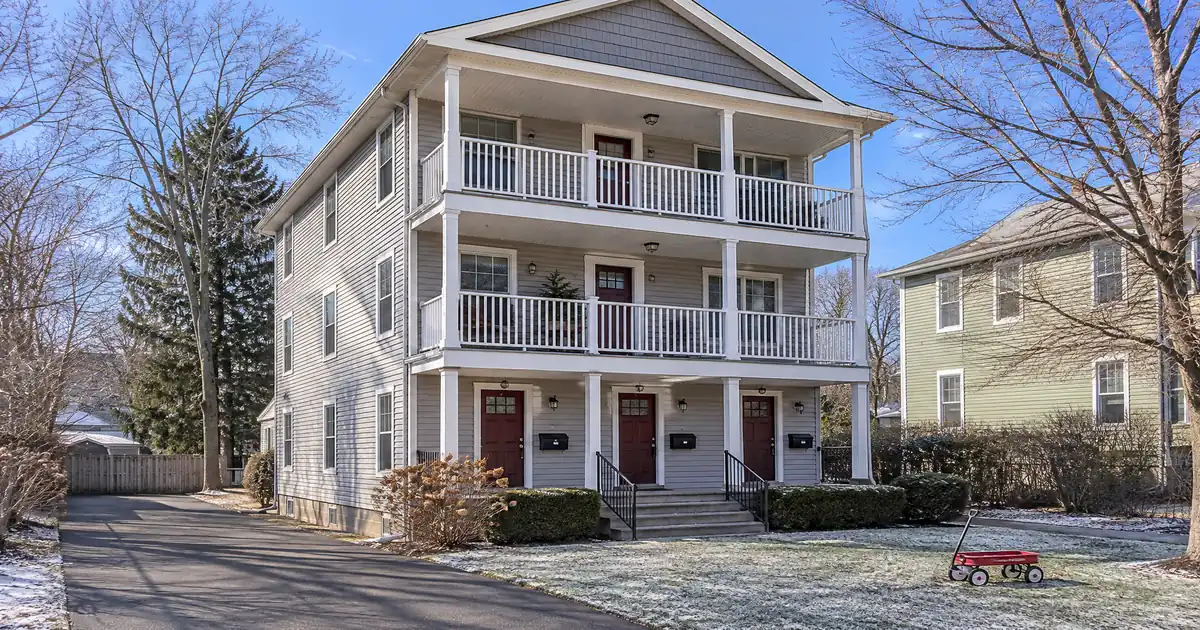
The Quick Read: On a triplex you live in, an FHA cash-out counts rent from the two units you lease to tenants, and only at a discount. Your own unit’s rent is not qualifying income. With no rental history, the lender counts 75% of the lesser of the lease rent or the appraiser’s market rent. A separate property test then asks whether the whole building’s rent can carry the full payment.
Key takeaways
- Only the units you rent out add to your qualifying income. The unit you live in does not.
- The lender uses the lower of your lease rent or the appraiser’s market rent, then takes a haircut.
- Rental history changes the method: tax returns if you have a history, an appraisal and leases if you don’t.
- A triplex also faces a building-level test that your salary cannot override.
- A bigger cash-out means a bigger payment, which can turn a passing triplex into a failing one.
FHA cash-out estimate
Seeded with an example value, a balance to match, and a round cash request; change any field.
Editable benchmark: 7.18% as of November 5, 2026 · Freddie Mac 30-year average via FRED®. A conventional market reference, not an FHA cash-out refinance quote.
Illustrative starting assumptions: a $350,000 home value, a $193,000 current balance, the FHA cap on a principal residence with the upfront premium financed, a thirty-year term at the current Freddie Mac benchmark, and property taxes and insurance estimated at typical national rates. Every field is editable.
An illustration, not a Loan Estimate, an approval, a quote, or a commitment to lend. The rate shown is the weekly Freddie Mac thirty-year conventional benchmark, used as a market reference; an FHA cash-out is priced by the lender at lock, and this is not an FHA cash-out refinance quote. HUD’s cap limits the base loan; the upfront premium is financed on top of the capped base loan; the monthly premium for the first year follows the snapshot’s schedule. Cash available means the base loan the cap permits less the balances retired, before closing costs, which this calculator leaves out. The line figure applies the line program’s combined loan-to-value ceiling to the same value and balance. Taxes and insurance are estimates you can edit. Licensed in sixteen states for consumer mortgages.
What Does an FHA Cash-Out on a Triplex Actually Do With Rent?
It treats rent from your tenants as income, but trims it first. A triplex is a three-unit building, and an FHA cash-out refinance replaces your current loan with a larger one and hands you the difference in cash. Cash-out is allowed only on a home you own and live in as your main residence. Living in one of the three units satisfies that.
This article zooms in on one piece: how the rent from the other two units changes the math.
Here is the way a lender thinks about it. Your income pays the loan. Rent from the two leased units can join your income. If the rent counted is positive after the lender’s adjustments, it adds to what you earn. If it comes out negative, it counts as a debt. Either way, the rent enters the same debt-to-income review as your paycheck.
Across the wholesale programs Lendmire places FHA files with, the base ratio pair is 31/43, with no compensating factors. That means housing costs up to 31% of income and total debts up to 43%. With documented compensating factors, the ratios can reach 40/50 at the top tier, and the automated finding governs most files. Everything stays subject to lender guidelines and a full file review.
Which Units Count and Which Don’t?
The two units you lease out count. The unit you occupy does not. Because the rule turns on which unit is which, it gets its own section.
Say you own a triplex and live in unit A. Units B and C each have a tenant under a lease. The lender builds your qualifying rental income from B and C only. Unit A’s rent is a number on the appraisal, but it is not income you receive from anyone.
Unit A does matter later, in the building-level test covered below. That is where “income rent” and “test rent” split apart.
A few other things never count:
- Commercial space. A storefront in a mixed-use building adds nothing to rental income under HUD Mortgagee Letter 2023-17.
- Accessory dwelling unit rent on a one-unit home. HUD bars it on a cash-out. This is a one-unit rule. It does not touch a legal three-unit building.
- Income from a co-borrower who doesn’t live there. On a cash-out, that income cannot be used to qualify, per the same HUD letter.
On a purchase, a non-occupant co-borrower can help. On a cash-out, that door is closed. If a parent was your co-signer when you bought, plan on qualifying without their income when you refinance.
How Is the Counted Rent Calculated?
The method depends on whether you have a rental history. The lender documents which path applies, and the two paths use different paperwork. The core rule comes straight from HUD: for a 2–4 unit home, rent from the subject property can be effective income.
Path one: you have a rental history. The lender collects your last two years of tax returns with the rental schedule attached, as described in the archive copy of the same HUD letter. Income comes from that history. The lender also documents when you acquired the property.
Path two: limited or no history. Maybe you bought the triplex recently, or you only started leasing the other units. Then the lender relies on an appraisal that reports market rent for each unit. On a triplex, that is a small residential income property appraisal, commonly called Form 1025. Leases support the rent actually in place.
For this path, HUD counts 75% of the lesser of two numbers: the appraiser’s market rent or the rent in the lease. The 25% that falls away is the cushion for vacancy and upkeep.
Here is the “lesser of” rule in plain words. Suppose a long-term tenant pays 90% of what the appraiser says the unit would rent for today. The lease is lower, so the lease governs. The lender counts 75% of that lower figure. Put together, the lender counts roughly two-thirds of today’s market rent for that unit. Suppose instead your tenant pays more than market. The appraiser’s lower figure governs. You don’t get credit for above-market rent.
That is why counted income is a haircut figure. It is not the money you collect. Vacancies and repairs stay your risk, whatever the lender counts.
What Documents Does the Lender Want?
Plan on gathering these before you apply:
1. Signed leases for each rented unit.
2. Proof the rent is actually being paid.
3. Two years of tax returns with the rental schedule, if you have a rental history.
4. The usual identity, income, asset and mortgage statements for any FHA file.
Tax treatment can depend on your situation; borrowers should speak with a qualified tax professional before relying on any deduction or credit.
If one unit is vacant or has no lease, expect it to count for little or nothing as income. The appraisal still reports a market rent for it, which helps in the building test. Talk to a loan officer before you apply, not after, because the vacant unit shapes which numbers work.
Is the Building-Level Test the Same as the Income Calculation?
No. They use different rent, answer different questions and fail for different reasons. This is a common source of confusion on a triplex.
The income calculation asks: how much rent can join your qualifying income? The self-sufficiency test asks: can the building’s rent carry its own payment? FHA applies that second test to three- and four-unit homes. It looks at the property, not at you.
| Factor | Income calculation | Self-sufficiency test |
|---|---|---|
| What it measures | Rent added to your income | Whether the building pays for itself |
| Your own unit’s rent | Not counted | Included in the rent total |
| Rent source | Lesser of lease or market rent | Appraiser’s market rent |
| Haircut | 75% of the lesser rent (no-history path) | Vacancy and maintenance reduction |
| Compared against | Your debt-to-income ratio | The full monthly payment |
| Can salary fix a miss? | Helps overall ratios | No |
In the test, the appraiser’s market rent for all three units, including yours, is reduced for vacancy and maintenance. What remains must cover the full payment. The full payment means principal, interest, taxes, insurance and mortgage insurance. The exact reduction and the form wording follow the guidelines of the lender handling your file. Your loan officer can confirm how it applies to your file.
Because it is a property test, a high salary does not rescue a building that falls short. A strong paycheck helps your ratios. It does nothing for the building’s rent-to-payment fit.
Why Can a Bigger Cash-Out Break the Test?
Because the payment grows with the loan, while the rent stays put. This is the part most triplex owners don’t see coming.
Picture a triplex that passes comfortably on your current loan. You decide to pull out as much cash as the program allows. Across the wholesale programs Lendmire places FHA cash-outs with, the maximum is 80% of the home’s value. That is a bigger balance than you have now, so the payment rises. The upfront mortgage insurance premium of 1.75% of the base loan is typically financed, which adds to the balance too. The building’s rent hasn’t moved.
Run the same triplex two ways, in plain terms:
- Smaller cash-out. The payment stays modest. Net test rent covers it with room to spare. The deal works on.
- Maximum cash-out. The payment climbs. Net test rent barely covers it, or falls short. The file stalls on the property test, even though your income looks fine. Final terms depend on the lender’s guidelines, the property type, and the borrower’s complete credit picture.
The fix is usually to borrow less. A smaller loan means a smaller payment, which gives the test more room. A rent increase backed by leases and by the appraiser’s market rent can also help. A loan officer can show you where the line sits for your building before you order anything.
The same push-and-pull hits the income side. The higher payment lowers the rent left over after the haircut. If counted rent no longer exceeds the payment attributed to the property, it flips from adding income to counting as a debt. Same triplex, same tenants, different outcome, all from the size of the loan.
What Changes Compared With an FHA Purchase?
Three things: the equity limit, the occupancy history and the rent you can prove.
- Equity limit. A purchase can reach 96.5% financing with a 3.5% minimum investment at a decision score of 580 or higher. A cash-out tops out at 80% of value. The 96.5% figure is not a cash-out figure, so don’t use it to size your refinance.
- Occupancy history. The FHA cash-out is for a home you have owned and lived in for 12 months before the case number. A recent buyer may need to wait, or may be better served by another refinance type.
- Rent evidence. On a purchase, there may be no tenant yet, so lenders lean on projected market rent. On a cash-out, your tenants are already there. Real leases and a real payment record sit in your file. That helps, as long as the leases and the appraisal agree.
If your goal is simply a lower payment or a changed term, other FHA refinance paths exist. The FHA Streamline refinances an existing FHA loan with no appraisal and a limited credit review, and it must deliver a net tangible benefit. The rate-and-term refinance with an appraisal reaches 97.75% on a principal residence occupied for the previous twelve months. Neither pays you cash. If cash is the point, the cash-out is the path, and the rent math above comes with it.
Where Does the General Rule Break? Edge Cases
A few situations don’t follow the standard path.
Below-market leases. A long-time tenant paying under market lowers your counted income, because the lesser-of rule picks the lease. Raising rent at renewal helps future files, not this one.
Boarders. A boarder is not a tenant in a separate unit. HUD treats boarder income as its own category with its own history requirements, described in Mortgagee Letter 2025-04. Don’t count on it to substitute for leased-unit rent in a triplex.
One-unit homes with a backyard unit. If you own a single-family home with an accessory dwelling unit, that rent cannot be used on an FHA cash-out. People assume that rule applies to a triplex. It doesn’t, because each triplex unit is a legal unit of the property.
Two units instead of three. A duplex skips the building-level test. A fourplex faces it, like a triplex. That is why many owners find a duplex easier to qualify, even though the income rule is the same.
Other loan types. Conventional programs treat rent differently. Freddie Mac’s Home Possible program limits rental income from a one- or two-unit primary residence. It also does not offer cash-out transactions. Those are different rulebooks. FHA’s handbook governs FHA only.
Rules change. FHA’s policy handbook gets revised regularly, and HUD’s handbook page lists the updates. The lender applies the version in force when your case number is assigned.
Key Terms Defined
Effective income: The income a lender counts toward qualifying after adjustments, including any rent that passes the rules.
Self-sufficiency test: An FHA test for three- and four-unit homes that checks whether the building’s reduced rent can cover the full payment.
Lesser-of rule: The rule that counts the lower of the lease rent or the appraiser’s market rent.
Cash-out refinance: A new, larger mortgage that pays off the old one and gives you the difference in cash.
Seasoning: The waiting period a lender wants between events. Here it means owning and living in the home for 12 months before the case number.
Mortgage insurance premium: FHA’s insurance on the loan, with an upfront piece of 1.75% of the base loan and an annual piece between 0.15% and 0.75% of the balance.
Debt-to-income ratio: Your monthly debts divided by your gross monthly income, shown as housing and total pairs such as 31/43.
How Does It Play Out for the Borrower?
Take a borrower who lives in one unit of a triplex and leases the other two. The borrower wants cash for a roof and other repairs. Three questions decide the outcome.
1. Do the leases and the appraisal agree? If they do, counted rent is straightforward. If the leases run low, the lease rent is what counts.
2. Does the building pass its own test? The test uses market rent on all three units, less the vacancy and maintenance reduction, against the full payment, including mortgage insurance.
3. Is the cash-out sized sensibly? At the 80% ceiling, the test gets harder. A smaller request often passes where a maximum request doesn’t.
Credit matters too. The wholesale programs Lendmire places FHA loans with start at a 580 decision score. HUD’s waiting periods after credit events, such as two years from a chapter 7 discharge or three years from a foreclosure, are HUD’s rules. County loan limits apply and change every year. Annual mortgage insurance on a thirty-year loan at or below 80% LTV ends after eleven years, which is the situation a cash-out at 80% falls into. Each figure is subject to lender guidelines and a complete review of property type, leverage, and credit.
A final check before you apply: list each unit, its lease rent, and what you think a stranger would pay for it today. Compare your list to the lender’s view. Big gaps point to where the file may need work.
Frequently Asked Questions
Does my own unit’s rent count as income on an FHA cash-out for a triplex?
No. Only rent from the units you lease to others can add to your qualifying income. Your unit’s market rent still appears in the building-level test, where it helps show the property can carry its payment.
What if I just bought the triplex and have no rental history?
The lender documents rent with an appraisal that reports market rent per unit, plus any leases in place. HUD counts 75% of the lesser of the appraiser’s rent or the lease rent. You also need to have owned and lived in the home for 12 months before the case number, so a very recent purchase may not qualify.
Can a larger cash-out make a triplex fail the self-sufficiency test?
Yes. A larger loan means a larger payment, and the building’s rent doesn’t grow with it. A triplex that passes at a modest loan can fall short at the 80% maximum. Reducing the cash-out amount is the usual fix.
Does the cash I take out count as reserves?
It depends on the lender’s rules for your file. Don’t assume it does. Lenders can handle reserves for three- and four-unit homes differently, so ask your loan officer how they treat cash-out proceeds before you size the loan.
Can a co-borrower who doesn’t live there help me qualify?
Not on a cash-out. HUD says income from a non-occupant co-borrower cannot be used to qualify for an FHA cash-out. That differs from an FHA purchase, where a non-occupant co-borrower is allowed.
What Should You Do Next?
Start with a rent roll: each unit, its lease rent, and when each lease ends. Then work out how much cash you truly need. A smaller request gives the building’s rent more room to cover the payment.
If you are weighing a cash-out refinance against keeping the loan you have, Lendmire can help you compare the programs and the equity each one reaches. Every figure here is subject to lender guidelines and a full file review, and nothing here is a commitment to lend.
For your own numbers, request a scenario review with Lendmire.
About Lendmire
Lendmire (NMLS# 2371349) is a mortgage brokerage serving homeowners and home buyers in 16 states. FHA, VA, conventional and jumbo purchase and refinance loans are arranged through wholesale lending channels; Lendmire brokers the financing and the lender underwrites each application. Scotsman Guide named Lendmire a Top Mortgage Workplace in both 2025 and 2026.
Get Started
Ready to find the right loan for you?
See your offer in seconds. No credit pull, no obligation.
Informational only. Not a Loan Estimate, approval, or commitment to lend. Program availability and eligibility are subject to lender guidelines, credit approval, property review, and underwriting.
References
1. HUD Mortgagee Letter 2023-17
2. HUD Mortgagee Letter 2023-17 (archive copy)
3. HUD Mortgagee Letter 2025-04
4. Freddie Mac Home Possible fact sheet
5. HUD Housing Handbooks page (Handbook 4000.1)
This article is part of Lendmire’s FHA cash-out refinance program — full qualification details, guidelines, and scenarios live on the program page.
Related reading: How Much an FHA Cash-Out Lends on a Condo Without Project Approval · FHA Cash-Out vs VA Cash-Out for a Veteran With a Co-Trustee · How to Get an FHA Cash-Out Before Retiring With Pension Income
Brandon Miller
Founder & CEO, Mortgage Loan Originator, Lendmire LLC
- Mortgage Loan Originator · NMLS# 1129696 · Verify on NMLS Consumer Access
- North Carolina Real Estate Broker · License# 343312 · Verify on NCREC
- North Carolina Insurance Producer · License# 19053198 · Property, Casualty, Life, Health · Verify on NAIC SBS
- Lendmire LLC · Firm NMLS# 2371349 · Verify firm licensure
Legal disclosures. Lendmire (NMLS# 2371349) is a state-licensed mortgage brokerage that arranges financing through wholesale lender relationships. Lendmire is not a direct lender, depository institution, or registered financial advisor. The discussion above is general informational content about real estate financing — it is not financial, legal, or tax advice, and readers should consult licensed professionals for guidance on their individual circumstances. Loan inquiries are subject to lender underwriting; this article does not represent a commitment to lend. Loan terms, rates, and qualification standards vary by borrower, property, and state, and are subject to change at any time. Equal Housing Opportunity. NMLS Consumer Access: nmlsconsumeraccess.org.