
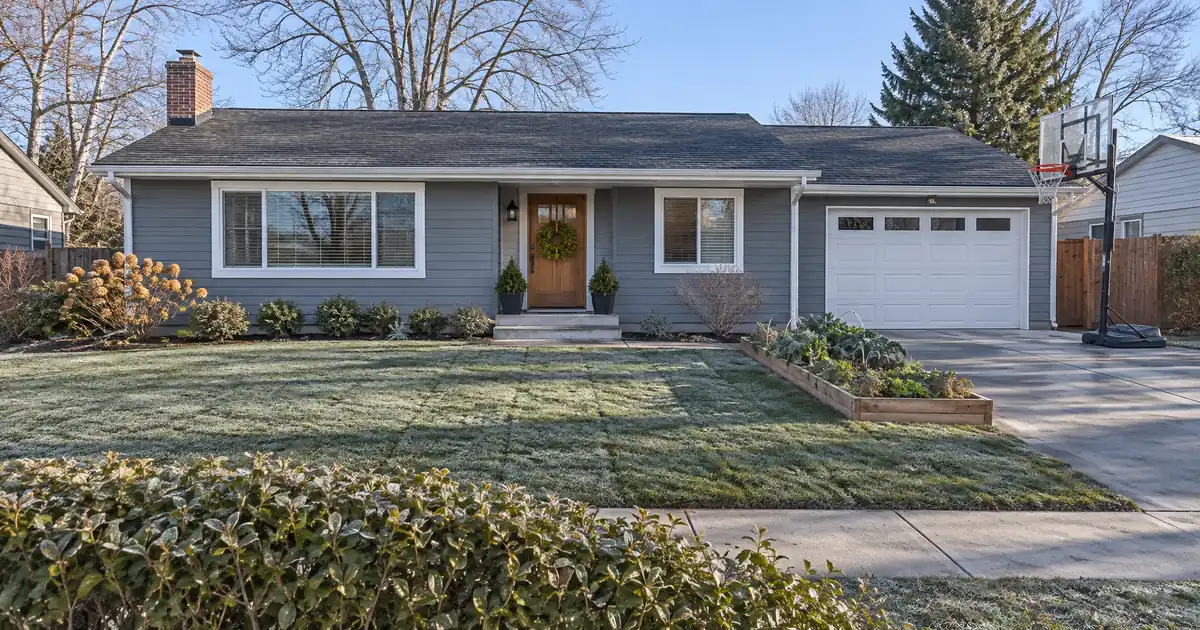
The Quick Read: On a home you own outright, the base loan tops out at 80% of the appraised value. The county loan limit can cap it lower. You do not get all of that as cash. Costs paid from proceeds come out first, and the upfront mortgage insurance premium is added to the loan balance on top. Every figure here is subject to lender guidelines and full file review, and none of it is a commitment to lend.
Key Takeaways
- A paid-off home still counts as a cash-out refinance, because the new loan has no old mortgage to replace.
- The maximum base loan is 80% of the home’s appraised value, or the county FHA loan limit if that is lower.
- You must have owned and occupied the home as your principal residence for 12 months before the case number is assigned.
- The cash you receive is the base loan minus closing costs paid from proceeds and any liens that must be cleared.
- You trade a debt-free home for a new first mortgage with a monthly payment that includes mortgage insurance.
Why a Paid-Off Home Still Counts as “Cash-Out”
A refinance is cash-out when the new loan is bigger than what it pays off. With no mortgage, there is nothing to pay off. So the whole loan, after costs, lands in your hands. That makes this the cleanest version of the product.
FHA cash-out estimate
Seeded with an example value, a balance to match, and a round cash request; change any field.
Editable benchmark: 7.18% as of November 5, 2026 · Freddie Mac 30-year average via FRED®. A conventional market reference, not an FHA cash-out refinance quote.
Illustrative starting assumptions: a $350,000 home value, a $193,000 current balance, the FHA cap on a principal residence with the upfront premium financed, a thirty-year term at the current Freddie Mac benchmark, and property taxes and insurance estimated at typical national rates. Every field is editable.
An illustration, not a Loan Estimate, an approval, a quote, or a commitment to lend. The rate shown is the weekly Freddie Mac thirty-year conventional benchmark, used as a market reference; an FHA cash-out is priced by the lender at lock, and this is not an FHA cash-out refinance quote. HUD’s cap limits the base loan; the upfront premium is financed on top of the capped base loan; the monthly premium for the first year follows the snapshot’s schedule. Cash available means the base loan the cap permits less the balances retired, before closing costs, which this calculator leaves out. The line figure applies the line program’s combined loan-to-value ceiling to the same value and balance. Taxes and insurance are estimates you can edit. Licensed in sixteen states for consumer mortgages.
It also changes what “how much” means. On a financed home, the answer is a maximum loan minus a payoff. Here the maximum loan is the answer, and then costs shave it down.
Through the wholesale lenders Lendmire works with, the FHA cash-out caps loan-to-value (LTV) well below what other FHA loans allow. LTV is the loan amount divided by the home’s appraised value. That ceiling sits well below the 96.5% an FHA purchase can reach with a 3.5% minimum investment. It is also below the 97.75% an FHA rate-and-term refinance reaches on a principal residence you have occupied for the previous twelve months. Cash-out gets the tightest leverage of the three because the lender is handing you money, not just swapping one loan for another.
The rest of this piece walks through the math and the places where the rule bends.
The Formula: Value, Cap, Limit
The base loan is the lower of two numbers:
1. 80% of the home’s appraised value.
2. The FHA loan limit for your county.
Most people only think about the first. In many counties the first number is the one that binds. In higher-priced homes, the county limit can bind first. FHA limits are set by county and change every year, so look yours up on HUD’s FHA mortgage limits search rather than guessing. This article does not quote county figures.
Here is how the 80% cap plays out as percentages of value. These are modeled illustrations, not offers.
| Home value (appraisal) | Max base loan | Equity left after closing |
|---|---|---|
| 100% | 80% | 20% |
| 100%, county limit binds | Limit, below 80% | More than 20% |
| 100%, upfront premium added | 80% plus 1.75% of that | Slightly under 20% on paper |
That last row trips people up. The upfront premium is financed on top of the base loan. The 80% cap applies to the base loan, so the premium does not count against it. On paper, your total balance can edge slightly past 80% of value. The base loan stays inside the cap.
How the Underwriting Runs, Step by Step
This is a fully underwritten loan. Nothing about owning the home free and clear skips the file review. Here is the sequence.
Step 1: Eligibility screen. FHA standard cash-out is for owner-occupied principal residences. At least one borrower must have owned and occupied the home for the 12 months before the FHA case number is assigned. If you bought or inherited the home recently, the clock matters. More on that below.
Step 2: Title and lien check. A “paid-off” home is not always lien-free. An old second mortgage that was never released, a judgment, or an unpaid tax lien can sit on title. Those items get paid from your loan proceeds, and every dollar that goes to them is a dollar you do not receive. Ask for a title search early.
Step 3: Appraisal. The lender orders an FHA appraisal. For a home you have held 12 months or more, the appraised value drives the math. The appraiser also notes condition issues. FHA appraisals can require repairs for safety, soundness or security problems, so a lower value or a repair list directly changes how much you can borrow.
Step 4: Payment history. On a financed home, the lender documents the mortgage payment record. A free-and-clear home has no mortgage record to document. That helps, but it is not the whole file.
Step 5: Credit, income and debt. Across the wholesale programs I place FHA files with, the starting point is a decision score of 580 or higher. The score that counts is the lender’s decision score, which is usually the middle of the three bureau scores. Some lenders set a higher floor on cash-out than on purchase.
The ratio pair is 31/43. That means housing cost is up to 31% of gross income and total debts are up to 43%. With documented compensating factors, the ratios can stretch as far as 40/50 at the top tier. Compensating factors are strengths like savings, a strong payment history or low overall debt.
Step 6: Sizing the loan. The lender takes the lower of 80% of value and the county limit. HUD’s own letter on the cash-out cap sets this out. HUD’s Mortgagee Letter cutting cash-out LTV to 80% lowered the limit from its earlier level. It also notes that FHA had cut cash-out limits once before, after the housing market weakened. If you see an older page quoting a higher cash-out limit, it is outdated.
Step 7: Mortgage insurance. Every FHA loan carries two premiums. The upfront premium is 1.75% of the base loan, and it is financed into the balance. The annual premium runs between 0.15% and 0.75% of the balance, depending on term, loan amount and LTV, and it is added to your monthly payment. On a thirty-year loan with a higher LTV, the annual premium lasts for the full term. With a lower LTV, it ends after eleven years. A cash-out loan sized under the program’s cap falls in the lower-LTV group, which matters over time. These are program facts, not a price quote. Terms vary by lender guidelines, property type, leverage, credit profile, and full file review.
Step 8: Disclosures and closing. You receive a Loan Estimate and, later, a Closing Disclosure. These show what is paid from your loan amount and what you receive. Read the cash-to-borrower line carefully before you sign.
From Maximum Loan to Cash in Your Hand
The maximum loan is not your cash. Think of it as three buckets.
- Base loan: up to 80% of appraised value, or the county limit if lower.
- Deductions from proceeds: closing costs paid out of the loan, plus any liens cleared at closing.
- Your cash: what is left.
CFPB research on cash-out refinances notes that cash-out costs can include origination, appraisal and title fees. So the cash you actually spend is smaller than the headline number.
Say you own a home appraised at a round value, free and clear. The base loan is 80% of that. The upfront premium adds about 1.4% of the home’s value to your balance, since 1.75% of 80% is 1.4%. Costs paid from proceeds then reduce the cash. Your payment goes up because the balance carries the premium, and the annual premium rides on top.
A word on “no closing cost” offers. Those costs do not disappear. They get folded into the loan balance or built into the pricing. Ask to see the line items on the Loan Estimate and compare the full terms, not just the cash figure.
Where the General Rule Breaks
Here are the named edge cases.
Owned less than 12 months. Standard FHA cash-out is not available. A different rule can apply to the value used for a home held for a shorter time, and that rule changes the math. Many lenders will simply tell you to wait. Plan around the 12-month mark.
Inherited home. If you inherited the house, the occupancy clock still matters. If the home was rented out after the inheritance, you generally need to occupy it as your principal residence for 12 months before a cash-out. An inheritance does not skip the rule.
Second home or rental. FHA standard cash-out is for the home you live in. Occupancy decides leverage, so a second home or rental follows different rules.
High-cost counties. County limits can sit above the national floor, but never above the ceiling. If your home is worth a lot in a high-cost area, the county limit may cap the base loan below 80%. That is the one case where the formula’s second number matters more than the first. HUD’s FHA lender page lists the nationwide limit range and points to the county search.
Condos and other property types. Condo eligibility carries its own project requirements. Manufactured homes have their own rules too. Confirm eligibility before you pay for an appraisal.
FHA-to-FHA refinance. If your current loan is already FHA, a partial refund of the upfront premium may apply within the first few years. A Streamline refinance with no appraisal is a different product. It cannot pull out cash. On a paid-off home, it does not apply at all.
Lender overlays. HUD sets the floor. Individual lenders can set stricter credit, ratio or reserve rules. That is why two lenders can give different answers on the same file.
Outdated guidance. Some older web pages quote a higher loan-to-value cap for FHA cash-out, such as 85%. If the page is old, treat that figure as stale and rely on the 80% cap.
Is a Paid-Off Home Really “Free and Clear” to FHA?
Yes, HUD treats it as eligible. HUD’s archived refinance reference guide says properties owned free and clear may be refinanced as cash-out transactions. It also requires owner occupancy. That page states an outdated LTV, so use it only for those two points, not the cap.
Free and clear does not mean easier on every front. Four things still apply: the 12-month ownership and occupancy rule, full income and credit review, the appraisal, and mortgage insurance. Nothing about owning the home outright skips the file review. The only difference is that there is no existing mortgage payment history to document.
What It Costs You Beyond the Cash
A home with no mortgage has no monthly housing payment except taxes, insurance and upkeep. A cash-out puts a new first lien on that home. You now owe a monthly payment that includes principal, interest and the annual mortgage insurance premium.
Two points to weigh:
- Equity shrinks by design. HUD’s 80% cap means at least 20% equity stays in the home. You have converted up to 80% of its value into debt.
- The cash has to earn its keep. Paying off higher-cost debt, funding a repair that adds value, or covering a real need can justify it. Spending it on things that lose value leaves you with a lien and nothing to show.
A cash-out can swap a lower-rate mortgage for a higher one when rates rise. That risk does not apply to a home with no mortgage, since there is no old rate to give up. It does mean you are adding a new payment where none existed.
Tax treatment can depend on your situation; borrowers should speak with a qualified tax professional before relying on any deduction or credit.
How FHA Cash-Out Compares With Other Ways to Tap Equity
| Feature | FHA cash-out | Conventional cash-out | HELOC or home equity loan |
|---|---|---|---|
| Lien position | New first mortgage | New first mortgage | Second lien |
| Cash form | Lump sum | Lump sum | Line or lump sum |
| Appraisal | Yes, FHA appraisal | Typically yes | Often yes |
| Mortgage insurance | Upfront plus annual | Depends on LTV | None |
| Credit flexibility | Starts at a 580 decision score | Often stricter | Often stricter |
Conventional and home equity figures vary by lender, so this table stays qualitative. For a borrower with strong credit and a smaller cash need, a home equity loan or line can cost less, because there is no FHA mortgage insurance. For a borrower with thinner credit who wants a fixed lump sum, FHA is often the better fit. Where your situation falls between those two depends on your score, the amount you need and how long you will stay in the home.
Documents to Gather Early
Start with the pieces that slow down a free-and-clear file:
- Proof of ownership and occupancy for the past 12 months, such as the deed and utility or ID records.
- Title information showing no open liens, or payoff paperwork for any that remain.
- Income documents, such as pay stubs or traditional personal-income documentation, depending on how you earn.
- Bank statements for any funds you need to show.
- Homeowners insurance details and the property tax record; check with your insurance agent and local tax authority for what applies to your property.
A tidy title search saves more headaches than any other single step.
Key Terms Defined
Adjusted value: The value FHA uses to size the loan, usually the appraised value for a home you have held 12 months or more.
Base loan: The loan amount before the financed upfront premium is added.
Upfront mortgage insurance premium: A one-time FHA premium of 1.75% of the base loan, usually financed into the balance.
Annual mortgage insurance premium: The ongoing FHA premium, paid monthly as part of your payment.
Free and clear: A home with no mortgage or other lien against it.
Closing costs financed: Costs paid out of your loan proceeds instead of in cash at closing.
Frequently Asked Questions
Can I get an FHA cash-out loan if I own my home with no mortgage?
Yes, subject to lender guidelines. You must have owned and occupied it as your principal residence for 12 months before the case number is assigned. You still go through credit, income, appraisal and title review.
Is the 80% cap the cash I get?
No. The 80% applies to the base loan. Costs paid from proceeds, plus any liens cleared at closing, come out of that amount. Your cash is what remains after those deductions.
Does the county loan limit matter on a paid-off home?
It can. The base loan is the lower of 80% of value and your county’s FHA limit. In many areas the percentage binds first. Look up your county on HUD’s FHA mortgage limits search.
Do I still pay mortgage insurance if I own the home outright?
Yes. The new FHA loan carries an upfront premium of 1.75% of the base loan and an annual premium. The annual premium runs between 0.15% and 0.75% of the balance, depending on term, loan amount and LTV. At or below 90% LTV on a thirty-year loan, it ends after eleven years. Exact terms depend on the lender’s guidelines, property type, leverage, and a full review of the borrower’s file.
What if I inherited the house or bought it recently?
Under 12 months of ownership generally rules out a standard FHA cash-out. If you inherited the home and rented it out, you generally need to live in it for 12 months before cashing out. Waiting is often the practical answer.
Next Step
If you are weighing a cash-out refinance on a home you own outright, Lendmire can help you compare the programs and the equity each one reaches.
For your own numbers, request a scenario review with Lendmire.
About Lendmire
Lendmire is a mortgage brokerage (NMLS# 2371349) licensed for consumer mortgage lending in 16 states, arranging FHA, VA, conventional and jumbo purchase and refinance loans through a wholesale lending network. Eligibility is determined by the lender on each file. Scotsman Guide named Lendmire a Top Mortgage Workplace in both 2025 and 2026.
Get Started
Ready to find the right loan for you?
See your offer in seconds. No credit pull, no obligation.
Informational only. Not a Loan Estimate, approval, or commitment to lend. Program availability and eligibility are subject to lender guidelines, credit approval, property review, and underwriting.
References
1. HUD Mortgagee Letter on cash-out LTV limits
2. CFPB: Cash-Out Refinances and Paydown Behavior
3. HUD FHA Lender Page on Mortgage Limits
4. HUD Archives Reference Guide, Refinances
This article is part of Lendmire’s FHA cash-out refinance program — full qualification details, guidelines, and scenarios live on the program page.
Related reading: FHA Cash-Out vs Buying Out Heirs on a Home in Probate · FHA Cash-Out vs Paying Off a Solar Lien Before Refinancing · FHA Cash-Out Appraisal Appeal vs. a New Appraisal on a Paid-Off Home
Brandon Miller
Founder & CEO, Mortgage Loan Originator, Lendmire LLC
- Mortgage Loan Originator · NMLS# 1129696 · Verify on NMLS Consumer Access
- North Carolina Real Estate Broker · License# 343312 · Verify on NCREC
- North Carolina Insurance Producer · License# 19053198 · Property, Casualty, Life, Health · Verify on NAIC SBS
- Lendmire LLC · Firm NMLS# 2371349 · Verify firm licensure
Legal disclosures. Lendmire (NMLS# 2371349) is a state-licensed mortgage brokerage that arranges financing through wholesale lender relationships. Lendmire is not a direct lender, depository institution, or registered financial advisor. The discussion above is general informational content about real estate financing — it is not financial, legal, or tax advice, and readers should consult licensed professionals for guidance on their individual circumstances. Loan inquiries are subject to lender underwriting; this article does not represent a commitment to lend. Loan terms, rates, and qualification standards vary by borrower, property, and state, and are subject to change at any time. Equal Housing Opportunity. NMLS Consumer Access: nmlsconsumeraccess.org.