
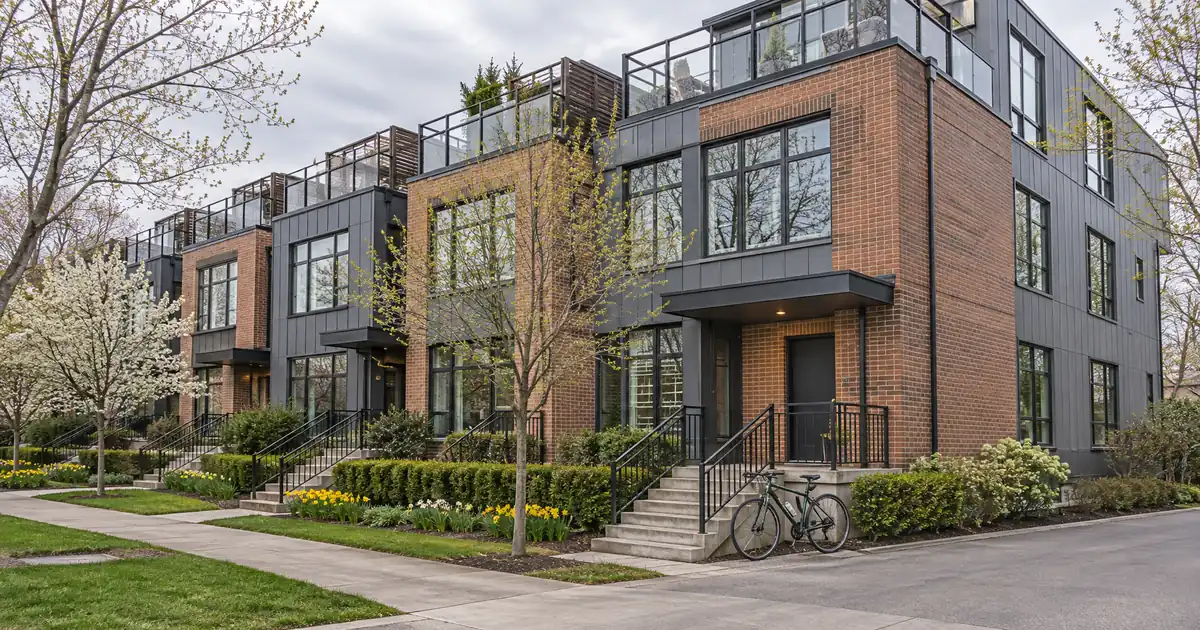
The Quick Read: The condo does not change the percentage. An FHA cash-out on a condo unit reaches the same ceiling as one on a detached house: 80% of the appraised value, on a home you have owned and lived in for 12 months before the case number. What changes is the gate in front of the loan. The building has to pass FHA’s project tests, so equity alone does not decide the outcome. Cash to you is what remains after the old mortgage, any liens, and financed costs come out of that 80%.
What Does “Equity Released” Actually Mean?
Equity released is the cash you receive at closing. It is not your total equity. The two numbers are different, and mixing them up is a common mistake on a condo cash-out.
FHA cash-out estimate
Seeded with an example value, a balance to match, and a round cash request; change any field.
Editable benchmark: 7.18% as of November 5, 2026 · Freddie Mac 30-year average via FRED®. A conventional market reference, not an FHA cash-out refinance quote.
Illustrative starting assumptions: a $350,000 home value, a $193,000 current balance, the FHA cap on a principal residence with the upfront premium financed, a thirty-year term at the current Freddie Mac benchmark, and property taxes and insurance estimated at typical national rates. Every field is editable.
An illustration, not a Loan Estimate, an approval, a quote, or a commitment to lend. The rate shown is the weekly Freddie Mac thirty-year conventional benchmark, used as a market reference; an FHA cash-out is priced by the lender at lock, and this is not an FHA cash-out refinance quote. HUD’s cap limits the base loan; the upfront premium is financed on top of the capped base loan; the monthly premium for the first year follows the snapshot’s schedule. Cash available means the base loan the cap permits less the balances retired, before closing costs, which this calculator leaves out. The line figure applies the line program’s combined loan-to-value ceiling to the same value and balance. Taxes and insurance are estimates you can edit. Licensed in sixteen states for consumer mortgages.
Total equity is the appraised value minus what you owe. The new FHA loan can reach 80% of the appraised value. That leaves at least 20% of the value in the unit after closing. HUD Mortgagee Letter 2019-11 cut the cash-out limit to 80% of the adjusted value from the prior 85%. If you read an older article quoting a higher figure, ignore it.
From the new loan amount, the following come out:
- The payoff of your existing first mortgage.
- Any other liens that must be paid.
- Closing costs and prepaids that are financed.
- The upfront mortgage insurance premium, which is financed into the loan.
What is left goes to you. That is why the check is always smaller than the gap between value and balance.
A cash-out refinance replaces your first mortgage. A home equity loan or HELOC sits behind it and leaves it alone, as the CFPB’s research blog on cash-out refinances explains. That distinction matters if your current first mortgage is one you would rather keep.
Key Terms Defined
Adjusted value: The appraised value as FHA treats it for the loan-to-value test. The 80% cap is applied to this number.
LTV and CLTV: Loan-to-value is the new first loan divided by value. Combined loan-to-value counts every lien on the unit. FHA’s cap applies to the combined figure.
Project approval: FHA’s review of the condominium building or association, not just your unit. It looks at insurance, finances, title, legal actions, and physical condition.
Single-Unit Approval (SUA): A path for a unit in a building that is not on FHA’s approved list. The lender requests approval for that one unit.
HUD-9991: The condo questionnaire. It collects association, owner-occupancy, and delinquency data used to test the project.
Upfront premium: A one-time FHA mortgage insurance charge of 1.75% of the base loan. It is usually financed into the loan.
How Is the Number Built, Step by Step?
The math follows the same order on every file. Take a hypothetical condo and walk it through in percentages.
1. Value sets the ceiling. The appraiser reports a value. Multiply it by 80%. That is the maximum new loan, before anything else is considered.
2. Subtract the payoff. Your current first mortgage balance comes off the top. If you also have a second lien, it counts toward the combined cap and is paid at closing unless it stays in place.
3. Subtract financed costs. Closing costs and prepaid items that you roll into the loan come out of the cash. The 1.75% upfront premium is added to the base loan as well. Costs vary by file and are shown on your Loan Estimate and Closing Disclosure.
4. What remains is your cash. Nothing else is added.
Here is a plain-language scenario. Say a unit’s appraised value comes in at a given figure and your current mortgage is about 50% of that value. The new loan can reach 80%. The gap is 30% of value. The costs and the financed premium then come out of that 30%. The check is smaller than 30%, and the exact size depends on the file.
Now change one input. If the appraisal comes in lower, the 80% ceiling drops with it, and the cash shrinks faster than the value does, because the payoff stays fixed. A small appraisal miss can take a large bite out of the check. Condo appraisals bring their own complications, which is the next topic.
Why Does the Appraisal Matter More on a Condo?
The appraisal on a condo is the number that moves your cash the most. It is also the number you control least.
A condo appraiser leans on comparable sales of similar units, usually in the same building or a nearby one. In a small building, there may be only a few recent sales. If one was a distressed sale or a very different floor plan, it can pull the value down. Floor level, view, parking, and unit condition all get adjusted. Each adjustment moves the final number.
There is a second effect. The appraiser also comments on the project: condition of common areas, signs of deferred maintenance, and anything affecting marketability. Problems in the building can show up in both the value and the project review.
If you believe the value came in low, appraisal reconsideration is the normal route. It works best with a short packet of recent comparable sales that were closed, in the same building or very close, with notes on why they fit better. Your loan officer submits it through the lender. It does not always change the number, but a well-documented request is routine, not unusual.
What Does FHA Test in the Building?
Your credit and equity can be fine and the loan can still stop at the building. This is where condo cash-outs diverge from house cash-outs.
FHA insures condo loans to purchase or refinance a unit in an FHA-approved project. It also insures them in a non-approved project that meets Single-Unit Approval requirements. HUD’s FHA condominium page lists what is reviewed: insurance coverage, financial condition, nature of title, pending legal action, physical condition, and other factors that affect the viability or marketability of the project or its units. Refinances are covered along with purchases.
The lender first checks whether the building is on HUD’s approved list. Two paths follow.
Approved project. The lender completes the HUD-9991 for your loan. The form pulls in the association’s data: how many units are owner-occupied, how concentrated FHA loans are, how much any one owner holds, and how many units are behind on dues. The lender fills it from information gathered within the last 90 days, from the association or its management company and from public records, per HUD’s form instructions.
Unapproved project, Single-Unit Approval. SUA applies only if the building has at least five dwelling units, is complete and ready for occupancy, and is not a manufactured home. It must also meet a subset of the approval tests: FHA insurance concentration, owner-occupancy percentage, and financial condition. HUD’s SUA documentation list names what the lender must collect, including a signed HUD-9991, a current balance sheet dated within 90 days, a year-to-date income and expense statement, and recorded site plans. HUD says that list is the minimum. A project or unit can carry more.
Here is the catch. Most of those documents come from the HOA or its management company, not from you. If the association is slow, disorganized, or unwilling, the file waits. If the building fails a test, cash-out on that unit cannot go through FHA. Your equity is not the problem in that case. The building is.
Where Condo Files Get Stuck
Several failure points show up on condo files, and none of them involves the borrower’s income. Each one sits with the building or its association.
- HOA questionnaire completeness. A half-filled questionnaire or a missing signature sends the file back. Ask the management company early which items they can provide and who signs.
- Stale financials. The balance sheet and the income and expense statement have to be recent. Documents that age past the 90-day window have to be redone.
- Owner-occupancy and delinquency. If too many units are rented or behind on dues, the building can fail the test. You cannot fix this from your unit.
- Insurance gaps. Master policy coverage is part of the project review. A lapse or a thin policy is a project problem.
- Pending litigation. Open legal action against the association can block approval until it is resolved.
- Special assessments. A building that has levied or is about to levy a large assessment raises questions about its financial condition.
The practical habit: before you commit time to the appraisal, find out whether the building is on the approved list and whether the association will cooperate. That one check can save a file.
How Do HOA Dues Affect Qualifying?
Dues are part of your monthly housing cost, and lenders count them. Across the wholesale programs Lendmire places FHA files with, the ratio test is built on housing expense and total debt. The base pair is 31/43, housing to total, with no compensating factors. Documented compensating factors can reach 40/50 at the top tier, and the automated finding governs most files.
A condo with high dues carries a heavier housing line than a house with the same loan balance. The new loan is also larger than the old one, and it carries mortgage insurance. So a condo owner can pass the equity test and still strain the ratio test, subject to lender guidelines and full file review. This is not a reason to avoid a condo cash-out. It is a reason to run the ratios before ordering the appraisal.
On mortgage insurance: the annual premium runs between 0.15% and 0.75% of the balance, depending on term, loan amount, and LTV. On a thirty-year loan above 90% LTV, it lasts for the term. At or below 90%, it ends after eleven years. A cash-out at 80% falls in the lower bracket on that test, but the premium still counts in your housing cost for as long as it applies. HUD Mortgagee Letter 2023-05 set the current annual schedule by loan amount and LTV. Every figure here varies by lender and program — guidelines, property type, leverage, and credit profile all apply.
House Versus Condo: Same Equity, Different Outcome
The equity cap does not move. The path to it does.
| Factor | Detached house | Condo unit |
|---|---|---|
| Appraisal comps | Neighborhood sales | Often building-level sales |
| Extra approval | None | Project approval or SUA |
| Third-party documents | Few | HOA questionnaire, financials |
| Monthly housing cost | Loan, insurance, taxes | Adds HOA dues |
Two borrowers with identical equity can end with different results. One owns in an approved building with a cooperative management company. The other owns in an unapproved building with a stalled association. The first gets the full 80% calculation. The second may not get a loan at all.
What Are the Eligibility Gates Beyond the Building?
A standard FHA cash-out is for an owner-occupied principal residence. The home must be owned and lived in for 12 months before the case number is assigned. Occupancy is what decides the leverage here. A condo you rent out or keep as a second home does not fit this program.
Payment history is reviewed too. The lender looks at whether your mortgage payments have been made on time over the recent past. HUD sets the tests in its Single Family Handbook 4000.1, and the lender applies them to your history. Late payments can end the file or restrict it.
The credit floor in the wholesale programs Lendmire works with starts at a 580 decision score. HUD’s own rules reach lower, but the network does not go below 580, and some lenders set a higher floor. HUD’s waiting periods after credit events are HUD rules: two years from a Chapter 7 discharge and three years from a foreclosure.
County loan limits apply to FHA loans, and they change every year. Check the limit for your county with your loan officer rather than relying on a number you saw elsewhere.
Outdated Claims to Ignore
Several figures circulate that no longer apply.
- “You can borrow 85%, or even 95%.” Those were earlier limits. The cash-out cap is now 80%.
- “Condos get a different percentage.” They do not. The extra layer is project eligibility, not a separate equity cap.
- “A second loan can add cash above the cap.” The cap counts all liens combined. A subordinate lien does not sit outside it.
- “A cash-out is the same as a HELOC.” It replaces your first mortgage. A HELOC does not.
- “If my unit is in good shape, I qualify.” The building’s finances, insurance, and legal status are tested too.
- “A streamline can give me cash.” The FHA Streamline refinances an existing FHA loan with no appraisal and a limited credit review. It is a no-cash-out product. The FHA rate-and-term refinance, with an appraisal, reaches 97.75% on a principal residence occupied for the previous twelve months, but it does not put cash in your pocket either.
What Does the Decision Look Like?
The decision is rarely about whether 80% sounds good. It is about whether the building passes and whether the numbers still make sense after the payoff, costs, and insurance.
Start with the building. Confirm approval status and the association’s willingness to supply documents. Then estimate value with recent sales in the building. Then run the cash math in percentages: 80% of value, minus your payoff, minus costs and the financed premium. If the result is thin, the cash-out may not be worth the new closing costs.
Then ask what the money is for. The CFPB notes that paying non-mortgage debts with mortgage debt can increase foreclosure risk. You are turning unsecured debt into debt against your home. Weigh that before you sign.
One more comparison. If your current loan is already FHA and you only want a better structure, not cash, the Streamline may fit better. If you want to keep a first mortgage you like, a second-lien product leaves it in place. The right tool depends on what you need the money to do.
If you are weighing a cash-out refinance against keeping the loan you have, Lendmire can help you compare the programs and the equity each one reaches. Reach the team at 828-256-2183 or request a quote through the quote page. Every figure here is subject to lender guidelines and full file review, and nothing here is a commitment to lend.
Frequently Asked Questions
Does an FHA cash-out on a condo allow a higher percentage than on a house?
No. The cap is 80% of the adjusted value for both. The condo adds a project review, not a different equity limit. The building has to be FHA-approved or the unit has to qualify through Single-Unit Approval.
Why is my cash smaller than the difference between my value and my balance?
Because the new loan pays off your old mortgage, any required liens, and financed costs first. The upfront premium of 1.75% of the base loan is also added to the loan. What remains after those items is your cash, and it is always less than your total equity.
What happens if my building is not FHA-approved?
The lender can ask for Single-Unit Approval, if the building has at least five units, is complete, and is not a manufactured home. It must still meet tests on FHA concentration, owner-occupancy, and financial condition. If it fails, an FHA cash-out on that unit cannot proceed, and you would look at other products.
Can I use an FHA cash-out on a condo I rent out?
Not through the standard program. It is for an owner-occupied principal residence that you have owned and lived in for 12 months before the case number. Occupancy decides the leverage.
Do HOA dues reduce how much I can take out?
Not the equity cap directly. Dues count in your monthly housing expense, which feeds the ratio test. A high-dues building can push ratios past the limits, and that can reduce what the lender will approve, subject to guidelines and full file review.
About Lendmire
Lendmire (NMLS# 2371349) is a mortgage brokerage serving homeowners and home buyers in 16 states. FHA, VA, conventional and jumbo purchase and refinance loans are arranged through wholesale lending channels; Lendmire brokers the financing and the lender underwrites each application. Scotsman Guide named Lendmire a Top Mortgage Workplace in both 2025 and 2026.
Get Started
Ready to find the right loan for you?
See your offer in seconds. No credit pull, no obligation.
Informational only. Not a Loan Estimate, approval, or commitment to lend. Program availability and eligibility are subject to lender guidelines, credit approval, property review, and underwriting.
References
1. HUD Mortgagee Letter 2019-11
2. CFPB Office of Research blog on cash-out refinances
5. HUD: FHA Sua Condo Required Docs
6. HUD Mortgagee Letter 2023-05
7. CFPB: CFPB Report Finds Cash Out Mortgage Refinance Borrowers Improve Credit Scores
This article is part of Lendmire’s FHA cash-out refinance program — full qualification details, guidelines, and scenarios live on the program page.
Related reading: FHA Cash-Out vs Conventional Cash-Out for a High-Cost State Condo · How to Use the Inheritance Exception on an FHA Cash-Out · How Much an FHA Cash-Out Lends on a Condo Without Project Approval
Brandon Miller
Founder & CEO, Mortgage Loan Originator, Lendmire LLC
- Mortgage Loan Originator · NMLS# 1129696 · Verify on NMLS Consumer Access
- North Carolina Real Estate Broker · License# 343312 · Verify on NCREC
- North Carolina Insurance Producer · License# 19053198 · Property, Casualty, Life, Health · Verify on NAIC SBS
- Lendmire LLC · Firm NMLS# 2371349 · Verify firm licensure
Legal disclosures. Lendmire (NMLS# 2371349) is a state-licensed mortgage brokerage that arranges financing through wholesale lender relationships. Lendmire is not a direct lender, depository institution, or registered financial advisor. The discussion above is general informational content about real estate financing — it is not financial, legal, or tax advice, and readers should consult licensed professionals for guidance on their individual circumstances. Loan inquiries are subject to lender underwriting; this article does not represent a commitment to lend. Loan terms, rates, and qualification standards vary by borrower, property, and state, and are subject to change at any time. Equal Housing Opportunity. NMLS Consumer Access: nmlsconsumeraccess.org.