
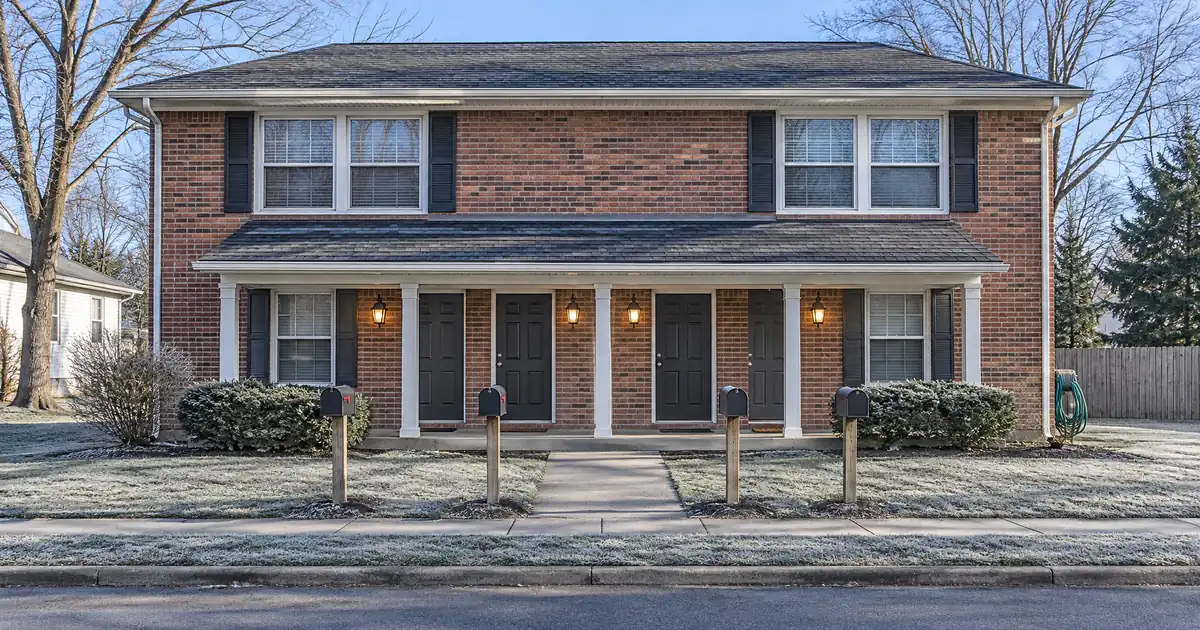
The Quick Read: The most an FHA cash-out will lend on a fourplex is the lowest of three limits: 80% of the appraised value, the county four-unit loan limit, and the rent test that applies to three- and four-unit homes. A low first mortgage lowers the payoff. It does not raise any of those three caps. Equity is a precondition, not the driver, so the cash you receive depends on which limit binds first.
What Is an FHA Cash-Out on a Fourplex?
An FHA cash-out refinance replaces your current mortgage with a new, larger FHA loan. The new loan pays off the old one, and you receive the difference in cash. The CFPB’s guide to using home equity describes a cash-out the same way and warns that the payoff period may lengthen and the monthly payment may rise.
FHA cash-out estimate
Seeded with an example value, a balance to match, and a round cash request; change any field.
Editable benchmark: 7.18% as of November 5, 2026 · Freddie Mac 30-year average via FRED®. A conventional market reference, not an FHA cash-out refinance quote.
Illustrative starting assumptions: a $350,000 home value, a $193,000 current balance, the FHA cap on a principal residence with the upfront premium financed, a thirty-year term at the current Freddie Mac benchmark, and property taxes and insurance estimated at typical national rates. Every field is editable.
An illustration, not a Loan Estimate, an approval, a quote, or a commitment to lend. The rate shown is the weekly Freddie Mac thirty-year conventional benchmark, used as a market reference; an FHA cash-out is priced by the lender at lock, and this is not an FHA cash-out refinance quote. HUD’s cap limits the base loan; the upfront premium is financed on top of the capped base loan; the monthly premium for the first year follows the snapshot’s schedule. Cash available means the base loan the cap permits less the balances retired, before closing costs, which this calculator leaves out. The line figure applies the line program’s combined loan-to-value ceiling to the same value and balance. Taxes and insurance are estimates you can edit. Licensed in sixteen states for consumer mortgages.
Three conditions define the product:
- You live in one of the four units as your principal residence. An investor-owned fourplex with no owner in it does not qualify.
- You have owned the building and lived in it for 12 months before the case number is assigned.
- The building has one to four units. A fourplex sits at the top of that range.
This article covers the piece that gets missed on four-unit files: why the amount you can take is not set by how little you owe.
Why a Low Payoff Does Not Set the Cash
The 80% cap applies to the entire new loan, not to the cash. HUD Mortgagee Letter 2019-11 cut the maximum loan-to-value and combined loan-to-value on cash-out refinances to 80% of the adjusted value. HUD’s announcement explains that FHA had earlier moved the cap down from 95% to 85% before going to 80%.
The cap counts everything. The payoff of the first mortgage, any second lien being paid off, financed costs and the financed upfront premium all sit inside that 80%. Cash to the borrower is what is left.
Here is the plain version. A fourplex appraises at some value. Eighty percent of that is the ceiling on the new loan. A low first mortgage uses little of the ceiling, so more room is left for cash. That part is real, and a low first mortgage helps. But two other ceilings can sit below the 80% line on a fourplex: the county loan limit and the rent test.
How the Loan Is Underwritten, Step by Step
Here is the sequence a file follows. The order matters because the lowest ceiling wins.
1. Eligibility screen. One borrower occupies a unit as a principal residence and has owned and lived there for 12 months. The 12 months count back from the case number, not from the application date or the closing date.
2. Case number and appraisal. The appraiser sets the as-is value. On a three- or four-unit property, the appraiser also reports market rent for every unit, including the one you live in.
3. Ceiling one: value. For a refinance of a property held 12 months or more, the adjusted value is the appraised value. The maximum new loan is 80% of that.
4. Ceiling two: county loan limit. FHA limits are set by county and change every year. HUD’s announcement of the latest limits shows that four-unit limits vary widely across the country, from a low-cost-area floor to a high-cost ceiling. Look up your own county on HUD’s site. Do not rely on any national number.
5. Ceiling three: the rent test. This is the one fourplex owners do not expect. It is covered in the next section.
6. Cash to you. Take the lowest of the three ceilings. Subtract the payoff of the first mortgage, any other liens being paid, closing costs and the financed upfront premium. What remains is your cash.
7. Borrower underwriting. Credit, income, debt-to-income, assets and reserves are reviewed separately. The rent test is a test of the building. Your own qualification is a test of you.
8. Documents. Expect a payoff statement, mortgage payment history, income and asset records, insurance and tax figures, lease and rent documentation for the other units, and the appraisal with its rent schedule. Exact lists vary by lender and underwriting method.
The Rent Test: Where Low-Mortgage Files Stall
On a three- or four-unit home, the building’s rent has to support the payment on the new loan. HUD defines “Net Self-Sufficiency Rental Income” in its Handbook 4000.1 glossary. Its archived reference guide says net rental income on three- and four-unit properties must be at least equal to the projected monthly mortgage payment.
Three mechanics matter on a file:
- The rents are the appraiser’s market rents, not your leases. The archived guide says the appraiser’s fair-market rent from all units counts, less a vacancy and maintenance factor. A below-market lease does not drag the test down. An above-market lease does not lift it.
- Your own unit counts. The appraiser’s rent for the unit you live in is part of the total, even though you pay no rent on it.
- No offset. The rent is not subtracted from your payment as a credit. It is compared against the payment as a test.
The payment in the test is the proposed one. That includes the mortgage insurance and the effect of the new, larger loan. A bigger cash-out means a bigger payment, so the test can cap the loan below 80% of value. Your first mortgage balance never enters this test. Only the new payment does.
The sources linked above are written around purchase and general eligibility, so confirm with the underwriter on your file how the current Handbook applies the test to a refinance. Ask before you order an appraisal.
The rent test applies only to three and four units. A duplex does not face it, which is why a low-mortgage duplex can often use the full 80% where a fourplex cannot.
Which Limit Binds First?
It depends on the building. This table shows how each situation lines up with its binding limit.
| Situation | Likely binding limit | Why |
|---|---|---|
| Moderate-value fourplex, strong rents | 80% of value | Rents support the payment; county limit sits above |
| High-value fourplex in a lower-limit county | County loan limit | Value cap lands above the four-unit limit |
| Soft rents relative to value | Rent test | Payment on a larger loan outruns net rent |
| Below-market rents, new large cash-out | Rent test | Larger loan lifts the payment past net rent |
In the last three rows, the 80% line is not what binds. A low first mortgage leaves equity to spare, so the county limit or the rent test is what sets the cash in those situations.
What Mortgage Insurance Does to the Cash
Across the wholesale programs Lendmire places FHA loans with, the upfront premium is 1.75% of the base loan, and it is usually financed. HUD Mortgagee Letter 2023-05 sets that upfront premium at 175 basis points of the base loan amount. Financing it raises the loan balance and the payment, and it uses up part of the 80% room.
The annual premium is a separate item that runs between 0.15% and 0.75% of the balance, depending on term, loan amount and loan-to-value. On a thirty-year loan above 90% loan-to-value, the annual premium lasts for the term. At or below 90%, it ends after eleven years. A cash-out at 80% falls in the lower bracket, so the 11-year end date is the relevant one. The premium is a program fact and is subject to lender guidelines.
The annual premium also feeds the rent test, since it sits inside the proposed payment. That is how a mortgage-insurance detail turns into a cash-amount detail.
Walking Through the Cash Math
Take a fourplex with a first mortgage balance equal to about 25% of the appraised value. The 80% cap leaves roughly 55 percentage points of value for cash, closing costs and the financed upfront premium. That looks generous.
Now apply the other two limits. Say the county four-unit limit sits at a level that equals about 70% of this building’s value. The binding ceiling is now 70%, and room for cash drops to about 45 points before costs. The first mortgage did not change. The ceiling did.
Next, apply the rent test. Say the appraiser’s market rents, after the vacancy and maintenance deduction, cover the payment on a 60% loan but fall short on a 70% loan. The rent test is now the binding ceiling at 60%, and room for cash drops to about 35 points before costs. Same building, same low first mortgage, and only about two thirds of the headline room.
The reverse also happens. With strong rents and a county limit well above value, the 80% line binds and the low first mortgage delivers its full benefit. The point is to find out which of the three it is before you plan around a number.
Here is a simple comparison of three first-mortgage balances on the same building, assuming the 80% line binds:
| First mortgage vs. value | Room under 80% cap | Effect on cash |
|---|---|---|
| About 60% | About 20 points | Small cash, costs take a large share |
| About 40% | About 40 points | Mid-size cash |
| About 20% | About 60 points | Largest cash, if no other cap binds |
If the rent test or the county limit binds instead, the bottom rows shrink and the three outcomes move closer together.
Where the General Rule Breaks
These are the named edge cases that change the answer.
- Not owner-occupied. FHA cash-out is for a principal residence. HUD’s archived refinance guide confirms that one- to four-unit owner-occupied homes are eligible. A fourplex rented out in full is not.
- Free and clear. The same guide states that free-and-clear properties can be cash-out refinanced. A fully paid-off fourplex is eligible if the other tests pass.
- Recent inheritance. The archived guide says a property inherited within the past 12 months can be eligible if the borrower has lived in it as a primary residence since inheriting. Confirm this against the current Handbook before relying on it.
- Reserves. The archived guide requires verified reserves after closing on three- and four-unit purchases. The current reserve requirement for a cash-out on three or four units is a question for the underwriter, since HUD has updated reserve guidance since that guide was written.
- Accessory units. A rental unit added to a one-unit home is treated differently than a unit in a two-or-more-unit building. Secondary sources describe it, so talk to the underwriter on your file.
- Outdated figures. Some older pages still show an 85% or 95% cap. Those are old. The 80% figure is the current cap.
Credit and Income Still Apply
The rent test does not replace your own qualification. Across the wholesale programs we place files with, FHA lending starts at a 580 decision score. HUD has a lower tier for scores of 500 to 579, but the network does not reach below 580.
Debt ratios start at a 31/43 pair of housing and total ratios with no compensating factors. Documented compensating factors can lift that to 40/50 at the top tier, and the automated finding governs most files. HUD’s waiting periods after credit events, two years from a chapter 7 discharge and three years from a foreclosure, are HUD rules, not network promises. Everything here is subject to lender guidelines and full file review.
Key Terms Defined
Adjusted value: The value HUD uses for the loan-to-value test. On a refinance of a home held 12 months or more, it is the appraised value.
Combined loan-to-value (CLTV): The total of all liens on the home divided by its value. FHA applies the same 80% cap to it.
Net self-sufficiency rental income: The appraiser’s market rent from all units, less a vacancy and maintenance deduction, used in the rent test.
Case number: The number assigned to the file when the appraisal is ordered. The 12-month ownership and occupancy count runs back from it.
Upfront mortgage insurance premium: A one-time premium of 1.75% of the base loan, usually financed.
What the Decision Looks Like in Practice
A fourplex owner with a low first mortgage should work through four questions in this order:
1. Do I meet the 12-month ownership and occupancy test, counted back from the case number?
2. What is my county’s four-unit FHA limit, and where does it land against the building’s likely value?
3. Do the likely market rents support a larger payment, with mortgage insurance included?
4. Does the cash left after payoff, costs and the financed premium justify a new, larger loan?
The last question deserves honest weight. The new loan replaces your old one in full. A low-balance, low-payment first mortgage goes away, and the new payment sits on a bigger balance. The CFPB’s guide flags this tradeoff. CFPB research on cash-out borrowers also found that many use the cash to pay off other debts, and that credit card balances drifted back toward earlier levels within a year, per the CFPB’s report on cash-out borrowers. If the cash is meant to clear cards, that is a reason for caution.
If the numbers do not fit, the options are a smaller cash-out that clears the rent test, a rate-and-term FHA refinance (which can reach 97.75% on a principal residence occupied for the previous twelve months, but returns no cash), or keeping the loan you have.
Tax treatment can depend on your situation; borrowers should speak with a qualified tax professional before relying on any deduction or credit.
If you are weighing a cash-out refinance against keeping the loan you have, Lendmire can help you compare the programs and the equity each one reaches.
Frequently Asked Questions
Does a lower first mortgage balance increase how much cash I can take?
Only up to a point. A lower payoff leaves more room under the 80% cap, which helps. It does nothing for the county loan limit or the rent test, and either of those can cap the loan lower. The binding limit decides the cash.
Does the 80% cap mean I get 80% of my value in cash?
No. The 80% is the cap on the whole new loan. The payoff of your first mortgage, any other liens, closing costs and the financed upfront premium all come out of it first. Cash is what remains.
Are my actual lease rents used in the rent test?
No. The test uses the appraiser’s market rents for every unit, including the one you live in. A below-market lease does not lower the test income and an above-market lease does not raise it.
Can I use FHA cash-out on a fourplex I rent entirely to tenants?
No. FHA cash-out requires you to own and occupy the home as your principal residence for 12 months before the case number. An investor-owned building is outside the program.
Does a duplex follow the same rules as a fourplex?
Mostly, with one big difference. The rent test applies to three- and four-unit properties, not to one or two units. A low-mortgage duplex can often reach the full 80% where a fourplex may be held lower by the rent test.
For your own numbers, request a scenario review with Lendmire.
For current guidelines and terms, see Lendmire’s FHA loan programs page.
About Lendmire
Lendmire (NMLS# 2371349) is a mortgage brokerage serving homeowners and home buyers in 16 states. FHA, VA, conventional and jumbo purchase and refinance loans are arranged through wholesale lending channels; Lendmire brokers the financing and the lender underwrites each application. Scotsman Guide named Lendmire a Top Mortgage Workplace in both 2025 and 2026.
Get Started
Ready to find the right loan for you?
See your offer in seconds. No credit pull, no obligation.
Informational only. Not a Loan Estimate, approval, or commitment to lend. Program availability and eligibility are subject to lender guidelines, credit approval, property review, and underwriting.
References
1. CFPB guide to using home equity
2. HUD Mortgagee Letter 2019-11
3. HUD press release on the cash-out LTV reduction
4. HUD announcement of FHA loan limits
5. HUD Handbook 4000.1 Glossary
6. HUD Reference Guide, Rental Income (archived)
7. HUD Mortgagee Letter 2023-05
8. HUD Reference Guide, Refinances (archived)
9. CFPB: CFPB Report Finds Cash Out Mortgage Refinance Borrowers Improve Credit Scores
This article is part of Lendmire’s FHA cash-out refinance program — full qualification details, guidelines, and scenarios live on the program page.
Related reading: How an FHA Cash-Out Limits How Much Home Equity You Can Take · How to Qualify and Apply for an FHA Cash-Out Refinance With Existing FHA Mortgage · How to Get an FHA Cash-Out When Conventional Costs Too Much
Brandon Miller
Founder & CEO, Mortgage Loan Originator, Lendmire LLC
- Mortgage Loan Originator · NMLS# 1129696 · Verify on NMLS Consumer Access
- North Carolina Real Estate Broker · License# 343312 · Verify on NCREC
- North Carolina Insurance Producer · License# 19053198 · Property, Casualty, Life, Health · Verify on NAIC SBS
- Lendmire LLC · Firm NMLS# 2371349 · Verify firm licensure
Important disclosures. Lendmire (NMLS# 2371349) is a licensed mortgage brokerage. Lendmire is not a direct lender, depository institution, or financial advisor. All loan inquiries are subject to lender underwriting; this article does not constitute a commitment to lend. Rates, terms, and program guidelines are subject to change without notice and vary by borrower profile, property type, and state. Information in this article is general in nature and is not financial, legal, or tax advice. Equal Housing Opportunity. NMLS Consumer Access: nmlsconsumeraccess.org.