
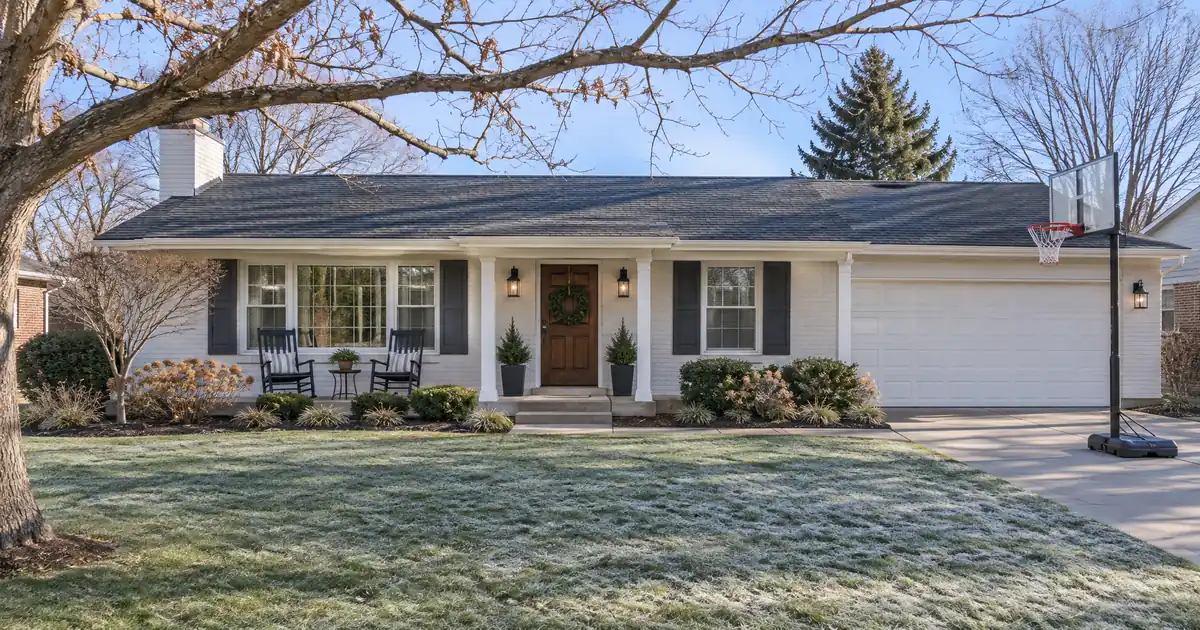
The Quick Read: An FHA cash-out sizes your loan from the home’s appraised value, up to 80% of it, so the gap over a streamline is set by your equity. A streamline is built from your existing FHA balance and puts almost no cash in your hands. The more equity you hold above 20% of value, the wider the gap. Both products are subject to lender guidelines and full file review.
How the Two Loans Set the Amount
A cash-out refinance asks, “What is the home worth?” A streamline asks, “What do you owe today?” That one difference explains nearly everything else here.
FHA cash-out estimate
Seeded with an example value, a balance to match, and a round cash request; change any field.
Editable benchmark: 7.18% as of November 5, 2026 · Freddie Mac 30-year average via FRED®. A conventional market reference, not an FHA cash-out refinance quote.
Illustrative starting assumptions: a $350,000 home value, a $193,000 current balance, the FHA cap on a principal residence with the upfront premium financed, a thirty-year term at the current Freddie Mac benchmark, and property taxes and insurance estimated at typical national rates. Every field is editable.
An illustration, not a Loan Estimate, an approval, a quote, or a commitment to lend. The rate shown is the weekly Freddie Mac thirty-year conventional benchmark, used as a market reference; an FHA cash-out is priced by the lender at lock, and this is not an FHA cash-out refinance quote. HUD’s cap limits the base loan; the upfront premium is financed on top of the capped base loan; the monthly premium for the first year follows the snapshot’s schedule. Cash available means the base loan the cap permits less the balances retired, before closing costs, which this calculator leaves out. The line figure applies the line program’s combined loan-to-value ceiling to the same value and balance. Taxes and insurance are estimates you can edit. Licensed in sixteen states for consumer mortgages.
The cash-out loan starts with a full appraisal. HUD’s knowledge base states that for case numbers assigned on or after September 1, 2019, the maximum loan-to-value on a cash-out is 80% of the adjusted value. Any second lien counts inside that same cap. Whatever sits between your payoff and that ceiling is the room for cash.
A streamline never looks at value. The FDIC’s streamline summary explains that these loans skip a new appraisal, rely on the property value from the earlier FHA loan, and are capped by the existing balance rather than by FHA mortgage limits. Home value is not part of the formula.
So the honest answer to “how much more” is a formula, not a dollar amount:
- Cash-out room: 80% of appraised value, minus your payoff, minus financed costs and the premium treatment.
- Streamline room: your existing balance, adjusted for the premium refund and the new premium, with only a small cash-back allowance.
Owners with a lot of equity see a big difference. Owners with thin equity see none, because a cash-out simply can’t be done.
The Quick Comparison
| Factor | FHA Cash-Out | FHA Streamline |
|---|---|---|
| Sizing basis | Appraised value | Existing FHA balance |
| Maximum financing | 80% LTV | Balance-based |
| Appraisal | Full appraisal | Not required |
| Meaningful cash out | Yes | No |
| Who can use it | Owner-occupants with equity | Existing FHA borrowers |
| Underwriting | Full credit and income | Limited credit review |
Cash-Out Step by Step
Across the wholesale programs Lendmire places FHA files with, a cash-out follows a predictable path.
1. Ownership and occupancy. The home must be owned and lived in as your principal residence for 12 months before the case number is assigned.
2. Appraisal. A full appraisal sets the value the 80% is applied to.
3. The ceiling. Multiply value by 80%. That is the most the new base loan can be, including any subordinate financing you keep.
4. The waterfall. From that ceiling, the payoff of your current loan comes out first. Financed closing costs and the upfront mortgage insurance premium come out next. What remains is the cash to you.
5. Full underwriting. Credit, income and debt ratios are reviewed. Across the network, the starting point is a 580 decision score. The base ratio pair is 31/43 for housing and total debt, and documented compensating factors can stretch to 40/50 at the top tier. The automated finding governs most files.
Notice step four. The 20% cushion is not all yours. Costs and premium come out of the same room, so the headline equity number always overstates the check.
Streamline Step by Step
A streamline is deliberately simple.
1. An existing FHA loan. A conventional loan holder cannot streamline into FHA this way.
2. A net tangible benefit. The lender has to document that you come out ahead, typically through a lower combined payment or a move from an adjustable to a fixed structure. HUD’s archived guidance lays out the maximum-mortgage formula: the outstanding principal plus interest charged by the servicer, with delinquent interest, late charges and escrow shortages excluded, then adjusted for the premium refund and the new premium.
3. No appraisal. Even if you happen to hold a recent appraisal, it does not raise the maximum.
4. Limited credit review. The file is lighter, and the premium continues.
5. Minimal cash back. Older HUD guidance limits cash to the borrower at closing to a small amount. Treat that as a ceiling, not a feature, and confirm the current figure with your loan officer.
Where the Gap Is Widest (and Where It Disappears)
The gap grows with the distance between your payoff and 80% of value. Picture two homeowners with the same appraised value. One owes about half of it. The other owes about 78%. The first has a large band of reachable equity. The second has almost none after costs and premium. An FHA Streamline gives both the same thing: a loan built from the balance, with no real cash.
Where cash-out wins big: a home with substantial equity, a borrower who needs a lump sum, and a borrower who can handle a bigger balance and a full file review.
Where the gap is smallest: a home with 20% equity or less. The FHA cash-out reaches only 80% LTV, so after costs and premium little or no cash remains, and the cash-out lane is effectively closed.
Where the streamline wins outright: a borrower who is underwater or close to it. Because value is never tested, a streamline can still work when a cash-out cannot.
Edge Cases Where the General Rule Bends
Second liens. In a cash-out, a subordinate lien counts inside the 80% cap. In a streamline, a borrower can often keep a second lien if it is re-subordinated. HUD’s archived guide sets a combined limit for that case, but the figure is dated, so confirm the current one before relying on it.
Closing costs. A cash-out can fold costs into the loan, within the 80% cap. A streamline done without an appraisal generally cannot finance other closing costs into the balance, so the borrower brings them to closing or negotiates around them. The new premium is the exception, since the streamline’s maximum balance is adjusted for it. Rolling costs in lowers what is due at closing but raises total cost through added interest, as the CFPB’s closing disclosure explainer notes.
Occupancy changes. If the home is no longer your principal residence, streamline rules shift and are narrower. Occupancy decides the leverage, and a cash-out for a home you do not live in is outside this lane.
Older FHA loans. Streamlines of loans endorsed on or before May 31, 2009 carry a much smaller upfront premium, per HUD Mortgagee Letter 2023-05. A newer loan does not get that treatment.
Rules in motion. HUD revises its handbook periodically. Details like seasoning periods and cash-back limits can change, so treat any figure you read, including older ones, as something to confirm against the current handbook.
What Shrinks Your Cash
Three things reduce what a cash-out actually puts in your hands.
- The payoff. It comes off the top, plus interest owed to the servicer.
- Closing costs. Financed or paid, they use room or cash. Lenders quote them differently, so compare Loan Estimates line by line.
- Mortgage insurance. The upfront premium is 1.75% of the base loan and is typically financed, so it eats ceiling room. The annual premium runs between 0.15% and 0.75% of the balance depending on term, loan amount and LTV. On a thirty-year loan above 90% LTV it lasts the life of the loan; at or below 90% it ends after eleven years. Streamlines generally carry the upfront premium too, so a streamline is not automatically cheaper.
The annual premium dropped for most new borrowers in a 2023 HUD change, summarized by NCSHA, but because it depends on loan size, LTV and term, no single figure applies to everyone.
A borrower who takes more cash also takes a bigger balance and a bigger insurance base. That is the real cost of the larger loan. The CFPB’s research on cash-out refinances notes that extracting cash carries substantial costs, including origination, appraisal and title fees, and looks at how borrowers use proceeds, such as paying down non-mortgage debt.
Which One Fits Your Goal?
| Your goal | Likely fit | Why |
|---|---|---|
| Lower the payment on an FHA loan | Streamline | Benefit test, no appraisal |
| Large lump sum for a project | Cash-out | Reaches equity up to 80% |
| Little or no equity | Streamline | Value is not tested |
| Pay off high-cost debt | Cash-out, with care | Moves unsecured debt onto the home |
| Both a lower payment and cash | Compare both | Two closings may cost more than one |
That last row is a real judgment call. Streamlining now and cashing out later means two sets of costs. A single cash-out may be cleaner if you need the money soon, though it forgoes the lighter streamline file. It is a genuine toss-up that depends on how much cash you need and how large your equity cushion is.
What If the Appraisal Comes In Low?
A low appraisal shrinks the 80% ceiling, which shrinks the cash. If the number falls too far, there may be no cash left after payoff and costs. Options include requesting a review where the lender allows it, taking a smaller cash amount, or, if you hold an FHA loan and the goal is a better payment, switching to a streamline, which never tests value. In a cash-out file the appraisal drives how much cash you can reach, while a streamline avoids it entirely.
Key Terms Defined
Adjusted value: the appraised value figure the lender applies the 80% limit to.
Cash-out refinance: a refinance where the proceeds are not limited to paying off the old loan and costs.
Streamline refinance: a lighter FHA-to-FHA refinance sized from the existing balance, with no appraisal.
Net tangible benefit: a documented improvement for the borrower, such as a lower combined payment.
Upfront mortgage insurance premium: a one-time FHA premium, 1.75% of the base loan, usually financed.
Combined loan-to-value (CLTV): the first mortgage plus any second liens, divided by value.
Frequently Asked Questions
Can an FHA streamline give me any cash back?
Only a small amount. A streamline is sized from your existing balance, and HUD guidance limits cash to the borrower at closing to a minor sum. If you want meaningful cash, the cash-out product is the one built for it.
What is the most an FHA cash-out can lend?
Up to 80% of the home’s appraised value, with any second lien counted inside that limit. Across the programs Lendmire works with, that is the cap for a home you have owned and lived in for 12 months before the case number. County loan limits apply, and all figures are subject to lender guidelines.
Do I need an appraisal for each?
A cash-out needs a full appraisal because value drives the loan. A streamline does not, and an appraisal you already hold will not raise the streamline amount.
Is a streamline always cheaper than a cash-out?
Not always. The upfront premium generally still applies to a streamline, and the net tangible benefit test has to be met. A streamline usually has a lighter file and fewer costs tied to appraisal, but “cheaper” depends on the specific loans involved.
Can I streamline if I owe more than the home is worth?
Often yes, because value is not tested, provided you hold an existing FHA loan with a clean payment record and the benefit test is met. A cash-out in that situation is not possible.
Weighing It for Your Own File
Start with two numbers: your current payoff and 80% of a realistic value. If the space between them is wide, a cash-out may be worth a full comparison. If it is narrow, or you want a better payment rather than cash, the streamline lane deserves a look first. If you are weighing a cash-out refinance against keeping the loan you have, Lendmire can help you compare the programs and the equity each one reaches. Nothing here is a commitment to lend, and all figures are subject to lender guidelines and full file review.
For your own numbers, request a scenario review with Lendmire.
About Lendmire
As a mortgage broker (NMLS# 2371349), Lendmire helps homeowners and home buyers in 16 states with FHA, VA, conventional and jumbo purchase and refinance loans arranged through wholesale lenders. Lendmire is never the lender; program terms are set by the lender and the agency guidelines. Scotsman Guide named Lendmire a Top Mortgage Workplace in both 2025 and 2026.
Get Started
Ready to find the right loan for you?
See your offer in seconds. No credit pull, no obligation.
Informational only. Not a Loan Estimate, approval, or commitment to lend. Program availability and eligibility are subject to lender guidelines, credit approval, property review, and underwriting.
References
2. HUD Archives Reference Guide: Refinances
4. CFPB Closing Disclosure explainer
5. HUD Mortgagee Letter 2023-05
6. NCSHA summary of ML 2023-05
7. CFPB’s research on cash-out refinances
This article is part of Lendmire’s FHA cash-out refinance program — full qualification details, guidelines, and scenarios live on the program page.
Related reading: How to Plan and Use an FHA Cash-Out Refinance to Go Fixed · How to Get an FHA Cash-Out When Conventional Costs Too Much · How to Use the Inheritance Exception on an FHA Cash-Out
Brandon Miller
Founder & CEO, Mortgage Loan Originator, Lendmire LLC
- Mortgage Loan Originator · NMLS# 1129696 · Verify on NMLS Consumer Access
- North Carolina Real Estate Broker · License# 343312 · Verify on NCREC
- North Carolina Insurance Producer · License# 19053198 · Property, Casualty, Life, Health · Verify on NAIC SBS
- Lendmire LLC · Firm NMLS# 2371349 · Verify firm licensure
Compliance and disclosures. Lendmire (NMLS# 2371349) is a licensed mortgage broker and is not a direct lender, depository institution, financial advisor, or tax professional. Content in this article is general market analysis and educational information — not financial, legal, or tax advice for any specific situation. Lendmire does not guarantee loan approval; every transaction is subject to underwriting by the funding lender. Mortgage pricing and loan program guidelines are subject to change at any time without notice and vary by borrower characteristics, property type, and state regulations. Lendmire complies with Equal Housing Opportunity. Licensure verification: NMLS Consumer Access.