
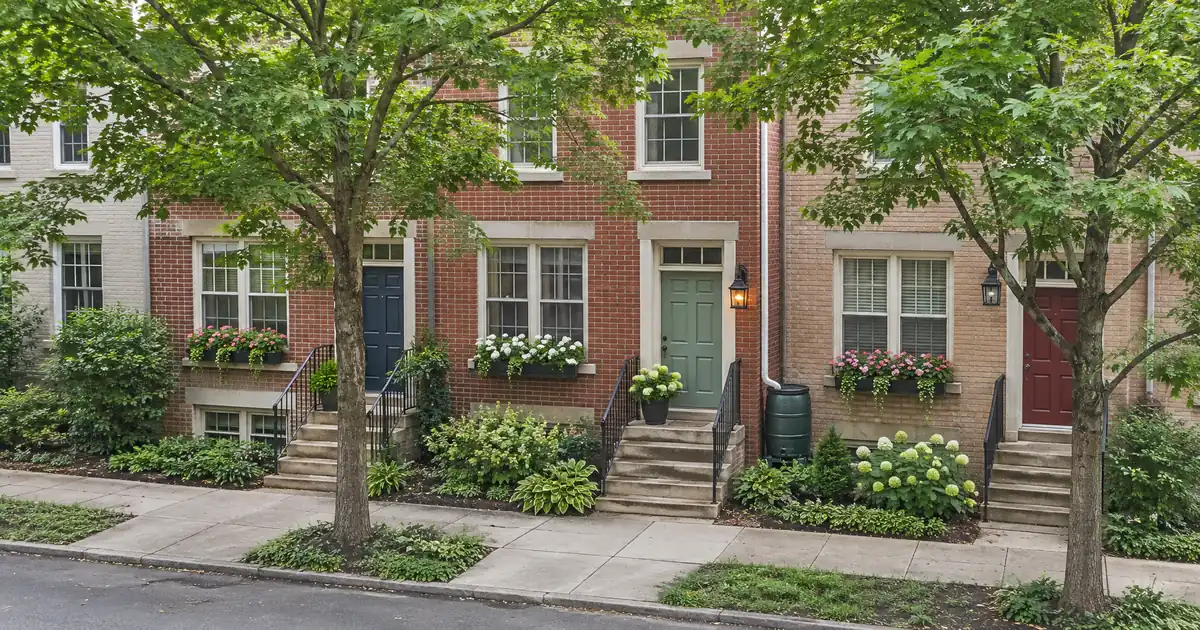
The Quick Read: It depends on the home and the old loan. In DC, recordation is a government charge on the new deed of trust. For a one-to-five-unit Class 1 home with an owner’s affidavit on file, it can be zero, leaving only a flat recording fee. Without that exemption, the tax applies to the new debt above the old balance, and in some cases to the whole new loan. FHA caps the base loan on a cash-out at 80% LTV, so any recordation you finance comes straight out of the cash you receive.
What Is DC Recordation, and What Is It Not?
DC recordation is a tax the District charges when a deed of trust is recorded, and a refinance records a new one. Three separate charges get confused, so separate them first.
- The flat recording fee. A set charge for filing the document, plus a small per-document surcharge. It is modest and does not scale with your loan.
- The recordation tax. A percentage of the debt secured by the deed of trust. This is the charge that moves the numbers.
- The transfer tax. A charge on deeds that change hands in a sale. A cash-out refinance has no deed transfer, so it does not apply.
FHA cash-out estimate
Seeded with an example value, a balance to match, and a round cash request; change any field.
Editable benchmark: 7.18% as of November 5, 2026 · Freddie Mac 30-year average via FRED®. A conventional market reference, not an FHA cash-out refinance quote.
Illustrative starting assumptions: a $350,000 home value, a $193,000 current balance, the FHA cap on a principal residence with the upfront premium financed, a thirty-year term at the current Freddie Mac benchmark, and property taxes and insurance estimated at typical national rates. Every field is editable.
An illustration, not a Loan Estimate, an approval, a quote, or a commitment to lend. The rate shown is the weekly Freddie Mac thirty-year conventional benchmark, used as a market reference; an FHA cash-out is priced by the lender at lock, and this is not an FHA cash-out refinance quote. HUD’s cap limits the base loan; the upfront premium is financed on top of the capped base loan; the monthly premium for the first year follows the snapshot’s schedule. Cash available means the base loan the cap permits less the balances retired, before closing costs, which this calculator leaves out. The line figure applies the line program’s combined loan-to-value ceiling to the same value and balance. Taxes and insurance are estimates you can edit. Licensed in sixteen states for consumer mortgages.
None of these is a lender fee. The CFPB describes government recording charges as fees that state and local agencies assess for legally recording your deed, mortgage and related documents.
This piece gives no dollar figures for the tax. The amount turns on your file, and your settlement agent has to confirm it.
How Does DC Tax a Refinance?
DC taxes only the new money when the old debt qualifies for credit. The statute says that when existing debt is refinanced, the tax applies to new debt above the existing principal balance. That credit holds only if the old loan was a purchase-money loan or was previously taxed (see DC Code § 42-1103).
The Office of Tax and Revenue’s Tax Notice 2023-04 is the controlling guidance on refinances and modifications. In plain terms:
1. The existing principal balance is exempt only to the extent it was previously taxed or exempt.
2. The tax does not apply to residential property with five or fewer dwelling units when a Class 1 security affidavit is on file.
3. A refinance is tied to the same borrower and the same property. Adding or removing a borrower can break the credit, so raise it early with the title company.
The Class 1 exemption rests on an owner’s affidavit made subject to criminal penalties for false statements. Check with the Recorder of Deeds that the class wording and exemption still read the way the code is described here. The exemption applies only when the home is Class 1, the unit count fits, and the affidavit is filed.
How Does the FHA Cash-Out Side Work?
FHA sets the size of the loan. Everything else, including recordation, fits around it. Across the wholesale programs we place FHA files with, a cash-out reaches 80% LTV on a home you have owned and occupied for 12 months before the case number. County loan limits apply. The cash-out rules live in the refinance section of HUD Handbook 4000.1. Every figure here varies by lender and program, and guidelines, property type, leverage and credit profile all apply.
Three program points matter for this topic:
- The cap covers the whole base loan. Eighty percent is not the share you receive in cash. It limits the base loan, which must pay off the old lien and any financed costs before you see a dollar.
- The upfront premium sits on top. FHA charges an upfront premium of 1.75% of the base loan, usually financed by adding it to the balance. It is added on top of the capped base loan, so it does not use room under the cap, but it does enlarge the balance you repay.
- Owner-occupancy is required. FHA cash-out is for a principal residence. The Class 1 exemption turns on property class and unit count, not on occupancy, so the two tests are separate.
This differs from FHA Streamline, which refinances an existing FHA loan without an appraisal and takes no cash out. The DC recordation analysis follows the same OTR notice, but the cash math does not apply.
Step by Step: How the Charge Lands on Your Loan
Here is the sequence a file follows.
1. FHA underwriting sets the ceiling. The ceiling on the base loan is 80% of the home’s adjusted value, with county loan limits applying.
2. The base loan pays off the old one. It also covers any costs you choose to finance. What remains of the base loan is your cash. The upfront premium is added on top of it.
3. The settlement agent prepares the DC recording package. That means the deed of trust, Form FP-7/C, and the Class 1 affidavit if you claim the exemption. Each deed of trust gets its own FP-7/C, which separates the exempt amount from the taxable amount.
4. A substantiation statement goes with a refinance. It shows the existing debt’s outstanding principal, the face amount of the new debt and the prior recording details. If the exemption is not claimed, it must also show the tax previously paid, as shown on the recording stamp. These requirements do not apply to instruments exempt from recordation.
5. The tax is computed. The rate applies to the taxable portion, and the flat fee is added separately.
6. The charge shows on your disclosures. Government recording charges appear in section E on page 2 of the Loan Estimate and Closing Disclosure.
Your loan officer can tell you exactly where the DC recordation tax lands on those forms.
What Does It Do to Your Cash?
Take a home with a modest old balance, and compare two outcomes without any dollar figures.
Scenario A: Class 1 home, affidavit filed. The tax can be zero, so only the small flat fee sits in the closing costs. Almost all of the room under the 80% cap goes to the payoff and your cash.
Scenario B: no exemption. Here the tax applies to the new debt above the old balance, and the old balance gets credit only to the extent it was previously taxed or exempt. The more equity you pull, the larger the new-debt slice. Financed tax uses room under the cap and cuts the cash you walk away with. It also enlarges the balance and the monthly payment.
Pay it from savings and the loan proceeds are untouched. Finance it and every dollar of tax is a dollar less cash. A Loan Estimate that assumed the affidavit when you don’t qualify can change, so confirm the exemption before you rely on the estimate.
None of this affects FHA eligibility on credit, ratios or LTV. It changes how much net cash you actually get.
Where the General Rule Breaks
These are the edge cases where the “zero or small” answer does not hold.
- Non-Class 1 property. Title companies describe non-Class 1 refinances as taxed on the loan amount. Treat that as an industry description, not government guidance, and confirm it.
- Free and clear homes. If you own the home outright, a new FHA loan is still a cash-out refinance. With no old balance to credit, the whole new loan could count as new debt unless the affidavit applies.
- Unsubstantiated credit. If you can’t document the old loan’s tax history, a claimed credit may not hold, and tax can fall on the full existing balance.
- Modifications. OTR treats some modifications as deemed refinances, so a loan change is not automatically tax-free.
- Purchase-only reliefs. The purchase-money exemption covers a deed of trust recorded simultaneously with the deed. DC’s reduced first-time-homebuyer rate applies to deeds on a purchase. Neither helps a later cash-out.
- Changed borrowers. Adding or removing a borrower can break the same-borrower condition.
Key Terms Defined
Recordation tax: A government tax, based on the debt secured, charged when a deed of trust is recorded.
Deed of trust: The security document that pledges your home as collateral for the loan.
Class 1 affidavit: A sworn owner statement, filed with the deed of trust, that claims the exemption for qualifying residential property of five or fewer units.
Substantiation statement: The attachment to a refinance filing that shows the old debt and how it was previously taxed.
Adjusted value: The value FHA uses to apply its LTV cap on a cash-out.
Cash to close: On a refinance, the gap between total payoff requirements and the new mortgage amount.
What to Ask Before You Close
A short list does most of the work here.
1. Does my Loan Estimate assume the Class 1 affidavit? If it does, what happens if I don’t qualify?
2. Is my home Class 1 with five or fewer units?
3. Was my existing loan a purchase-money loan or previously taxed?
4. Are the borrowers and the property identical to the old loan?
5. Which line of the disclosures carries the recordation tax?
6. If I finance the costs, how much does my cash drop?
Tax treatment can depend on your situation; borrowers should speak with a qualified tax professional before relying on any deduction or credit.
If you are weighing a cash-out refinance against keeping the loan you have, Lendmire can help you compare the programs and the equity each one reaches. Every program figure is subject to lender guidelines and full file review, and nothing here is a commitment to lend.
Frequently Asked Questions
Does DC charge transfer tax on an FHA cash-out refinance?
No. DC’s transfer tax belongs to deeds that change hands in a sale, and a cash-out refinance has no deed transfer. What you do pay is the recording fee and, depending on your home, the recordation tax on the new deed of trust.
Is DC recordation a lender fee?
No. It is a government charge. The CFPB describes recording charges as fees state and local agencies assess for recording your documents. They sit in the closing-cost section of your disclosures, but they go to the District, not to the lender or broker.
Can I finance the recordation tax into my FHA cash-out?
Often yes, but it costs you cash. FHA caps the base loan at 80% LTV, so financed costs sit inside that cap and shrink what you receive. Paying from savings leaves the proceeds untouched. Your loan officer can show both versions side by side.
Does the 80% cap mean I get 80% of my home’s value in cash?
No. The cap limits the base loan. That loan first pays off your old lien and any financed costs, and the financed upfront premium is added on top. Your cash is what is left of the base loan, so it is always less than the cap suggests.
Why do online sources disagree on whether a cash-out is taxed at all?
They describe different situations. A Class 1 home with a filed affidavit may owe no tax, a qualifying refinance may owe tax only on the excess over the old balance, and a non-exempt home without credit may owe it on the whole loan. Your property class, loan history and paperwork decide which applies.
For your own numbers, request a scenario review with Lendmire.
About Lendmire
Lendmire — NMLS# 2371349 — is a mortgage broker that arranges FHA, VA, conventional and jumbo home purchase and refinance financing in 16 states through wholesale lenders. Every option is subject to the lender’s guidelines and full underwriting. Scotsman Guide named Lendmire a Top Mortgage Workplace in both 2025 and 2026.
Get Started
Ready to find the right loan for you?
See your offer in seconds. No credit pull, no obligation.
Informational only. Not a Loan Estimate, approval, or commitment to lend. Program availability and eligibility are subject to lender guidelines, credit approval, property review, and underwriting.
References
1. CFPB
3. OTR Tax Notice 2023-04: Taxation of Refinances and Modifications
This article is part of Lendmire’s FHA cash-out refinance program — full qualification details, guidelines, and scenarios live on the program page.
Related reading: How Much a Renovation Adds to an FHA Cash-Out Appraisal · How Much Debt an FHA Cash-Out Can Combine Into One Payment · How Much Cash an FHA Cash-Out Releases in a Pending Divorce
Brandon Miller
Founder & CEO, Mortgage Loan Originator, Lendmire LLC
- Mortgage Loan Originator · NMLS# 1129696 · Verify on NMLS Consumer Access
- North Carolina Real Estate Broker · License# 343312 · Verify on NCREC
- North Carolina Insurance Producer · License# 19053198 · Property, Casualty, Life, Health · Verify on NAIC SBS
- Lendmire LLC · Firm NMLS# 2371349 · Verify firm licensure
Important disclosures. Lendmire (NMLS# 2371349) is a licensed mortgage brokerage. Lendmire is not a direct lender, depository institution, or financial advisor. All loan inquiries are subject to lender underwriting; this article does not constitute a commitment to lend. Rates, terms, and program guidelines are subject to change without notice and vary by borrower profile, property type, and state. Information in this article is general in nature and is not financial, legal, or tax advice. Equal Housing Opportunity. NMLS Consumer Access: nmlsconsumeraccess.org.