
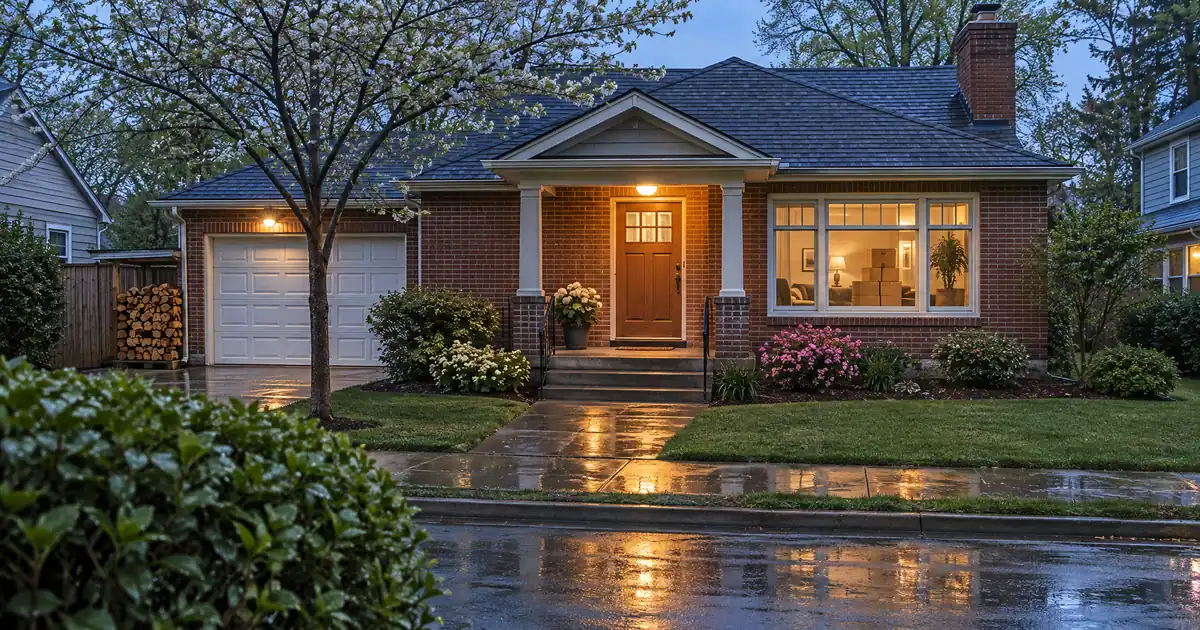
The Quick Read: The exception waives a waiting period. It does not raise the ceiling. An heir who lives in the inherited home can skip the usual 12-month occupancy wait, but the new loan still tops out at 80% of the home’s appraised value. The cash that reaches you is smaller than that, because payoffs, other liens and closing costs come out first. Rent the home after inheriting it, and the exception disappears.
Key Takeaways
- The exception removes the “own and live in it for 12 months” test for an heir. It leaves every other cash-out rule in place.
- The cap is 80% of the appraised value, the same cap every FHA cash-out borrower faces.
- Your net cash is the cap minus what the loan has to pay off and cover.
- You must live in the home as your principal residence. Renting it after you inherit it forfeits the exception.
- You still qualify on your own income, credit and debt load.
What Does the Exception Actually Waive?
Normally, an FHA cash-out refinance requires that you owned and lived in the home for the 12 months before the case number is assigned. A case number is the file ID FHA gives the loan at the start. Inheriting a home does not give you those 12 months of history, so the usual test would shut you out.
FHA cash-out estimate
Seeded with an example value, a balance to match, and a round cash request; change any field.
Editable benchmark: 7.18% as of November 5, 2026 · Freddie Mac 30-year average via FRED®. A conventional market reference, not an FHA cash-out refinance quote.
Illustrative starting assumptions: a $350,000 home value, a $193,000 current balance, the FHA cap on a principal residence with the upfront premium financed, a thirty-year term at the current Freddie Mac benchmark, and property taxes and insurance estimated at typical national rates. Every field is editable.
An illustration, not a Loan Estimate, an approval, a quote, or a commitment to lend. The rate shown is the weekly Freddie Mac thirty-year conventional benchmark, used as a market reference; an FHA cash-out is priced by the lender at lock, and this is not an FHA cash-out refinance quote. HUD’s cap limits the base loan; the upfront premium is financed on top of the capped base loan; the monthly premium for the first year follows the snapshot’s schedule. Cash available means the base loan the cap permits less the balances retired, before closing costs, which this calculator leaves out. The line figure applies the line program’s combined loan-to-value ceiling to the same value and balance. Taxes and insurance are estimates you can edit. Licensed in sixteen states for consumer mortgages.
The exception fixes that one problem. It waives the 12-month ownership and occupancy history, so you do not have to wait out a minimum period before applying. You still have to meet two conditions: the home is your principal residence, and since inheriting you have not treated the property as an investment. If you meet both, you can apply right away.
That is the whole benefit. It changes when you can borrow. It does not change how much.
The exception is a carve-out from that 12-month ownership-and-occupancy rule, and from nothing else in the cash-out program.
How Much Can You Borrow?
You can borrow up to 80% of the home’s appraised value, measured against the base loan amount. Heirs get no bonus. The exception opens the door sooner, but the room inside is the same size it is for every other FHA cash-out borrower.
Two pieces of vocabulary matter here. The base loan amount is the mortgage before any financed upfront premium is added. Adjusted value is the value FHA uses to measure the loan. For a recently purchased home, FHA looks at the lesser of price or value. For an heir, the glossary treats inherited property like a home held 12 months or more. So the appraisal drives the number, not what the estate or the family thought the house was worth.
That lesser-of-price test is the one that shrinks the loan on a recent purchase. Inheritance sidesteps it. The appraiser’s opinion of value sets the ceiling, and the ceiling is 80% of it.
HUD set that 80% cap in Mortgagee Letter 2019-11, which cut the maximum loan-to-value and combined loan-to-value on cash-out refinances. HUD’s press release on the change explained that the lower cap was meant to reduce risk in cash-out lending. The old cap was higher.
County loan limits also apply, and they change every year. Most homes land under the cap long before they touch a county limit, so the 80% figure usually decides the outcome. Still, the loan is sized to the lower of the two.
One more point. The exception does not give FHA more leverage than a conventional cash-out on a primary home. For a one-unit principal residence, the two caps now sit at the same 80%. Choose between them on mortgage insurance, credit and ratios, not on a leverage edge.
How Is the Loan Underwritten, Step by Step?
The loan is underwritten like any other FHA cash-out, with the inheritance facts added at the front. Here is the sequence across the wholesale programs Lendmire places FHA files with. Each step has a purpose.
1. Confirm the facts of the inheritance. Title is in your name. You live in the home. It has not been rented or used as an investment since you inherited it. Expect the lender to want documents showing how you acquired it.
2. Order the case number and appraisal. An FHA-approved appraiser sets the property value. That value sets the ceiling.
3. Identify every payoff. If a mortgage or lien sits on the home, the lender obtains payoff statements for all of them. These get paid from the new loan.
4. Check the payment history. If you are paying an existing mortgage, the handbook calls for evidence that payments were made within the month due over the prior 12 months, or since the loan began if shorter. A paid-off home skips this step.
5. Underwrite you. Your income, credit and debts get a full review. The programs Lendmire places FHA loans with start at a 580 decision score. The base ratio pair is 31/43, meaning housing cost over income and total debt over income. Documented compensating factors can stretch that as far as 40/50 at the top tier. The automated finding governs most files.
6. Size the loan. The loan is limited to the lowest of 80% of adjusted value, the county loan limit and what your income supports.
That last item surprises people. The cap is a ceiling, not an entitlement. You can qualify for less than 80%, and many heirs do.
Two details deserve attention. First, income from a co-borrower who does not live in the home generally cannot be used to qualify for a cash-out refinance, according to HUD’s Handbook 4000.1. That is different from an FHA purchase, where a non-occupant co-borrower can help. Second, inheritance itself is not income. The money you receive from a house does not count as a paycheck. You qualify on what you earn.
Where Does the Cash Go Before It Reaches You?
The cash you receive is always less than 80% of the value. The 80% cap covers the whole new base loan, and several things get paid out of it first.
Think of the base loan as a bucket. Existing mortgages and liens get paid from it. Closing costs financed into the loan come out of it. Whatever remains is your cash.
The upfront mortgage insurance premium works slightly differently. The loan-to-value test uses the base loan, before that premium. The premium is then added on top when it is financed. So your final balance ends a little above the base loan. Your cash, though, still comes from the base-loan bucket.
Here are three modeled scenarios. They use percentages of appraised value, not dollars, and they are illustrations, not market data.
| Situation | Base loan cap | Paid out first | What is left |
|---|---|---|---|
| Paid-off home | 80% of value | Closing costs | Most of the cap |
| Home with a lien at 30% of value | 80% of value | Lien, then costs | About 50% of value, less costs |
| Lien at 30% plus a buyout at 40% | 80% of value | Lien, buyout, costs | Little or nothing left |
Run the third row slowly. A home with a lien equal to 30% of value leaves roughly 50% of value under the cap. If the family agreed to a buyout of a co-heir at 40% of value, only about 10% is left before costs. If the buyout were agreed at 55%, the loan cannot reach it. The family would have to adjust the number or bring in cash from somewhere else. A handshake number is not a loan number.
A co-heir buyout is not a separate category under the cap, so treat it as just another payoff. It gets paid out of the bucket, and the bucket has a lid.
A paid-off house surprises people in a different way. They assume no mortgage means no cash-out. HUD still treats taking equity out of a home with no mortgage as a cash-out. The same 80% cap and the same rules apply.
The CFPB’s guide to using home equity makes a related point: no home equity option lets you convert 100% of your equity into cash, and a cash-out refinance may extend the time it takes to pay off your mortgage. Leaving a cushion is built into the design.
When Does the Exception Hold, and When Does It Break?
The exception holds as long as you live in the home and never use it as an investment. It breaks the moment you rent it out. This table covers the common situations.
| Situation | Exception | What to do |
|---|---|---|
| You live in the inherited home | Kept | Apply as an owner-occupant |
| Home is paid off | Kept | It still counts as cash-out |
| You rented it after inheriting | Lost | Live there 12 months first |
| It is a second home or rental | Not available | Cash-out is for primary residences |
| Heir does not live in it | Not available | Occupancy is still required |
Here is the rule that trips people up. You cannot rent the home for a short stretch and then use the exception. Once the home has been treated as an investment, the waiver is gone. You would then need to occupy it as your principal residence for at least 12 months before you qualify for a cash-out.
A common misreading is that the exception covers any inherited property. It covers an inherited principal residence. A rental, second home or vacation property does not qualify for an FHA cash-out at all. Occupancy decides it.
What about 2–4 unit homes? Nothing in the exception depends on unit count. You still have to live in one of the units. Older HUD guidance imposed extra tests on three- and four-unit homes, and those may not match current policy. Confirm them against the current handbook before you plan around them.
What about gifts? The occupancy waiver is written for inheritance, so do not assume a gift gets identical treatment. Ask a loan officer to check the current handbook language for your facts.
What about homes in a trust or an estate? Title has to be in the right place before you can refinance. If the estate has not been settled or title has not transferred to you, the lender may not be able to proceed. Sort out title and probate with an attorney first. The lender needs clean ownership on the file.
What about Hawaiian Home Lands? Loans on Hawaiian Home Lands are a separate FHA program, and the cash-out rules described here may differ for them. Most borrowers will never meet that program. If you are one of them, ask a loan officer how the rules apply to you.
How Does This Compare to Other FHA Refinances?
A cash-out is only one of three FHA refinance paths. The right one depends on whether you need cash and whether the current loan is already FHA.
| Feature | Streamline | Rate-and-term | Cash-out |
|---|---|---|---|
| Needs existing FHA loan | Yes | No | No |
| Cash to borrower | No | No | Yes |
| Appraisal | Not required | Required | Required |
| Maximum LTV | Not value-based | 97.75% | 80% |
The streamline refinances an existing FHA loan with no appraisal, a limited credit review and a net tangible benefit. The premium carries forward. It gives you no cash, so it is irrelevant if you need equity.
The rate-and-term refinance with an appraisal reaches 97.75% on a principal residence you occupied for the previous 12 months. It gives no cash either. An heir who just moved in generally would not meet the 12-month occupancy test, which is exactly the gap the inheritance exception was written to fill for cash-out.
So for an heir who needs money, cash-out with the exception is usually the relevant lane. An heir who simply wants to replace an inherited mortgage with a different loan has other paths.
What Does Mortgage Insurance Do to the Math?
Mortgage insurance applies, and it changes your monthly budget. There are two parts. An upfront premium of 1.75% of the base loan is typically financed into the balance. An annual premium between 0.15% and 0.75% of the balance applies, depending on term, loan amount and LTV.
Duration depends on leverage. On a thirty-year loan above 90% LTV, the annual premium lasts for the full term. At or below 90% LTV, it ends after 11 years. Because a cash-out tops out at 80%, the shorter schedule is the one that applies to a thirty-year loan. Those are program facts, not a price quote. Every figure here is subject to lender guidelines and full file review.
Closing costs also reduce your net, and they are real. No official percentage exists, so treat any quoted range with caution until you see your own Loan Estimate.
What Should You Weigh Before You Borrow?
The exception lets you refinance right away. That timing helps if you need cash for taxes on the estate, repairs, a sibling’s buyout or paying off debt. The price is that your home becomes collateral for a larger loan.
Think about three things.
- The monthly budget. The new payment replaces any inherited-loan payment and adds mortgage insurance. A bigger balance may also stretch the payoff schedule.
- The purpose. Fixing a roof or settling a buyout is one thing. Paying off credit cards is another. The Federal Reserve’s consumer guide to refinancing notes that many financial advisers caution against using cash-out refinancing to pay down unsecured debt. You are swapping debt with no collateral for debt secured by your home.
- The alternatives. Sometimes the better move is a smaller loan, selling the home or buying out a sibling another way. A cash-out is a tool, not a default.
Several early checks can keep a file moving: confirm that title has cleared, find out whether any lien exists on the home, and avoid fixing a buyout number before an appraisal is ordered. The appraisal sets the value the 80% cap applies to, so a figure agreed ahead of it may not match what the loan can support.
Key Terms Defined
Cash-out refinance: A new mortgage that replaces your current one, or that borrows against a home with no mortgage, and gives you the difference as cash.
Inheritance exception: An FHA rule that lets an heir skip the 12-month occupancy history for a cash-out, as long as the home has not been treated as an investment since inheritance.
Adjusted value: The value FHA uses to measure the loan. For an heir, the appraisal drives it.
Base loan amount: The mortgage before a financed upfront premium is added. The loan-to-value test uses this figure.
Case number: The file number FHA assigns at the start of the loan. Occupancy history is counted back from it.
Upfront mortgage insurance premium: A one-time FHA charge of 1.75% of the base loan, usually financed into the balance.
Frequently Asked Questions
Can I use the exception if the home is paid off?
Yes, if you live there and have not used it as an investment. A paid-off home still counts as cash-out, so the same 80% cap, appraisal and underwriting apply. You qualify on your own income and credit. Title must also be in your name before the lender can proceed.
Does the exception let me borrow more than other FHA borrowers?
No. It only removes the occupancy waiting period. Every FHA cash-out borrower, heir or not, is capped at 80% of the appraised value. The county loan limit applies on top of that. Your net cash is smaller than the cap, because payoffs and costs come out first.
What if I rented the home for a while after inheriting it?
Renting it can put the exception at risk, because the home would no longer be treated as owner-occupied since you inherited it. Without the exception, you would need to own and live in the home for 12 months before the case number. Ask a loan officer how your own rental history would be reviewed.
Can a relative who lives elsewhere co-sign to help me qualify?
A non-occupant co-borrower’s income generally cannot be used to qualify for an FHA cash-out refinance, according to HUD’s handbook. That differs from an FHA purchase, where a non-occupant co-borrower is allowed. Ask a loan officer to check the current handbook against your situation.
Which value counts, the estate value or a new appraisal?
A new appraisal by an FHA-approved appraiser. That value sets the ceiling. A date-of-death valuation, a family estimate or an agreed buyout figure does not set the loan limit. If the appraisal comes in below what the family expected, the cap moves down with it.
If You Are Weighing This Decision
If you are weighing a cash-out refinance against keeping the loan you have, Lendmire can help you compare the programs and the equity each one reaches. Lendmire is a mortgage broker that arranges FHA loans through wholesale lenders. Every parameter here is subject to lender guidelines and full file review, and nothing here is a commitment to lend.
For your own numbers, request a scenario review with Lendmire.
About Lendmire
As a mortgage broker (NMLS# 2371349), Lendmire helps homeowners and home buyers in 16 states with FHA, VA, conventional and jumbo purchase and refinance loans arranged through wholesale lenders. Lendmire is never the lender; program terms are set by the lender and the agency guidelines. Scotsman Guide named Lendmire a Top Mortgage Workplace in both 2025 and 2026.
Get Started
Ready to find the right loan for you?
See your offer in seconds. No credit pull, no obligation.
Informational only. Not a Loan Estimate, approval, or commitment to lend. Program availability and eligibility are subject to lender guidelines, credit approval, property review, and underwriting.
References
1. HUD Mortgagee Letter 2019-11
2. HUD press release on cash-out lending risk
4. CFPB, Using home equity to meet financial needs
5. Federal Reserve, Consumer’s Guide to Mortgage Refinancings
This article is part of Lendmire’s FHA cash-out refinance program — full qualification details, guidelines, and scenarios live on the program page.
Related reading: How Much an FHA Cash-Out Lends on a Rural Home With Acreage · How Much an FHA Cash-Out Lends When Conventional Is Costly
Brandon Miller
Founder & CEO, Mortgage Loan Originator, Lendmire LLC
- Mortgage Loan Originator · NMLS# 1129696 · Verify on NMLS Consumer Access
- North Carolina Real Estate Broker · License# 343312 · Verify on NCREC
- North Carolina Insurance Producer · License# 19053198 · Property, Casualty, Life, Health · Verify on NAIC SBS
- Lendmire LLC · Firm NMLS# 2371349 · Verify firm licensure
Compliance and disclosures. Lendmire (NMLS# 2371349) is a licensed mortgage broker and is not a direct lender, depository institution, financial advisor, or tax professional. Content in this article is general market analysis and educational information — not financial, legal, or tax advice for any specific situation. Lendmire does not guarantee loan approval; every transaction is subject to underwriting by the funding lender. Mortgage pricing and loan program guidelines are subject to change at any time without notice and vary by borrower characteristics, property type, and state regulations. Lendmire complies with Equal Housing Opportunity. Licensure verification: NMLS Consumer Access.