
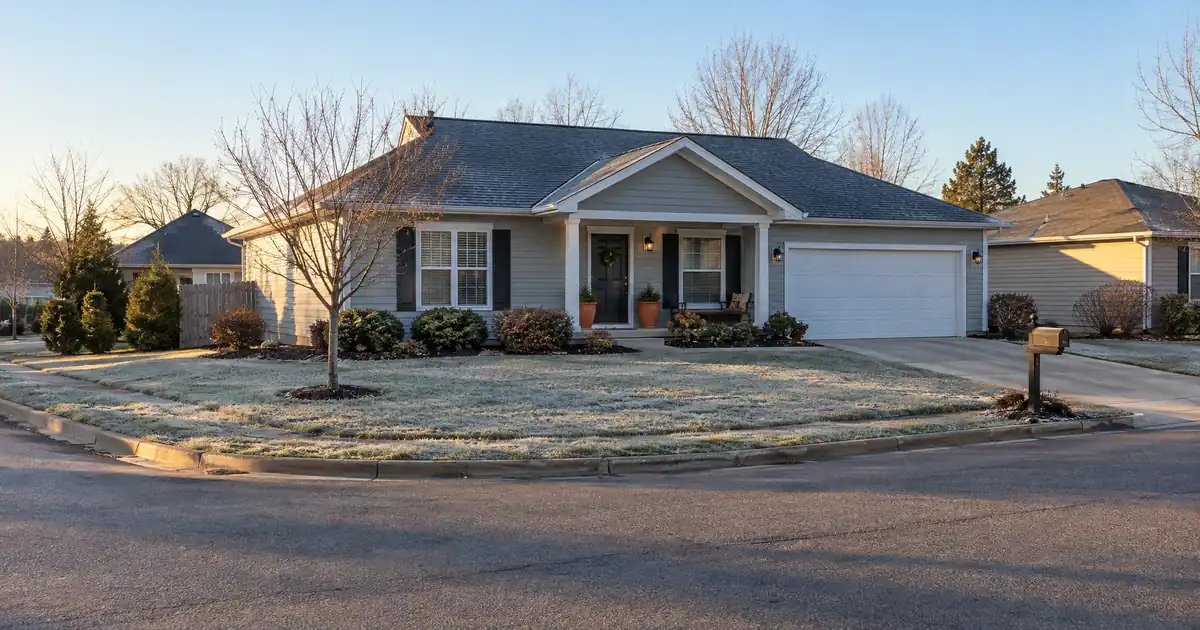
The Quick Read: For a home you live in, a conventional cash-out refinance reaches 80% of the home’s value on a one-unit principal residence, and the first mortgage being paid off must be at least 12 months old. You must also have been on title for six months. Spending the cash on repairs does not change the loan type, and on a rural property the appraisal is usually the step that decides how much cash is available. Everything here is subject to lender guidelines and full file review, and nothing is a commitment to lend.
What Counts as a Cash-Out Refinance?
A cash-out refinance replaces your current first mortgage with a larger one and hands you the difference in cash. The label comes from how much cash leaves the closing table. It does not come from what you plan to do with it.
Cash-out refinance estimate
The starting figures are an example value with a balance and a cash request in proportion. Replace them with yours.
Editable benchmark: 7.18% as of November 5, 2026 · Freddie Mac 30-year average via FRED®. A conventional market reference, not a cash-out refinance quote.
Illustrative starting assumptions: a $350,000 home value, a $193,000 current balance, the agency cap on a one-unit principal residence, a thirty-year term at the current Freddie Mac benchmark, and property taxes and insurance estimated at typical national rates. Every field is editable.
Illustrative estimate only — not a Loan Estimate, approval, quote, or commitment to lend. The rate field carries the weekly Freddie Mac thirty-year conventional benchmark, a market reference and not a cash-out refinance quote; a cash-out loan is priced by the lender at lock. The cash available is the loan the program cap allows less the balances paid off, before closing costs, which are not included. The HELOC line is the program’s combined loan-to-value ceiling applied to the same value and balance. Taxes and insurance are editable estimates. Licensed in sixteen states for consumer mortgages.
Freddie Mac’s Guide section 4301.5 defines it as a mortgage with no specific restrictions on how proceeds are used. That is why “repairs” is not a loan type. A cash-out used to replace a roof and a cash-out used to pay off a credit card are the same loan.
Two things follow from that.
- A free-and-clear rural home is still a cash-out when a new lien goes on it.
- A cash-out replaces the whole first mortgage. A HELOC or home equity loan leaves the first mortgage in place and adds a second lien. The federal consumer-finance regulator research blog on cash-out refinances draws the same line.
If your current first mortgage is a good one, replacing it is the main cost of the whole move. Weigh that before anything else.
Key Terms Defined
Cash-out refinance: a new first mortgage larger than the one it pays off, with the extra amount paid to you in cash.
LTV (loan-to-value): the new loan amount divided by the appraised value of the home, shown as a percentage.
Seasoning: the minimum age of your current loan and the minimum time you have been on title before a cash-out is allowed.
Limited cash-out (rate-and-term) refinance: a refinance that pays off the old loan and closing costs, with only a small incidental amount of cash back.
As-completed appraisal: a value that assumes planned repairs are finished. Renovation loans use it. A plain cash-out does not.
How Is a Cash-Out Underwritten, Step by Step?
The deal works through the same stages on most conventional cash-outs. Each stage has a document that tends to hold it up.
1. Loan type. Decide between a plain cash-out, a renovation loan, a VA cash-out, or a second lien such as a HELOC. On a USDA-financed home, cash-out generally means leaving USDA, since the sources reviewed describe USDA refinances as not allowing cash-out. Ask a loan officer to confirm the current USDA position for your loan.
2. Seasoning check. The lender looks at the note date of your current first mortgage and at your time on title.
3. Credit, income and assets. The wholesale conventional programs Lendmire places files with generally start at a 620 decision score. The automated finding governs most files, with a total ratio ceiling of 50%. Manually underwritten loans run tighter, at 36% or 45% depending on the reserve and score factors in the Eligibility Matrix.
4. Appraisal. This is the step that matters most on a rural home. More on that below.
5. Underwriting conditions and closing. The lender clears title, confirms insurance and reconciles the settlement figures. Under the federal consumer-mortgage disclosure regime, you receive a Loan Estimate and a Closing Disclosure.
What decides the outcome: appraised value, the balance on the existing lien, credit and ratios, seasoning, occupancy, and property type and condition.
What Are the Core Requirements?
Here are the numbers, tied to the program they belong to. Programs and overlays vary by lender and borrower.
| Requirement | Conventional cash-out | Notes |
|---|---|---|
| Max LTV, one-unit primary home | 80% | Subject to lender guidelines |
| Max LTV, 2-4 units, second home, investment | 75% | Occupancy sets leverage |
| First-mortgage seasoning | 12 months | Note date to note date |
| Time on title | 6 months | Exceptions exist |
| Wholesale no-MI lane | Up to 89.99% LTV | 680 score, 50% ratio, 30-year fixed, conforming balance |
A few notes on that table.
The 12-month and six-month clocks come from Fannie Mae’s SEL-2023-01 announcement. The first mortgage being paid off must be at least 12 months old, measured from the existing note date to the new note date. That is in addition to the six months on title, unless an exception applies. The exceptions include delayed financing, inheritance and legal awards.
Mortgage insurance on the agency path is required above 80% LTV, except in the wholesale no-MI cash-out lane noted in the table. That lane has its own six months of seasoning and is written on a primary residence at a conforming balance. It is not written in Texas. Exact terms depend on the lender’s guidelines, property type, leverage, and a full review of the borrower’s file.
Texas has its own rule for a cash-out on a homestead, called a Section 50(a)(6) loan. The state constitution caps it at 80% of the home’s value.
Fannie Mae also applies cash-out pricing and a loan-level price adjustment on certain cash-out loans, based on LTV and credit score, per Selling Guide B2-1.3-03. That is one reason a cash-out is priced differently from a rate-and-term refinance.
The CFPB’s guide to using home equity notes that lenders typically want you to keep 10% to 20% of your home value as equity. The 80% cap puts a conventional cash-out in that range.
Why Does the Rural Appraisal Decide the Cash?
On a rural home, the appraisal sets the loan amount, and it is also where files lose value. Cash available is the appraised value times the LTV cap, minus your current payoff and costs. If the value comes in light, the cash shrinks.
Three rural issues show up again and again.
Whole-site valuation. Under Fannie Mae’s site section guidance, B4-1.3-04, the appraisal must reflect the actual size of the site. An appraiser may not value only 5 acres of an unsubdivided 40-acre parcel. The value has to reflect all 40. The same section requires improvements to be a legal conforming use and asks the appraiser to assess highest and best use.
Thin comparables. Fannie Mae’s comparable sales guidance, B4-1.3-08, allows older sales when rural activity is minimal. In a rural area an appraiser may not find three truly comparable sales in the prior 12 months. In that case the appraiser may use sales that are not truly comparable, and must explain why they were chosen.
Agricultural character. Fannie Mae does not purchase agricultural-type properties or undeveloped land. A rural home with a few outbuildings is generally fine. A working farm with income-producing acreage is a different file. Some lenders also set their own acreage overlays. Those are lender-level and vary, so ask early.
Here is the catch for a repair loan. The appraiser values the home as it stands today. If the roof is failing, the well pump is shot or the septic needs work, the value can drop, or the appraiser can call for the repair before closing. The repair you borrowed to fix can reduce the cash you can borrow.
When Is a Renovation Loan the Better Fit?
A renovation loan fits when the repairs are big, when the home needs work before it reaches its full value, or when you want the money tied to the project. A plain cash-out gives you cash at closing and trusts you to spend it. A renovation loan holds the money in escrow and releases it as work is inspected.
| Feature | Plain cash-out | HomeStyle Renovation | FHA 203(k) |
|---|---|---|---|
| Cash at closing | Yes | None | None |
| Appraisal basis | As-is value | As-completed value | As-completed value |
| Funds released | All at closing | After each phase | Escrow, as work finishes |
| Paperwork | Standard | Plans, bids, draw schedule | Plans; consultant on Standard |
Fannie Mae HomeStyle. Per Selling Guide B5-3.2-01, a borrower can refinance an existing loan and include funds for repairs, remodeling, renovations or energy improvements in the loan amount. The deadline for completing the work depends on the program terms and the lender’s requirements for the file. On a refinance, renovation funds are limited to 75% of the as-completed appraised value, and 50% on manufactured housing, per Fannie Mae’s comparison sheet.
The collateral rules in B5-3.2-03 add that a licensed contractor does the work unless licensing does not apply under state or local law. You pick the contractor. The lender may not steer you to one.
Fannie Mae’s HomeStyle product sheet says no cash back at closing in any amount, and the money sits in an interest-bearing custodial account. Unused funds go to principal. Do-it-yourself work is allowed only on one-unit properties and is capped at 10% of the as-completed value, per Fannie Mae’s product page.
Freddie Mac CHOICERenovation. Freddie Mac’s treatment of this product depends on how the proceeds are used, and the details, including seasoning exemptions, change over time. Ask your loan officer for the current Freddie Mac wording before you plan around it.
FHA 203(k). HUD’s 203(k) program page describes a loan that insures the purchase or refinance of a home at least a year old, plus rehabilitation. Part of the proceeds pays off the existing mortgage and the rest goes into an escrow released as work is completed. HUD’s 203(k) types page says the Limited 203(k) finances up to $75,000 of repairs. The Standard 203(k) requires at least $5,000 of rehabilitation. An HUD-approved consultant is optional for Limited and required for Standard.
Trade-off: a renovation loan means more paperwork, contractor vetting, inspections and draws. In return you get a defined completion window and money matched to the work.
Where Does the General Rule Break?
Most of the rules above flex at the edges. These are the cases that surprise borrowers.
Existing government loans. An FHA Streamline or VA IRRRL cannot fund repairs. The FHA Streamline needs an existing FHA loan, a net tangible benefit and no cash out. The VA IRRRL is a VA-to-VA loan with a 0.5% funding fee unless exempt, no VA appraisal, a net tangible benefit and seasoning of the later of 210 days and 6 payments. Neither one is a repair tool.
VA cash-out. A VA cash-out refinance can take cash from equity for debt, school or home improvements, and it carries a net tangible benefit test. One prong is a new loan at 90% or less of the home’s reasonable value. Veterans may be able to reach up to 100% of equity for repairs, so the 90% figure is one test prong and not necessarily the ceiling. Confirm the current limits with your loan officer.
FHA cash-out. FHA standard cash-out is for owner-occupied principal residences, with a minimum occupancy period and a lower LTV cap than purchase. Income from a non-occupant co-borrower cannot be used to qualify. HUD’s handbook index is at HUD Handbook 4000.1.
Listed for sale. Fannie Mae deliveries are not eligible if the property is listed for sale when the new loan is disbursed.
Buying out a co-owner. Buying out a co-owner under a written agreement is a limited cash-out transaction at both agencies. It is not a HomeStyle feature.
PACE loans. Paying one off with a refinance has specific treatment. Ask the loan officer before assuming it works.
Small cash back. A limited cash-out allows only incidental cash. Fannie Mae’s figure is the lesser of 2% of the new loan amount or $2,000. That is a rate-and-term refinance, not a repair loan.
Repairs Before or After Closing?
Cash from a plain cash-out arrives at closing. It does not arrive in draws, and it does not arrive before the appraisal. That matters when a repair is urgent.
If a leak, a failed well pump or a bad furnace cannot wait, you may need to pay for it first from savings or another source, then refinance. A refinance is a document-heavy process, and a contractor will not wait on it. Sequence the work around the loan, not the other way around.
Three other points on timing.
- Condition can stop a closing. If the appraiser flags a safety or habitability issue, the lender may require the repair before closing. Bids and photos you gather early help you answer that.
- Over-borrowing is a real risk. Repair quotes on rural homes can move with the weather and the contractor’s schedule. Cash you borrow and don’t spend still sits in a larger loan, and unlike a renovation loan, it does not reduce principal automatically.
- Document the scope. Even on a plain cash-out, written bids show the lender and you what the money is for. They are required on a renovation loan.
What Do Lenders Ask For?
- Pay stubs, W-2s and tax returns for salaried borrowers.
- Self-employed or seasonal borrowers need a longer income history, and farm-adjacent income needs a clean separation between household and business earnings.
- Statements for the current mortgage, so the lender can confirm the loan’s age and balance.
- Proof of how long you have been on title.
- Homeowners insurance, and flood information where it applies.
- Plans, bids and a contractor’s license for any renovation loan.
- A survey or legal description when the parcel is large or unsubdivided.
Credit events carry waiting periods set by the agencies: four years from a chapter 7 discharge, seven from a foreclosure, and four from a short sale or deed-in-lieu. Documented extenuating circumstances can shorten them.
How Does It Affect Your Monthly Budget?
A bigger first mortgage means a bigger balance and, in most cases, a longer payoff. The CFPB guide above notes that a cash-out may lengthen the payoff time and raise the monthly payment because the new loan is larger.
Mortgage insurance applies above 80% LTV on the agency path, with the no-MI wholesale cash-out lane as the exception. You can request cancellation at 80% of the original value with good payment history, no subordinate liens and no decline in value. Federal homeowner protection rules require the servicer to end it automatically at 78%. Lendmire’s conventional program sheet lists typical annual premiums of 0.58% to 1.86% of the balance, which is the sheet’s range and not a quote. Every figure here varies by lender and program — guidelines, property type, leverage, and credit profile all apply.
Tax treatment can depend on your situation; borrowers should speak with a qualified tax professional before relying on any deduction or credit.
Is a Cash-Out the Wrong Tool?
Sometimes. Run through these.
- Your current first mortgage is a good one. Replacing it to fund a small repair is expensive. A HELOC or home equity loan leaves it alone.
- The repair is small. The cost of refinancing the entire balance may outweigh the benefit.
- The home needs major work to reach its value. A renovation loan, valued as completed, may reach further than an as-is appraisal.
- You hold a VA or FHA streamline-eligible loan and want only a lower payment. A cash-out is the wrong program for that.
- You are on USDA. Cash-out generally means moving to a conventional, FHA or VA loan.
- You are thinking of selling soon. Closing costs on a new loan need time to pay back.
If you are weighing a cash-out refinance against keeping the loan you have, a look at Lendmire’s cash-out refinance programs page shows the structures side by side. For more on the program choice, Lendmire’s piece Best Cash-Out Refinance Program to Pay for Home Repairs on a Rural Property covers how to compare them.
Frequently Asked Questions
Can I use a cash-out refinance for home repairs?
Yes. A cash-out has no use restrictions, so repairs are a permitted use. The loan is classified by how much cash leaves closing, not by what you buy with it. Only dedicated renovation products such as HomeStyle, CHOICERenovation and the FHA 203(k) restrict how funds are used.
How long must I own the home before a cash-out?
You must have been on title for six months, with exceptions for delayed financing, inheritance and legal awards. The first mortgage being paid off must also be at least 12 months old, measured note date to note date. The wholesale no-MI lane has its own six months of seasoning.
Will the repairs I need change the appraisal?
Yes, they can. The appraiser values the home as it is, so a failing roof, well or septic system can lower the value or lead to a repair condition. That reduces the cash available. On rural property, whole-site valuation and thin comparable sales add to that effect.
Can an FHA Streamline or VA IRRRL pay for repairs?
No. The FHA Streamline is a no-cash-out refinance of an existing FHA loan, and the VA IRRRL is a VA-to-VA refinance of an existing VA loan. If you need repair money, look at a cash-out, a renovation loan or, for veterans, a VA cash-out.
Can I cash out on a USDA loan?
Generally no. The sources reviewed describe USDA refinances as not allowing cash-out, so repair cash on a USDA home usually means moving to a conventional, FHA or VA loan. Confirm the current USDA position with a loan officer before planning around it.
For your own numbers, request a scenario review with Lendmire.
For current guidelines and terms, see Lendmire’s refinance programs page.
About Lendmire
As a mortgage broker (NMLS# 2371349), Lendmire helps homeowners and home buyers in 16 states with FHA, VA, conventional and jumbo purchase and refinance loans arranged through wholesale lenders. Lendmire is never the lender; program terms are set by the lender and the agency guidelines. Scotsman Guide named Lendmire a Top Mortgage Workplace in both 2025 and 2026.
Get Started
Ready to find the right loan for you?
See your offer in seconds. No credit pull, no obligation.
Informational only. Not a Loan Estimate, approval, or commitment to lend. Program availability and eligibility are subject to lender guidelines, credit approval, property review, and underwriting.
References
1. Freddie Mac Guide section 4301.5
2. CFPB research blog on cash-out refinances
5. CFPB, Using home equity guide
6. Fannie Mae Selling Guide B4-1.3-04, Site Section
7. Fannie Mae B4-1.3-08 Comparable Sales
8. Fannie Mae Selling Guide B5-3.2-01, HomeStyle Renovation
9. Fannie Mae HomeStyle comparison sheet
10. B5-3.2-03
This article is part of Lendmire’s cash-out refinance program — full qualification details, guidelines, and scenarios live on the program page.
Related reading: How to Plan and Use a Cash-Out Refinance for Small Home Improvements · How to Pay Out an Ex Without Selling Using a Cash-Out Refinance · How to Qualify and Apply for a Cash-Out Refinance on Your Home
Brandon Miller
Founder & CEO, Mortgage Loan Originator, Lendmire LLC
- Mortgage Loan Originator · NMLS# 1129696 · Verify on NMLS Consumer Access
- North Carolina Real Estate Broker · License# 343312 · Verify on NCREC
- North Carolina Insurance Producer · License# 19053198 · Property, Casualty, Life, Health · Verify on NAIC SBS
- Lendmire LLC · Firm NMLS# 2371349 · Verify firm licensure
Legal disclosures. Lendmire (NMLS# 2371349) is a state-licensed mortgage brokerage that arranges financing through wholesale lender relationships. Lendmire is not a direct lender, depository institution, or registered financial advisor. The discussion above is general informational content about real estate financing — it is not financial, legal, or tax advice, and readers should consult licensed professionals for guidance on their individual circumstances. Loan inquiries are subject to lender underwriting; this article does not represent a commitment to lend. Loan terms, rates, and qualification standards vary by borrower, property, and state, and are subject to change at any time. Equal Housing Opportunity. NMLS Consumer Access: nmlsconsumeraccess.org.