
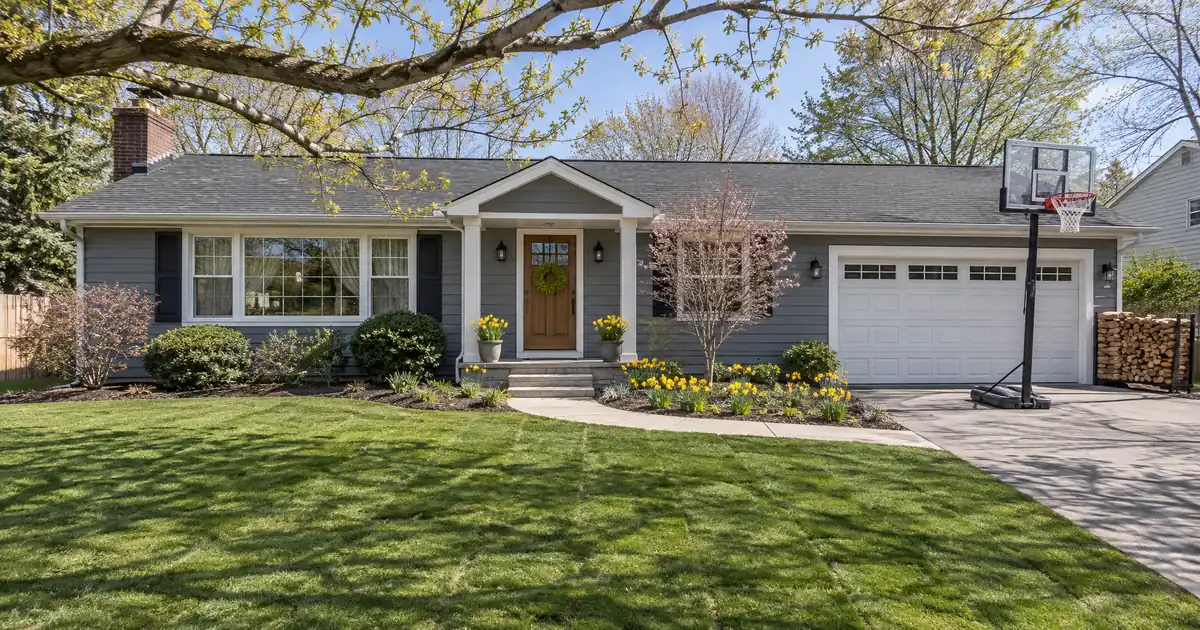
The Quick Read: Usually less than the equity you think you have, and the amount is sized from your home as it appraises today, not from the ADU you plan to build. The cash is 80% of the home’s current appraised value, minus your payoff, closing costs and anything rolled into the loan. The unit you haven’t built yet adds nothing to that math.
The Formula Behind the Number
The cash you receive equals 80% of the appraised value, minus your current payoff, minus costs. That is the whole calculation. The 80% is the FHA cash-out ceiling on the home, and everything you already owe or must pay to close comes out of that room first.
FHA cash-out estimate
Seeded with an example value, a balance to match, and a round cash request; change any field.
Editable benchmark: 7.18% as of November 5, 2026 · Freddie Mac 30-year average via FRED®. A conventional market reference, not an FHA cash-out refinance quote.
Illustrative starting assumptions: a $350,000 home value, a $193,000 current balance, the FHA cap on a principal residence with the upfront premium financed, a thirty-year term at the current Freddie Mac benchmark, and property taxes and insurance estimated at typical national rates. Every field is editable.
An illustration, not a Loan Estimate, an approval, a quote, or a commitment to lend. The rate shown is the weekly Freddie Mac thirty-year conventional benchmark, used as a market reference; an FHA cash-out is priced by the lender at lock, and this is not an FHA cash-out refinance quote. HUD’s cap limits the base loan; the upfront premium is financed on top of the capped base loan; the monthly premium for the first year follows the snapshot’s schedule. Cash available means the base loan the cap permits less the balances retired, before closing costs, which this calculator leaves out. The line figure applies the line program’s combined loan-to-value ceiling to the same value and balance. Taxes and insurance are estimates you can edit. Licensed in sixteen states for consumer mortgages.
HUD’s knowledge base confirms the 80% cap for cash-out refinances, and it notes that the first mortgage plus any other liens can’t exceed the nationwide mortgage limits. Older FHA cash-out loans used a higher cap. That ended years ago, so ignore any article still quoting it.
Here is the formula in plain steps:
1. Take the appraised value of the home as it stands today.
2. Multiply by 80%. That is the most the total of all liens can be.
3. Subtract the payoff of your current mortgage and any other liens.
4. Subtract closing costs and prepaid items you choose to roll in.
5. What remains is your cash.
Run it with a home that appraises for a round number and a modest payoff, and the result is a fraction of what many owners expect. Paying costs out of pocket leaves more cash in the loan but takes cash from you on the way in.
One more consequence: at least 20% equity has to stay in the house. If your balance is already near 80% of value, there may be little or nothing to take out.
Does the ADU Raise What You Can Borrow?
No. An FHA cash-out refinance is sized from the as-is appraisal, not the finished ADU. This is the point most homeowners miss, and it shapes the whole plan.
The appraiser values the home as it exists. A backyard unit that is only a drawing and a permit application contributes nothing. When the project is finished, your home may be worth more, and you will have more equity then. But that gain arrives after the loan closes, so it can’t increase your proceeds.
Across the wholesale programs we place FHA files with, the cash-out is also not tied to a purpose. You can spend it on an ADU, a roof or a debt payoff, and the loan is underwritten the same way. There are no draws, no inspections of the work, and no builder approval. That freedom is real, and so is the responsibility: you manage the contractor, the permits, the zoning and the budget.
Can the ADU’s Rent Help You Qualify?
Not on a cash-out refinance. HUD Mortgagee Letter 2023-17 states that for a one-unit property with an ADU, rental income from the ADU cannot be used as effective income to qualify for a cash-out refinance. That covers both rent from an existing unit and projected rent from one you plan to build.
So you qualify on the income you already have. Our program envelope starts with ratios of 31/43 (housing to total debt) with no compensating factors, and documented compensating factors can stretch that to 40/50 at the top tier. The new loan replaces your entire old mortgage, so the payment reflects the whole balance, not just the new cash. If your budget is tight today, a plan that counts on future rent to make it work will not pass underwriting.
Rental income from an ADU can matter in other FHA situations, such as purchases and no-cash-out refinances, but HUD’s rules there are specific and change. Confirm the current letter before relying on them.
What Shrinks Your Cash
Four things come out ahead of you: the payoff, closing costs, mortgage insurance and the equity cushion. Check each one before you set a construction budget.
- Your current payoff. The existing mortgage and any home equity loan or lien must be paid in full from the new loan.
- Closing costs. Appraisal, title and lender charges add up to thousands of dollars. Roll them in and you lose cash. Pay them out of pocket and you keep it.
- FHA mortgage insurance. The upfront premium is 1.75% of the base loan, and it is typically financed, which uses up cap room. The annual premium, between 0.15% and 0.75% of the balance depending on term, amount and LTV, raises the monthly cost. On a thirty-year loan with a higher LTV, it lasts for the term. At lower LTVs it ends after eleven years.
- The 20% cushion. Because financing stops at 80% of value, the equity you leave behind is never available as cash.
A CFPB research report on cash-out refinances notes that consumers may face substantial costs and other barriers in reaching their home equity, including origination, appraisal and title fees. That matches what borrowers see on a Loan Estimate: the headline equity number and the check you receive are far apart.
Does the Cash Match an ADU Budget?
It depends on equity, and the shortfall is common. A useful way to test the plan is to work backward from the build.
Say your home carries a balance near 60% of its appraised value. The 80% cap leaves roughly 20% of value, before costs and the upfront premium. For a home with a very high value, that may be a meaningful sum. For a more modest home, it can fall short of what a unit costs to build. Detached units, utility connections, permits and site work tend to run higher than owners expect.
A second profile: a home paid off or nearly. With no balance to subtract, the cap leaves up to 80% of value before costs and the upfront premium, and a cash-out on a home with no current mortgage is allowed. This borrower has plenty of room, but the new payment now exists where none did before. That is a real budget change, and a cash-out lengthens the time you carry debt on the home.
A third profile: a balance already near 75% of value. After costs and premiums, almost nothing is left. Pursuing the cash-out here would cost closing fees for no usable result.
If proceeds fall short, you have three honest choices: scale the project down, add savings, or switch to a different financing route. Don’t count on a higher appraisal to close the gap.
Eligibility Basics
The home must be your principal residence, owned and occupied for 12 months before the case number. That is the seasoning rule in our program set. Other pieces:
- The LTV cap on a cash-out is 80%.
- County loan limits apply, and they change every year. We don’t quote them here because they vary by county.
- A decision score of 580 or higher is where the wholesale programs we use start. HUD allows lower scores in some situations, but our network does not reach below 580.
- HUD’s waiting periods after credit events apply: two years from a chapter 7 discharge and three years from a foreclosure.
- A non-occupant co-borrower’s income generally can’t be used on a cash-out, so don’t plan around it.
Each of these is subject to lender guidelines and a full file review, and none is a commitment to lend. Consumer mortgages like this one carry the standard Loan Estimate and Closing Disclosure.
The FHA Option Built for ADUs
The FHA Standard 203(k) is the FHA program designed for construction, and it works very differently from a cash-out. HUD’s FHA INFO 2023-81 announced expanded financing for ADUs, including rehabilitating existing structures to add one, and clarified that ADUs are an eligible improvement under the Standard 203(k). HUD’s 203(k) page says the Standard version requires rehabilitation costs of at least $5,000, while the Limited version covers up to $75,000 for non-structural work. A full ADU isn’t a Limited project.
The key difference is sizing. A 203(k) loan is based on the projected value after the work plus the cost of the work, so it can deliver more construction money than a cash-out sized to today’s value. In return, the money is held in escrow and released in draws as the work is completed, and you’ll need a contractor plan and inspections. A 203(k) can also count projected ADU rent in qualifying under the HUD letter, which a cash-out can’t.
Some limits apply. HUD has described 203(k) as tied to existing structures, so whether a new detached unit qualifies depends on current program rules, local zoning and the lender’s review. Confirm that before you build a plan around it. Not every home or every ADU design fits.
Cash-Out Refinance vs. Other Ways to Pay for an ADU
| Factor | FHA cash-out | FHA 203(k) | HELOC / home equity loan |
|---|---|---|---|
| Sized from | Current value | Value after work | Current value and lien |
| Your first mortgage | Replaced | Replaced | Stays in place |
| Funds delivered | Lump sum | Escrow, in draws | Line or lump sum |
| ADU rent to qualify | Not allowed | Allowed under HUD rules | Varies by lender |
| Oversight of work | None | Inspections, plan | Usually none |
Which fits depends on your situation. If you have a good existing mortgage, a second lien may keep it intact, while a cash-out resets everything. If you need the loan sized to the finished home, the 203(k) is the structural fit. If you want simple cash and have the equity and income, the cash-out is the straightforward route. The CFPB’s HELOC brochure compares the equity products in general terms. For contrast only, other loan programs have their own ADU rules, as in the Freddie Mac ADU fact sheet. Those don’t carry over to FHA.
Common Mistakes
Most mistakes come from assuming the ADU helps the loan. Watch for these:
- Counting the finished unit’s value toward your proceeds.
- Counting its future rent toward qualifying on a cash-out.
- Assuming FHA lends more than 80% on a cash-out. The higher figures you see belong to other FHA loans, such as the rate-and-term refinance at up to 97.75% on a home you’ve occupied for the previous twelve months.
- Assuming all equity above 20% comes out. Payoff, costs and premiums come first.
- Assuming the lender will watch the spending. It won’t, which means a budget overrun is entirely yours.
- Choosing a cash-out when a different structure fits the project better.
Key Terms Defined
Adjusted value: The appraised value used to measure the cap on an FHA loan, which for a home you’ve owned a year is generally its current value.
Cash-out refinance: A new, larger mortgage that pays off the old one and gives you the difference in cash.
Standard 203(k): An FHA renovation loan that funds major repairs or additions through escrow and draws.
Annual premium: The recurring FHA mortgage insurance charge, built into the monthly payment.
Effective income: The income a lender is allowed to count when qualifying you.
Frequently Asked Questions
Can I use FHA cash-out money to build an ADU?
Yes, the proceeds are not limited to specific purposes, so you can spend them on an ADU. The loan is sized from your home’s current appraised value, and the lender doesn’t monitor how you spend the cash. You carry the construction risk, including permits and zoning.
Will the appraiser count the ADU I plan to build?
No. The appraisal reflects the home as it stands at the time of the loan. The unit you intend to build adds nothing to the proceeds. Once it’s built, it may raise your home’s value and equity, which helps later, not now.
How much equity do I need to leave in the home?
At least 20%, because the FHA cash-out cap is 80% of value. Payoff, closing costs and the financed upfront premium all come out of the room below that cap, so the cash you net is smaller than your raw equity.
Is an FHA cash-out or a 203(k) better for an ADU?
It depends on the project. The 203(k) sizes the loan to the finished value and counts projected ADU rent under HUD’s rules, but it requires escrowed draws and a plan. The cash-out is simpler but limited to today’s value and can’t use ADU rent. Whether a detached unit qualifies for a 203(k) should be confirmed before you plan around it.
What’s the minimum credit score for this loan?
The wholesale programs we place FHA files with start at a decision score of 580. HUD itself allows lower scores in some cases, but our network doesn’t reach below 580. Final eligibility is subject to lender guidelines and full file review.
Next Steps
If you are weighing a cash-out refinance against keeping the loan you have, Lendmire can help you compare the programs and the equity each one reaches. Start with Lendmire’s FHA cash-out refinance program page, then work backward from your build budget before you commit. Lendmire is a mortgage broker; every program detail here is subject to lender guidelines and full file review and is not a commitment to lend.
For your own numbers, request a scenario review with Lendmire.
For current guidelines and terms, see Lendmire’s FHA loan programs page.
About Lendmire
Lendmire, NMLS# 2371349, is a mortgage brokerage with consumer lending licenses in 16 states. FHA, VA, conventional and jumbo purchase and refinance loans are arranged through wholesale lending partners, and each application is reviewed individually by the lender. Scotsman Guide named Lendmire a Top Mortgage Workplace in both 2025 and 2026.
Get Started
Ready to find the right loan for you?
See your offer in seconds. No credit pull, no obligation.
Informational only. Not a Loan Estimate, approval, or commitment to lend. Program availability and eligibility are subject to lender guidelines, credit approval, property review, and underwriting.
References
1. HUD Mortgagee Letter 2023-17
2. CFPB: CFPB Cash Out Refinances and Paydown Behavior of Non Mortgage Debt Balances
This article is part of Lendmire’s FHA cash-out refinance program — full qualification details, guidelines, and scenarios live on the program page.
Related reading: How to Plan and Use an FHA Cash-Out Refinance to Go Fixed · How to Qualify and Apply for an FHA Cash-Out Refinance After 12 Months · How Lenders Underwrite an FHA Cash-Out Refinance Without a Mortgage
Brandon Miller
Founder & CEO, Mortgage Loan Originator, Lendmire LLC
- Mortgage Loan Originator · NMLS# 1129696 · Verify on NMLS Consumer Access
- North Carolina Real Estate Broker · License# 343312 · Verify on NCREC
- North Carolina Insurance Producer · License# 19053198 · Property, Casualty, Life, Health · Verify on NAIC SBS
- Lendmire LLC · Firm NMLS# 2371349 · Verify firm licensure
Required disclosures. Lendmire (NMLS# 2371349) operates as a licensed mortgage broker, not a direct lender or depository. The discussion in this article is general in nature and should not be relied upon as financial, legal, or tax advice — every investment scenario is unique and should be reviewed by a qualified professional. Any loan inquiry is subject to lender underwriting, and this article is not a commitment to lend or a guarantee of approval. Mortgage rates, loan terms, and program guidelines vary by borrower, property, and state, and may change without notice. Equal Housing Opportunity. Verify licensure at NMLS Consumer Access.