
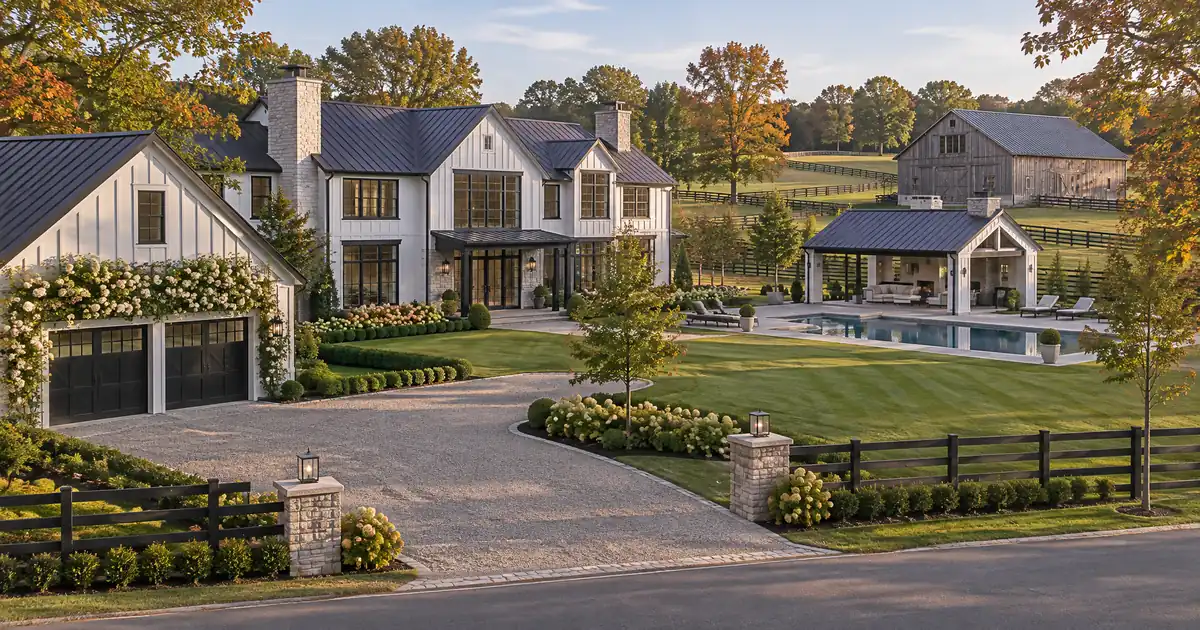
The Quick Read: Jumbo cash-out refinance requirements on a rural property with acreage come down to three tests: the borrower, the loan size, and the land. The borrower test covers credit, ratios and reserves. The size test decides how many appraisals and how much cash a lane allows. The land test asks whether the parcel still reads as a residence, which makes it worth checking early. Terms vary by lender and by file, so confirm each one before you pay for an appraisal.
Key Takeaways
- Jumbo loans aren’t bought by Fannie Mae or Freddie Mac, so each wholesale lender sets its own acreage rules. There is no single national acreage cap.
- Cash-out sits at lower leverage than purchase.
- Use matters more than size. A home with land is a residence. A working farm is a different loan.
- The appraisal sets your cash. Land with few comparable sales can shrink proceeds.
- Pre-screen the property before ordering anything. Exact terms depend on the lender’s guidelines, property type, leverage, and a full review of the borrower’s file.
What Counts as a Jumbo Loan Here?
A jumbo loan begins one dollar above the county’s conforming limit. That limit changes every year and varies by county, so the FHFA announcement of the latest conforming loan limits is the place to check your county. For a refinance, the test is the new loan amount: your payoff plus the cash you take out plus any financed costs. If that total lands above the limit, the loan is jumbo.
Jumbo cash-out estimate
Enter the value, the balance, and the cash wanted; choose the occupancy and the structure; the lanes, the payment, and the reserves follow.
Editable benchmark: 7.18% as of November 5, 2026 · Freddie Mac 30-year average via FRED®. A conventional market reference, not a jumbo cash-out refinance quote.
Illustrative starting assumptions: a $2,000,000 home value in the jumbo range, a $1,000,000 current balance, a principal residence on a thirty-year fixed structure at the current Freddie Mac conforming benchmark, and property taxes and insurance estimated at typical national rates. Every field is editable.
Illustrative estimate only — not a Loan Estimate, approval, quote, or commitment to lend. The rate field carries the weekly Freddie Mac thirty-year conforming benchmark, a market reference and not a jumbo cash-out refinance quote; a jumbo loan is priced by the lender at lock. The lanes shown are the wholesale cash-out lanes behind this page as of the snapshot date; the calculator reads each lane’s leverage, loan maximum by occupancy, cash-in-hand cap, and reserves as the lane table states them, and a Lendmire loan officer confirms the lane on the file. The cash available is the loan the lane allows less the balances paid off, before closing costs, which are not included; on most lanes a jumbo cash-out begins one dollar above the conforming limit for the county, and two lanes start at a stated dollar floor instead. The HELOC line is the line program’s combined loan-to-value ceiling applied to the same value and balance. Taxes and insurance are editable estimates. Licensed in sixteen states for consumer mortgages.
That matters on rural land because many acreage owners sit near the line. Some can choose conforming or jumbo. If your total stays under the county limit, compare both options before you commit. Conforming cash-out has its own leverage cap and its own appraisal rules.
Lendmire’s jumbo cash-out refinance program page outlines the lane structure. Lendmire is a mortgage broker licensed for consumer lending in 16 states, and it arranges these loans through wholesale lenders. It does not lend directly.
How Is a Jumbo Cash-Out Refinance Underwritten, Step by Step?
1. Pre-screen the property. Before anything else, ask whether the lender’s investor caps acreage, has rural overlays, or treats your land as residential. This is a property question, not a credit question. A strong borrower can still be turned down because of the parcel.
2. Application and Loan Estimate. You receive a standardized Loan Estimate showing costs and cash to close. On a cash-out refinance, cash to close can differ from total closing costs, because some costs come out of proceeds or are financed.
3. Credit, income and asset review. The lender documents income, assets, credit, reserves and ratios under its own jumbo guidelines.
4. Appraisal. On acreage, this step decides your outcome. More on it below.
5. Title and property review. Road access, easements, utilities, and well and septic where present all get checked.
6. Closing Disclosure. Compare final figures to your Loan Estimate before you sign.
What Do the Borrower Requirements Look Like?
Across the wholesale programs Lendmire places files with, the headline lane starts at a 660 decision score. Leverage tops out at 90% LTV, and several lanes reach 89.99% CLTV (combined loan-to-value). Those are two different labels, so don’t treat them as one number. The remaining lanes stop at 80%. Loan amounts go to $5,000,000 on the largest lanes. Guidelines, property type, leverage, and credit profile all apply.
Cash-out generally sits at lower leverage than a purchase, and the two largest lanes add a cash cap.
Ratios depend on structure:
| Structure | Debt-to-income ceiling |
|---|---|
| Fixed lanes | 50% |
| Adjustable lanes | 45% |
| Interest-only lanes | 43% |
Reserves are measured in months of the full payment, and the requirement rises with the loan amount. A larger balance means more months set aside. None of this is a commitment to lend.
One point on federal rules: jumbo loans still fall under the ability-to-repay framework. The CFPB’s General QM final rule replaced the old fixed 43% cap with a price-based test, though lenders must still consider and verify debt-to-income or residual income. So any ratio ceiling you see on a jumbo file is the lender’s guideline, not a federal number.
Rural vs. Acreage: Three Separate Tests
Rural and acreage are not the same thing, and lenders screen them separately.
| Test | What it asks | Who decides |
|---|---|---|
| Rural classification | Is the location remote, with thin comparable sales? | Appraiser and lender |
| Acreage | Is the parcel larger than the investor allows or values? | Individual investor |
| Use | Is the property residential or agricultural? | Lender, on appraisal evidence |
A property can be large without being rural. A suburban estate on several acres may raise no flags. A modest house in a remote county may raise plenty. Ask the lender about each test on its own.
Agency guidelines offer a useful baseline, though they don’t bind jumbo lenders. Freddie Mac says it has no site size or acreage limitations, but a large parcel in farm country gets extra analysis to confirm it is residential. Fannie Mae likewise requires property that is residential in nature, with road access and utilities meeting community standards. Jumbo investors often set tighter limits than either. That’s why one lender can decline what another approves.
How Does the Appraisal Treat Land?
The appraisal is where acreage files succeed or stall. Four things drive it.
Comparable sales. Rural homes on large lots often have few recent sales nearby. Under Fannie Mae’s appraisal guidance, the best comparables can sit a considerable distance away if the results are credible, and the appraiser must explain each choice. A jumbo investor may ask for more or closer comparables than that.
Value of the land. Extra land with weak comparables may add little appraised value. More acres do not automatically mean more cash out. Some lenders also carve out excess land, which lowers the value the loan can rest on.
Outbuildings. A small, typical barn or shop rarely matters. Large barns, silos, or multiple animal facilities can suggest an agricultural property, whatever value the appraiser assigns.
Two appraisals. Above a lane’s threshold amount, the lender requires two appraisals. A big balance on rural land can mean two appraisers working with thin data, so the gap between them matters.
Your maximum cash is the appraised value times the lane’s maximum LTV, minus your payoff and financed costs. A conservative valuation shrinks proceeds directly.
A Scenario in Percentages
Take a homeowner with a primary residence on several acres, a strong credit profile, and a sizable existing balance. The home appraises lower than expected because the nearest comparable sold some distance away and the appraiser gave limited credit to unused land.
The lane allows cash-out at its maximum LTV. Because value came in low, the allowed loan shrinks by the same proportion. After the payoff and costs are subtracted, proceeds are noticeably smaller than the homeowner planned. Nothing about the borrower changed. The land valuation did.
The takeaway: plan your cash need around a conservative value, not the highest one you’ve heard.
Where the General Rule Breaks
These are the edge cases that catch rural borrowers.
- Agricultural use. A working farm, orchard, ranch, or income from farming can make a property ineligible for a residential jumbo loan or move it to another loan type. Hobby use and personal-use land are treated differently from a commercial operation.
- Multiple parcels. Not every lender treats adjoining parcels as one property. Raise this early.
- Occupancy. Primary residence gets the most favorable leverage. Second-home and investment occupancy sit at lane-specific, tighter leverage. This article covers the home you live in.
- Limited vs. full cash-out. Small cash back may be limited cash-out. Paying off a second lien that wasn’t used to buy the home generally makes it full cash-out, and jumbo lanes define these terms their own way.
- Well, septic, private roads. These need documentation and sometimes inspections, and private road maintenance agreements may be requested.
- Rural appraisal waivers. Fannie Mae retired its high-needs rural value acceptance offer. It applied only to agency purchases, so it never changed jumbo appraisal rules, but don’t assume any waiver exists.
- Non-warrantable condos. Two lanes accept them, which is rarely relevant on acreage but worth knowing if you own a unit rather than a house.
If Your Property Doesn’t Fit
A decline on acreage isn’t the end. Options depend on the cause.
| Situation | Option to discuss |
|---|---|
| Acreage above one lender’s cap | A different lane or lender with different limits |
| Excess land lowers value | A smaller cash-out request |
| Loan size near the county limit | Compare conforming and jumbo |
| Agricultural use | A different loan type altogether |
| Thin comparables | A rural-experienced appraiser, or a second review |
The honest test of any option is whether the cash you need still clears at a conservative value. If it doesn’t, reduce the request before you spend on an appraisal.
Documents to Gather Before You Apply
- Survey or plot map showing acreage and boundaries.
- Records of improvements and outbuildings, with their use.
- Well and septic documentation.
- Road access and easement paperwork.
- Zoning confirmation for residential use.
- Income, asset and credit documents for the lane.
- Your existing mortgage statement, including any second lien.
Flag the property as rural at the first conversation. It saves you a surprise later.
Key Terms Defined
Jumbo loan: a mortgage that begins one dollar above the county’s conforming limit.
Cash-out refinance: a new, larger mortgage that pays off the old one and gives you the difference in cash.
LTV (loan-to-value): the loan amount as a percentage of the appraised value.
CLTV (combined loan-to-value): all liens on the home combined, as a percentage of the appraised value.
Excess land: acreage beyond what a lender treats as typical for a residence, which may be excluded from value.
Reserves: liquid savings, measured in months of the full payment, that you hold after closing.
Seasoning: the time you’ve owned the home or held the current loan before certain refinance terms apply.
Frequently Asked Questions
Is there a maximum acreage for a jumbo cash-out refinance?
There is no single national cap. Agency guidelines set none, but each jumbo lender or investor sets its own. Some accept generous acreage when the home is clearly residential. Others stop sooner, so ask before you order an appraisal.
Does a rural address make a jumbo cash-out harder?
Often a little, rarely impossible. The pressure point is thin comparable sales, which can mean a conservative value or a second appraisal. A well-documented residential property with clear road access and utilities usually fits the box.
Will the land increase how much cash I can take?
Not necessarily. Land adds value only as far as comparable sales support it. If the appraiser finds few comparables, or the lender excludes excess land, the cash available may be smaller than the acreage suggests.
Can a large barn or farm use disqualify the property?
Possibly. A small, typical outbuilding rarely matters. Large barns, animal facilities, or income from farming can push a property toward agricultural classification, which a residential jumbo lane may not accept.
Does the cash-out lower the leverage allowed?
Yes. The exact limit depends on the lane, and it remains subject to lender guidelines and full file review.
If you are weighing a cash-out refinance against keeping the loan you have, Lendmire can help you compare the programs and the equity each one reaches. Nothing here is a commitment to lend.
For your own numbers, request a scenario review with Lendmire.
About Lendmire
Lendmire, NMLS# 2371349, is a mortgage brokerage with consumer lending licenses in 16 states. FHA, VA, conventional and jumbo purchase and refinance loans are arranged through wholesale lending partners, and each application is reviewed individually by the lender. Scotsman Guide named Lendmire a Top Mortgage Workplace in both 2025 and 2026.
Get Started
Ready to find the right loan for you?
See your offer in seconds. No credit pull, no obligation.
Informational only. Not a Loan Estimate, approval, or commitment to lend. Program availability and eligibility are subject to lender guidelines, credit approval, property review, and underwriting.
References
1. FHFA announces conforming loan limit values
3. Freddie Mac Guide FAQ on site size and acreage
4. Fannie Mae Selling Guide, general property eligibility
5. Fannie Mae Selling Guide, comparable sales
6. Fannie Mae retired its high-needs rural value acceptance offer
This article is part of Lendmire’s jumbo cash-out refinance program — full qualification details, guidelines, and scenarios live on the program page.
Related reading: Top Jumbo Cash-Out Refinance Providers to Go Fixed · Jumbo Cash-Out Refinance vs Conforming Cash-Out Refinance · Jumbo Cash-Out Refinance Requirements to Switch a Traditional Mortgage to Interest-Only
Brandon Miller
Founder & CEO, Mortgage Loan Originator, Lendmire LLC
- Mortgage Loan Originator · NMLS# 1129696 · Verify on NMLS Consumer Access
- North Carolina Real Estate Broker · License# 343312 · Verify on NCREC
- North Carolina Insurance Producer · License# 19053198 · Property, Casualty, Life, Health · Verify on NAIC SBS
- Lendmire LLC · Firm NMLS# 2371349 · Verify firm licensure
Compliance and disclosures. Lendmire (NMLS# 2371349) is a licensed mortgage broker and is not a direct lender, depository institution, financial advisor, or tax professional. Content in this article is general market analysis and educational information — not financial, legal, or tax advice for any specific situation. Lendmire does not guarantee loan approval; every transaction is subject to underwriting by the funding lender. Mortgage pricing and loan program guidelines are subject to change at any time without notice and vary by borrower characteristics, property type, and state regulations. Lendmire complies with Equal Housing Opportunity. Licensure verification: NMLS Consumer Access.