
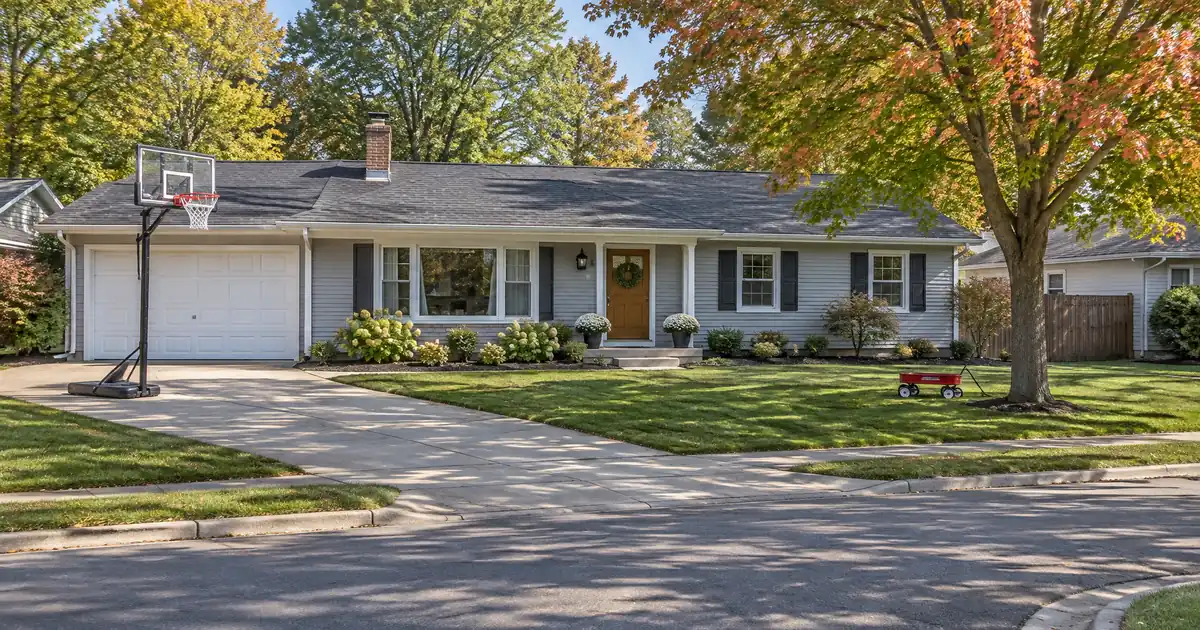
The Quick Read: An FHA cash-out refinance can fund a renovation even when your debts are heavy, because FHA lets documented strengths stretch the debt limits. The program caps borrowing at 80% of your home’s value. Whether you get approved depends less on one published ratio and more on your credit score, your reserves, and the lender’s own rules. Those rules differ from one lender to the next, so the right fit depends on your situation.
What Should You Know Before You Read On?
- FHA cash-out refinances cap the loan-to-value ratio well below the home’s full value, on a home you have owned and lived in for 12 months.
- The base debt ratios are 31/43. Documented compensating factors can stretch them as far as 40/50.
- The renovation money is yours to spend. Nothing forces it into a contractor’s hands.
- A larger loan means a larger payment, and that pushes your debt-to-income ratio up.
- Each lender layers extra conditions over FHA’s, so one may decline a file that another accepts.
- A broker that shops several wholesale lenders can match your file to the program that fits.
How Does an FHA Cash-Out Refinance Work for a Renovation?
You replace your current mortgage with a new, larger FHA loan. The new loan pays off the old one, and you receive the difference as cash at closing. You can spend that cash on a kitchen, a roof, or a new bathroom.
FHA cash-out estimate
Seeded with an example value, a balance to match, and a round cash request; change any field.
Editable benchmark: 7.18% as of November 5, 2026 · Freddie Mac 30-year average via FRED®. A conventional market reference, not an FHA cash-out refinance quote.
Illustrative starting assumptions: a $350,000 home value, a $193,000 current balance, the FHA cap on a principal residence with the upfront premium financed, a thirty-year term at the current Freddie Mac benchmark, and property taxes and insurance estimated at typical national rates. Every field is editable.
An illustration, not a Loan Estimate, an approval, a quote, or a commitment to lend. The rate shown is the weekly Freddie Mac thirty-year conventional benchmark, used as a market reference; an FHA cash-out is priced by the lender at lock, and this is not an FHA cash-out refinance quote. HUD’s cap limits the base loan; the upfront premium is financed on top of the capped base loan; the monthly premium for the first year follows the snapshot’s schedule. Cash available means the base loan the cap permits less the balances retired, before closing costs, which this calculator leaves out. The line figure applies the line program’s combined loan-to-value ceiling to the same value and balance. Taxes and insurance are estimates you can edit. Licensed in sixteen states for consumer mortgages.
Here is the short form. The new loan can reach 80% of your home’s appraised value. You must have owned and lived in the home for 12 months before the case number is assigned. The home must be your principal residence. A rental or second home does not qualify. Occupancy decides the leverage.
FHA also charges mortgage insurance. There is an upfront premium of 1.75% of the base loan, which is usually financed into the balance. There is also an annual premium between 0.15% and 0.75% of the balance, depending on term, loan amount, and LTV. The length of time the annual premium stays on the loan depends on the term and the LTV at origination. County loan limits also apply.
Here is the catch for renovators. The renovation budget sits on top of what you already owe. Every dollar you pull out adds to the payment. A bigger payment raises your debt-to-income ratio. That is the heart of this topic.
Key Terms Defined
Debt-to-income ratio (DTI): your monthly debt payments divided by your gross monthly income. Lenders look at two versions: housing alone, and all debts together.
Front-end and back-end ratio: the front-end ratio counts only your housing payment. The back-end ratio adds car loans, credit cards, student loans, and other recurring debts. FHA writes them as a pair, like 31/43.
Compensating factor: a documented strength, such as savings or a small payment increase, that supports approval at a higher ratio.
Loan-to-value (LTV): the new loan divided by your home’s appraised value. FHA cash-out stops at 80%.
Automated underwriting: software that scores your file and returns an Accept or a Refer. A Refer sends the file to a person for manual review.
Overlay: a rule a lender adds on top of the program’s minimum. Overlays are why lenders disagree.
How Do Higher-DTI Files Actually Get Approved?
Files get approved through the automated finding first, and through documented strengths second. FHA does not run on a single wall at 43%. The base ratio pair is 31/43 with no compensating factors. With documented compensating factors, a file can reach 40/50 at the top tier.
That top tier needs a decision credit score of 580 or higher. The wholesale programs Lendmire works with start at 580. HUD has a lower tier for lower scores, but the network does not reach below 580. Terms vary by lender guidelines, property type, leverage, credit profile, and full file review.
HUD frames the ratios as a starting benchmark that documented strengths can move. HUD Handbook 4000.1 is the source for FHA single-family policy. Lenders must follow it, and they may add to it.
An underwriter reads a high-DTI file in a set order:
1. Decision credit score. This sets which ratio ladder applies.
2. Total-debt ratio. The underwriter counts every recurring debt, including the new, larger housing payment.
3. Compensating factors. Verified cash reserves, a small increase over your current housing payment, and income that is real but not counted all help.
4. The automated finding. An Accept moves forward. A Refer triggers a manual review against the ratio ladder.
What does a before-and-after look like?
Picture a borrower whose total-debt ratio sits right at 43% today. They take cash out for a renovation. The new loan is larger, and the premium is financed in. The housing payment climbs, and the ratio climbs with it, past the 31/43 base pair.
Now add a twist. The borrower uses part of the proceeds to pay off credit cards and an auto loan at closing. Those monthly payments leave the ratio. Depending on the size of those debts compared with the added housing payment, the ratio can end up higher, flat, or lower. The lender needs the payoffs written into the closing paperwork for that to count.
The CFPB’s report on cash-out refinance borrowers found that many borrowers use proceeds to pay down other debt. It also found that credit scores improved at first, then gradually worsened as card balances drifted back up. The lesson: paying off cards helps the ratio only if the cards stay paid off.
Program Rules vs. Lender Overlays: Why Answers Differ
This is the section most borrowers need and few see. FHA sets a floor of rules. Each lender then decides whether to lend at that floor or to add stricter conditions. Exact terms depend on lender and investor guidelines, credit profile, reserves, and property review.
| Layer | Who sets it | What it means for you |
|---|---|---|
| Program rules | HUD | Leverage cap, occupancy, premium structure |
| Automated finding | Scoring software | Accept or Refer on your file |
| Lender overlay | Each lender | Higher score floors, tighter ratios |
| Property review | Appraiser and lender | Value and condition limit your cash |
Some lenders set a score floor above the program’s minimum. Others cap the back-end ratio below what manual review allows. A borrower can meet HUD’s rule and still be declined by a lender with a stricter overlay. That is not a contradiction. It is two different sets of rules.
The common misconceptions follow from this. “FHA has one hard 43% cap” is wrong, because 43% is the starting benchmark and the ladder goes higher with documented factors. “FHA cash-out goes to the old, higher cap” is wrong too. HUD’s Handbook transmittal confirms that cash-out LTV was updated to 80%.
How Do You Find the Right Lender for This Loan?
You find it by matching your file to the lenders that write this kind of loan. Which lenders fit depends on your credit profile, your ratios, your reserves, and your renovation plan. The best program for your situation is the one whose rules fit your file, not the one with the loudest advertising.
A mortgage broker shops several wholesale lenders on your behalf. Lendmire is a broker. It does not lend. It places your file with lenders whose overlays suit your scenario. That matters most when your DTI is high, because overlays differ most at the edges.
Ask any lender or broker these questions:
- What is your minimum decision score for FHA cash-out, and is it above HUD’s?
- Do you cap the back-end ratio below what manual review allows?
- Which compensating factors do you accept, and how do you document them?
- Do you require a set number of months of reserves?
- Will you count debts paid off at closing in my ratio?
- How do you treat recent late payments on a mortgage?
Watch for red flags. Be wary of anyone who promises approval before reviewing your file. Be wary of a “no closing costs” pitch, since those costs get built into the balance or the pricing. Be wary of pressure to borrow the maximum. You will receive a Loan Estimate and, later, a Closing Disclosure. Compare the full terms line by line before you commit.
Cash-Out Refinance or a Renovation Loan?
A plain cash-out gives you unrestricted money. HUD’s 203(k) program restricts the money to repairs but can fit larger or structural projects. Many high-DTI borrowers should compare both.
| Factor | FHA cash-out | 203(k) rehab loan |
|---|---|---|
| Use of funds | Unrestricted | Repairs only, held in escrow |
| Value basis | Current appraised value | After-improved value |
| Payout | All at closing | Released in draws |
| Paperwork | Lighter | Heavier, may need a consultant |
| Best fit | Smaller or flexible projects | Large or structural work |
HUD’s 203(k) program page explains that one loan can cover the refinance plus the rehabilitation. Part pays off your mortgage. The rest sits in escrow and is released as work is completed. The Standard version covers major rehab, and an HUD-approved consultant is required.
A few edge cases matter here:
- Condos: 203(k) improvements stay inside the unit.
- Do-it-yourself work: many lenders do not allow 203(k) funds for it. Confirm with your lender.
- Small cosmetic jobs: HUD points to its Title I Property Improvement program for work that needs no refinance.
- Paid-off homes: taking equity out of a home with no mortgage still counts as a cash-out.
- FHA Streamline: this refinances an existing FHA loan, with no appraisal and a limited credit review, and it is not a cash-out. It cannot fund a renovation.
The 203(k) route does not erase the DTI question. The larger loan still has to fit the ratios. Its advantage is the after-improved value, which can raise the equity available.
What Are the Eligibility Essentials?
Keep this list short. It decides whether the loan is even possible.
- Occupancy: the home is your principal residence, one to four units.
- Seasoning: you have owned and lived in it for 12 months before the case number.
- Equity: the new loan stops at 80% LTV. The CFPB’s home equity guide notes that lenders want you to keep a cushion of equity after a cash-out.
- Credit: a decision score of 580 or higher on the programs Lendmire places with. Some lenders set a higher floor.
- Payment history: recent late mortgage payments can stop a file. HUD’s waiting periods after a Chapter 7 discharge (two years) or a foreclosure (three years) are HUD rules, not promises from any lender.
- Loan size: county loan limits apply. Exact terms depend on the lender’s guidelines, property type, leverage, and a full review of the borrower’s file.
That same CFPB guide warns that a cash-out can raise your payment and lengthen your payoff timeline. Weigh that before you take more cash than the project needs.
What If Your DTI Is Too High?
Before you give up, try these moves. Each one changes the math.
Take less cash. A smaller loan means a smaller payment. Trim the renovation scope or phase it.
Pay down debts first. Clearing a card or car loan removes a payment from the ratio. Paying it off at closing from the proceeds works too.
Build reserves. Verified savings are one of the strongest compensating factors.
Add income. Documented income that was not counted before can lower the ratio.
Ask about a co-borrower. A non-occupant co-borrower is allowed on FHA purchases. Rules for a refinance vary by lender, so ask.
Compare other refinance types. If the real goal is a lower ratio, Lendmire’s piece How Lenders Underwrite a Cash-Out Refinance to Lower Your Debt-to-Income Ratio covers the debt-payoff approach.
What Is the Step-by-Step Process?
1. Set the renovation budget. Get a contractor’s written bid. Add room for overruns, because projects often cost more than the first bid.
2. Check your numbers. List every recurring debt and your gross monthly income. Estimate your ratio with the new payment.
3. Pick the structure. Decide between a plain cash-out and a 203(k).
4. Talk to a broker. Share your score, your ratios, and your reserves. The broker matches the scenario to lenders whose overlays fit.
5. Apply and document. Expect to provide pay records, bank statements, and a list of debts to pay off at closing.
6. Appraisal. The appraiser sets the value that caps your loan at 80%. For a 203(k), the lender works from after-improved value.
7. Underwriting. The automated system returns a finding. A Refer goes to manual review, where compensating factors matter.
8. Review your disclosures. Compare the Loan Estimate and the Closing Disclosure line by line.
9. Closing and funding. On a plain cash-out, funds arrive at closing. On a 203(k), the rehab money is released in draws after inspections.
Manage the cash with care. Pay contractors in stages tied to finished work, and keep a reserve for surprises. Cash that sits in your account is easy to spend on other things.
Every program parameter here is subject to lender guidelines and a full file review. Nothing here is a commitment to lend.
Frequently Asked Questions
Can I use FHA cash-out funds for any renovation?
Yes, with a plain cash-out refinance the proceeds are unrestricted. The lender does not control how you spend them. A 203(k) is different, because it escrows the rehab money and releases it against inspections.
Does paying off debt at closing lower my DTI?
Usually, yes, when the payoff is written into the closing paperwork. The paid-off payments leave your ratio, which can offset the larger housing payment. The benefit fades if balances climb back up afterward.
Why did one lender decline me when another approved?
Each lender adds its own overlays on top of FHA’s minimums. These can include a higher score floor or a tighter back-end ratio. A broker that shops multiple wholesale lenders can look for the one whose rules match your file.
How much cash can I take out?
The new loan can reach 80% LTV, and it first pays off your current mortgage. The leftover is your cash. County loan limits apply, and the appraisal sets the value. Premium costs financed into the loan reduce what is left. Final terms depend on lender guidelines, property type, leverage, and the borrower’s complete credit picture.
Is the 43% back-end ratio a hard limit?
No. It is the base ratio with no compensating factors. Documented factors can stretch the pair as far as 40/50 at the top tier, and the automated finding governs most files.
Ready to Compare Your Options?
If you are weighing a cash-out refinance against keeping the loan you have, Lendmire can help you compare the programs and the equity each one reaches. A short conversation about your score, your ratios, and your renovation plan shows which lenders are worth approaching.
For your own numbers, request a scenario review with Lendmire.
About Lendmire
Lendmire is a mortgage brokerage (NMLS# 2371349) licensed for consumer mortgage lending in 16 states, arranging FHA, VA, conventional and jumbo purchase and refinance loans through a wholesale lending network. Eligibility is determined by the lender on each file. Scotsman Guide named Lendmire a Top Mortgage Workplace in both 2025 and 2026.
Get Started
Ready to find the right loan for you?
See your offer in seconds. No credit pull, no obligation.
Informational only. Not a Loan Estimate, approval, or commitment to lend. Program availability and eligibility are subject to lender guidelines, credit approval, property review, and underwriting.
References
1. HUD Handbook 4000.1 Overview
2. CFPB: CFPB Report Finds Cash Out Mortgage Refinance Borrowers Improve Credit Scores
3. HUD Handbook 4000.1 transmittal
4. HUD Section 203(k) program overview
This article is part of Lendmire’s FHA cash-out refinance program — full qualification details, guidelines, and scenarios live on the program page.
Related reading: How Much Cash Comes Out of an FHA Cash-Out Refinance When Child Support Counts as Income? · FHA Cash-Out Refinance Requirements With a 580 Credit Score · How Lenders Underwrite an FHA Cash-Out Refinance to Consolidate Debt
Brandon Miller
Founder & CEO, Mortgage Loan Originator, Lendmire LLC
- Mortgage Loan Originator · NMLS# 1129696 · Verify on NMLS Consumer Access
- North Carolina Real Estate Broker · License# 343312 · Verify on NCREC
- North Carolina Insurance Producer · License# 19053198 · Property, Casualty, Life, Health · Verify on NAIC SBS
- Lendmire LLC · Firm NMLS# 2371349 · Verify firm licensure
Compliance and disclosures. Lendmire (NMLS# 2371349) is a licensed mortgage broker and is not a direct lender, depository institution, financial advisor, or tax professional. Content in this article is general market analysis and educational information — not financial, legal, or tax advice for any specific situation. Lendmire does not guarantee loan approval; every transaction is subject to underwriting by the funding lender. Mortgage pricing and loan program guidelines are subject to change at any time without notice and vary by borrower characteristics, property type, and state regulations. Lendmire complies with Equal Housing Opportunity. Licensure verification: NMLS Consumer Access.