
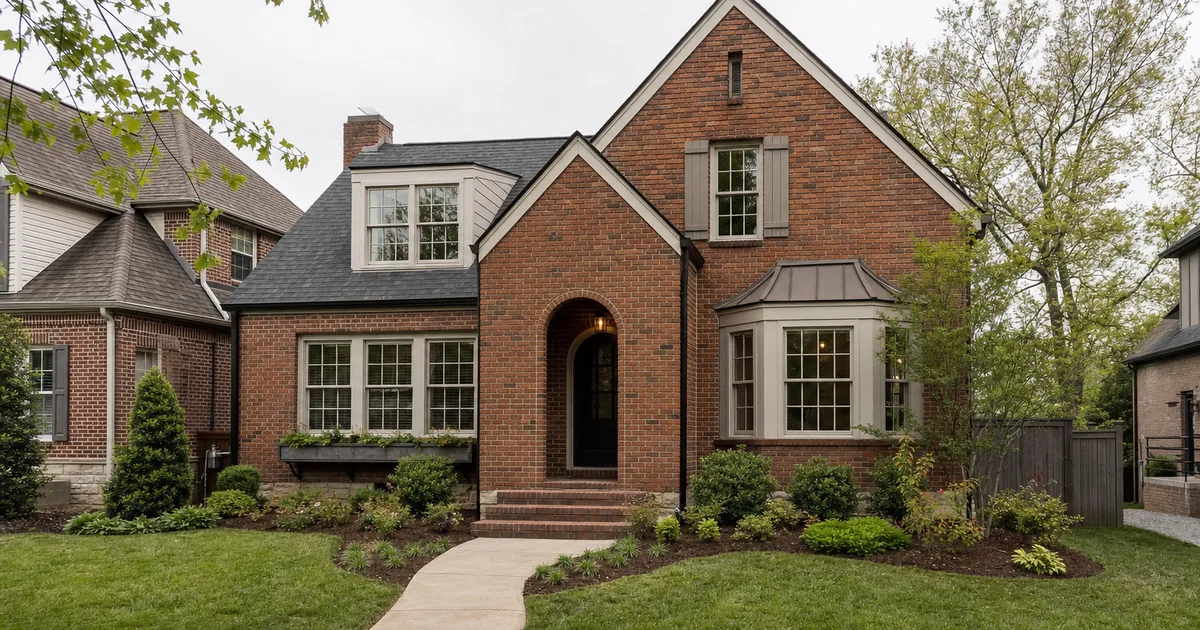
Current down payment assistance guidelines, updated from one source.
One source feeds every down payment assistance page Lendmire publishes; the Tennessee figures below refresh when the program sheets are updated.
Of the purchase price
Assistance is sized as a share of the price, never a fixed sum: the biggest option covers the down payment and reaches closing costs, the smaller ones cover the 3.5% FHA minimum down payment.
Covers the whole FHA down payment
This covers the entire 3.5% FHA minimum down payment and is forgiven at closing: no lien on the home, no monthly payment, no interest. It opens on the area income limit or on a qualifying category.
On the forgivable and repayable options
The forgivable and repayable options have no income limit at all — one of the biggest advantages of this program. Only the nothing-to-repay option asks for income at or below 140% of the area median, or a qualifying category.
Credit score to start
This is the lowest score that opens an option here — the nothing-to-repay option; the forgivable second liens start a little higher and the repayable options higher still, so a stronger score opens more choices.
| Option | Assistance | What you repay | Credit · mortgage · units |
|---|---|---|---|
| Grant-style assistance — nothing to repay | 2% or 3.5% of the price | Nothing — released at closing | 620+ · FHA 203(b), FHA repair escrow, FHA Limited 203(k), FHA Standard 203(k) · 1–4 units |
| Forgivable second lien — three-year | 3.5% of the price | Nothing after 36 on-time mortgage payments | 640+ · FHA 203(b), FHA Limited 203(k), HUD-184, USDA · 1–2 units |
| Forgivable second lien — five-year | 3.5% of the price | Nothing after 60 on-time mortgage payments | 640+ · FHA 203(b), FHA Limited 203(k), HUD-184, USDA · 1–2 units |
| Repayable second lien — thirty-year amortization, ten-year balloon | 3.5% or 5% of the price | Second lien, 30-year amortization, balloon in year 10 | 660+ · FHA 203(b), FHA Limited 203(k), HUD-184, USDA · 1–2 units |
| Closing-cost repayable second lien | 3.5% or 5% of the price | Second lien, 30-year amortization, balloon in year 10 | 660+ · FHA 203(b) · 1–2 units |
| Refinance-cost second lien (repayable) | 1% to 3.5% of the balance | Second lien, repaid | 660+ · FHA 203(b) · 1–4 units |
Current down payment assistance snapshot · updated September 7, 2026 · six options offered in Tennessee · no option requires a first-time buyer · no option combines with another assistance program · owner-occupied primary residences only.
Program figures are hydrated from one guideline source and change when it changes. The nothing-to-repay option is not offered in every state; the forgivable and repayable options are second liens; no option combines with another assistance program; all are for owner-occupied primary residences. The rate in the calculator is an editable market benchmark, not a quote, and the payment shown is an illustrative estimate; no fee or lender identity appears on this page. Lendmire is the broker, not the lender, and is not affiliated with FHA, USDA, HUD, or the federal government.
What down payment assistance is — and how the options differ.
First-time home buyer programs are not one program; they are a family of down payment assistance options paired with a government-backed first lien, and the right one for a Tennessee buyer depends on credit, the first lien, the property, and whether the help needs to reach closing costs.
For the program overview, see Lendmire’s down payment assistance program; for the first lien, the FHA loan program.
Assistance covers the FHA down payment
Every option is sized on the price, not on a fixed sum: the smaller options cover the minimum investment, the larger repayable option covers it and reaches closing costs and prepaid items too.
Four shapes: grant, forgivable, repayable, refinance
Nothing to repay, forgiven over time, or repaid with a balloon: the three purchase shapes in Tennessee cover the same minimum investment and differ in what the buyer owes afterward.
Credit floors, mortgage programs, and unit counts
Two-borrower files can qualify on a blended score on the second-lien options when the higher earner has the higher score and an automated approval is in hand; every borrower still needs a score of their own.
Eligibility without a first-time-buyer rule
In Tennessee, the question is not whether this is a first home; it is which option fits the credit, the first lien, and the property — and, for the nothing-to-repay option, which qualifying category applies.
The assistance is measured on the price, so the calculator starts there. It then applies the option you choose, your own cash, and an editable benchmark rate to show the loan, the mortgage insurance, and the payment.
Where Tennessee’s first-time and moderate-income buyers shop — and how the assistance fits.
Tennessee’s renter share, median home value, and median household income frame the gap the assistance closes; the figures here are statewide context, not underwriting inputs.
Statewide figures provide general market context, not an appraisal or an income calculation. In most markets, the renter households are the pool the program exists for: qualified for a payment close to their rent, short the cash to close; the assistance is the bridge from one to the other.
Data sources: U.S. Census Bureau — ACS 5-Year (2024) housing and population estimates, including tenure, home values, gross rents, and household income.
Where Tennessee’s renters live — market by market.
From Nashville to Memphis, these are the Tennessee markets with the most renter households, and each has its own down payment assistance page.
Nashville
Nashville holds one of the largest pools of renter households among Lendmire’s Tennessee markets — roughly 149,179, about 48% of households — a metropolitan market where the down payment is the hurdle for a large share of would-be buyers. Census context: median value near $413,600, median household income near $77,371, population near 690K.
Memphis
Roughly 139,512 Memphis households rent, about 55% of the total, which makes it a metropolitan market where down payment assistance closes a great many first purchases. Census context: median value near $169,000, median household income near $51,736, population near 619K.
Knoxville
Knoxville holds one of the largest pools of renter households among Lendmire’s Tennessee markets — roughly 46,023, about 53% of households — a metropolitan market where the down payment is the hurdle for a large share of would-be buyers. Census context: median value near $239,700, median household income near $54,039, population near 195K.
Chattanooga
Chattanooga holds one of the largest pools of renter households among Lendmire’s Tennessee markets — roughly 37,647, about 48% of households — a metropolitan market where the down payment is the hurdle for a large share of would-be buyers. Census context: median value near $283,200, median household income near $64,523, population near 186K.
Clarksville
Roughly 30,149 Clarksville households rent, about 44% of the total, which makes it a metropolitan market where down payment assistance closes a great many first purchases. Census context: median value near $263,600, median household income near $69,303, population near 176K.
Murfreesboro
Roughly 28,900 Murfreesboro households rent, about 48% of the total, which makes it a metropolitan market where down payment assistance closes a great many first purchases. Census context: median value near $402,100, median household income near $80,108, population near 161K.
Market rankings describe where renters live, not the strength of any file; every Tennessee purchase is underwritten on its own first lien, its own credit, and its own option.
Four ways Tennessee buyers put down payment assistance to work.
How Tennessee buyers put the program to work depends on the first lien, the property, and what the help needs to cover; these four paths cover most files.
Cover closing costs too on the larger option
A Tennessee buyer who needs more than the minimum investment uses the repayable option that covers down payment, closing costs, and prepaid items, including costs paid outside closing.
Cover the costs of an FHA refinance
The refinance-cost option in Tennessee is for an existing FHA loan, not a streamline, and not a loan that already carries assistance; it is sized on the lesser of balance or value.
Buy a home that needs work with a renovation mortgage
A Tennessee buyer taking on a fixer pairs a limited or standard renovation first lien with the assistance; the help is figured on the purchase price, and the loan covers price plus repairs.
Buy a first home with the down payment covered
For a first purchase in Tennessee, the assistance closes the down payment gap; the option is chosen by credit, first lien, and eligibility category.
Size the assistance on a Tennessee price before requesting a quote.
The calculator does what a loan officer’s first pass does for a Tennessee file — sizes the minimum investment, applies the option, builds the FHA loan with mortgage insurance, and estimates the payment — using the current program figures and an editable benchmark rate.
Tennessee FHA payment with assistance
Starting assumptions reflect Tennessee’s home values; change any field and the loan, the mortgage insurance, and the payment are recalculated.
Editable benchmark: 6.71% as of September 3, 2026 · Freddie Mac 30-year average via FRED®. A conventional market reference, not an FHA loan quote.
Illustrative starting assumptions: a $285,000 price near Tennessee’s median owner-occupied home value, the strongest assistance option offered in Tennessee applied against the FHA minimum investment, a thirty-year term at the current Freddie Mac benchmark, property taxes and insurance estimated for Tennessee (U.S. Census Bureau). Every field is editable.
Illustrative estimate only — not a Loan Estimate, approval, quote, or commitment to lend. The rate field carries the weekly Freddie Mac thirty-year conventional benchmark, a market reference and not an FHA loan quote; your rate is set by the lender at lock. FHA mortgage insurance follows HUD’s published schedule for the term, leverage and loan size entered; taxes, insurance and dues are editable estimates; closing costs are not included; a repayable second lien adds its own payment, which is not shown here. Consumer mortgage lending licensed in sixteen states. Lendmire is not affiliated with or acting on behalf of FHA, USDA, HUD, or the federal government.
Same buyer, four very different closings.
A Tennessee buyer can reach the closing table several ways; the difference is where the minimum investment comes from and what it costs to carry afterward.
Assistance on a government loan, saving the minimum, or a gift.
Assistance paired with the first lien at closing: the minimum investment covered, the shape chosen by credit, first lien, and eligibility category, and the second-lien options open to repeat buyers with no income limit.
The buyer brings the minimum investment from savings, a retirement withdrawal, or seasoned funds; no second lien, no eligibility category, no homebuyer education requirement, and no assistance to carry. For the first lien itself, see Lendmire’s FHA loan program.
On a USDA or HUD-184 first lien, the assistance shifts to the second-lien options and to the closing costs; the nothing-to-repay option pairs only with FHA. For the USDA first lien, see the USDA loan program.
Assistance fits the buyer short of cash to close; the plain purchase fits the buyer with savings; the USDA and HUD-184 pairing fits eligible properties and borrowers; a documented gift fits when family can help — Lendmire places the Tennessee file where it reads best.
What to prepare for a Tennessee scenario review.
The documents a lender reads first on an assistance file.
This is a general preparation guide, not a universal checklist. The selected lender may request additional information based on the mortgage, the assistance option, the property, and the eligibility category. Nothing here is legal or tax advice.
Local details that can change the loan.
A down payment assistance file in Tennessee is won or lost on details a plain purchase never meets: the eligibility category, the forgiveness clock, the balloon on the repayable option, the county loan limit, the property type.
Use these checks to keep the Tennessee file clean and fundable.
Three checks keep a Tennessee assistance file on track: know which option the credit tier opens, know which first lien the property can carry, and know the category that opens the nothing-to-repay option.
- Know the option: choose by cost to carry first, amount second.
- Confirm the category: complete the homebuyer education course where required.
- Match the first lien: expect the repayable options only on a high-balance first lien.
The option decides what you owe afterward
The same minimum investment can be covered three ways in Tennessee, and the difference is entirely in what happens after closing: nothing, nothing if the first lien stays current, or a second loan that comes due; the options table shows what is offered.
The eligibility category for the nothing-to-repay option
The category is checked at application on the nothing-to-repay option, together with the signed assistance application and the education certificate; no option requires a first-time buyer, and the second-lien options carry no income limit.
The mortgage and the county loan limit
In Tennessee, the first-lien program is chosen with the property: USDA where the address is eligible, HUD-184 where the buyer qualifies, FHA everywhere. The county loan limit then decides whether a larger first lien can still carry an assistance option.
Escrow holdbacks for minor repairs
On the second-lien options, minor, non-structural repairs can be escrowed at closing: the repairs must not affect health, safety, or livability, and the work is completed and inspected within a set period after closing.
The forgiveness clock on the forgivable options
For a Tennessee buyer, the forgivable options cost nothing to carry as long as the first lien stays current through the period; they are not resubordinated, not assumed, and no additional lien can be added behind them.
From a Tennessee pre-approval to keys with the assistance in place.
Four steps take a Tennessee assistance file from a first read to funding; the first one is the one most buyers skip.
Pick the option
The first step is the option: which ones the credit opens, which the first lien allows, and which costs the least to carry for a Tennessee buyer — settled before anything is ordered.
Get the mortgage approved
The first lien’s approval carries the file; the assistance is arranged alongside it, with the eligibility category and the education certificate in hand where they apply.
Clear the property
Property review runs in parallel with the first lien; the Tennessee home is checked against the option’s rules and the first lien’s, from the unit count to the association package.
Close both loans together
Final underwriting reads the whole Tennessee file against the first lien’s rules and the option’s; the loan funds with the assistance in place and the second lien, where there is one, recorded behind it.
A brokerage that pairs the assistance to the loan.
Lendmire built its consumer practice around the buyers these programs exist for, which is why the options, the categories, and the property rules are familiar ground rather than surprises.
The option, matched to the buyer
The nothing-to-repay option where it fits, the forgivable options where it does not, the repayable option where closing costs are the hurdle — chosen for the Tennessee buyer, not by default.
The mortgage, matched to the property
USDA where the address is eligible, HUD-184 where the buyer qualifies, FHA everywhere; the Tennessee first lien is the foundation the assistance stands on.
The right wholesale program
A Tennessee file is matched to the wholesale program whose option fits the buyer, and Lendmire manages the first lien and the assistance together through closing.
Trusted by first-time buyers & families alike.


Tennessee down payment assistance FAQs
The questions a Tennessee buyer asks before requesting an assistance review, answered plainly.
Do I have to be a first-time homebuyer?
No. None of the options requires a first-time buyer. Being a first-time buyer is one of four categories that opens the nothing-to-repay option; the second-lien options have no first-time-buyer rule and no income limit at all.
Is there an income limit?
The second-lien options have none; the nothing-to-repay option has an area income limit that a qualifying occupation, a first purchase, or an underserved tract can substitute for.
What first-time home buyer programs are available in Tennessee?
Assistance measured as a percentage of the price, in shapes that differ by what you owe afterward: nothing, nothing if the first lien stays current, or a second loan with a balloon. Credit, the first lien, the property, and the eligibility category decide which fits.
Do I have to pay the assistance back?
A nothing-to-repay option is released at closing with no lien and no payment. The forgivable second liens also cost nothing — no interest, no payment — as long as the first lien stays current through the forgiveness period, and they pair with USDA and HUD-184 first liens as well as FHA.
What credit score do I need?
Each option has its own floor, starting in the low six hundreds on the nothing-to-repay option and stepping up on the forgivable and repayable second liens; every borrower needs a score, and two-borrower files may qualify on a blended score on the second-lien options. The snapshot shows the floors in force.
Can the assistance cover closing costs too?
Closing-cost coverage lives on the repayable second lien; on a USDA first lien, which needs no down payment, the second-lien options cover closing costs and prepaids instead.
What is the repayable option and when does it make sense?
It is a loan — the only purchase option with a payment — in exchange for covering the most. A Tennessee buyer chooses it for the closing-cost coverage or the high-balance pairing.
Which mortgages can the assistance be used with?
The nothing-to-repay option pairs only with FHA; the second-lien options pair with FHA, USDA, and HUD-184. The property and the buyer decide which first lien fits.
Can I use the assistance on a second home or a rental?
No. Every option is for an owner-occupied primary residence; on the forgivable and repayable options the home must stay the primary residence for the term of the second lien.
What property types are eligible?
Most primary-residence property types, with the condominium’s approval, the manufactured home’s width and title, and the unit count deciding which option attaches.
Start a Tennessee assistance review today.
Share the property, the price, and a little about your situation; a Lendmire loan officer names the option that fits and follows up.
This guide covers Tennessee — for the program overview and the options, see Lendmire’s down payment assistance program.
Related programs: FHA Loans · USDA Loans · FHA 203(k) Rehab Loans