
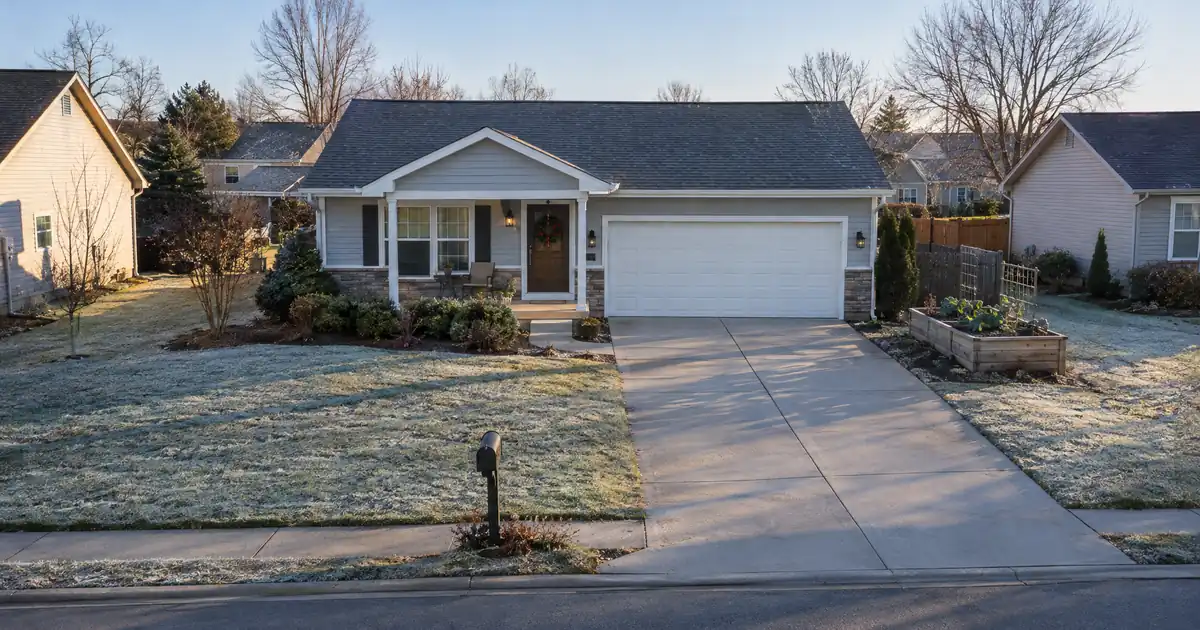
The Quick Read: Yes, in two ways, and which one applies depends on the repair. Repairs the VA appraiser requires for safety, structure, or sanitation must be finished and cleared before the loan can be guaranteed. Repairs and upgrades you simply want can sometimes be built into a special VA alteration-and-repair loan, though few lenders offer it. Active-duty status and first-time use do not change either rule.
Two Kinds of “Repairs,” Two Different Answers
Required repairs and wanted repairs are different problems. They follow different rules.
VA payment estimate
Starting assumptions reflect an example price with no down payment and a first-use funding fee. Replace them with your own figures.
Editable benchmark: 7.32% as of October 22, 2026 · Freddie Mac 30-year average via FRED®. A conventional market reference, not a VA loan quote.
Illustrative starting assumptions: a $350,000 price, no down payment with full entitlement, a first-use funding fee financed into the loan, a thirty-year term at the current Freddie Mac benchmark, and property taxes and insurance estimated at typical national rates. Every field is editable.
Illustrative estimate only — not a Loan Estimate, approval, quote, or commitment to lend. The rate field carries the weekly Freddie Mac thirty-year conventional benchmark, a market reference and not a VA loan quote; your rate is set by the lender at lock. The funding fee follows VA’s published table for the use and down payment entered; the residual-income figure is VA’s guideline for the region and family size, and the rough residual shown subtracts only the housing payment and the debts entered, while VA also deducts taxes, maintenance and utilities. Taxes, insurance and dues are editable estimates; closing costs are not included. Licensed in sixteen states for consumer mortgages. Lendmire is not affiliated with or acting on behalf of the Department of Veterans Affairs.
Required repairs come from the VA appraisal. On a purchase, the appraiser reports the home’s value. The appraiser also checks whether the home meets VA’s minimum property requirements. That means the home must be safe, structurally sound, and sanitary. If something fails, the appraisal is written “subject to” the repair. The work has to be done, and confirmed, before the VA will guarantee the loan.
Wanted repairs are the ones you decide on: a tired roof that still passes, an older HVAC system, or flooring you hate. The VA does not require these. They are your call, and you pay for them one way or another.
Here is the good news for a first-time buyer. Most cosmetic issues do not fail a VA appraisal. A dated kitchen and worn carpet are not safety problems. The trouble starts when the home has a real hazard or a defect that threatens the structure.
Does Active-Duty Status Change the Repair Rules?
No. The property rules are the same for a service member, a veteran, and a surviving spouse. The home gets measured, not the borrower.
Your status matters for eligibility. VA’s eligibility page says a service member generally meets the minimum service requirement after 90 continuous days of active duty. The same page says you also need to meet credit, income, and occupancy requirements from both VA and the lender. You prove your status through a certificate of eligibility, usually called a COE.
“First-time” matters for two things: your entitlement and the funding fee tier. It has no bearing on whether a failing roof must be fixed.
Here is what active duty does change: logistics. Orders, report dates, and a move across the country make repair delays more stressful. We come back to that below.
What Actually Triggers a Required Repair?
The appraiser looks for conditions that make the home unsafe, unsanitary, or structurally unsound. Think of it as a “three S” test: safe, structurally sound, sanitary. Common trouble spots include a failing roof, active leaks, exposed wiring, broken heating, damaged foundations, and peeling paint on older homes. Pest damage can come up too.
Two things surprise first-time buyers.
First, the VA appraisal is not a home inspection. It is a value report with a safety screen attached. The appraiser is not crawling your attic or testing every outlet. A separate home inspection is optional, but it is wise. It shows you what the appraiser will not.
Second, the appraiser is told to leave out minor items. VA’s Lenders Handbook, Chapter 12 says appraisers should not recommend repairs for cosmetic items, minor deferred maintenance, or normal wear and tear. They still weigh those items when rating the home’s condition. The same chapter says the appraisal is written “subject to” the repairs needed to meet the requirements, and it counts the value of those repairs once they are done.
| Item | Usually a required repair? |
|---|---|
| Active roof leak | Yes, a safety and soundness issue |
| Exposed or unsafe wiring | Yes |
| Broken primary heating | Yes, a livability issue |
| Worn carpet, dated kitchen | No, cosmetic |
| Scuffed paint, minor wear | No, normal wear |
The appraiser’s judgment decides the gray areas, so a home’s actual findings can differ from this table.
Who Pays for Required Repairs?
Nobody is automatically assigned the bill. That is the part many buyers get wrong.
The VA does not say the seller must pay. Who pays is a negotiation among you, the seller, and the lender, and it lives in your purchase contract. What the VA does require is that the work gets finished and cleared before guaranty. Ignoring a flagged repair is not an option.
Plenty of people assume the VA forces the seller to fix everything. It does not. A seller who is unwilling can still say no. Then you have choices, which the next section lays out.
One more fact matters for your budget. The VA limits which fees a veteran can be charged at closing. 38 CFR 36.4313 lists the charges a borrower may pay, including VA appraiser and compliance inspector fees. It also caps the lender’s origination charge as a flat percentage of the loan. That section governs fees. It does not decide who pays for the repair work itself.
Seller concessions are limited too. VA caps how much a seller can contribute, so ask your loan officer how much of a repair credit can fit under the rules before you write the request.
Your Options When the Appraisal Flags a Repair
Think of this as a decision, not a crisis. Each option fits a different situation.
| Option | How it works | Confirm with your lender |
|---|---|---|
| Seller completes the work | Seller fixes it before closing | Who hires the contractor |
| Buyer pays for the repair | You fund the work yourself | Whether the lender permits it |
| Seller credit | Seller contributes toward costs | VA concession limits |
| Price reduction | Seller lowers the price | Value still supports the loan |
| Escrow holdback | Funds held until work is done | Whether the lender offers it |
| Repair-inclusive loan | Repairs financed in the loan | Whether the lender offers it |
| Walk away | Use your contract contingency | Deadlines and earnest money |
Across the wholesale programs Lendmire places VA files with, lender policy decides how much of this menu you actually get. The VA permits some paths that individual lenders do not offer. For example, one lender may let you pay a contractor directly, while another refuses. Ask your loan officer which options exist on your specific file before you make a repair demand.
A related tool is a reconsideration of value. If you think the appraiser missed something, your loan officer can ask the lender to request one. It is not a fix for a real defect, but it helps when the appraisal contains an error.
Step by Step: From the Appraisal to Clearance
The order of operations matters more than anything else. This is how a typical repair condition unfolds.
1. Get your certificate of eligibility. Your loan officer can pull it, and a service member supplies proof of duty status.
2. Sign the contract with your protections in place. Include your inspection and financing contingencies, and keep the deadlines in view.
3. The appraisal comes back. If it is written “subject to” repairs, read the exact list and the appraiser’s description of each item.
4. Call your loan officer first. Do this before you talk to the seller. The officer can tell you what the lender allows, what the VA requires, and what can be negotiated.
5. Negotiate in writing. Your agent should amend the contract so it says who does the work, who pays, and by when.
6. Get the work done properly. For a problem like a settlement issue, VA text calls for repair by a licensed contractor. Keep invoices and photos.
7. Reinspection. Once the work is complete, the appraiser or an inspector confirms it before guaranty. Industry practice calls this a compliance inspection.
8. Clearance, then closing. The loan cannot be guaranteed until the repair is cleared.
Keep a document trail. You want to show who did the work, what they did, and what it cost. The lender will ask.
An overrun is possible. If the repair turns out larger than first thought, or fails reinspection, the loan does not move forward. Then you are back to the options table: renegotiate, pay the gap, or use your contingency to exit.
What Changes for an Active-Duty First-Time Buyer?
Four things: time, distance, authority, and occupancy.
Time. Orders create hard dates. A report date, a lease end, or a housing allowance change can sit right on top of a repair clearance. Required repairs keep the loan from being guaranteed until the work is cleared, so a repair that drags can threaten both your contract and your move.
Distance. You may be at another duty station, at sea, or deployed when the appraisal lands. Who can hire the contractor, receive photos, and sign for you? Ask your loan officer early about a power of attorney and what your lender accepts. Your agent and spouse can usually coordinate on-site, within what your contract and lender allow.
Authority. Be careful here. A power of attorney for a VA purchase has to meet lender and title requirements, and requirements differ. Sort it out before the appraisal, not after.
Occupancy. A VA loan is for a primary residence. You are expected to occupy the home. Orders can complicate that, but exceptions need to be confirmed with the lender, so do not assume one applies.
Picture a service member who gets a repair condition on a roof not long before a report date. The seller is willing to fix it but slow to hire anyone. The buyer cannot be on-site. The practical play is to move on three tracks at once. The agent gets the seller’s contractor scheduled. The loan officer confirms what documentation the lender will accept at reinspection. The buyer checks whether the contract contingencies protect earnest money if the work slips. If the roof is bigger than expected, the buyer then weighs a price cut, a credit, or leaving the deal.
Your liquidity is the quiet factor. A VA purchase can run with no down payment and no mortgage insurance, so many buyers arrive at closing with little cash set aside. That is a strength, but it leaves less cushion for a surprise repair. Plan a reserve of your own before you shop. Your funding fee, which is waived for exempt veterans such as those receiving service-connected disability compensation, can usually be financed into the loan.
Can You Finance Repairs Into the Loan?
Sometimes. Whether you can depends on the lender.
VA has a program for alteration and repair. VA Circular 26-18-6 describes it. The idea: VA may guarantee a loan that lets improvements be included in the value and completed after closing. The money goes to the contractor in draws during the repair period, and the lender needs your written approval before each one. It covers purchases and regular cash-out refinances.
The circular was written to help with aging homes, which are often listed as “cash or conventional financing” only. That wording keeps veterans from using the benefit. So the myth that a VA loan cannot touch a fixer-upper is not quite right. The tool exists. Finding a lender willing to use it is the harder part.
A few honest cautions apply.
Availability is thin. Few lenders offer this product. Ask directly whether yours does.
Status needs checking. Change 1 to that circular extended its rescission date, and the date it names has long passed. VA’s circulars page lists current ones, so confirm with your loan officer that this guidance is still in force and still offered before you plan around it.
Value has to support it. The loan is valued as improved. The amount must still be supported by value, and the lender may charge a supervision fee for administering the draws. VA caps that fee.
Credit and income still count. Folding repairs into the balance raises your monthly obligation. It cuts the cash you need up front. You still have to qualify. On the VA side, residual income is the controlling test, which means the lender checks what is left after your obligations and living costs. The 41% debt-to-income figure is a guideline, not a hard cap. The wholesale programs Lendmire works with generally start at a 580 decision score, subject to lender guidelines and full file review.
This is the key distinction. Required repairs are about passing the home. A repair-inclusive loan is about improving it. Do not mix them up.
When to Walk Away
Walking is a legitimate choice. It is not a failure.
Consider it when a defect looks structural or large, when the seller refuses any workable path, when repairs would exceed what the home’s value supports, or when the repair schedule would break your orders. Your contract contingencies are what make leaving cheap, so read them before you waive anything. Never skip your own inspection to look more attractive to a seller. The VA appraisal will not tell you what a good inspection will.
Do not let a home talk you into stretching past your budget. Another home will come along.
Key Terms Defined
Minimum property requirements: VA’s standards that a home must be safe, structurally sound, and sanitary before the VA will guarantee a loan on it.
“Subject to” appraisal: An appraisal that sets the home’s value on the condition that specific repairs are completed first.
Certificate of eligibility (COE): The VA document that confirms you qualify for the benefit.
Compliance inspection: A follow-up visit that confirms required repairs were finished before the loan is guaranteed.
Residual income: The money left each month after major obligations and living costs, which VA treats as the controlling underwriting test.
Alteration-and-repair loan: A VA-guaranteed loan that lets repairs be paid through draws to a contractor and valued as improved, where a lender offers it.
Frequently Asked Questions
Does the seller have to fix what the VA appraiser flags?
No. VA rules do not make the seller pay. The repair still has to be completed and cleared before the loan is guaranteed, so who handles it is a contract negotiation. A seller who refuses leaves you to pay, ask for a credit or price cut, use a lender-approved route, or exit under your contingency.
Can I fix it myself?
It depends on the lender and the repair. Some lenders permit buyer-paid repairs, and some do not. Safety and structural work often needs a licensed contractor and documentation. Ask your loan officer before you buy materials, because unapproved work can fail the reinspection.
Can I close first and fix it later?
Not for required repairs. They have to be cleared before guaranty. The only post-closing path is a repair-inclusive loan, where improvements are completed after closing with draws paid to the contractor. Few lenders offer it, so confirm availability first.
Does the VA require a home inspection?
No. The VA appraisal is not a home inspection, and VA does not require one. An inspection is optional but wise, especially for a first-time buyer. It can reveal problems before the appraiser flags them, and it gives you leverage while your contingency is still open.
Do I need more service time because I’m active duty?
No. VA’s minimum is 90 continuous days of active duty for a service member, without a break. You still must meet credit, income, and occupancy requirements, and your COE confirms eligibility. Final approval depends on your file, not service alone.
The Bottom Line
You can get repairs fixed on a VA purchase. Required repairs must be cleared first, and wanted ones may be financed if your lender offers the special loan. If you are buying a home and want to see whether a VA loan fits your file, Lendmire can help you compare the options and what each one asks of the file. Start with the VA loan programs page, then ask what your lender allows before you write an offer. Every parameter here is subject to lender guidelines and full file review, and none of it is a commitment to lend.
For your own numbers, request a scenario review with Lendmire.
About Lendmire
Lendmire is a mortgage brokerage (NMLS# 2371349) licensed for consumer mortgage lending in 16 states, arranging FHA, VA, conventional and jumbo purchase and refinance loans through a wholesale lending network. Eligibility is determined by the lender on each file. Scotsman Guide named Lendmire a Top Mortgage Workplace in both 2025 and 2026.
Get Started
Ready to find the right loan for you?
In about 30 seconds you can review financing options available for your home or investment property. No commitment required.
Informational only. Not a Loan Estimate, approval, or commitment to lend. Program availability and eligibility are subject to lender guidelines, credit approval, property review, and underwriting.
References
1. VA Eligibility for Home Loan Programs
2. VA Lenders Handbook, Chapter 12: Minimum Property Requirements
4. VA Circular 26-18-6, Loans for Alteration and Repair
5. VA Circular 26-18-6 Change 1
This article is part of Lendmire’s VA loan program — full qualification details, guidelines, and scenarios live on the program page.
Related reading: VA Cash-Out vs Second Lien for a First-Time Borrower Needing a Large Draw · Can a Non-Spouse Co-Borrow on a VA Loan With Zero Down? · Should a Veteran Refinance a Conventional Loan Into a VA Cash-Out?
Brandon Miller
Founder & CEO, Mortgage Loan Originator, Lendmire LLC
- Mortgage Loan Originator · NMLS# 1129696 · Verify on NMLS Consumer Access
- North Carolina Real Estate Broker · License# 343312 · Verify on NCREC
- North Carolina Insurance Producer · License# 19053198 · Property, Casualty, Life, Health · Verify on NAIC SBS
- Lendmire LLC · Firm NMLS# 2371349 · Verify firm licensure
Disclosure information. Lendmire is a state-licensed mortgage brokerage under NMLS# 2371349. Lendmire is not a depository institution, direct lender, or financial advisor — all loans referenced are placed through wholesale lender partners and are subject to each lender's underwriting standards. This article is provided for general informational purposes and is not a commitment to lend, nor does it constitute financial, legal, or tax advice. Loan programs, terms, rates, and qualification standards change without notice and depend on borrower profile, property type, and the state in which the subject property is located. Equal Housing Opportunity provider. NMLS Consumer Access: nmlsconsumeraccess.org.