
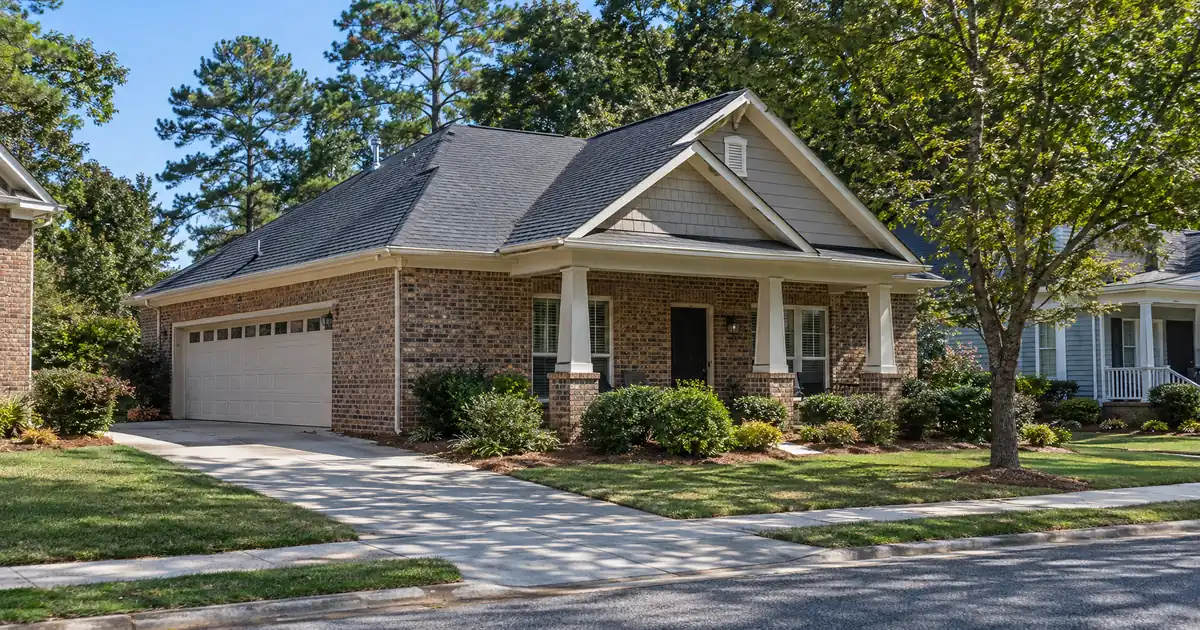
The Quick Read: Yes, an Alabama snowbird can buy a winter home on savings alone in two ways: pay all cash, or use an asset-based mortgage where the lender counts eligible savings and investments toward the whole loan instead of testing paycheck income, subject to underwriting, credit, the property, and the program’s seasoning rules.
- All cash skips the lender entirely, but you still need to prove the funds and keep enough liquid after closing.
- The asset qualifier path counts eligible assets against the entire loan, with no traditional personal-income documentation, pay stubs or employment verification.
- The asset depletion path turns your usable assets into a monthly qualifying income by dividing them by 60 months.
- Savings used only as a down payment on a conventional second-home loan usually falls short, because that loan tests income and debts.
- If you need the home’s rent to make the numbers work, it is an investment property, and a different loan applies.
What Does “Savings Alone” Actually Mean?
It means one of three different things, and each leads to a different loan. Knowing which one you mean saves you a wasted week of phone calls.
The first meaning is paying the full price in cash. The second is using savings as the down payment and financing the rest the usual way. The third is letting the lender count your savings as the reason you qualify.
Only the first and third are truly “savings alone.” The second still leans on income. A retiree with a large portfolio and a modest pension can look weak on paper in that second case, even though the balances are strong.
Alabama also adds a wrinkle. An “Alabama snowbird” might be an Alabama resident heading south for winter, or a northern visitor wintering in Alabama. The financing mechanics are the same for both. The state of the borrower and the state of the property decide whether a program is available, which a later section covers.
Path 1: Paying All Cash
Paying cash is common in vacation markets. NAR’s Economists’ Outlook reports that across a recent 10-month stretch of its REALTORS® Confidence Index, 57% of vacation home buyers and 56% of investment buyers paid all cash. Those are national figures for a broad category. They are not snowbird-specific and not Alabama-specific.
Cash has real advantages. No lender reviews the file, and sellers like a clean offer. Cash is not universal, though. NAR’s 2025 Profile takeaways put the all-cash share of primary-residence buyers at 26%, and that figure covers primary-residence buyers only.
The catch is liquidity. Once the cash leaves your account, it is not available for a roof repair, a medical bill or a market dip. Many retirees find that a $0 loan balance feels good until the account that funds their monthly life is much smaller.
Sellers and title companies commonly ask for proof of funds, meaning recent bank or brokerage statements showing the money exists. Have those statements ready before you make an offer.
Path 2: Savings That Qualify the Loan
An asset-based mortgage lets documented assets, not a paycheck, carry the file. Across the wholesale network Lendmire works with, this is the lane built for people whose balances are large and whose documented income is small: retirees, business sellers, inheritance recipients and early-retired professionals. Lendmire is the broker here. It arranges these loans through select lenders, and every file is fully underwritten.
There are two paths. A borrower is reviewed under one path at a time, and the figures below never mix. Lendmire’s asset-based mortgage programs place files on either one, subject to lender guidelines.
The asset qualifier path
On this path, your eligible assets, after the credit percentages below, must equal or exceed the entire loan amount. No employment or income is documented. Leverage runs up to 80% on a purchase and up to 75% on a refinance, for a principal residence or second home. Loans go up to $4,000,000, with a 600 minimum credit score.
| Asset type | Share that counts |
|---|---|
| Brokerage accounts | 100% |
| Certificates of deposit | 100% |
| Money market accounts | 100% |
| Savings accounts | 100% |
| 401(k) or IRA, under age 59½ | 90% |
| 401(k) or IRA, age 59½ or older | 100% |
Accounts combine. Each qualifying account needs 60 days of seasoning and two months of statements. No reserves are required at or below 75% loan-to-value, and above that the lender sets them.
The asset depletion path
This path turns assets into income. The lender takes your usable assets, divides by 60 months, and treats the result as monthly qualifying income. That income must carry the full housing payment and your other debts through a debt-to-income test.
| Asset type | Share that counts |
|---|---|
| Cash accounts | 100% |
| Certificates of deposit | 100% |
| Securities | 80% |
| Private stock | 75% |
| Retirement accounts (any age) | 70% |
| Real-estate equity | 60% |
On a second home, leverage goes up to 80% on a purchase or rate-and-term refinance, and 60% on a cash-out refinance. Loans run from $125,000 to $3,500,000. Credit follows the lender’s matrix. You need qualified assets of at least the lesser of $1,000,000 or 1.25 times the loan balance, and never less than $250,000 liquid when depletion is your only income source. Statements must be at least 120 days old at application, plus one statement within 45 days. Asset income can also supplement documented income up to a 45% debt-to-income ratio, and in that case the minimum-assets rule is waived.
Some assets do not count on either path. Custodial accounts, deferred compensation, escrow accounts, foreign funds, cash on hand, stock options and non-vested restricted stock units are not eligible on the depletion path. Cryptocurrency, precious metals and collectibles are not published as eligible on either path. The documented route is converting them to a seasoned cash balance in a regulated account, with the source reviewed by the lender.
“No tax returns, pay stubs or employment verification” does not mean no paperwork. Statements document every dollar that counts.
Why Savings as a Down Payment Usually Isn’t Enough
A conventional second-home loan is a full-documentation loan. The lender tests your income and debts, and the new payment counts toward your debt-to-income ratio. Large balances help with the down payment and reserves, but they do not replace income in that test.
The Fannie Mae Selling Guide is a useful contrast here, and it is not a rule for asset-based files. Under Fannie Mae’s occupancy rules, a second home must be occupied by the borrower for part of the year. It also cannot be subject to agreements that give a management firm control over occupancy. Rental income from the property can exist, but it cannot be used to qualify.
So a retiree can often still finance part of a purchase, but only if documented income and debts pass the test. When they don’t, the asset-based paths above are the usual alternative.
Second Home or Investment Property?
The classification comes first, and it must be honest. A winter home you live in is a second home. A home you buy mainly for rent is an investment property.
| Factor | Second home | Investment property |
|---|---|---|
| Who uses it | You, part of the year | Tenants |
| Rent can qualify you | Generally no | Yes, on rental loans |
| Typical loan type | Consumer mortgage or cash | Business-purpose loan |
| Asset-based path fit | Both paths | Depletion path only |
If you need the home’s rent to qualify, mortgage-media explainers like HSH say you cannot get a second-home mortgage and must apply for an investment property mortgage. Business-purpose rental loans, including DSCR loans (which test whether the property’s rent covers its own payment), are built for that case. They are not a shortcut for a getaway home. Calling a personal winter home an investment to reach a rental loan is a misrepresentation.
Mixed use needs a deliberate choice. Renting the home out now and then can leave it a second home, but that rent cannot help you qualify. Heavy short-term renting pushes it toward the investment lane. Short-term rental rules can vary by city, county, HOA, and property type, so investors should confirm local rules before relying on projected rental income.
On the asset depletion path, an investment property carries lower leverage: up to 65% on a purchase or rate-and-term refinance and 60% on a cash-out refinance, subject to underwriting.
A Worked Example
These are shapes, not offers. The lender’s own calculation governs.
Qualifier path. Say the loan amount is $800,000. You hold $330,000 in brokerage accounts (100% counts, so $330,000), $300,000 in a 401(k) while under 59½ (90% counts, so $270,000), and $200,000 in savings (100% counts, so $200,000). That adds up to $800,000 of usable assets. The assets cover the entire loan, so the file can qualify on assets alone, subject to underwriting.
Depletion path. Picture $1,500,000 in securities (80% counts, so $1,200,000) plus $300,000 in cash (100% counts). That is $1,500,000 of usable assets. Divided by 60 months, it produces $25,000 of monthly qualifying income. That income then has to carry the housing payment and other debts through the debt-to-income test.
Notice how the same balances read differently on each path. Retirement money counts for more on the qualifier path, and securities and equity are haircut more on the depletion path. Which one fits depends on what you hold, how big the loan is, and your age.
The trade-off against cash is straightforward. Financing with assets keeps more of your portfolio working and liquid. Paying cash removes the loan entirely. Many retirees land in between, using a loan for part of the purchase.
Which Kind of Alabama Snowbird Are You?
If you live in Alabama and winter elsewhere, you are a home-state borrower. Alabama is one of 16 states where Lendmire’s consumer mortgage lending is licensed: Alabama, California, Colorado, Florida, Georgia, Indiana, Michigan, Montana, New Mexico, North Carolina, Ohio, Pennsylvania, Tennessee, Texas, Virginia and Washington.
That list matters for the winter home itself. Florida, Georgia and Texas are on it. A winter home in a state outside those 16, Arizona for example, is not something this program covers. If you are a visitor wintering in Alabama, the property is in a covered state, but your own state of residence also has to line up.
Program figures do not change by state. State-level facts such as local prices, insurance and condo rules are context for your budget, not program parameters.
A condo in a resort market adds HOA dues and rules to your carrying costs. Ask for the condo documents before you commit, because they affect both your budget and whether a lender can finance that building.
Cash, Asset-Based Loan, Income-Based Loan or Rent?
| Option | Liquidity after | Complexity | Best for |
|---|---|---|---|
| All cash | Lowest | Low | Large, spare balances |
| Asset-based loan | Higher | Moderate | Big assets, small income |
| Income-based loan | Higher | Higher | Steady documented income |
| Rent winters | Highest | Lowest | Testing a location |
The honest advice for many buyers is to rent a winter or two first. That tests the location, the neighbors and the HOA before you commit capital. If the answer is still yes, one of the three buying options will fit.
Costs After You Buy
Cash leaving your account is only the first number. Insurers typically charge higher premiums for second homes, Kiplinger notes, and taxes, upkeep, utilities and HOA dues keep running while you are away.
The stronger play for many retirees is keeping a real cushion after closing, even if that means financing part of the price. Draining the portfolio for a home you use a few months a year is a risk worth sizing. Funding the purchase from retirement withdrawals or by selling investments has consequences of its own. Tax treatment varies; consult a qualified professional before choosing how to raise the cash.
Key Terms Defined
Asset qualifier path: a way to qualify where eligible assets, after credit percentages, equal or exceed the whole loan, and no income is documented.
Asset depletion path: a way to qualify where usable assets divided by 60 months become a monthly qualifying income.
Seasoning: the time money must sit in your accounts before a lender will count it.
Proof of funds: recent statements showing you have the money for a purchase.
Second home: a home you occupy for part of the year that is not your main residence.
Investment property: a home bought mainly to rent to others.
Loan-to-value (LTV): the loan amount as a share of the home’s value.
Before You Talk to a Lender
Gather this first:
- Two months of statements for every account you plan to use, and the most recent one within 45 days.
- A list of which accounts are brokerage, cash, retirement or other.
- Your intended use of the home, stated honestly.
- A rough view of how much liquid cash you want left after closing.
- Condo or HOA documents, if the property has them.
Frequently Asked Questions
Can I buy a winter home with no income at all?
Not with no income and no assets. An asset-based mortgage does not document employment or income on the qualifier path, but your statements document every dollar that counts. The file is fully underwritten, and approval depends on credit, assets and the property.
Do I need to show proof of funds if I pay cash?
Sellers and title companies commonly ask for it. Recent bank or brokerage statements are the usual form. Having them ready makes your offer easier to take seriously.
Can I use my IRA or 401(k)?
Yes, within limits. On the qualifier path, retirement balances count at 90% under age 59½ and 100% at 59½ or older. On the depletion path they count at 70% at any age. Eligibility is subject to underwriting.
Can I rent the home out and use that rent to qualify?
Generally no on a second-home loan. If you need the rent to make the numbers work, the home is an investment property and needs a business-purpose rental loan instead.
Does it matter that I’m an Alabama resident buying a winter home in another state?
Program figures do not change by state. What changes is eligibility by location, since the program covers 16 states, plus state-level context such as insurance and local prices. Confirm that both your home state and the winter home’s state are covered before you start.
Next Step
If you are qualifying on assets rather than income and want to see how the numbers work, Lendmire can help you compare asset-based mortgage options based on your statements, the property, credit profile, leverage, and your goals.
Lendmire’s asset-based mortgage in Alabama page presents the program for Alabama borrowers.
About Lendmire
Lendmire is a mortgage brokerage (NMLS# 2371349) licensed for consumer mortgage lending in 16 states, arranging bank statement and other alternative-documentation mortgages — P&L-only, 1099-only and asset-based paths — through a wholesale lending network. Eligibility is determined by the lender on each file. Scotsman Guide named Lendmire a Top Mortgage Workplace in both 2025 and 2026.
Investors who want the broader program framework can review how DSCR loans work.
Get Started
Ready to find the right loan for you?
In about 30 seconds you can review financing options available for your home or investment property. No commitment required.
Informational only. Not a Loan Estimate, approval, or commitment to lend. Program availability and eligibility are subject to lender guidelines, credit approval, property review, and underwriting.
References
1. NAR Economists’ Outlook – The Cash Buyer
2. NAR – Top 10 Takeaways from the Profile of Home Buyers and Sellers
3. Fannie Mae Selling Guide – Occupancy Types
5. Kiplinger – Great Places for Snowbirds to Land
This article is part of Lendmire’s asset-based mortgage program — full qualification details, guidelines, and scenarios live on the program page.
Related reading: Can an Indiana Snowbird Buy a Winter Home on Savings Alone? · How Ohio Retirees Buy a Home on Savings Without a Paycheck · How Georgia Business Owners Buy a Home on Savings Instead of Tax Returns
Guides: Asset-Based Mortgage in Alabama
Brandon Miller
Founder & CEO, Mortgage Loan Originator, Lendmire LLC
- Mortgage Loan Originator · NMLS# 1129696 · Verify on NMLS Consumer Access
- North Carolina Real Estate Broker · License# 343312 · Verify on NCREC
- North Carolina Insurance Producer · License# 19053198 · Property, Casualty, Life, Health · Verify on NAIC SBS
- Lendmire LLC · Firm NMLS# 2371349 · Verify firm licensure
Important disclosures. Lendmire (NMLS# 2371349) is a licensed mortgage brokerage. Lendmire is not a direct lender, depository institution, or financial advisor. All loan inquiries are subject to lender underwriting; this article does not constitute a commitment to lend. Rates, terms, and program guidelines are subject to change without notice and vary by borrower profile, property type, and state. Information in this article is general in nature and is not financial, legal, or tax advice. Equal Housing Opportunity. NMLS Consumer Access: nmlsconsumeraccess.org.