
The Quick Read: A VA cash-out on a condo has to pass two separate checks. The condo project must be VA-approved, and the unit itself must be appraised by a VA-approved appraiser. Every VA cash-out needs that full appraisal, and its value caps how much you can borrow, including any financed funding fee. Approval of the project does not replace the appraisal of your unit.
What Does a VA Cash-Out Appraisal Check on a Condo?
A VA appraisal does two jobs. It sets the home’s reasonable value, and it checks that the property meets VA’s minimum property requirements. The value sets your ceiling. The minimum requirements confirm the home is safe, sound and livable.
It is not a home inspection. An inspector looks for defects and gives you a report for your own use. An appraiser reports value and flags problems that break VA’s standards. A separate inspection is optional, and many borrowers add one anyway.
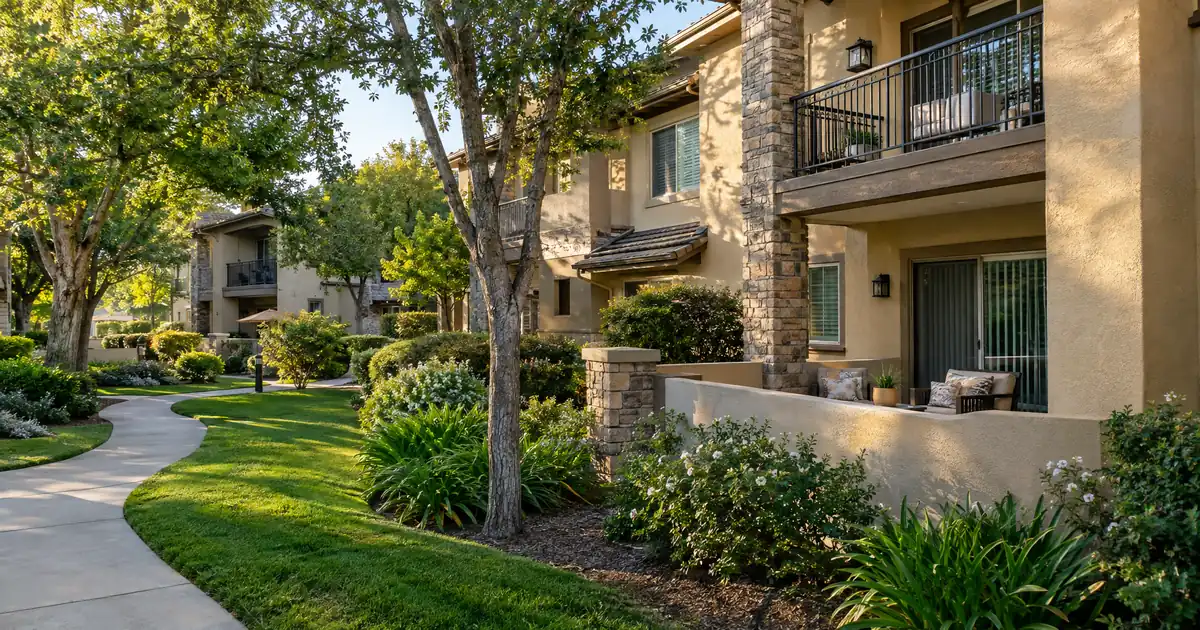
A condo adds a layer a house does not have. You own the unit, but you share the building, grounds and systems with your neighbors. The appraiser looks at your unit and also at how the project around it is run. That means comparable sales inside the project and nearby, the condition of the common areas, and what the association charges.
Here is the sequence that trips people up on refinances. The project gets reviewed first, and the unit gets appraised second. A fine unit in an unapproved project does not move forward.
Key Terms Defined
Reasonable value: The value a VA-approved appraiser assigns to the home. VA uses it to decide how much of the loan it can guarantee.
Notice of Value (NOV): The document that reports the appraiser’s reasonable value. It sets the maximum loan amount.
Minimum property requirements: VA’s standards for safety, soundness and sanitation. The appraiser checks them along with value.
Project approval: VA’s sign-off on the condo development as a whole. It is separate from the appraisal of your unit.
Net tangible benefit (NTB): A test that shows the refinance actually helps you. A cash-out has to pass it.
Residual income: What is left of your income after taxes, debts and the monthly cost of owning the home. It is the controlling test in VA underwriting.
Type I and Type II cash-out: VA’s two cash-out categories. Type I does not exceed the payoff. Type II exceeds the payoff and puts cash in your hands.
How the Project and the Unit Are Reviewed
The two layers have different owners and different documents. This table shows the split.
| Factor | Project review | Unit appraisal |
|---|---|---|
| What is reviewed | The whole condo development | Your unit and its condition |
| Who handles it | Lender, with VA | VA-approved appraiser |
| Documents | Association governing papers | Your property details |
| Failure looks like | Loan cannot proceed | Low value or required repairs |
You do not run the project process. The lender checks whether VA has already approved the development. If the project is not listed, the lender or the developer can submit it to VA for review.
That submission includes the association’s organizational documents. VA’s handbook also encourages an attorney’s opinion that the project meets VA requirements. A package like that takes the association’s cooperation, so the early question is whether the board will supply what VA needs.
This applies to refinances as well as purchases. The requirement sits on the project, not on the loan purpose. PUDs, a related type of shared community, do not need project approval. They still have to meet VA’s title and lien rules.
The Order of Operations for a Condo Cash-Out
Here is how a condo cash-out file moves, step by step. Lendmire, a mortgage broker, arranges these loans through wholesale lenders. The order below is how the sequence runs across the programs it places VA files with.
1. Project submission, if needed. If the development is not listed, the lender or sponsor sends it to VA for review. You are not the one filing.
2. The appraisal request. The lender orders the appraisal through VA’s system and marks it as a refinance. The lender also has to upload the required cash-out compliance disclosures to the appraisal record.
3. The appraiser’s visit. The appraiser sets reasonable value and checks the minimum property requirements. The result is the Notice of Value.
4. Full underwriting. A cash-out gets a full credit and income review, with residual income as the controlling test. VA treats a debt-to-income ratio above 41% as a guideline that calls for closer scrutiny, not a hard cap. Across the wholesale programs Lendmire places VA loans with, a ratio above that level needs residual income well above VA’s table.
5. The net tangible benefit test. The refinance has to show a real benefit to you.
6. The final number. Your cash is the new loan minus the payoff, other liens and costs. It cannot push the loan past the value ceiling.
Notice that nothing in step 3 happens until step 1 clears. That ordering is what saves refinance borrowers from paying for an appraisal on a project that cannot be approved.
Where the 100% Ceiling Comes From
The ceiling is in VA’s own rule. The Federal Register notice revising VA’s cash-out refinance rules allows a new loan of up to 100 percent of VA-determined reasonable value. The same rulemaking draws the Type I and Type II distinction described above.
The math is simple. VBA Circular 26-19-05 says to take the total loan amount, including any financed funding fee, and divide it by the appraiser’s reasonable value. The funding fee cannot push the loan past that value. Anything over the line gets paid in cash.
Many borrowers hear that VA cash-out “caps at 90%.” That is a misreading. Ninety percent is one of the options within the net tangible benefit test, not the maximum. VA’s rule reaches 100%, and across the wholesale programs Lendmire works with, the VA cash-out reaches 100% of the appraised value, including the financed fee. Some individual lenders set tighter limits of their own, and those are lender overlays, not VA rules.
The funding fee is part of that math. On a cash-out refinance it is 2.15% on first use and 3.3% on later use. Veterans receiving compensation for a service-connected disability, and the other exempt groups, do not pay it. You can finance the fee, but only inside the value ceiling.
How a Condo Appraisal Works Differently
A house is compared with nearby houses. A condo is compared with similar units, usually inside the same project and in comparable projects nearby. If your building has few recent sales, the appraiser has less to work with. That is a common reason a condo value comes in tighter than an owner expects.
Several project-level facts feed the appraiser’s picture of your unit:
- Association dues and budget. Dues that look low for the building can signal underfunded reserves.
- Reserves. A healthy reserve account suggests the building can pay for big repairs without surprise bills.
- Special assessments. A one-time charge to owners can weigh on what a buyer would pay for your unit.
- Deferred maintenance. Visible neglect in the common areas affects the project’s condition and marketability.
- Litigation and rental mix. A building tied up in lawsuits, or one with a high share of rentals, can look less stable.
Monthly dues also hit your own file. HOA dues count toward your monthly housing costs, so they affect residual income and debt-to-income in underwriting.
A Worked Scenario Without Dollar Figures
Picture a veteran with a unit in a mid-size building. The unit is well kept, and the owner wants to pull cash out. The association has just announced a building-wide special assessment for roof work. Two recent sales in the project came in lower than the owner expected.
The appraiser reports value from the nearby sales and notes the pending assessment. The reasonable value lands below what the owner hoped for. The loan ceiling, at 100% of that lower value, shrinks with it. If a financed funding fee would push the total over the line, the owner pays the overage in cash. The cash-out proceeds shrink twice: once from the lower value, and once from the fee inside the cap.
That is why the project check and the value expectation come before the appraisal is ordered. A refinance borrower cannot negotiate the price down with a seller, so the equity is only as large as the appraisal says.
Cash-Out Versus Streamline: The Appraisal Difference
Many veterans assume a VA loan they already hold means no appraisal on any refinance. That holds for only one kind.
| Factor | VA cash-out | IRRRL (streamline) |
|---|---|---|
| VA appraisal | Required | Not required |
| Cash to borrower | Yes | No |
| Full underwriting | Yes | No |
| Net tangible benefit | Required | Required |
VA’s Lenders Handbook says an IRRRL needs no appraisal or underwriting and pays no cash to the borrower. VA’s Buyer’s Guide states that the appraisal is mandatory on purchase and cash-out loans. So a streamlined refinance can skip the appraisal, and a cash-out cannot.
The IRRRL carries a 0.5% funding fee unless you are exempt. It also has seasoning rules: the later of 210 days from your first payment and your sixth payment. The VA cash-out carries the same seasoning and the net tangible benefit test. Those seasoning rules apply when you are refinancing an existing VA loan. A cash-out can also pay off a conventional or FHA loan and move it into VA.
The full program is covered on Lendmire’s VA cash-out refinance program page.
Where the General Rule Breaks
These are the situations where condo cash-outs stop following the standard path.
The project is not approved. The loan cannot move forward on the unit’s merits alone. Project approval can also add time to the file, and no timeline can be promised.
Single-unit approval. FHA has a path that approves one unit at a time. VA’s handbook says it approves condo projects, not individual units. Some websites claim VA offers a single-unit route, but that is not stated in VA’s handbook text. Ask your lender directly before you count on it.
A project already approved by another agency. Some lenders describe a streamlined route for projects approved by HUD or USDA. It may exist, but VA’s handbook text does not spell it out. Have the lender confirm it for your project.
Repairs and improvements. The Buyer’s Guide says a cash-out refinance can include repairs and improvements. The as-completed value can be used on a refinance, and the lender must get your written approval before each draw. If the appraiser flags a minimum-property problem, this can be the way to fold the fix into the loan.
A refinance that pays off a non-VA loan. Seasoning applies to VA-to-VA refinances. A cash-out replacing a conventional or FHA loan is treated differently on that point.
A lender’s own overlays. VA sets the rules, but the lender may add its own. Wholesale programs differ here. For a VA cash-out, VA sets no minimum credit score. The wholesale programs Lendmire places VA loans with start at a 580 decision score. Some lenders set a higher floor.
If a value comes in low, Lendmire’s guide How to Respond When a VA Cash-Out Appraisal Comes In Low lays out the options.
What to Do Before You Order the Appraisal
Appraisal fees are paid up front, so a few questions up front can save you a wasted one.
1. Confirm your certificate of eligibility. VA’s certificate of eligibility (COE) decides eligibility, and VA sets the service rules.
2. Gather the association’s documents. Ask the board or management company for the budget, reserve figures, any pending special assessments and any litigation notices. These help the appraiser and the lender.
3. Find the unit’s recent sales. Ask your loan officer which comparable sales are likely to come up. If the building has few, expect a tighter value.
4. Walk the unit against VA’s standards. Look for peeling paint, leaks, broken railings, failed heating or cooling, and anything else that could fail the minimum property requirements. Fix small items before the visit.
5. Plan your budget for the larger balance. A bigger balance, a financed fee and a changed term all change the monthly payment, and HOA dues sit on top. Ask your loan officer to walk through residual income with those dues included.
Taxes can matter too. Tax treatment can depend on your situation; borrowers should speak with a qualified tax professional before relying on any deduction or credit.
Common Misreadings
“My unit is fine, so the loan works.” VA approves the project. A well-kept unit in an unapproved building stops at the project check.
“I already have a VA loan, so no appraisal.” True only for the IRRRL. A cash-out always needs one.
“The appraisal is a home inspection.” It reviews value and minimum property requirements. A separate inspection is optional.
“VA caps cash-out at 90%.” VA’s rule allows up to 100% of reasonable value. Any lower limit comes from a lender’s overlay. Final terms depend on lender guidelines, property type, leverage, and the borrower’s complete credit picture.
“Townhomes and condos are the same.” They are not. A condo needs project approval and a PUD does not, which is why classification matters. If you are unsure which your home is, ask your lender early.
Frequently Asked Questions
Does a VA cash-out on a condo always need a new appraisal?
Yes, a VA-approved appraiser must report the value on a cash-out refinance. The appraisal sets the maximum loan, and the unit has to pass VA’s minimum property requirements. Only the IRRRL skips it.
Who handles project approval, me or the lender?
The lender, or the developer or sponsor. The borrower does not file it. You can help by asking the association for the documents the review needs.
Can I appeal a low appraisal to get a bigger loan?
A value that comes in low shrinks the 100% ceiling and with it the cash you can take. There may be room to ask for a reconsideration with better comparable sales. That depends on the lender and the file, so ask your loan officer what supporting sales would count.
Does the funding fee reduce my cash-out?
Possibly. You can finance the fee, but the total loan, fee included, cannot exceed the reasonable value. If the financed fee would push the loan over, you pay the difference in cash. Veterans exempt from the fee do not face this.
What credit score do I need for a VA condo cash-out?
VA sets no minimum credit score. Lenders set their own. The wholesale programs Lendmire places VA loans with start at a 580 decision score, and some lenders set a higher floor. Every figure here is subject to lender guidelines and full file review.
If you are weighing a cash-out refinance against keeping the loan you have, Lendmire can help you compare the programs and the equity each one reaches.
For your own numbers, request a scenario review with Lendmire.
About Lendmire
Lendmire, NMLS# 2371349, is a mortgage brokerage with consumer lending licenses in 16 states. FHA, VA, conventional and jumbo purchase and refinance loans are arranged through wholesale lending partners, and each application is reviewed individually by the lender. Scotsman Guide named Lendmire a Top Mortgage Workplace in both 2025 and 2026.
Get Started
Ready to find the right loan for you?
In about 30 seconds you can review financing options available for your home or investment property. No commitment required.
Informational only. Not a Loan Estimate, approval, or commitment to lend. Program availability and eligibility are subject to lender guidelines, credit approval, property review, and underwriting.
References
1. Federal Register: Revisions to VA Cash-Out Refinance Loans
3. VA Lenders Handbook, Chapter 3: The VA Loan and Guaranty
4. VA Home Loan Guaranty Buyer’s Guide
This article is part of Lendmire’s VA Loans series — every loan program’s qualification details, guidelines, and scenarios live on the loan options page.
Related reading: VA Cash-Out Seasoning Requirements for an Existing VA Loan · VA vs Conventional Cash-Out Requirements for a High-Equity Home · VA Cash-Out Requirements vs IRRRL on an Existing VA Loan
Brandon Miller
Founder & CEO, Mortgage Loan Originator, Lendmire LLC
- Mortgage Loan Originator · NMLS# 1129696 · Verify on NMLS Consumer Access
- North Carolina Real Estate Broker · License# 343312 · Verify on NCREC
- North Carolina Insurance Producer · License# 19053198 · Property, Casualty, Life, Health · Verify on NAIC SBS
- Lendmire LLC · Firm NMLS# 2371349 · Verify firm licensure
Legal disclosures. Lendmire (NMLS# 2371349) is a state-licensed mortgage brokerage that arranges financing through wholesale lender relationships. Lendmire is not a direct lender, depository institution, or registered financial advisor. The discussion above is general informational content about real estate financing — it is not financial, legal, or tax advice, and readers should consult licensed professionals for guidance on their individual circumstances. Loan inquiries are subject to lender underwriting; this article does not represent a commitment to lend. Loan terms, rates, and qualification standards vary by borrower, property, and state, and are subject to change at any time. Equal Housing Opportunity. NMLS Consumer Access: nmlsconsumeraccess.org.