
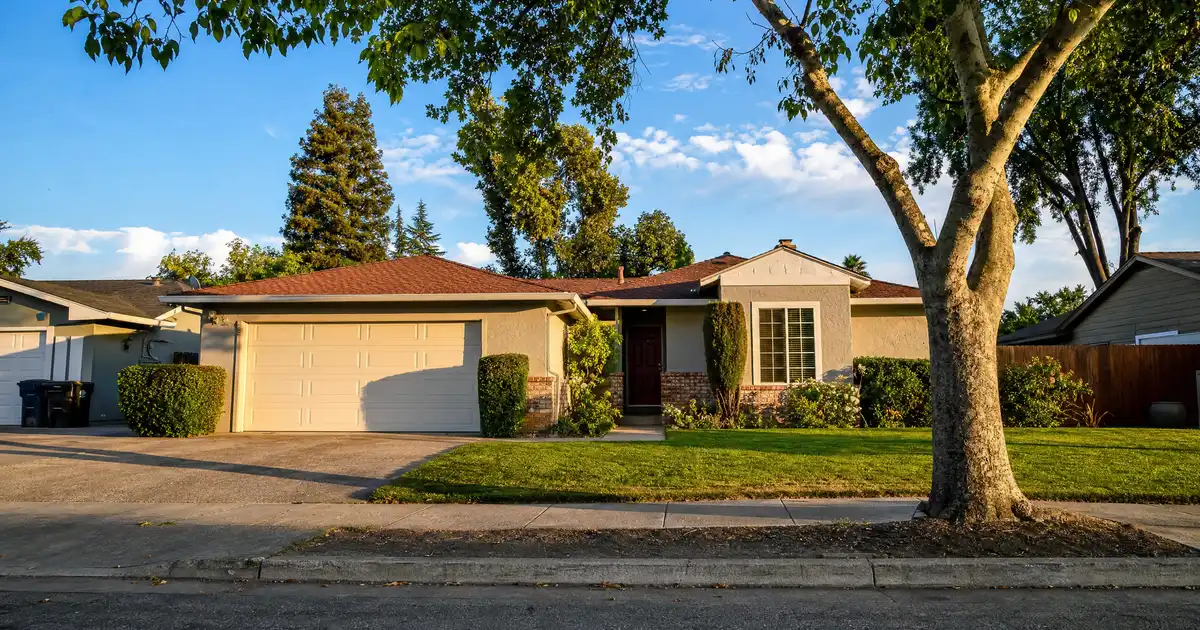
Bank statement loan guidelines, current and centrally updated.
These cards pull from one place: Lendmire’s centralized alternative-documentation standards source, which refreshes automatically as program guidance changes. What a specific file qualifies for still comes down to the borrower, the property, and the selected wholesale lender.
Max LTV on a primary
A primary-residence purchase can reach 90% loan-to-value on bank-statement documentation: 10% down at minimum, and not one tax return in the file.
Months of statements
Twelve months of personal or business bank statements replace the tax returns, W-2s, and pay stubs a conventional file would require.
Maximum loan amount
Loan sizes span $125,000 at the floor to $3.5 million at the ceiling — starter home through high-value primary residence.
Ways to document income
Choose the evidence that matches how you get paid: bank statements, 1099s, a CPA-prepared profit and loss, asset depletion, or one-year documentation.
Standard-program snapshot for owner-occupied financing · figures render from the centralized guideline source and change without notice · second homes and investment properties run to different leverage tiers.
Modesto pricing and the program line up cleanly — the median owner-occupied value of $415,600 (ACS 2019–2023) means ten percent down of roughly $41,560 at the median, with the financed amount well within the top loan-to-value tier.
What a bank statement loan is — and why the return works against you.
Good accounting is the culprit: the more thoroughly Modesto’s preparers do their work, the less a profitable business appears to earn on its return. Conventional lenders must qualify on that post-deduction figure. This program qualifies on the deposits.
Deposits replace the tax return
Qualifying income is derived from twelve months of deposits into your personal or business accounts, not from the adjusted gross income on a return. The money the business actually collected is what counts.
An expense factor stands in for write-offs
For business accounts, an expense factor reflects the cost of running your type of operation, at 50% for most businesses, 30% for small service firms, and 20% for sole owner-operators. Personal accounts need no factor; those deposits are divided by twelve.
Your CPA can beat the standard factor
A ratio built on your actual books can replace the standard tier: an independent CPA, enrolled agent, tax attorney, or licensed preparer documents it, with a floor of 10%. It is frequently the difference between qualifying tiers.
Underwriting still applies
Nothing about this is a no-documentation loan. Credit, reserves, appraisal, title, insurance, business existence, and account activity all get reviewed. The only change is which documents establish your income, not whether verification happens.
Personal accounts use total eligible deposits divided by twelve. Business accounts apply the expense factor for your industry first, or a ratio prepared by your own CPA. The calculator below runs the math for the bank statement, 1099, and asset-depletion paths; the lender determines the final figure from the actual statements.
Modesto’s independent workforce, measured.
Modesto’s workforce runs 95,651 employed civilians, and 8,790 of them — 9.2% — work for themselves: 2,693 incorporated, 6,097 unincorporated (ACS 2019–2023).
Citywide figures provide general market context, not an underwriting decision. Your qualifying income comes from your own statements, and the loan amount depends on credit, reserves, the property, and the documentation path selected.
Data source: U.S. Census Bureau ACS 5-Year (2023), class-of-worker series, Modesto city.
How Modesto borrowers prove income — without a tax return.
The bank statement loans that self-employed borrowers close in Modesto, California start with a path decision: how your business banks, how you are paid, and what your accountant can prepare. Five documentation types on the snapshot, six ways the math runs below — bank statements three ways (personal, business, and a CPA-provided ratio), 1099s, a CPA profit and loss, and asset depletion. Most files fit one of these; some combine them.
Count the split and Modesto reads unincorporated — 6,097 sole proprietors, 2,693 entity owners (ACS 2019–2023) — so the ordering starts with personal statements: deposits divided by twelve, no factor, the cleanest math available.
Personal bank statements
The math is the simplest of the six methods: total eligible deposits across twelve months of personal statements, divided by twelve, with no expense factor. It requires at least 20% ownership of the business behind the deposits, and it often fits owners who pay themselves into a personal account best.
Business bank statements
Your industry sets the expense factor applied to deposits: the standard is 50%, small service firms with no more than five employees take 30%, and sole owner-operators with no employees, cost of goods, or leased office space take 20%. Minimum ownership is 25%.
CPA-provided expense ratio
An independent CPA, enrolled agent, tax attorney, or CTEC preparer can provide an expense ratio specific to your business, floored at 10%. Certain industries — real-estate investing, construction, food service, retail — take no less than the standard factor.
1099 only
This path counts 90% of gross 1099 earnings over one or two years. The earnings must be 100% commission, from one company or several, and borrowers carrying office, equipment, or vehicle costs usually do better on bank statements.
CPA profit & loss
With a 680 minimum score, a 12- or 24-month profit and loss prepared by your accountant qualifies a primary residence on its own — no bank statements in the file. The standard path is owner-occupied, and other occupancies require an exception.
Asset depletion
Here the assets themselves qualify: spread across 60 months, with cash counted in full, securities at 80%, and retirement accounts at 70%. The path requires no employment and carries no separate reserve requirement.
One program, six doors in. Lendmire’s review runs your Modesto file against the paths across wholesale lenders to find the one that produces the strongest qualifying income.
How the program reads this market.
Three composite scenarios drawn from the business types that anchor Modesto’s self-employed economy — each mapped to the documentation path that fits it.
Independent practice, prior employment counts
A practitioner in Modesto who left a system job to open a practice pairs the new entity’s deposits with prior same-line employment to satisfy the history standard — the classic first-mortgage file for a young practice.
Path: business statements + same-line history
Equipment write-offs, healthy top line
Aggressive equipment depreciation is the right move on a Modesto fabricator’s return and the wrong one for conventional qualifying — statements put the hidden top line back in view.
Path fit: 12 months of business statements
Inventory business, readable revenue
Settlements, wholesale accounts, and the seasonal spike are all right there in the Modesto shop’s statements — the exact inventory-business shape the expense-factor structure was built to read.
The path: standard-factor business statements
The four transactions this program exists to solve.
Bank statement loans in Modesto are not a niche workaround — they are the standard path for self-employed borrowers across every common transaction type.
Buy a primary residence
An owner-occupied purchase reaches 90% loan-to-value: 10% down at minimum, no tax returns in the file. By a wide margin, this is the program’s most common use.
Rate-and-term refinance
Replace existing financing without documenting income the conventional way — useful for borrowers who bought before going self-employed, or whose last two returns no longer reflect the business.
Cash-out refinance
Convert home equity into business or personal capital. Cash in hand is unlimited at or below 70% loan-to-value, with a $1,000,000 cap above that threshold.
Second homes and investment property
Second homes and investment properties use the same documentation paths at their own leverage tiers; a self-employed borrower is not boxed into a primary residence.
Run the deposits before you run the application.
Choose your documentation path and enter the figure it uses. The calculator applies the current expense factors, the 1099 factor, and the asset-depletion divisor exactly as the program does, refreshed from Lendmire’s centralized guideline source. Every figure remains an estimate until a lender reviews the actual statements.
Modesto qualifying income calculator
The opening figures sketch an example Modesto small business; your own numbers go straight in over them.
The 50% expense factor is the business-statement default, unless your business qualifies for a lower tier or your CPA documents an industry-specific ratio.
The opening scenario shows an example Modesto small business: $708,000 in twelve-month deposits, a $59,000 monthly average, 100% ownership, standard business-statement path. All factors, reserve requirements, and leverage ceilings reflect current program guidance and update from Lendmire’s centralized guideline source on the live page.
Illustrative estimate only — not a credit decision, pre-approval, or commitment to lend. Housing-budget figures show the total monthly obligation the stated debt-to-income ratio would allow before other debts, taxes, and insurance are considered. Actual qualifying income, program eligibility, and loan amount depend on the statements themselves and full underwriting by the selected wholesale lender.
Same borrower, two very different income calculations.
How much you earn is not the difference. The difference is which number the lender is allowed to use.
Net profit or gross deposits.
Conventional underwriting must use net income after business deductions, generally averaged over two years of returns. Every depreciation schedule, vehicle expense, home-office deduction, and equipment write-off pulls the usable figure lower.
Bank statement underwriting uses deposits net of a standardized expense factor, so a profitable Modesto business whose write-offs are aggressive but legitimate frequently shows materially more qualifying income here than its return allows.
Expect alternative-documentation pricing to sit above comparable conventional financing — that is the cost of the different documentation standard. Paying it is only rational when your returns understate the business, and that is precisely the case this program was built for.
When your last two returns describe the business accurately and comfortably support the payment, conventional financing usually wins on economics. When deductions have compressed your reportable income, this program exists precisely for that gap. Lendmire arranges both.
What to prepare for a bank statement file.
Documentation specifics vary by lender and path; these six categories give a self-employed borrower in Modesto a practical starting point.
This is a general preparation guide, not a universal checklist. The selected lender may request additional information based on the business, borrower, property, and underwriting findings.
The details that move your qualifying income.
What the file supports comes down to account structure, deposit activity, business history, and the property itself. Settle each before counting on a target loan amount.
Use these checks to keep the file clean and financeable.
The exact treatment varies by wholesale lender, so the goal here is not to promise a universal outcome. It is to spotlight the main issues self-employed borrowers in Modesto should resolve first.
- Separate the accounts. When business and personal deposits share an account, the calculation gets harder and qualifying income can shrink.
- Watch the account activity. More than ten insufficient-funds items in twelve months disqualifies the file under the current program.
- Document the business. Plan on two years of business existence; anything shorter leans on prior same-line employment.
Which Accounts, Ownership, and Partners
Deposits follow ownership: 25% minimum for business accounts, 20% for personal. A shared business generally prorates qualifying income to your stake, backed by a partner letter permitting your use of the funds, and every statement set must run consecutive, complete, and dated within 45 days of application.
Large Deposits and Transfers
Expect a letter of explanation, with supporting evidence of business revenue, for any deposit exceeding half your monthly average. Rather than being counted twice, transfers between your own accounts, loan proceeds, and one-time windfalls are generally excluded from the calculation.
Business History and Ownership Changes
Business existence runs on a two-year standard: under two years works with two years of prior same-line employment, and under one year does not qualify. Ownership changes within the past twelve months generally season before the deposits can be relied upon.
Listing History and Time on Title
An active listing at application makes the property ineligible, and a listing within six months of the note date generally does as well. Cash-out refinances want at least one borrower on title for six months, a requirement waived for property received by inheritance, gift, court award, or divorce.
Prepayment Terms Under the Program
California owner-occupied and second-home consumer files carry no prepayment penalties here. Investment-property files can include a prepayment structure of one to five years — buy-out available — set by the wholesale lender and weighed alongside the program’s other levers in review.
From statements to closing table.
Most self-employed borrowers find the path shorter than expected, because the hardest part, assembling returns, schedules, and K-1s, is removed entirely.
Run the scenario
Open with the basics: property, business type, twelve-month deposit total, credit range, timeline. Prequalification is a conversation, not a document request.
Pick the path
Lendmire compares the documentation paths across multiple wholesale lenders to find which one produces the strongest qualifying income for your file.
Submit the statements
Underwriting begins when twelve consecutive months of statements, business evidence, and standard property documentation reach the selected lender.
Close
While underwriting runs, appraisal, title, and coverage requirements complete in parallel, and the file moves to a standard California closing.
Comparing bank statement lenders in Modesto.
No two bank statement lenders are interchangeable: expense factors, ownership thresholds, deposit treatment, and reserve requirements all differ between wholesale programs. Which lender a file from Modesto lands with materially changes the qualifying income it produces.
The lender you land with is the product
Path plus lender equals the number: the same borrower qualifies for materially different amounts depending on both. Getting that choice right is the work.
Self-employed specialization
The review focuses on how your business banks, what your accountant can support, and which expense factor your industry actually qualifies for.
An honest comparison
Lendmire also arranges conventional financing, so the answer you get about whether a bank statement loan is the right call is a straight one, not a pitch for the only product available.
Trusted by buyers & business owners alike.


Modesto FAQs: bank statement lending
Here are the answers to the qualification, documentation, and eligibility questions Modesto, California borrowers ask most about bank statement loans. Final program terms remain scenario-specific.
What is a bank statement loan in Modesto?
In Modesto, a bank statement loan documents your mortgage with twelve months of bank deposits — no tax returns, wage forms, or pay stubs. Lendmire’s wholesale network runs these programs on primary residences, second homes, and investment properties; the top loan-to-value tier belongs to owner-occupied purchases, with other occupancies at their own tiers.
Do I need two years of business history?
Two years of business existence is the standard. Under two years can work with two years of prior employment in the same line; under one year does not qualify. An ownership change within the past twelve months generally needs seasoning before the deposits can be relied upon.
Will overdrafts or insufficient-funds items disqualify me?
Not automatically, and the two are counted differently. An overdraft covered by linked funds, or one leaving no negative end-of-day balance, is generally not counted as an insufficient-funds item. True NSF items are capped across the twelve-month period — if your history is near that threshold, banking cleaner months before applying is often the difference.
Can I get a mortgage without tax returns if I’m self-employed in Modesto?
You can, and this is the mechanism: qualifying income is built from your deposits instead of post-deduction net income. Personal statements divide by twelve; business statements take your industry’s expense factor first.
How is my qualifying income calculated from bank statements?
For personal accounts: total eligible deposits, divided by twelve, no expense factor. For business accounts: the expense factor for your business type applies first — or a ratio your own CPA documents — and the result divides by twelve. The calculator on this page runs the bank statement, 1099, and asset-depletion paths with your figures.
I’m an independent practitioner who left a hospital system last year — do I qualify?
Going independent from a system job is the standard case of the category: prior same-line employment can fill out the two-year business requirement, and the file pairs the practice’s deposits with the employment history that came before.
My shop’s revenue is seasonal — how do lenders read the slow months?
The full twelve months average together, so peak season does the lifting for the slow months. The file succeeds on two things: a revenue pattern that explains itself, and an account that stays clean through the trough rather than collecting NSF items in the off-season.
Do these loans carry prepayment terms in California?
Investment-property files can carry them under the program’s standard structures, with a buy-out available; owner-occupied loans do not carry them at all. Have the quoted structure confirmed for your scenario before you compare offers.
How much do I need to put down in Modesto?
Ten percent down is the floor on a primary-residence purchase at the top loan-to-value tier, and Modesto’s typical prices sit comfortably within the program’s loan range. The strongest leverage requires the strongest credit; second homes and investment properties max out lower.
I’m a sole proprietor without a separate business account — can I still qualify?
Usually you can — the personal-statement path exists for it. Twelve months of personal deposits divide by twelve, with the business shown by registration or a preparer’s letter. And a dedicated account opened today strengthens the file after this one.
Your deposits tell the real story. Let’s use them.
Bring three things: your business type, your twelve-month deposit total, and the Modesto property in mind. A soft credit inquiry that doesn’t affect your score is all prequalification takes, and if conventional financing serves you better, we’ll say so.
You’re reading the Modesto guide — the statewide rules, guidelines, and scenarios live at Bank Statement Loans in California, part of Lendmire’s bank statement loan program.
Nearby markets in California: Turlock · Manteca · Tracy · Stockton · Merced · Lodi · Livermore · Brentwood
Other loan programs in Modesto: DSCR Loans in Modesto, CA · Super Jumbo DSCR Loans in Modesto, CA · Short-Term Rental Loans in Modesto, CA · Investment Property Cash-Out Refinance in Modesto, CA · Hard Money Loans in Modesto, CA · Super Jumbo Bank Statement Loans in Modesto, CA · Bank Statement HELOC in Modesto, CA · Investment Property HELOC in Modesto, CA