
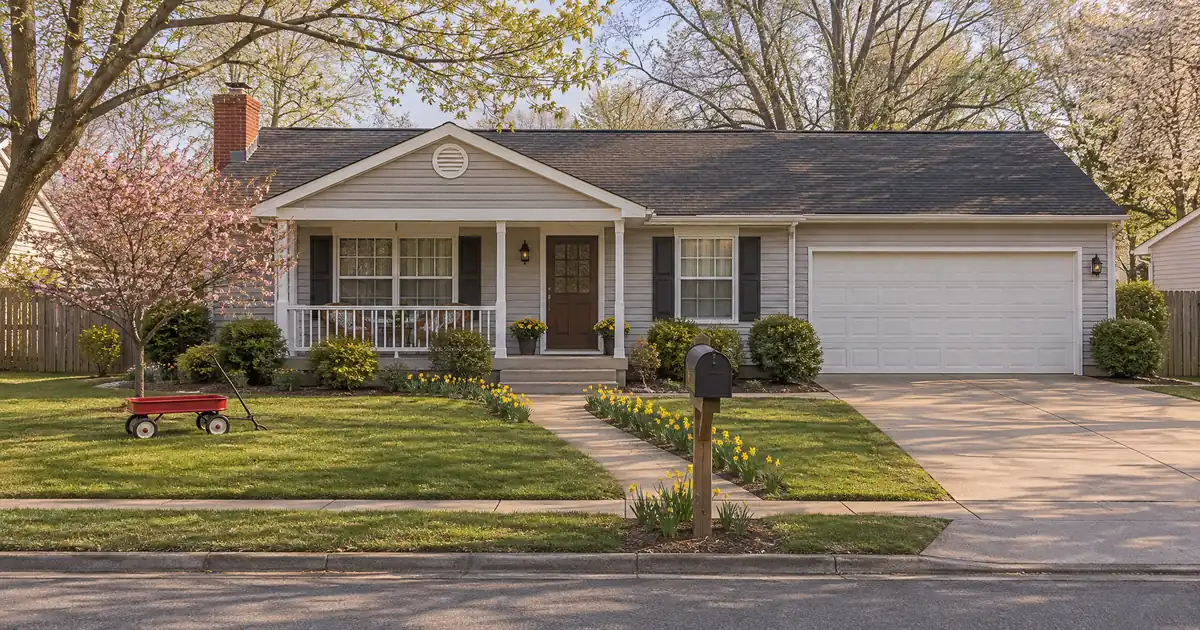
The Quick Read: Many lenders will write this loan. A new mortgage on a home you own outright counts as a cash-out refinance, and you borrow against your equity while the home becomes collateral for a brand-new first mortgage. Which lender fits depends on your credit, your income, and how much of the home’s value you want to tap. A broker that shops several wholesale lenders can match your file to the right program.
Key Takeaways
- A paid-off home is treated as a cash-out refinance, never a plain rate-and-term refinance.
- The FHA Streamline and the VA streamline refinance do not apply, because both need an existing loan from that agency.
- Conventional, FHA, and VA cash-out loans are the realistic paths. Each sets its own leverage cap.
- Time on title, credit, income, and the appraisal decide how much cash you can pull.
- You trade a payment-free home for a new monthly payment. That tradeoff is the real decision.
Key Terms Defined
Free and clear: you own the home with no mortgage or other lien against it.
LTV (loan-to-value): the loan amount divided by the home’s appraised value, shown as a percentage.
Seasoning: the waiting period a lender wants, such as how long you have held title before you borrow.
Delayed financing: a rule that lets someone who bought a home with cash borrow against it before the usual waiting period ends.
DTI (debt-to-income ratio): your monthly debts, including the new loan, divided by your monthly income.
Reserves: money you hold after closing, which a lender may require as a cushion.
Cash-out refinance estimate
The starting figures are an example value with a balance and a cash request in proportion. Replace them with yours.
Editable benchmark: 7.18% as of November 5, 2026 · Freddie Mac 30-year average via FRED®. A conventional market reference, not a cash-out refinance quote.
Illustrative starting assumptions: a $350,000 home value, a $193,000 current balance, the agency cap on a one-unit principal residence, a thirty-year term at the current Freddie Mac benchmark, and property taxes and insurance estimated at typical national rates. Every field is editable.
Illustrative estimate only — not a Loan Estimate, approval, quote, or commitment to lend. The rate field carries the weekly Freddie Mac thirty-year conventional benchmark, a market reference and not a cash-out refinance quote; a cash-out loan is priced by the lender at lock. The cash available is the loan the program cap allows less the balances paid off, before closing costs, which are not included. The HELOC line is the program’s combined loan-to-value ceiling applied to the same value and balance. Taxes and insurance are editable estimates. Licensed in sixteen states for consumer mortgages.
Who Actually Offers This Loan?
Banks, credit unions, online lenders, and brokers all offer it, and they all work from the same underlying rules. Conventional loans follow standards set by the two big mortgage agencies. FHA and VA loans follow federal agency rules. What differs from one lender to the next is the fine print: credit floors, reserve demands, and how they treat unusual files.
“Which bank is best” is the wrong question. The best program for your situation depends on your property type, credit profile, how much cash you want, and how you document income. The lenders that write your particular file are a smaller group than the whole market.
That is where a broker earns its place. Lendmire is a mortgage broker, not a lender. It arranges loans through a network of wholesale lenders, so one conversation can test your file against several programs. You can see what the options look like on Lendmire’s cash-out refinance programs page.
Three things narrow the field for a home with no mortgage. Time on title is the first, because lenders want a borrower to have held the home for a set period. Occupancy is the second, since it sets how much you can borrow. The third is the lender itself, because some have no appetite for a lien-free home on their menu.
Why It’s Still Called a Refinance
There is no loan to replace, yet the label sticks. Lenders use “refinance” for any new first mortgage placed on a home you already own. Freddie Mac’s guide says a mortgage on a property previously owned free and clear by the borrower is a cash-out refinance.
That classification matters for three reasons. Cash-out leverage caps apply. Cash-out pricing applies. And the shortcut programs are off the table.
How Is a Paid-Off Home Underwritten, Step by Step?
The lender runs a full file, and it leans on credit, income, and the appraisal. Without a mortgage history, those three carry the decision. Here is the sequence.
1. Pick the program by what you hold. You hold no agency loan, so the FHA Streamline and the VA streamline refinance are out. The loan being refinanced must already be FHA insured.
2. Check time on title. On the conventional side, Fannie Mae’s guide requires at least one borrower on title for six months before the new loan funds. Exceptions exist for inheritance, legal awards, and delayed financing.
3. Skip the 12-month test. Freddie Mac applies a 12-month gap only when paying off a first lien. You have no first lien, so the title clock is the one that counts.
4. Confirm occupancy. On a primary residence, the borrower lives in the home. Second homes and investment properties are written too, at lower leverage.
5. Underwrite credit, income, and DTI. Across the conventional programs Lendmire places, a 620 decision score is the starting point. The automated finding governs most files, and the total ratio ceiling is 50%. A manually underwritten loan instead uses a ratio limit of 36% or 45%, depending on the reserve and score factors in the lender’s eligibility matrix. When your DTI runs high, the automated system can require extra reserves.
6. Appraise the home. Conventional and FHA loans are sized to appraised value. A VA loan is sized to VA’s own valuation.
7. Clear the title. The title search confirms no old liens remain. A mortgage that was paid off but never formally released can surface here.
8. Sign and receive proceeds. You sign a new note and security instrument. Closing costs are paid in cash or financed within the loan limit, and the rest comes to you as cash.
Every figure above is subject to lender guidelines and a full file review. Nothing here is a commitment to lend.
Which Loan Types Fit a Paid-Off Home?
Conventional cash-out is the main lane, with FHA and VA as options for borrowers who fit them. Jumbo lanes pick up above the conforming limit. Here is the side-by-side.
| Program | Fits a paid-off home? | Leverage |
|---|---|---|
| Conventional cash-out | Yes, as cash-out | 80% LTV, one-unit primary |
| Conventional, other occupancy | Yes, lower cap | 75% LTV, 2-4 units, second home, investment |
| Wholesale no-MI lane | Conforming, primary only | Up to 89.99% LTV |
| FHA cash-out | Standard cash-out only | Cap set by FHA; confirm |
| VA cash-out | Eligible veterans; confirm | VA valuation sets the cap |
| Jumbo | Above conforming limit | Varies by lender |
Mortgage insurance usually enters the picture above 80% LTV. The wholesale no-MI lane is the exception. It reaches 89.99% LTV with no mortgage insurance, but only at a 680 score, a 50% ratio, a thirty-year fixed rate, a primary residence, and a conforming balance. It carries its own six months of seasoning. Those caps are Lendmire’s program parameters, subject to lender guidelines.
The FHA path is the standard cash-out loan, not the Streamline. HUD also caps cash back on a Streamline at a token amount, which is another reason it was never built for this.
VA is the murkiest. VA says the loan goes through a private bank, mortgage company, or credit union, not directly through VA. You need a Certificate of Eligibility too. VA’s wording speaks of refinancing a “current loan,” so whether a lender will write a VA cash-out on a home with no mortgage is something to confirm with the lender first. Treat it as unsettled until you hear it from them.
Where the Rule Bends
You bought the home with cash recently. Delayed financing lets you borrow before six months on title. Fannie Mae requires a settlement statement showing no financing was used to buy the home. The loan is capped at your documented investment plus closing costs and prepaid items, and cash-out pricing still applies. Many borrowers assume this gets them today’s appraised value. It does not.
You inherited the home. Both agency guides carry named exceptions to the time-on-title rule for inheritance and legal awards. The details depend on the documents, so the lender reads them before quoting you anything.
You own it as a second home or rental. Occupancy sets the leverage. A second home or investment property takes the lower 75% cap on conventional cash-out.
A lien still exists. A leftover home equity line or old second mortgage means the home is not truly free and clear. Different rules apply, and the title search will find it.
You’re buying out a co-owner. A written buyout agreement is its own transaction type, and Freddie Mac handles it under a special-purpose cash-out path.
You live in Texas. A cash-out on a Texas homestead is capped at 80% of the home’s value by the state constitution. The wholesale no-MI lane is not written there.
The home is manufactured. Some cash-out types are restricted on manufactured homes. Ask before you assume.
What Does the Decision Look Like in Practice?
You are swapping a payment-free home for a loan with a monthly payment. That is the core of it, and it is stronger here than for someone refinancing an existing mortgage, because the whole payment is new. A larger loan can also run for a long time.
Picture a retired couple who own a one-unit primary residence outright. They want cash for a roof and some debt payoff. At the 80% conventional cap, they can borrow up to 80% of appraised value, minus closing costs if financed. They can’t borrow all of it, and they shouldn’t try. Lenders document steady income, which can include retirement income, and then size the loan to what the ratios allow. If the ratios are tight, a smaller draw often works better than a maxed-out one.
Borrowers often use cash-out proceeds to pay down other debts, particularly credit cards and auto loans. That can make sense. It also moves unsecured debt onto your house. Missed payments on a mortgage can lead to foreclosure, which a missed card payment cannot.
Before you commit, compare the alternatives. A home equity loan or line of credit taken on a paid-off home would sit as the only lien, so each is a real option. The one caution is that a leftover equity line or old second mortgage means the home is not truly free and clear, so confirm any such lien is closed first.
| Option | What you get | Tradeoff |
|---|---|---|
| Cash-out refinance | Lump sum, one loan | Whole payment is new |
| Home equity loan | Lump sum, fixed structure | Separate lien and terms |
| Home equity line (HELOC) | Draw as needed | Variable access, discipline needed |
For some borrowers the choice is close. If you want a single large sum and a clean structure, cash-out tends to win. If you need money in pieces over time, a line may suit you better.
Questions to Ask Before You Apply
- Does this lender write a cash-out on a home with no existing mortgage?
- What is the leverage cap for my occupancy and unit count?
- Do I meet the time-on-title requirement, or does an exception apply?
- Will I need reserves, and how much documentation do you need for my income?
- What are the estimated costs on the Loan Estimate, and which can be financed?
- Is mortgage insurance involved at the loan size I want?
Ask those of every lender, or have a broker ask them for you. Compare the Loan Estimates side by side.
Next Step
If you are weighing a cash-out refinance on a home you own outright, Lendmire can help you compare the programs and the equity each one reaches. Call 828-256-2183 or request a quote.
Frequently Asked Questions
Can I get a cash-out refinance if I have no mortgage at all?
Yes. Lenders treat the new loan as a cash-out refinance on a home owned free and clear. You still need to meet credit, income, DTI, appraisal, and time-on-title requirements. Eligibility depends on lender guidelines and a full file review.
Do I have to wait before borrowing against a home I just bought with cash?
Not necessarily. Delayed financing lets a cash buyer borrow before the six-month title period ends. You document that no financing was used, and the loan is capped at your documented purchase investment plus costs. Cash-out pricing and the maximum LTV still apply.
Can I use an FHA Streamline or VA IRRRL on a paid-off home?
No. Both programs refinance an existing loan from the same agency, and you have none. Your realistic paths are conventional cash-out, FHA cash-out, or, for eligible veterans, a VA cash-out confirmed with the lender.
How much of my home’s value can I borrow?
It depends on occupancy and program. On a one-unit primary residence, conventional cash-out reaches 80% LTV. Two- to four-unit homes, second homes, and investment properties sit at 75%. A wholesale no-MI lane goes higher for qualified primary residences. Leverage, reserves, and pricing vary by lender and program; the final terms follow the full file review.
Is a HELOC better than a cash-out refinance on a paid-off home?
It can be. A line of credit suits borrowers who want to draw money in stages, while a cash-out refinance delivers one lump sum under a single new loan. Compare costs, payment structure, and how much risk you want attached to the house.
For current guidelines and terms, see Lendmire’s refinance programs page.
About Lendmire
Lendmire (NMLS# 2371349) is a mortgage broker licensed for consumer lending in 16 states. Lendmire arranges FHA, VA, conventional and jumbo purchase and refinance loans through wholesale lenders; every file is underwritten by the lender under the applicable program guidelines. Scotsman Guide named Lendmire a Top Mortgage Workplace in both 2025 and 2026.
Get Started
Ready to find the right loan for you?
See your offer in seconds. No credit pull, no obligation.
Informational only. Not a Loan Estimate, approval, or commitment to lend. Program availability and eligibility are subject to lender guidelines, credit approval, property review, and underwriting.
References
1. Freddie Mac Guide, Cash-out refinance Mortgages
2. HUD FHA Streamline Refinance
3. Fannie Mae Selling Guide, Cash-Out Refinance Transactions
4. Freddie Mac Cash-out Refinance product page
This article is part of Lendmire’s cash-out refinance program — full qualification details, guidelines, and scenarios live on the program page.
Related reading: Cash-Out Refinance vs Home Equity Loan for Repairs Without a Contractor · Cash-Out Refinance vs Home Equity Loan With Mortgage Protection Insurance in Place · Financed vs Monthly Mortgage Insurance on a Cash-Out Refinance
Brandon Miller
Founder & CEO, Mortgage Loan Originator, Lendmire LLC
- Mortgage Loan Originator · NMLS# 1129696 · Verify on NMLS Consumer Access
- North Carolina Real Estate Broker · License# 343312 · Verify on NCREC
- North Carolina Insurance Producer · License# 19053198 · Property, Casualty, Life, Health · Verify on NAIC SBS
- Lendmire LLC · Firm NMLS# 2371349 · Verify firm licensure
Compliance and disclosures. Lendmire (NMLS# 2371349) is a licensed mortgage broker and is not a direct lender, depository institution, financial advisor, or tax professional. Content in this article is general market analysis and educational information — not financial, legal, or tax advice for any specific situation. Lendmire does not guarantee loan approval; every transaction is subject to underwriting by the funding lender. Mortgage pricing and loan program guidelines are subject to change at any time without notice and vary by borrower characteristics, property type, and state regulations. Lendmire complies with Equal Housing Opportunity. Licensure verification: NMLS Consumer Access.