
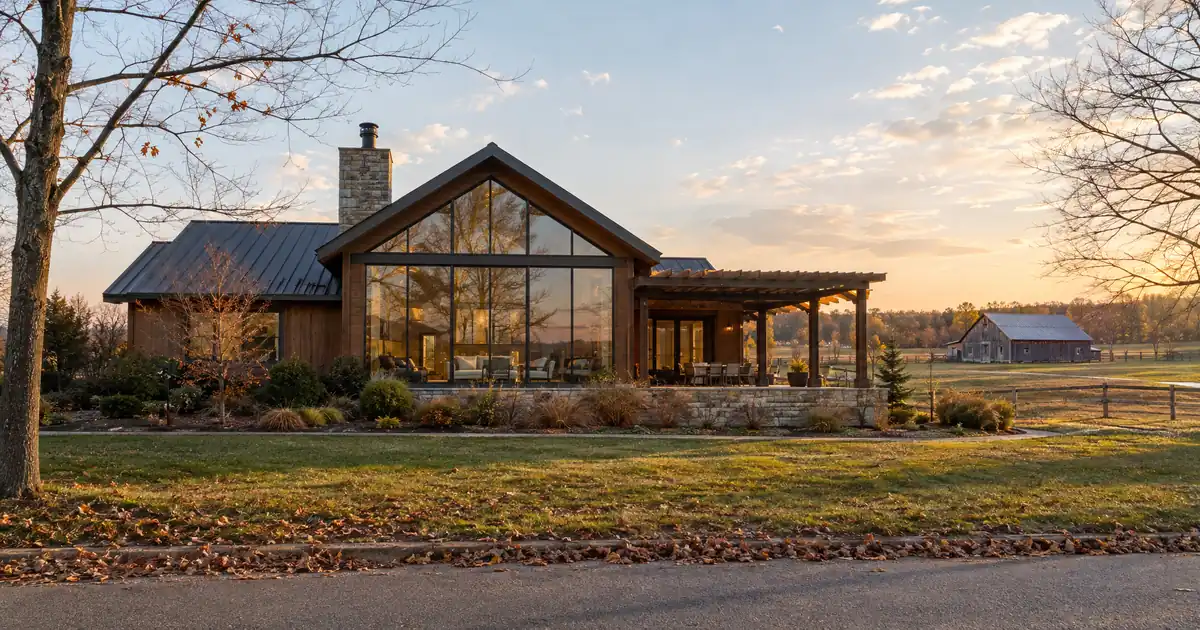
The Quick Read: Acreage is not a loan program, and no program is “the” answer for land. The best fit depends on four things: whether the property is residential in use, what the appraiser says the whole site is worth, the program’s leverage ceiling, and any extra limits the lender adds. Conventional, FHA and VA cash-out loans can all work on a home with land, subject to lender guidelines and full file review.
Key Takeaways
- There is no flat acreage cap on a residential home in the standard programs. Use and appraised value decide the outcome.
- A working farm, ranch or orchard is a different story. Those usually need agricultural or portfolio financing.
- Your cash comes from appraised value times the program’s leverage ceiling, minus your payoff and costs.
- Extra land often adds less value than owners expect. That shrinks the cash.
- The FHA Streamline and VA streamline refinance are not cash-out tools.
- A broker that shops several wholesale lenders can match your acreage to a lender whose overlays fit it.
Key Terms Defined
Cash-out refinance. A new first mortgage that pays off your old one and hands you part of your equity as cash.
Loan-to-value (LTV). The loan amount divided by the appraised value, shown as a percentage.
Residential in nature. A property whose main use is as a home, judged by its features and what is typical in the area.
Highest and best use. The use of the property that is legal, physically possible, financially workable and most valuable. The appraiser must decide whether your home on its land meets that test.
Overlay. A rule a lender adds on top of the agency’s rules, such as a lower acreage tolerance.
Seasoning. The minimum time you must have owned the home, or held the current loan, before you can take cash out.
Limited cash-out refinance. Often called rate-and-term. It pays off the old loan and costs, with only incidental cash back.
Cash-out refinance estimate
The starting figures are an example value with a balance and a cash request in proportion. Replace them with yours.
Editable benchmark: 7.24% as of October 29, 2026 · Freddie Mac 30-year average via FRED®. A conventional market reference, not a cash-out refinance quote.
Illustrative starting assumptions: a $350,000 home value, a $193,000 current balance, the agency cap on a one-unit principal residence, a thirty-year term at the current Freddie Mac benchmark, and property taxes and insurance estimated at typical national rates. Every field is editable.
Illustrative estimate only — not a Loan Estimate, approval, quote, or commitment to lend. The rate field carries the weekly Freddie Mac thirty-year conventional benchmark, a market reference and not a cash-out refinance quote; a cash-out loan is priced by the lender at lock. The cash available is the loan the program cap allows less the balances paid off, before closing costs, which are not included. The HELOC line is the program’s combined loan-to-value ceiling applied to the same value and balance. Taxes and insurance are editable estimates. Licensed in sixteen states for consumer mortgages.
What Does “Best Program” Mean When You Own Land?
Most “best cash-out refinance” pages rank companies. That tells you little when your property has twelve acres, a detached garage and a pond. The better question is which program’s rules fit your file.
Lendmire is a mortgage broker. It places files with a network of wholesale cash-out refinance lenders and does not lend itself. The lenders that write a home with acreage vary by acreage, outbuildings and appraiser experience. That is why the best program for your situation is a matching exercise, not a leaderboard. Lendmire’s cash-out refinance programs page lays out the main structures.
Here are the criteria that decide the match:
1. Use. Is the home your residence, with any farming minor and secondary?
2. Value. How does the appraiser treat the land beyond a normal home site?
3. Leverage. How much of that value will the program lend against?
4. Occupancy. Is this your principal residence? Occupancy changes the leverage ceiling.
5. Seasoning and credit. Have you owned long enough, and does your score and debt load fit?
6. Overlays. Does the specific lender accept your acreage and outbuildings?
How the Programs Compare on a Home With Acreage
On a principal residence, conventional cash-out reaches 80% LTV on a one-unit home. A wholesale conventional lane reaches 89.99% in narrow cases. FHA and VA have their own paths. These are the figures across the wholesale programs Lendmire places files with, and every one is subject to lender guidelines and full file review.
| Program | Best for | Acreage and use |
|---|---|---|
| Conventional cash-out | Strong credit, residential property | No flat acre cap; must be residential |
| Conventional high-leverage lane | Larger cash need, clean file | Same property rules; tighter borrower limits |
| FHA cash-out | Lower scores, owner-occupants | Owner-occupied only; lower ceiling than before |
| VA cash-out | Eligible veterans, high leverage need | Must live there; lender orders appraisal |
| FHA Streamline / VA IRRRL | Lower payment on an existing government loan | Not for meaningful cash |
Conventional cash-out
The ceiling is 80% LTV on a one-unit principal residence and 75% on two- to four-unit homes. Seasoning applies. The loan you are paying off must be at least 12 months old, and you must have been on title for 6 months. Delayed financing, inheritance and legal-award exceptions exist. Credit starts at a 620 decision score on the wholesale programs, with a total debt ratio ceiling of 50% on most files where the automated finding governs.
The lane
One wholesale lane reaches 89.99% LTV with no mortgage insurance. It needs a 680 score, a 50% ratio, a 30-year fixed rate, a primary residence, a conforming loan balance and six months of seasoning. A home with acreage can fit, but the appraisal has to support the value without heavy adjustments. In Texas, a cash-out on the homestead is capped by the state constitution at the agency figure, and the wholesale lane is not written there. Exact terms depend on the lender’s guidelines, property type, leverage, and a full review of the borrower’s file.
FHA and VA
FHA cash-out is for owner-occupied principal residences. HUD lowered the maximum LTV on FHA cash-out refinances, so older figures you see online are out of date. VA cash-out requires a Certificate of Eligibility and that you live in the home. VA explains that the loan replaces your current loan, or moves a non-VA loan into a VA-backed one. A private lender makes it, and the lender orders the appraisal. VA can lend up to a very high share of value, but individual lenders often set a lower ceiling.
Streamlines
The FHA Streamline (existing FHA loan, no appraisal, limited credit review, net tangible benefit) and the VA IRRRL (existing VA loan, 0.5% funding fee unless exempt, no VA appraisal, seasoning of the later of 210 days and 6 payments) skip a new valuation. They also skip meaningful cash. If you want cash, they are the wrong tool. And the IRRRL cannot convert an FHA or conventional loan into VA. Only VA cash-out does that.
Two other notes. Homes above the conforming limit move to the jumbo lanes, which start at a 660 decision score and reach 90% leverage on loans up to $5,000,000, with a 50% ratio ceiling on the fixed lanes. And if you owe nothing on the home, the new loan still counts as cash-out. Every figure here varies by lender and program — guidelines, property type, leverage, and credit profile all apply.
Is There a Maximum Number of Acres?
Not in the standard rules. Freddie Mac says it has no site size or acreage limits. When a large parcel sits where commercial farms are typical, the seller has to do extra analysis to confirm the property is residential. Fannie Mae’s guide says it will not buy loans on agricultural properties such as farms or ranches. The property must be residential in nature, judged by its characteristics and the surrounding market.
So the myth of a hard “10-acre cap” does not come from the agencies. It comes from lenders. Many add overlays on acreage because large parcels are harder to appraise. Ask before you pay for an appraisal.
How the Appraiser Treats Your Land
The appraiser values the whole site, not a slice you choose. The appraisal reports the actual site size, and the loan has to represent the highest and best use of the site as improved. In practice, three things happen on rural files.
Comparable sales are scarce. Nearby sales of similar homes on similar land may not exist. The appraiser may use sales from farther away and must explain why.
Land adds value, but not by the acre. Value comes from what buyers pay for comparable homes with comparable land, not from a price per acre multiplied across your parcel. Ten extra acres of woods may add modest value. Ten acres of usable pasture near a growing town may add more.
Adjustments can be large. When the comps differ a lot from your property, big adjustments lower the supported value. Lower value means a lower loan ceiling, which means less cash.
Excess land with development potential has its own wrinkle. Subdivision potential alone does not turn a home into something other than residential. But if the land is worth more as development than as part of your home, the improvements may not represent the highest and best use. That can stall a file.
Where the General Rule Breaks
Acreage rarely sinks a file by itself. These edge cases do.
- Working farm, ranch or orchard. Standard agency financing is out. You would look at agricultural or portfolio lenders. Those fall outside the programs described here.
- Heavy farm outbuildings. Large barns, silos or several buildings for farm animals can signal agricultural use. A hobby farm can still be eligible if the main use is residential. One horse barn is not the same as a commercial dairy setup.
- Agricultural zoning. Zoning alone does not disqualify a home. The question is the primary use.
- No year-round road access. A property not reachable by roads that meet local standards, or not suitable for year-round living, is a problem.
- Occupancy. FHA standard cash-out and VA cash-out are for homes you live in. A second home or rental changes the leverage ceiling.
- Appraisal shrinkage. Scarce comps can cut value late in the process. Plan for a range of outcomes.
What Do the Numbers Look Like? A Worked Example
Say you expect your home and land to appraise at 100 units of value, and your current loan balance equals 50% of that. The outcomes below are modeled on a conventional cash-out at 80% LTV. All figures are modeled assumptions, not market data. Final terms depend on lender guidelines, property type, leverage, and the borrower’s complete credit picture.
Outcome one: full credit for the land.
- Appraised value: 100 units.
- Maximum loan: 80% of value.
- Cash before costs: 80 minus the 50 payoff, or 30% of value.
Outcome two: modest shortfall.
- Appraised value: 90 units.
- Maximum loan: 72 units.
- Cash before costs: 72 minus 50, or 22% of the original expected value.
Outcome three: land gets little credit.
- Appraised value: 70 units.
- Maximum loan: 56 units.
- Cash before costs: 56 minus 50, or 6% of the original expected value.
A 30% drop in value took roughly four-fifths of the cash out of the deal. That is the mechanic to respect. Your cash is the leverage ceiling applied to the appraisal, minus payoffs and closing costs. Costs can be paid at closing or, on many cash-out loans, deducted from proceeds. Read them side by side before you decide.
Seasoned brokers see this pattern often. Owners anchor on the price a neighbor got for a few acres and then feel surprised when the appraisal gives the land modest credit. Running the 100, 90 and 70 scenarios before you apply tells you whether the loan is still worth doing at the low end.
Rule or Overlay? Know Which One You Are Facing
When a lender says no, ask whether the limit comes from the agency or from the lender. The answer decides your next move.
| Limit | Source | What to do |
|---|---|---|
| Property must be residential | Agency rule | Document residential use |
| Leverage ceiling by occupancy | Program rule | Pick the program that fits |
| Acreage tolerance | Often a lender overlay | Ask another wholesale lender |
| Outbuilding limits | Mix of both | Provide a building inventory |
| Appraiser experience with rural | Lender overlay | Request a rural-qualified appraiser |
A broker earns its keep here. Lendmire can shop the same scenario to lenders whose overlays differ, rather than leaving you to learn each lender’s limits one application at a time.
If Your Property Does Not Fit
If one lender declines, try these in order.
1. Move to a lender with a looser acreage overlay. Same program, different lender.
2. Change the program. FHA or VA may treat the property differently than conventional.
3. Ask for a smaller loan. Lower leverage can make a hard-to-appraise property easier to accept.
4. Document residential use. Show the home is the main use and the land is subordinate.
5. Consider a different product. A second-lien product or an agricultural lender may fit a farm-primary property.
6. Think about splitting the parcel. Some owners separate excess land before applying. That has legal and tax consequences, so talk with a professional first.
What to Prepare Before You Apply
- Survey or parcel map showing total acres.
- A list of every outbuilding, with size and use.
- Any income from the land, such as hay or leased pasture.
- Zoning information and proof of year-round road access.
- Your payoff statement and proof of how long you have held the current loan.
- Income, asset and credit documents. Conventional, FHA cash-out and VA cash-out use full documentation. Only the streamlines are limited.
Keep the debt picture in mind too. Borrowers often use cash-out proceeds to pay down other debts, mainly credit card and auto balances. Credit scores can rise at first and then gradually worsen. A larger loan usually means a higher payment and a longer payoff. Tax treatment can depend on your situation; borrowers should speak with a qualified tax professional before relying on any deduction or credit.
Mortgage insurance comes up when leverage passes 80%. You can request cancellation at 80% of the original value with a good payment history, no subordinate liens and no decline in value. The servicer must end it automatically at 78%. Most cash-out lanes stay at or below 80%, so it matters mainly on the high-leverage lane or the VA and FHA structures, which have their own insurance or funding fee mechanics.
Frequently Asked Questions
Does all my land count toward my cash?
Not automatically. The appraiser values the whole site, but the value comes from comparable sales, not from the number of acres. Land that buyers in your area pay a premium for counts for more. Excess woods or steep ground may count for little. Your cash is the leverage ceiling applied to that appraised value, minus payoffs and costs.
Can I cash out on land I own outright?
Yes, in the sense that a home with no loan can still be refinanced for cash. A new mortgage on a property with no lien is treated as cash-out. The same property rules apply, and leverage is capped by the program. The home has to be residential, and your lender may add its own acreage limits.
Does a barn or outbuilding hurt my chances?
Sometimes. A typical garage, shed or small barn rarely causes trouble. Large barns, silos or several buildings for farm animals can signal agricultural use, and that can make the property ineligible for agency loans. A hobby farm can still qualify if the primary use is residential.
Can I use an FHA Streamline or VA IRRRL to pull cash out?
No, not in any meaningful amount. Both are built to lower the cost of an existing government loan. The FHA Streamline needs an existing FHA loan and a net tangible benefit. The IRRRL needs an existing VA loan. For real cash on a government-backed loan, you look at FHA or VA cash-out.
Why did one lender say no and another say yes?
Often it is an overlay. Fannie Mae’s cash-out rules set the baseline, but each lender can add stricter limits on acreage, outbuildings or appraiser experience. A broker that shops several wholesale lenders can match your property to one whose limits fit it. Every outcome is subject to lender guidelines and full file review.
The Next Step
If you are weighing a cash-out refinance against keeping the loan you have, Lendmire can help you compare the programs and the equity each one reaches. Bring your acreage, your outbuilding list and your payoff, and the comparison gets concrete fast. Nothing here is a commitment to lend.
For your own numbers, request a scenario review with Lendmire.
For current guidelines and terms, see Lendmire’s refinance programs page.
About Lendmire
Lendmire (NMLS# 2371349) is a mortgage broker licensed for consumer lending in 16 states. Lendmire arranges FHA, VA, conventional and jumbo purchase and refinance loans through wholesale lenders; every file is underwritten by the lender under the applicable program guidelines. Scotsman Guide named Lendmire a Top Mortgage Workplace in both 2025 and 2026.
Get Started
Ready to find the right loan for you?
See your offer in seconds. No credit pull, no obligation.
Informational only. Not a Loan Estimate, approval, or commitment to lend. Program availability and eligibility are subject to lender guidelines, credit approval, property review, and underwriting.
References
1. HUD mortgagee letter on FHA cash-out loan-to-value limits
3. Freddie Mac Guide FAQ on acreage and site size
4. Fannie Mae Selling Guide B2-3-01, General Property Eligibility
5. Fannie Mae Selling Guide B2-1.3-03, Cash-Out Refinance Transactions
This article is part of Lendmire’s cash-out refinance program — full qualification details, guidelines, and scenarios live on the program page.
Related reading: How to Get a Cash-Out Refinance After Buying a Home With Cash · How to Apply for a Cash-Out Refinance on Your Primary Home
Brandon Miller
Founder & CEO, Mortgage Loan Originator, Lendmire LLC
- Mortgage Loan Originator · NMLS# 1129696 · Verify on NMLS Consumer Access
- North Carolina Real Estate Broker · License# 343312 · Verify on NCREC
- North Carolina Insurance Producer · License# 19053198 · Property, Casualty, Life, Health · Verify on NAIC SBS
- Lendmire LLC · Firm NMLS# 2371349 · Verify firm licensure
Disclosures. The information presented in this article is general market commentary, not financial, legal, or tax advice. Lendmire is a mortgage brokerage (NMLS# 2371349) — not a direct lender or depository institution — and loan placement is subject to lender underwriting. Nothing in this content represents a commitment to lend. Loan terms, pricing, and program availability vary based on borrower qualifications, property characteristics, and state of subject property, and are subject to change at any time. Lendmire complies with Equal Housing Opportunity requirements. Consumer access: nmlsconsumeraccess.org.