
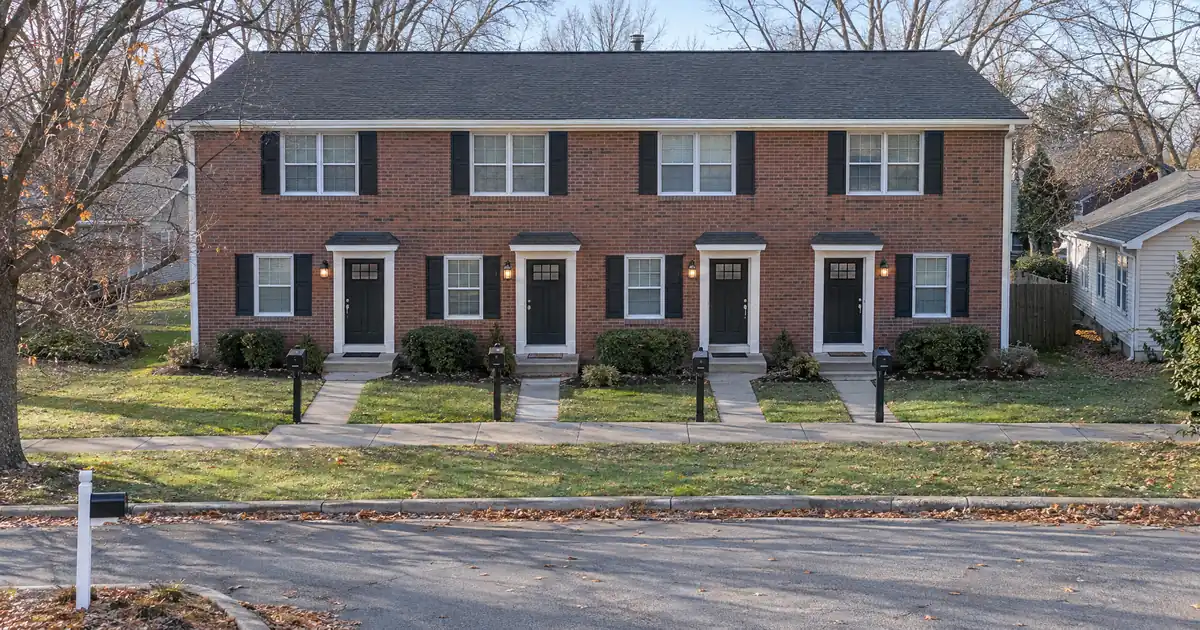
The Quick Read: No single program wins for every owner who lives in a four-unit building. The right one depends on whether you are a veteran, what loan you hold now, how much equity is left, and what the building’s rents can support. Two programs people often name, the FHA Streamline and the VA IRRRL, cannot pay you cash. For most owners, the real choice is conventional, FHA cash-out, or (for eligible veterans) VA cash-out.
The Short Version
- Streamline and IRRRL are out. They lower a payment on an existing government loan. They do not hand you equity.
- Leverage is lower on a fourplex. Conventional cash-out tops out at 75% of value on a two- to four-unit principal residence, versus 80% on a one-unit home.
- Rent helps less than you expect. Lenders discount income from the other units and generally ignore the unit you live in.
- The appraisal sets the ceiling. Your estimate of value does not.
Which Program Is Best for Your Situation?
The best program for your situation is the one that fits your current loan, your service history, and your equity. A broker’s job is to match those facts to a program, not to crown a winner. Lendmire’s cash-out refinance programs page lays out the loan types Lendmire arranges through wholesale lenders.
Cash-out refinance estimate
The starting figures are an example value with a balance and a cash request in proportion. Replace them with yours.
Editable benchmark: 7.24% as of October 29, 2026 · Freddie Mac 30-year average via FRED®. A conventional market reference, not a cash-out refinance quote.
Illustrative starting assumptions: a $350,000 home value, a $193,000 current balance, the agency cap on a one-unit principal residence, a thirty-year term at the current Freddie Mac benchmark, and property taxes and insurance estimated at typical national rates. Every field is editable.
Illustrative estimate only — not a Loan Estimate, approval, quote, or commitment to lend. The rate field carries the weekly Freddie Mac thirty-year conventional benchmark, a market reference and not a cash-out refinance quote; a cash-out loan is priced by the lender at lock. The cash available is the loan the program cap allows less the balances paid off, before closing costs, which are not included. The HELOC line is the program’s combined loan-to-value ceiling applied to the same value and balance. Taxes and insurance are editable estimates. Licensed in sixteen states for consumer mortgages.
Here is how the real options line up for a fourplex you live in.
| Program | Who it fits | Fourplex leverage | Watch for |
|---|---|---|---|
| Conventional cash-out | Most owners with equity | 75% of value | Seasoning clocks, reserves |
| FHA cash-out | Owners wanting FHA terms | Cap set by HUD | 3–4 unit rent test |
| VA cash-out | Eligible veterans | Set by VA and lender | Funding fee, lender limits |
| FHA Streamline / VA IRRRL | Existing FHA or VA loan | No cash allowed | Not a cash tool |
The conventional figure is from the wholesale programs Lendmire places files with. FHA and VA caps move with agency policy and lender overlays, so confirm them on your own file. A VA loan can reach higher leverage than conventional on paper. Individual lenders often set their own ceiling below the maximum.
Why the Streamline and IRRRL Don’t Belong Here
They are rate-and-term tools. Both exist to improve the terms of a loan you already have, and neither lets you take cash out. The FHA version needs an existing FHA loan and a net tangible benefit. The VA version needs an existing VA loan and charges a 0.5% funding fee unless you are exempt.
Borrowers sometimes ask for “the FHA streamline for cash.” Wrong tool. If you want equity, you need a true cash-out loan with a full appraisal and full underwriting.
How the Loan Is Underwritten, Step by Step
A cash-out on a four-unit owner-occupied building follows seven steps. Each one can change the answer.
1. Pick the lane. A veteran has VA cash-out in play. Everyone else looks at conventional or FHA cash-out.
2. Check the clocks. On conventional loans, the mortgage you are paying off must be at least 12 months old, measured note date to note date. At least one borrower must also have been on title for 6 months. The Fannie Mae Selling Guide spells out both clocks and the exceptions.
3. Order the appraisal. A two- to four-unit building gets a full appraisal on a small-residential-income form, with a rent schedule for the units.
4. Size the loan. The new loan must cover your payoff, any liens being cleared, and financed costs. Whatever remains is your cash. Every lien counts toward the leverage cap.
5. Underwrite income and ratios. Your wages and other income qualify you. Discounted rent from the other units is added. The decision score and total-ratio limits come next (details below).
6. Gather documents. Expect standard income, asset, and ID papers, plus leases and proof rents are being paid.
7. Close and wait out the cancellation window. More on that below.
The credit and ratio side
Wholesale conventional programs generally start at a 620 decision score, though the automated finding governs most files. The total-ratio ceiling is 50% on files that clear automated underwriting. Manually underwritten loans run tighter, at 36% or 45%, depending on reserves and score. Higher ratios can also trigger extra reserve requirements. All of this is subject to lender guidelines and full file review.
How Your Rent Counts (and Doesn’t)
Rent from the other three units counts, but at a discount. The lender takes only a share of the gross rent, then adds it to your income. Rent from the unit you live in generally does not count at all, apart from narrow exceptions like boarder income.
That surprises owners. A fourplex with strong rents still qualifies mostly on you.
When leases support the rent, the file needs the appraiser’s rent schedule or proof the leases are in effect. Fannie Mae’s Quality Insider describes this as two consecutive months of bank statements or transfers showing the rent arriving. Your full housing payment, including taxes and insurance, still counts as an expense.
Where the General Rule Breaks
These edge cases come up often on four-unit files.
- FHA’s rent test on 3–4 units. FHA applies a self-sufficiency test to three- and four-unit buildings. The building’s net rent is measured against the housing payment, and reserves apply. A fourplex with vacant units or soft rents can fail it. Confirm current thresholds against HUD Handbook 4000.1 before relying on any number.
- FHA’s cap versus conventional. HUD Mortgagee Letter 2019-11 cut FHA’s cash-out ceiling to line up with what the agency-backed conventional programs allow on one-unit homes. A fourplex is capped lower on the conventional side. So leaving FHA for conventional does not automatically produce more cash. Sometimes it produces less.
- Recent cash buyers. Delayed financing waives the six-month title wait for someone who bought the building outright. It is still treated and capped as a cash-out loan.
- Free-and-clear buildings. A new loan on a paid-off fourplex is still cash-out, not a purchase.
- Co-borrowers who don’t live there. Agency guidelines generally expect every borrower on a principal-residence cash-out to occupy the property. A parent or partner who lives elsewhere can complicate the file.
- Inheritance. An heir who lives in the building may get relief from FHA’s occupancy wait. The details vary by lender, so ask early.
- Non-VA loan into VA. Only VA cash-out can move a conventional or FHA loan into a VA loan. The FDIC’s summary of the IRRRL confirms the IRRRL must be VA-to-VA and allows cash only for energy-efficiency improvements.
- If you plan to move out. The loan is underwritten as your principal residence. Occupancy decides leverage, so a building you have left is a different loan conversation entirely.
(One more, and it is the most common: a low appraisal. See the next section.)
What a Low Appraisal Does to Your Cash
A small miss in value costs more cash than owners expect. The payoff on your existing loan does not shrink when the appraisal does.
Picture a fourplex where you expected the building to appraise at a certain value, and it comes in 10% lower. On a conventional fourplex cash-out at 75%, your maximum loan falls by 10%. Your payoff stays put. So the cash is the difference, and it can fall by far more than 10%. On a thin-equity file, it can disappear. These specifics are subject to lender guidelines and a full review of property, leverage, and credit.
That is simple arithmetic, and it explains why equity matters more than rent here. Before you apply, work backward. Take a conservative value, multiply by the cap for your program, then subtract your payoff and costs. If little remains, the refinance may not pay.
Quick Decision Matrix
| If your situation is… | Look at first |
|---|---|
| Eligible veteran, wants cash | VA cash-out |
| Conventional loan, solid equity | Conventional cash-out |
| FHA loan, wants FHA terms | FHA cash-out |
| FHA loan, wants only a new term | FHA Streamline (no cash) |
| VA loan, wants only a new term | VA IRRRL (no cash) |
| Bought outright recently | Delayed financing exception |
Wholesale lenders differ on overlays, reserves, and how they treat rents. That is why a broker who shops several of them can matter on a four-unit file. Which lenders fit a given file depends on your score, how much leverage you need, and how clean the rent documentation is. Nothing here is a commitment to lend.
What It Does to Your Monthly Budget
A cash-out replaces your old loan with a larger one. Your payment usually rises, and you give up your old terms. Cash-out loans also carry pricing adjustments that rate-and-term loans do not.
Mortgage insurance depends on leverage. On conventional loans, it applies above 80% loan-to-value. A fourplex cash-out tops out at 75%, so conventional mortgage insurance is not a factor there. FHA loans carry mortgage insurance premiums, and VA loans carry a funding fee instead.
Closing costs also run higher. A full multi-unit appraisal with a rent schedule costs more than a single-family report. Cost goes on your Loan Estimate, so compare it line by line.
The cancellation window
Because this is your principal dwelling, federal law gives you a short right-to-cancel period after signing. The CFPB explains the right of rescission in plain language. Cash is generally not disbursed until it ends. Don’t plan to spend the money the day you sign.
Is Cash-Out Even the Right Tool?
Sometimes not. If your current loan has terms worth keeping, a second lien or home equity line can reach equity without replacing it. If you only need a lower payment or a changed term, a refinance avoids the lower cash-out cap and pricing adjustments. Rate-and-term runs to 95% leverage on a one-unit principal residence. Terms depend on the lender’s guidelines, the property type, the leverage, and a full review of the credit profile.
Honestly, the stronger play for some owners is to skip the cash-out. If the money funds a repair that will lift your rents, the math may justify it. If it funds spending, think twice.
Key Terms Defined
Cash-out refinance: a new mortgage larger than your old one, with the difference paid to you.
Loan-to-value (LTV): your loan balance divided by the property’s appraised value.
Seasoning: the waiting period a lender requires, such as time on title or the age of your current loan.
Rescission: your right to cancel certain refinances within a short window after signing.
Self-sufficiency test: FHA’s check that a three- or four-unit building’s rents can carry the housing payment.
Common Mistakes to Avoid
- Assuming the Streamline or IRRRL can pay cash.
- Counting rent from your own unit as qualifying income.
- Using your own value estimate instead of a conservative appraisal.
- Overlooking the 12-month loan age and six-month title clocks.
- Assuming a move from FHA to conventional gives you more cash.
Frequently Asked Questions
Can I take cash out of a fourplex I live in?
Yes, if you occupy one unit as your principal residence and meet the program’s clocks, equity, and income tests. Conventional cash-out caps leverage at 75% on two- to four-unit principal residences. Eligible veterans can look at VA cash-out, and FHA cash-out is another route. Approval is subject to lender guidelines and full file review.
Does rent from my other three units help me qualify?
Partly. Lenders count a discounted share of the rent from the units you don’t live in. They generally do not count the unit you occupy. Leases need support, such as the appraiser’s rent schedule or proof that rent is being paid.
How long do I have to own the building first?
On conventional loans, at least one borrower must have been on title for 6 months, and the loan being paid off must be at least 12 months old. Exceptions exist for delayed financing, inheritance, and legal awards. FHA and VA have their own occupancy and seasoning rules, so confirm them on your file.
Will the FHA Streamline or VA IRRRL get me cash?
No. Both lower the cost of an existing government loan and do not allow cash out, apart from a narrow VA energy-efficiency exception. For cash, you need a cash-out loan with a full appraisal and underwriting.
Why does a fourplex get less leverage than a house?
Agencies treat two- to four-unit buildings as riskier than one-unit homes. That is why conventional cash-out is capped at 75% on a fourplex, compared with 80% on a one-unit principal residence. FHA adds a rent test on three- and four-unit buildings.
Next Step
If you are weighing a cash-out refinance against keeping the loan you have, Lendmire can help you compare the programs and the equity each one reaches. Many four-unit owners find their equity, not their rent roll, decides which lane works. Run your own conservative-value math first, then bring the numbers to a broker who can shop the wholesale options.
For your own numbers, request a scenario review with Lendmire.
About Lendmire
Lendmire is a mortgage brokerage (NMLS# 2371349) licensed for consumer mortgage lending in 16 states, arranging FHA, VA, conventional and jumbo purchase and refinance loans through a wholesale lending network. Eligibility is determined by the lender on each file. Scotsman Guide named Lendmire a Top Mortgage Workplace in both 2025 and 2026.
Get Started
Ready to find the right loan for you?
See your offer in seconds. No credit pull, no obligation.
Informational only. Not a Loan Estimate, approval, or commitment to lend. Program availability and eligibility are subject to lender guidelines, credit approval, property review, and underwriting.
References
1. Fannie Mae Selling Guide B2-1.3-03, Cash-Out Refinance Transactions
2. Fannie Mae Quality Insider, rental income documentation
3. HUD Mortgagee Letter 2019-11
4. FDIC summary of the VA Interest Rate Reduction Refinance Loan
This article is part of Lendmire’s cash-out refinance program — full qualification details, guidelines, and scenarios live on the program page.
Related reading: How to Get a Cash-Out Refinance After Buying a Home With Cash · Should Co-Owners Use a Cash-Out Refinance Buyout or Sell the Home? · Best Cash-Out Refinance Program to Purchase Another House With Existing Equity
Brandon Miller
Founder & CEO, Mortgage Loan Originator, Lendmire LLC
- Mortgage Loan Originator · NMLS# 1129696 · Verify on NMLS Consumer Access
- North Carolina Real Estate Broker · License# 343312 · Verify on NCREC
- North Carolina Insurance Producer · License# 19053198 · Property, Casualty, Life, Health · Verify on NAIC SBS
- Lendmire LLC · Firm NMLS# 2371349 · Verify firm licensure
Disclosures. The information presented in this article is general market commentary, not financial, legal, or tax advice. Lendmire is a mortgage brokerage (NMLS# 2371349) — not a direct lender or depository institution — and loan placement is subject to lender underwriting. Nothing in this content represents a commitment to lend. Loan terms, pricing, and program availability vary based on borrower qualifications, property characteristics, and state of subject property, and are subject to change at any time. Lendmire complies with Equal Housing Opportunity requirements. Consumer access: nmlsconsumeraccess.org.