
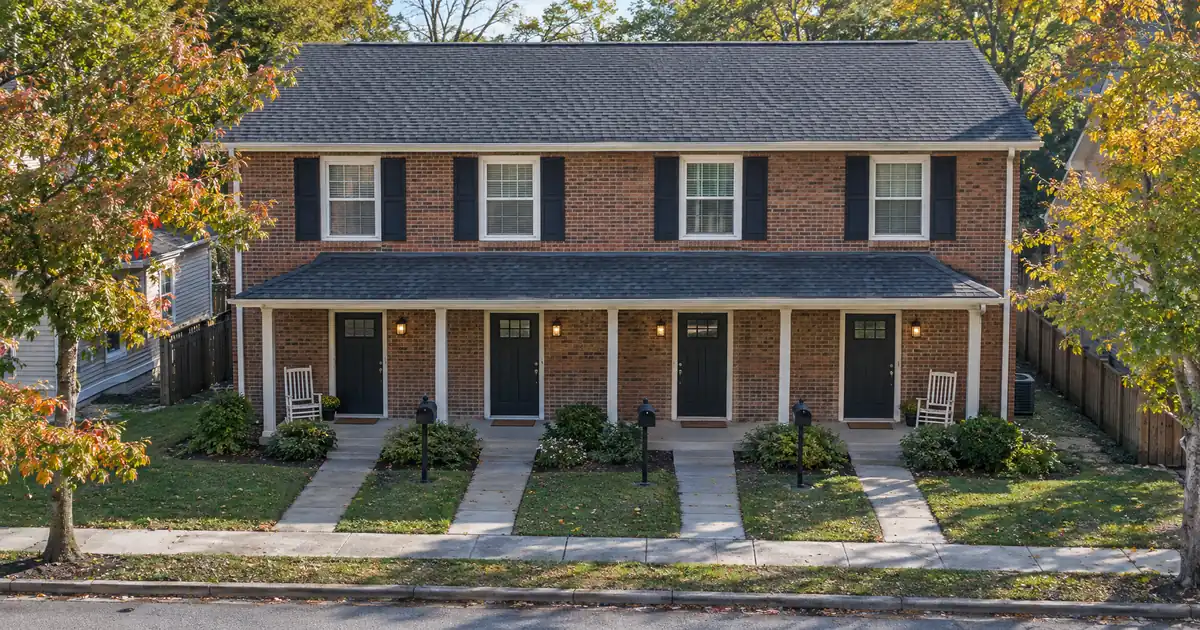
The Quick Read: The best program for your situation is usually the FHA cash-out refinance when you live in one unit of a duplex, triplex or fourplex, have owned and occupied it for at least 12 months, and want equity at up to 80% of the home’s value. It runs through Lendmire’s FHA cash-out refinance program page and the wholesale lenders behind it. It is not the right fit if a conventional cash-out or a plain rate-and-term refinance does the job at lower cost. The deciding variables are unit count, credit profile, how much equity you need, and what the rents on the building look like.
What Is an FHA Cash-Out Refinance on a Two-to-Four Unit Home?
An FHA cash-out refinance replaces your current mortgage with a new, larger FHA-insured loan and pays you the difference in cash. The new loan pays off every existing lien, including a conventional first mortgage. You do not need an FHA loan today to use it.
FHA cash-out estimate
Seeded with an example value, a balance to match, and a round cash request; change any field.
Editable benchmark: 7.18% as of November 5, 2026 · Freddie Mac 30-year average via FRED®. A conventional market reference, not an FHA cash-out refinance quote.
Illustrative starting assumptions: a $350,000 home value, a $193,000 current balance, the FHA cap on a principal residence with the upfront premium financed, a thirty-year term at the current Freddie Mac benchmark, and property taxes and insurance estimated at typical national rates. Every field is editable.
An illustration, not a Loan Estimate, an approval, a quote, or a commitment to lend. The rate shown is the weekly Freddie Mac thirty-year conventional benchmark, used as a market reference; an FHA cash-out is priced by the lender at lock, and this is not an FHA cash-out refinance quote. HUD’s cap limits the base loan; the upfront premium is financed on top of the capped base loan; the monthly premium for the first year follows the snapshot’s schedule. Cash available means the base loan the cap permits less the balances retired, before closing costs, which this calculator leaves out. The line figure applies the line program’s combined loan-to-value ceiling to the same value and balance. Taxes and insurance are estimates you can edit. Licensed in sixteen states for consumer mortgages.
Two-to-four unit owner-occupied means you live in one unit as your principal residence. The other units can be rented. Second homes and pure rental properties do not qualify for cash-out. Occupancy decides the leverage, and for a building you do not live in, this program is the wrong tool.
Across the wholesale programs we place files with, the cash-out reaches 80% loan-to-value on a home you have owned and occupied as your residence for at least 12 months before the case number is assigned. That 80% is measured against the whole base loan, not just the cash you take out, and financed closing costs sit inside that cap. The upfront mortgage insurance premium is financed on top of the base loan, so the final loan balance can land slightly above 80% of value.
HUD cut the cap from 85% to 80% in 2019, and it had earlier cut it from 95% to 85%, according to the HUD press release on cash-out risk. Some older pages still show 85%. Treat those as stale.
Who Is This Program Actually Best For?
For a duplex owner with moderate credit and a solid payment history, FHA is often the strongest cash-out lane. For a borrower with high credit scores and low debts, conventional may cost less. Here’s where the answer flips.
| Your situation | Likely better fit |
|---|---|
| Credit in the 580s to 600s, steady payment history | FHA cash-out |
| Strong credit, low debt ratios | Conventional cash-out may cost less |
| Need cash from a fourplex you live in | FHA, if the rent test passes |
| Only want a lower payment or shorter term, no cash | Rate-and-term or Streamline |
| Already hold an FHA loan, want no appraisal | Streamline (no cash) |
| Own it less than 12 months | Wait, or consider other structures |
The program fits borrowers who value flexible credit review. The wholesale programs we use start at a 580 decision score for FHA. HUD sets a lower tier of its own, but that is a HUD rule the network does not reach below 580. Some lenders set higher floors still, so the lenders that write this depend on the borrower’s file.
Equity matters just as much. You must keep at least 20% equity after closing. An owner with modest equity in a triplex will find FHA’s 80% cap leaves little cash. Before you chase the program, check the number against your payoff.
How the Loan Is Underwritten, Step by Step
The process follows a clear sequence. Each step can stop a file, so knowing the order helps.
1. Eligibility screen. You must own and occupy one unit as your primary home. The 12 months of ownership and occupancy are measured at the date the FHA case number is assigned. HUD has a limited inheritance exception. Your mortgage payment history is reviewed as well, and recent late payments can end the file.
2. Case number and appraisal. A full appraisal is required. The 80% cap is applied to the appraised, adjusted value. On a three- or four-unit building, the appraiser also produces a market-rent schedule that feeds the rent test described below.
3. Maximum loan amount. The loan is the lesser of 80% of adjusted value or the county FHA limit for the unit count. County loan limits apply and change every year, and they are higher for more units. HUD publishes them in Mortgagee Letter 2025-23. On a high-value building in an expensive county, the limit can bind before the 80% does. Final terms depend on the lender’s guidelines, the property type, and the borrower’s complete credit picture.
4. Underwriting. Credit, income, debts and reserves are reviewed. The base ratio pair is 31/43 (housing and total debt to income) when there are no compensating factors. Documented compensating factors can raise the limits as far as 40/50 at the top tier. In most files, though, the automated finding decides which ratios apply.
5. Payoff and closing. The new loan pays off all existing liens. Any remaining second liens count toward combined leverage. You receive what is left.
Your Loan Estimate shows the estimated cash to close, and the CFPB’s Loan Estimate explainer walks through how to read it. Compare it with the Closing Disclosure before you sign.
Duplex vs. Triplex vs. Fourplex: Where the Rules Split
A duplex skips the rent test. Three- and four-unit buildings do not. That is the biggest underwriting difference inside this category.
| Feature | Duplex | Triplex / Fourplex |
|---|---|---|
| Owner lives in one unit | Yes | Yes |
| Rent self-sufficiency test | Not applied | Applied |
| Reserves | Lighter | Higher |
| Rent from other units | May count as income, reduced | Tested against payment |
| Appraisal | Full, with rent data | Full, with rent schedule |
HUD’s glossary defines net self-sufficiency rental income as rent the property produces over and above principal, interest, taxes and insurance (HUD Handbook 4000.1 glossary). For three- and four-unit homes, HUD’s drafting material sets the standard so that the monthly housing payment cannot exceed 100 percent of net rental income. Net rent is the appraiser’s market-rent estimate for all units, including yours, less a deduction for vacancy and maintenance (HUD drafting table). That document is a draft, so the exact haircut is best confirmed against the current handbook and the lender’s file review.
Reserves also step up on three- and four-unit homes. The reserve requirement varies by lender, so ask about it at the start.
The Rent Test in a Refinance (Where Cash-Out Gets Squeezed)
The rent test is where cash-out on a triplex or fourplex quietly fails. A bigger new loan means a bigger payment. FHA mortgage insurance applies on the whole balance, so it raises the payment further. If appraised market rent does not cover that payment, the building does not pass.
Picture a homeowner with a fourplex who wants to pull the full 80%. Appraised rents come in soft because two units rent below market. The test fails at the full loan size. The fix is a smaller cash-out, not a different building. Reducing the loan amount lowers the payment until the building covers it.
Now picture a duplex owner in the same position. No rent test applies. Their constraint is debt-to-income and the 80% cap.
Here’s the catch. Your own unit’s rent counts in the three- and four-unit test, but it does not become personal income. Don’t assume you can stack it as borrower income.
If you fail the test, you have three options: take less cash, wait for rents to rise or a lease to turn over, or look at a program with different rules. In every case, size the cash-out to the building, not the other way around.
Mortgage Insurance: The Cost of the Flexibility
FHA mortgage insurance is the trade-off for flexible credit review. There are two parts.
The first part is an upfront premium of 1.75% of the base loan, which is financed. The second is an annual premium between 0.15% and 0.75% of the balance, depending on term, loan amount and LTV.
Duration matters. On a thirty-year loan above 90% LTV, the annual premium lasts for the term. At or below 90% LTV, it ends after eleven years. A cash-out capped at 80% falls below that line, so the shorter schedule is the one that typically applies to this loan.
These are program mechanics, not prices. Your Loan Estimate shows what applies to your file.
Financed costs also carry interest for the life of the loan. The CFPB has noted that rolling costs into the balance racks up interest over time (CFPB blog on closing costs). Financed costs also reduce your cash in hand when you sit near the cap.
Edge Cases Where the General Rule Breaks
Free and clear. A home owned with no mortgage can still be refinanced as a cash-out. The occupancy test still applies.
Recently moved in. Under 12 months of ownership and occupancy generally rules out cash-out. A limited inheritance exception exists.
Moving out and renting the whole building. Once you no longer live there, it is no longer an owner-occupied principal residence. Cash-out is off the table. Only a Streamline-type refinance on an existing FHA loan may apply.
Listed for sale. Some lenders will not do cash-out on a property that was recently listed. That is a lender overlay, not an FHA rule, and it varies.
Streamline is not cash-out. A Streamline or simple refinance is a no-cash-out transaction on an existing FHA loan. It needs no appraisal and only a limited credit review, but it requires a net tangible benefit. If your goal is cash, it won’t deliver.
High-value buildings. The county limit may cap the loan below 80% of value.
Credit events. HUD’s waiting periods apply after a bankruptcy or foreclosure: two years from a chapter 7 discharge and three years from a foreclosure. Those are HUD rules, not a promise from any lender.
Lender overlays. Lenders can add their own credit-score and reserve rules on top of HUD’s baseline. This is why two files with the same numbers can get different answers, and why shopping through a broker matters.
FHA vs. the Alternatives: A Decision Frame
The FHA program is one lane. These are the others a two-to-four unit owner should weigh.
| Option | Best when | Trade-off |
|---|---|---|
| FHA cash-out | Moderate credit, need flexible review | Mortgage insurance on whole balance |
| Conventional cash-out | Strong credit, low debts | Tighter credit review |
| Rate-and-term FHA | No cash needed, home occupied 12 months | Reaches 97.75% but gives no cash |
| FHA Streamline | Existing FHA loan, no cash | No cash; net tangible benefit needed |
| Second lien or HELOC | Keep a good first mortgage | Separate payment, variable terms |
The 2019 change erased FHA’s old leverage edge over conventional cash-out. Today the choice rests on credit flexibility and cost, not on borrowing more. If you hold an existing first mortgage you like, a second lien may preserve it. If you carry high-cost debt and a 580-to-low-700s credit profile, FHA often makes more sense.
Think about the cash itself. Using proceeds to repair a unit and raise its rent can strengthen the rent test next time. Using them to pay down card debt can lower your ratios. The CFPB has published research on how cash-out borrowers use funds and manage debt afterward (CFPB paper on cash-out and debt paydown). Paying off debt only helps if the balances stay down.
What to Prepare Before You Apply
- Proof of 12 months of ownership and occupancy.
- A mortgage payment history for the past year.
- Current leases for the rented units.
- Income documents for ratio review.
- A rough payoff figure, plus any second liens.
- Your target cash amount, ready to be sized against the 80% cap and the rent test.
The CFPB’s home loan toolkit advises weighing how long monthly savings take to repay the cost of a refinance. For a cash-out, the same logic applies: is the cash worth the added balance?
Key Terms Defined
Adjusted value: The appraised value the 80% cap is measured against.
Owner-occupant: A borrower who lives in one unit of the building as a principal residence.
Net self-sufficiency rental income: Appraiser-estimated rent, less a vacancy and maintenance deduction, used to test three- and four-unit buildings.
CLTV: Combined loan-to-value, counting the new loan plus any remaining second liens.
Streamline: A no-cash-out refinance of an existing FHA loan.
Case number: The FHA identifier assigned to the file. It marks the date against which the 12 months of ownership and occupancy are measured.
Frequently Asked Questions
Can I use an FHA cash-out refinance on a duplex I live in?
Yes, if you own and occupy it as your principal residence and meet the 12-month ownership and occupancy test. A duplex skips the rent self-sufficiency test that applies to three- and four-unit buildings. Credit, ratios, and the 80% LTV cap still apply, and county loan limits apply. The exact numbers vary by lender and program and follow a full review of property, leverage, and credit.
Does renting out the other units hurt my eligibility?
No. Renting the other units is expected. Rent can help on a duplex through reduced income treatment, and on a triplex or fourplex it feeds the rent test. What disqualifies you is not living in the building yourself.
Can I do a cash-out on a rental I don’t live in?
No. FHA cash-out requires owner-occupancy. Occupancy decides the leverage, so a non-occupied property falls outside this program.
How much cash can I take out?
It depends on appraised value, existing liens, financed costs, and the county limit. The base loan, including financed closing costs, is capped at 80% of adjusted value, and the financed upfront premium sits on top of that base. The cash you receive is what remains after payoffs and closing costs. On three- and four-unit homes, the rent test can lower it further.
Is there a better option if I just want a lower payment?
Possibly. If you do not need cash, a rate-and-term refinance or an FHA Streamline may fit better, since neither adds to your balance for cash proceeds. A Streamline on an existing FHA loan needs a net tangible benefit, so the payment or term has to improve in a way the lender can document.
Choosing Your Next Step
If you are weighing a cash-out refinance against keeping the loan you have, Lendmire can help you compare the programs and the equity each one reaches. As a mortgage broker, it matches your property, credit profile and cash goal to the wholesale program that fits. Program details are subject to lender guidelines and full file review, and nothing here is a commitment to lend.
For your own numbers, request a scenario review with Lendmire.
About Lendmire
Lendmire (NMLS# 2371349) is a mortgage brokerage serving homeowners and home buyers in 16 states. FHA, VA, conventional and jumbo purchase and refinance loans are arranged through wholesale lending channels; Lendmire brokers the financing and the lender underwrites each application. Scotsman Guide named Lendmire a Top Mortgage Workplace in both 2025 and 2026.
Get Started
Ready to find the right loan for you?
See your offer in seconds. No credit pull, no obligation.
Informational only. Not a Loan Estimate, approval, or commitment to lend. Program availability and eligibility are subject to lender guidelines, credit approval, property review, and underwriting.
References
1. HUD press release on cash-out risk
2. HUD Mortgagee Letter 2025-23
3. CFPB Loan Estimate explainer
4. HUD Handbook 4000.1 glossary
5. HUD Handbook 4000.1 drafting table (MPR modernization)
7. CFPB paper on cash-out and debt paydown
This article is part of Lendmire’s FHA cash-out refinance program — full qualification details, guidelines, and scenarios live on the program page.
Related reading: How to Plan and Use an FHA Cash-Out Refinance Before Your ARM Resets · How Much Cash Comes Out of an FHA Cash-Out Refinance to Consolidate Debt?
Brandon Miller
Founder & CEO, Mortgage Loan Originator, Lendmire LLC
- Mortgage Loan Originator · NMLS# 1129696 · Verify on NMLS Consumer Access
- North Carolina Real Estate Broker · License# 343312 · Verify on NCREC
- North Carolina Insurance Producer · License# 19053198 · Property, Casualty, Life, Health · Verify on NAIC SBS
- Lendmire LLC · Firm NMLS# 2371349 · Verify firm licensure
Compliance and disclosures. Lendmire (NMLS# 2371349) is a licensed mortgage broker and is not a direct lender, depository institution, financial advisor, or tax professional. Content in this article is general market analysis and educational information — not financial, legal, or tax advice for any specific situation. Lendmire does not guarantee loan approval; every transaction is subject to underwriting by the funding lender. Mortgage pricing and loan program guidelines are subject to change at any time without notice and vary by borrower characteristics, property type, and state regulations. Lendmire complies with Equal Housing Opportunity. Licensure verification: NMLS Consumer Access.