
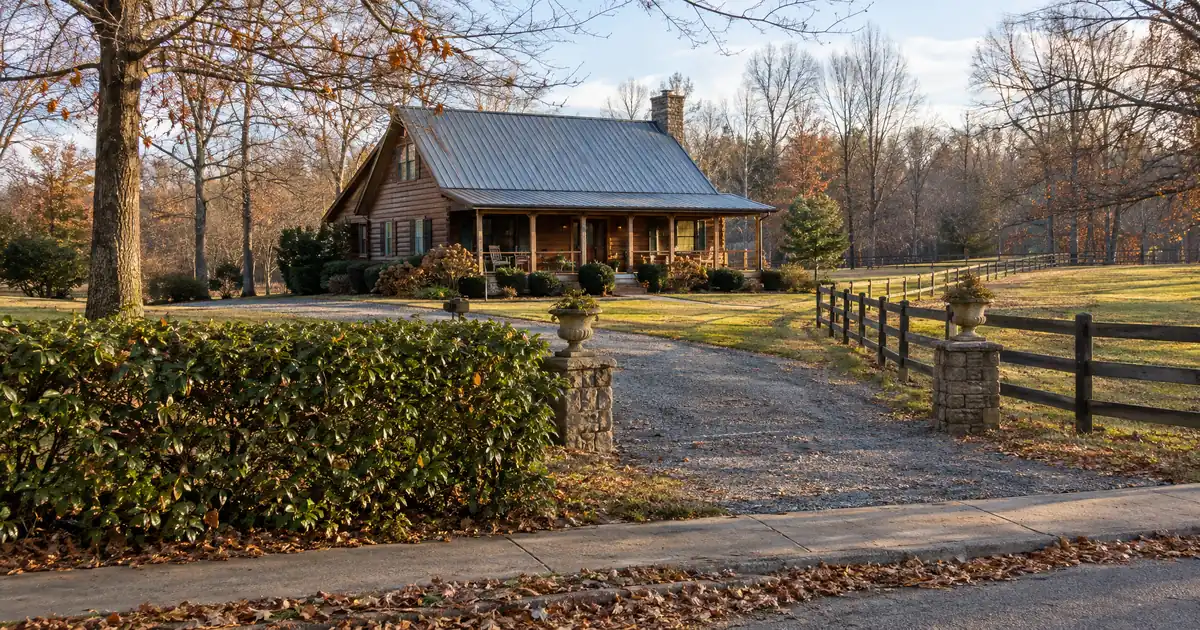
The Quick Read: The best VA cash-out program for rural land depends on your appraisal, how residential the property is, and which lender writes acreage. VA itself sets no acreage limit, so acreage alone rarely blocks a loan. The program reaches up to 100% of the appraised value, including the financed funding fee. Lender policy and comparable sales usually decide how much cash you actually receive.
Key Takeaways
- VA does not cap acres. Individual lenders often set their own limits.
- The home must be your primary residence, and the property must be used mainly as a residence, not a business.
- A full appraisal and full underwriting apply. This is not a streamline.
- Thin comparable sales are the main rural risk to the cash you can take out.
- The right match is a lender that routinely writes acreage files.
What Does “Best” Mean on a Rural Property?
“Best” here is a fit question, not a product ranking. The best program for your situation depends on four things: how much equity you want to reach, how many acres you own, how much of the value sits in the land versus the house, and the condition of the home and its systems.
VA cash-out estimate
Seeded with an example value, a typical balance, and a round cash request at the first-use fee; change any field.
Editable benchmark: 7.24% as of October 29, 2026 · Freddie Mac 30-year average via FRED®. A conventional market reference, not a VA cash-out refinance quote.
Illustrative starting assumptions: a $350,000 home value, a $193,000 current balance, the full-value VA cap with the first-use funding fee financed, a thirty-year term at the current Freddie Mac benchmark, and property taxes and insurance estimated at typical national rates. Every field is editable.
Illustrative estimate only — not a Loan Estimate, approval, quote, or commitment to lend. The rate field carries the weekly Freddie Mac thirty-year conventional benchmark, a market reference and not a VA cash-out refinance quote; a VA loan is priced by the lender at lock. The total loan, funding fee included, is capped at the program leverage on the reasonable value; the fee follows the tier chosen. The cash available is what the cap allows less the balances paid off and the fee, before closing costs, which are not included. The HELOC line is the line program’s combined loan-to-value ceiling applied to the same value and balance. Taxes and insurance are editable estimates. The debt-to-income figure is a guideline; residual income decides a VA file. Licensed in sixteen states for consumer mortgages.
Across the wholesale programs we place VA files with, the veteran who has a modest lot-plus-house on a few acres and clear residential comps usually has an easy path. The veteran with a small house on a large parcel, where most of the value is land, faces a harder one. Nothing about the VA program changes between those two. The appraisal and the lender’s comfort level do.
If your goal is simply to keep a loan you already like, a cash-out may not be the right tool at all. It raises your balance, and VA’s own guidance notes that a cash-out rarely lowers a monthly payment. Decide what the cash is for first.
How Does the VA Cash-Out Work on a Home With Land?
VA does not lend the money. VA describes the cash-out refinance as replacing your current loan with a new one, delivered through a private lender. You can take cash from equity, or refinance a non-VA loan into a VA-backed one. Lendmire’s VA cash-out refinance program page covers the program basics. Lendmire is a mortgage broker, so it arranges the loan through wholesale lenders rather than funding it.
Here is the envelope the wholesale programs work in:
- Financing reaches 100% of the appraised value, including the financed funding fee.
- There is no mortgage insurance of any kind.
- With full entitlement there is no VA loan limit. The wholesale programs we use serve amounts to $4,000,000 with full entitlement.
- VA sets no minimum credit score. The wholesale programs start at a 580 decision score.
- The cash-out funding fee is 2.15% on first use and 3.3% after. It is financeable and waived for exempt veterans, such as those receiving compensation for a service-connected disability.
- Residual income is the controlling underwriting test. The 41% debt-to-income figure is a guideline, not a cap.
- Seasoning and a net tangible benefit apply, the same as for other VA refinances.
All of this is subject to lender guidelines and full file review. Nothing here is a commitment to lend.
How Is the Loan Underwritten, Step by Step?
The process runs in a fixed order, and each step matters more on acreage.
1. Certificate of Eligibility (COE). VA decides eligibility. The COE is required for the cash-out.
2. Full credit underwriting. The lender reviews credit, income, assets and residual income. A cash-out is not an IRRRL, so there is no skipping the appraisal or the income review.
3. Cash-out disclosures. VA Circular 26-19-05 defines two types. In Type I, the new loan including the funding fee does not exceed the payoff of the old one. In Type II, it does. The circular applies the net tangible benefit test to all cash-out refinances. Initial and final cash-out disclosures must be in the file.
4. Appraisal. The lender orders it. A VA-approved appraiser sets the reasonable value and checks VA’s minimum property requirements. The VA Buyer’s Guide confirms an appraisal is mandatory on cash-out loans.
5. VA-to-VA checks. If you are refinancing an existing VA loan, seasoning applies, and fee recoupment applies to Type I loans.
6. Closing. The funding fee and allowable costs can be paid from proceeds, so cash due at closing is often small. You will receive a Loan Estimate and a Closing Disclosure, as with any consumer mortgage.
Three Layers of Rules: VA, Lender, Appraiser
Most confusion on rural files comes from blending three different sources of rules. Keep them separate and the picture clears.
| Issue | VA rule | Lender overlay | Appraiser judgment |
|---|---|---|---|
| Acreage | No limit | Many set caps | Comps drive value |
| Outbuildings | Allowed if typical | Varies | Valued if local sales support |
| Land-heavy value | Residential use only | Often stricter | Splits home and excess land |
| Farm income | Self-employment analysis | May require returns | Not applicable |
| Divided parcels | Must be one marketable entity | Varies | Judges road or water effect |
The VA rule column is the only one that is the same everywhere. The lender overlay column changes lender to lender, which is why shopping matters. The appraiser judgment column changes with the local sales record.
How Does Acreage Change the Appraisal and the Cash You Receive?
Acreage changes the cash through the appraised value, not through a VA rule. The loan is capped at 100% of the reasonable value the appraiser reaches, so a lower value means less cash.
VA’s Farm Loans factsheet says a farm dwelling is appraised the same way as a non-farm dwelling. It also says the appraisal should not be a problem if similar properties in the area recently sold primarily for residential use, including those with barns, sheds, corrals, stables and pastures. The reverse follows: few residential-use comps is the central rural risk.
Appraisers commonly value the house and a typical lot first, then treat excess land separately, sometimes at raw-land levels. VA’s published guidance does not spell this out, so treat it as common practice rather than a VA rule. The practical effect is that land beyond what is typical for the area may add less to the appraised value than you expect.
Run the logic in percentages. Say the appraiser finds the property worth a certain amount, and you owe 60% of it. A 100% cash-out program would reach the remaining 40%, less the financed funding fee and costs. If the appraiser gives limited credit to excess land, the value falls, and the 40% shrinks with it. The loan ratio stays the same. The base it applies to moves. Final terms depend on lender guidelines, property type, leverage, and the borrower’s complete credit picture.
Where Does the General Rule Break?
Several situations change the answer. Each is a named edge case, not a reason to give up.
Working farm or farm income. The VA factsheet says the Chapter 4 self-employment income analysis generally applies. Expect to provide tax returns.
Business-use land. VA-guaranteed loans are for residential purposes. They cannot buy or fund a business, so some farms are ineligible. There must be a farm residence on the land, and you must live in it.
Multiple parcels. Parcels can be combined if they are contiguous and legally marketable. The appraisal is generally made subject to putting them on one deed. Non-contiguous parcels are a problem. Lenders may add rules VA does not, such as requiring extra lots to be buildable.
Property split by a road or waterway. The appraiser must judge the effect on utility and marketability.
Non-standard homes. Log, earth-sheltered or dome homes must meet local codes, and the appraiser must consider marketability.
Wells, septic, access and zoning. These fall under the minimum property requirements. A failed system can stall a file until it is fixed.
Non-VA to VA. Seasoning and recoupment apply only when the loan you are replacing is already a VA loan. A conventional loan can be converted into VA.
Surviving spouses. If the spouse was not on the original loan, a cash-out may be the only refinance available, once qualified as a surviving spouse.
State rules. Some states add their own cash-out restrictions.
Property Condition Checklist for a Rural File
Gather these before you apply. Missing pieces cost time and, sometimes, an appraisal fee.
- A copy of your deed and a survey or plat showing all parcels
- A description of outbuildings and how they are used
- Well and septic records, if you have them
- A clear picture of road access, public or private
- Any farm or hobby income documentation, if it applies
- Your payoff information and loan history, especially on a VA-to-VA file
- A list of repairs or improvements you plan to fund
Order matters. Settle lender fit first, then the appraisal, then any repairs the appraiser flags.
Which Borrower Situations Fit Best?
The modest-acreage homeowner. A house on a few acres, residential comps nearby, no farm income. This file tends to move through underwriting like a standard one.
The land-heavy owner. A small house on a large parcel. The appraisal is the risk, and the cash may come in lower than the equity on paper suggests. Ask a lender early how they treat excess land.
The hobby farmer. Some animals, a barn, maybe rented pasture. The line between residential and business use matters here. Income from the land can pull the file into self-employment analysis.
The owner with a non-VA loan. Refinancing into VA can remove mortgage insurance you currently pay and open up the 100% structure, though a cash-out raises the balance.
The owner funding repairs. Well, septic and barn repairs are common uses of proceeds. VA also allows a cash-out for alteration and repair of a home you own and occupy.
What Should You Ask a Lender Before Applying?
Because VA sets no acreage cap, the practical limit is a lender’s own policy. Many lenders set acreage limits, and they differ widely. A short list of questions saves an appraisal fee:
- Do you set an acreage limit on VA cash-outs, and what is it?
- How do you treat land beyond a typical lot in value?
- Do you require tax returns if I have any farm activity?
- Will you accept outbuildings, a private road or a well and septic system?
- Have you closed rural VA cash-outs recently?
A broker shops multiple wholesale lenders and matches the scenario to the program, which is the main advantage here. The lenders that write acreage depend on your property type, credit profile and equity need. Be wary of unsolicited refinance offers too. VA does not partner with any single lender for special refinance options.
What If the Cash-Out Doesn’t Fit?
If the appraisal or acreage policy blocks the loan, you still have options, each with tradeoffs:
| Option | When it may work | Tradeoff |
|---|---|---|
| Smaller cash-out | Value is lower than hoped | Less cash |
| Different VA refinance | You only need a lower rate or term | No cash taken |
| Conventional cash-out | Acreage is large | Mortgage insurance may apply |
| USDA-guaranteed loan | Property is predominantly residential | Different eligibility rules |
USDA’s handbook sets no specific acreage limit but requires a predominantly residential property. That handbook covers USDA’s own purchase and refinance guarantees, so confirm the details before comparing it directly to VA.
Key Terms Defined
Cash-out refinance: A new loan that replaces your current one and lets you take equity as cash.
Certificate of Eligibility (COE): The VA document that confirms you qualify for a VA-backed loan.
Residual income: The money left each month after your debts and living costs, which is the controlling VA underwriting test.
Net tangible benefit: A test showing the refinance gives you a real, measurable advantage.
Lender overlay: A rule a lender adds on top of VA’s own requirements.
Excess land: Acreage beyond what is typical for homes in your area, which an appraiser may value separately.
Minimum property requirements: VA’s standards for safety, soundness and sanitation that the home must meet.
Frequently Asked Questions
Is there a maximum acreage for a VA cash-out refinance?
VA sets no acreage limit. The practical limit is the lender’s own policy, and many lenders cap acres. The appraisal and residential-use test also matter.
Can I use a VA cash-out on a working farm?
Only if the property is used primarily as your residence and the loan does not fund a business. Farm income generally triggers the self-employment income analysis, so expect tax returns. Some farms are not eligible.
Does the VA cash-out require a full appraisal?
Yes. A cash-out needs a full appraisal and full underwriting, unlike the IRRRL. The appraiser sets the reasonable value that caps your loan.
Can I refinance a non-VA loan into a VA cash-out?
Yes. A conventional or other non-VA loan can be refinanced into VA. Seasoning and fee recoupment apply only to VA-to-VA loans.
Why would a lender decline my acreage property?
Usually lender policy, not VA. Common causes are acreage above the lender’s limit, thin residential comps, value concentrated in land, or business-use income. A different wholesale lender may write the same file.
Next Step
If you are weighing a cash-out refinance against keeping the loan you have, Lendmire can help you compare the programs and the equity each one reaches. Tax treatment can depend on your situation; borrowers should speak with a qualified tax professional before relying on any deduction or credit. Program figures are subject to lender guidelines and full file review, and nothing here is a commitment to lend.
For your own numbers, request a scenario review with Lendmire.
About Lendmire
Lendmire is a mortgage brokerage (NMLS# 2371349) licensed for consumer mortgage lending in 16 states, arranging FHA, VA, conventional and jumbo purchase and refinance loans through a wholesale lending network. Eligibility is determined by the lender on each file. Scotsman Guide named Lendmire a Top Mortgage Workplace in both 2025 and 2026.
For the program’s current guidelines, see VA loan programs.
Get Started
Ready to find the right loan for you?
See your offer in seconds. No credit pull, no obligation.
Informational only. Not a Loan Estimate, approval, or commitment to lend. Program availability and eligibility are subject to lender guidelines, credit approval, property review, and underwriting.
References
2. VA News: You could be losing thousands on your home loan
3. VA.gov: Cash-out refinance loan
5. VA Home Loan Guaranty Buyer’s Guide
6. USDA Handbook HB-1-3555 Ch. 12
This article is part of Lendmire’s VA cash-out refinance program — full qualification details, guidelines, and scenarios live on the program page.
Related reading: How to Prepare a VA Cash-Out Refinance File for Approval · VA Cash-Out Refinance vs VA IRRRL for a Veteran Refinancing Again · Can You Refinance a VA Loan Again After a VA Cash-Out?
Brandon Miller
Founder & CEO, Mortgage Loan Originator, Lendmire LLC
- Mortgage Loan Originator · NMLS# 1129696 · Verify on NMLS Consumer Access
- North Carolina Real Estate Broker · License# 343312 · Verify on NCREC
- North Carolina Insurance Producer · License# 19053198 · Property, Casualty, Life, Health · Verify on NAIC SBS
- Lendmire LLC · Firm NMLS# 2371349 · Verify firm licensure
Compliance and disclosures. Lendmire (NMLS# 2371349) is a licensed mortgage broker and is not a direct lender, depository institution, financial advisor, or tax professional. Content in this article is general market analysis and educational information — not financial, legal, or tax advice for any specific situation. Lendmire does not guarantee loan approval; every transaction is subject to underwriting by the funding lender. Mortgage pricing and loan program guidelines are subject to change at any time without notice and vary by borrower characteristics, property type, and state regulations. Lendmire complies with Equal Housing Opportunity. Licensure verification: NMLS Consumer Access.