
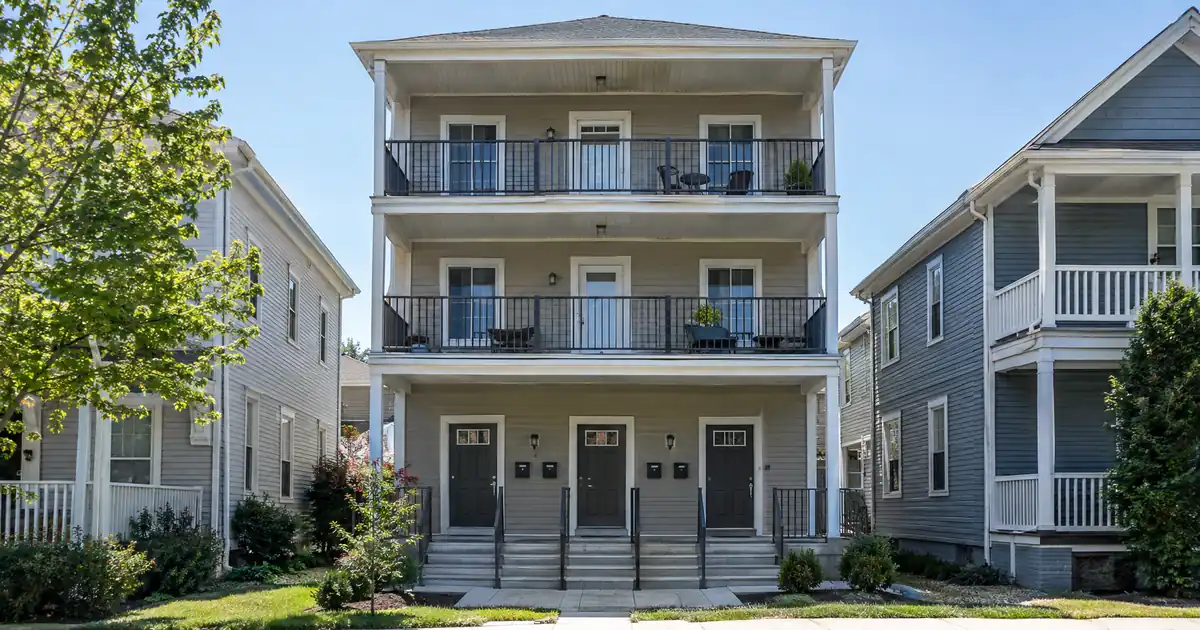
The Quick Read: It depends on two things: whether you are VA-eligible, and how much equity you need to reach. For an eligible veteran who lives in one unit, VA cash-out usually wins on leverage and mortgage insurance. Conventional wins when you are not eligible, when you want the lowest-friction file, or when the VA funding fee outweighs the extra equity. Neither is better in every case.
Here is the honest split. VA cash-out is built for veterans, service members, and certain surviving spouses who live in one unit of a duplex, triplex, or fourplex. Conventional is built for everyone else, and it also suits eligible veterans who want a smaller loan against the home. Lendmire’s VA cash-out refinance program page covers the VA side in detail. This article puts the two options next to each other.
Side-by-Side
| Factor | VA Cash-Out | Conventional Cash-Out |
|---|---|---|
| Who can use it | Eligible veterans, service members, some spouses | Any qualified borrower |
| Occupancy | You live in one unit | Primary residence; other uses follow other rules |
| Maximum leverage | Up to 100% of appraised value, fee included | Lower, and lower again on 2-4 units |
| Mortgage insurance | None | Rare at cash-out leverage; lender-dependent |
| One-time program fee | 2.15% first use, 3.3% after; exempt veterans waived | None |
| Credit floor | No VA minimum; 580 decision score on our wholesale programs | Set by lender and underwriting engine |
| Main income test | Residual income | Debt-to-income ratio |
| Rent from other units | VA’s own documentation and haircut rules | Added to income; full payment stays in debts |
| Loan limit | None with full entitlement | Conforming limits apply |
Every VA figure above comes from the wholesale programs Lendmire places files with, subject to lender guidelines and full file review. Nothing here is a commitment to lend.
Why 2-4 Units Change the Comparison
On a single-family home, the gap between the two programs is already large. On a 2-4 unit, it widens, because conventional guidelines treat multi-unit homes as riskier and cap cash-out leverage lower than on a one-unit home. The Fannie Mae Eligibility Matrix shows this: the cash-out limit for a 2-4 unit principal residence sits below the one-unit limit. Agencies update that matrix, so confirm the current number with your lender.
VA does not set a lower ceiling by unit count. Its 100% limit applies to the appraised “reasonable value,” and a financed funding fee cannot push the loan past it. VA’s Circular 26-19-05 spells out that ceiling.
You may see sites claiming VA cash-out does not work on multi-unit homes. That is a misreading. The VA’s cash-out refinance page conditions the loan on living in the home, not on the number of units. Live in one unit and rent the others, and the property can fit.
When VA Cash-Out Is the Better Fit
VA is the stronger choice when you want maximum equity and a lean cost structure. It fits best in these situations:
- You need to reach deep into your equity. Picture a fourplex you have owned for years, with a big gap between its value and what you owe. Conventional leaves a large slice of that equity untouched. VA can reach up to 100% of appraised value, financed fee included.
- Mortgage insurance would sting. VA carries no mortgage insurance of any kind, whatever your leverage.
- You are refinancing a non-VA loan into VA. A VA cash-out refinance can replace any loan type with a VA-backed loan. That can move you out of a conventional or FHA loan with ongoing insurance.
- Your credit has a few dents. VA sets no minimum score. The wholesale programs we place files with start at a 580 decision score, which is below what many conventional files need.
- You are exempt from the funding fee. Veterans receiving compensation for a service-connected disability, and the other exempt groups, skip the one-time fee entirely. For them, the cost case is lopsided.
- Your loan is large. With full entitlement, there is no VA loan limit.
A VA cash-out is not a streamlined refinance. The streamlined VA product (the IRRRL) skips the appraisal and pays out no cash. A cash-out needs a full appraisal, full underwriting, and a net tangible benefit, which means the lender must document a real gain for you. If you are refinancing an existing VA loan, seasoning also applies: the later of 210 days from your first payment and your sixth payment.
How the income test works
VA’s controlling test is residual income: what is left each month after your debts, taxes, and living costs. The 41% debt-to-income figure is a guideline, not a cap. A higher ratio can work if your residual income is well above VA’s table.
Rent from your other units can help you qualify, but VA applies its own documentation and haircut rules. A rental history generally needs to show on your tax return. Confirm the exact treatment with the underwriter, because the handbook governs the details.
One trap deserves attention. Under the VA Lenders Handbook, reserves must be documented before closing. Cash-out proceeds, equity, and gift funds cannot count as those reserves. If you plan to use the new cash as your cushion, that plan will not hold up.
When Conventional Is the Better Fit
Conventional wins when you are not VA-eligible, which settles the question on its own. It also wins in several cases where you are.
- You want a smaller loan on purpose. Say your home is worth far more than you owe, and you need a modest slice of equity. Borrowing less avoids a funding fee tied to a bigger balance, and conventional’s lower ceiling stops mattering.
- You do not want to use entitlement. A VA cash-out affects your remaining entitlement, which can matter if you plan another VA purchase. Whether and how much depends on your file, so raise it with a loan officer before you decide.
- The funding fee does not pencil out. The fee on a cash-out is 2.15% on first use and 3.3% on later use, and it can be financed. For a non-exempt veteran borrowing a small amount, that one-time charge can outweigh the benefit of higher leverage.
- You prefer income-based qualifying. Conventional works from your debt-to-income ratio. The rent from your other units is added to your income, but the full payment on the home stays in your debts, with no netting. Many borrowers find that easier to predict than a residual income table.
- You plan to keep the loan structure flexible. Conventional is open to any eligible borrower, and it handles second homes and other occupancy types under different, lower-leverage rules. If you later move out and keep the property, a conventional loan carries no VA occupancy condition going forward. That is a note for later planning, not a reason to skip the occupancy certification now.
One more point: for a borrower with strong credit and a modest equity need, conventional’s lower ceiling may not bind at all. Leverage only matters if you need to reach it.
A Quick Scenario Without the Dollar Signs
Take a veteran who lives in one unit of a triplex and rents the other two. The home appraises well above the loan balance. Both programs require the same basics: an appraisal, income documentation, and a documented rental history for the rented units.
The difference shows up in how far each reaches. On conventional, the loan stops at a lower percentage of value, so more equity stays in the house. On VA, the loan can reach 100% of value including the financed fee, so more equity comes out. That extra cash is what you pay for with the funding fee, unless you are exempt. A borrower who needs the cash may value that trade. A borrower who needs only a little may not.
Costs and Cautions to Weigh Either Way
A cash-out refinance replaces your current mortgage with a new, larger one. The CFPB’s guide to using home equity notes that the payment may rise and the payoff time may lengthen. That applies to both programs.
Think hard about what the cash is for. Using it to improve the property is one thing. Rolling unsecured debt into a loan secured by your home is another, because missed payments put the home at risk. Tax treatment can depend on your situation; borrowers should speak with a qualified tax professional before relying on any deduction or credit.
Finally, remember that lenders can set limits tighter than the program allows. VA’s 100% ceiling is federal, but a given lender may cap lower as its own policy. Ask early which ceiling applies to your file.
The Balanced Verdict
If you are VA-eligible, live in one unit, and want to reach deep into your equity without mortgage insurance, VA cash-out is usually the stronger fit. If you are exempt from the funding fee, the case gets stronger.
If you are not eligible, need only a small amount of cash, want to preserve entitlement, or prefer income-based qualifying, conventional can be the better choice. It rarely loses on cost when the amount borrowed is modest.
The only way to know is to run both on your actual property and compare the full terms on each Loan Estimate. If you are weighing a cash-out refinance against keeping the loan you have, Lendmire can help you compare the programs and the equity each one reaches.
Frequently Asked Questions
Can I use VA cash-out on a duplex, triplex, or fourplex?
Yes, if you live in one of the units. VA conditions the loan on occupancy, not unit count, so the other units can be rented. You also need a Certificate of Eligibility and a file that meets VA’s and the lender’s credit and income standards, subject to full file review.
Does VA cash-out stop at 90% of the home’s value?
No. The 100% ceiling replaced the old cap. The 90% figure survives only as one of several net tangible benefit tests a lender may use. Some lenders still set their own lower cap as policy, so ask which limit applies.
Can I use my cash-out proceeds as reserves?
No. Under VA’s handbook, equity, gift funds, and cash-out proceeds cannot count as reserves. Reserves must be documented before closing, so plan to show them from your own assets.
Does the rent from my other units cancel the payment?
Not on either program. Conventional adds the rent to your income but keeps the full payment in your debts. VA uses its own documentation and haircut rules. Either way, expect the underwriter to review a documented rental history.
Is a cash-out the same as a home equity loan?
No. A cash-out replaces your first mortgage with a new loan. A home equity loan or HELOC sits on top of the loan you already have, leaving the first lien in place. Which one fits depends on what your current loan carries.
For your own numbers, request a scenario review with Lendmire.
About Lendmire
Lendmire (NMLS# 2371349) is a mortgage broker licensed for consumer lending in 16 states. Lendmire arranges FHA, VA, conventional and jumbo purchase and refinance loans through wholesale lenders; every file is underwritten by the lender under the applicable program guidelines. Scotsman Guide named Lendmire a Top Mortgage Workplace in both 2025 and 2026.
Get Started
Ready to find the right loan for you?
In about 30 seconds you can review financing options available for your home or investment property. No commitment required.
Informational only. Not a Loan Estimate, approval, or commitment to lend. Program availability and eligibility are subject to lender guidelines, credit approval, property review, and underwriting.
References
1. Fannie Mae Eligibility Matrix
3. VA.gov: Cash-out refinance loan
4. VA Lenders Handbook, Chapter 4: Credit Underwriting
5. CFPB: Using your home equity guide
This article is part of Lendmire’s VA Loans series — every loan program’s qualification details, guidelines, and scenarios live on the loan options page.
Related reading: VA Cash-Out vs Conventional Cash-Out Living in a 2-4 Unit Primary Home · How to Refinance Into a VA Cash-Out on a 2-4 Unit Primary Home · How to Certify VA Cash-Out Occupancy on a 2-4 Unit Primary Home
Brandon Miller
Founder & CEO, Mortgage Loan Originator, Lendmire LLC
- Mortgage Loan Originator · NMLS# 1129696 · Verify on NMLS Consumer Access
- North Carolina Real Estate Broker · License# 343312 · Verify on NCREC
- North Carolina Insurance Producer · License# 19053198 · Property, Casualty, Life, Health · Verify on NAIC SBS
- Lendmire LLC · Firm NMLS# 2371349 · Verify firm licensure
Disclosures. The information presented in this article is general market commentary, not financial, legal, or tax advice. Lendmire is a mortgage brokerage (NMLS# 2371349) — not a direct lender or depository institution — and loan placement is subject to lender underwriting. Nothing in this content represents a commitment to lend. Loan terms, pricing, and program availability vary based on borrower qualifications, property characteristics, and state of subject property, and are subject to change at any time. Lendmire complies with Equal Housing Opportunity requirements. Consumer access: nmlsconsumeraccess.org.