
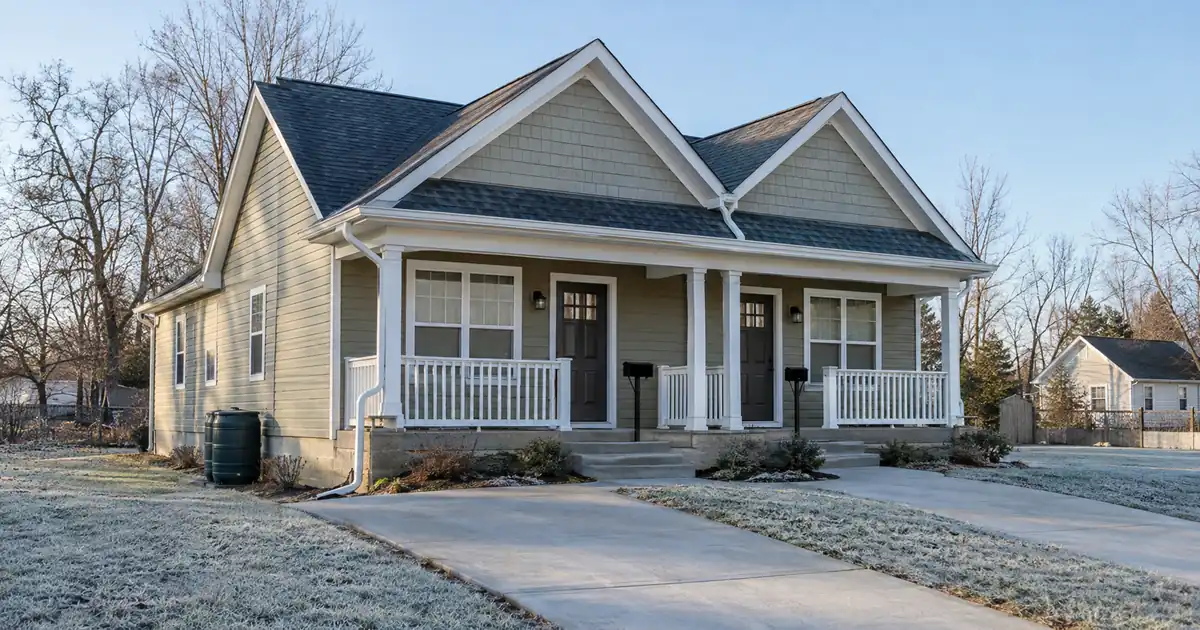
The Quick Read: A jumbo loan can finance a duplex, triplex or fourplex you live in, as long as the loan amount sits above the conforming limit for that county and unit count. You occupy one unit as your primary residence, the lender decides how much rent from the other units counts, and the full payment on the building still counts against you. Each wholesale lender sets its own rules, so the file is reviewed on its own terms, subject to lender guidelines.
Key Takeaways
- The conforming limit rises with unit count, so a building that is jumbo as a single-family home may not be jumbo as a fourplex.
- The limit tests the loan amount, not the purchase price.
- You must live in one unit. Rent from your own unit never counts as income.
Each investor writes its own rules for rental income, reserves and appraisals.
- The headline jumbo lane in the wholesale network reaches 90% leverage with a 660 decision score, and loans run up to $5,000,000 on the largest lanes. Other lanes stop at lower leverage.
- Lendmire is a mortgage broker. It arranges these loans through wholesale lenders and does not lend. Leverage, reserves, and pricing vary by lender and program; the final terms follow the full file review.
Jumbo payment estimate
The starting figures are an example price in the jumbo range with ten percent down on a thirty-year fixed. Replace them with yours.
Editable benchmark: 7.40% as of October 15, 2026 · Freddie Mac 30-year average via FRED®. A conventional market reference, not a jumbo loan quote.
Illustrative starting assumptions: a $1,000,000 price in the jumbo range, ten percent down on the top-leverage lane, a thirty-year fixed structure at the current Freddie Mac conforming benchmark, and property taxes and insurance estimated at typical national rates. Every field is editable.
Illustrative estimate only — not a Loan Estimate, approval, quote, or commitment to lend. The rate field carries the weekly Freddie Mac thirty-year conforming benchmark, a market reference and not a jumbo loan quote; jumbo rates are set by the lender and the lane at lock and differ from the conforming benchmark. An adjustable-rate scenario is shown at the benchmark for the whole term; the rate after the initial period is unknown. Reserve months and appraisal counts follow the lane sheet for the amount band; the automated finding may require more. Taxes, insurance and dues are editable estimates; closing costs are not included. On most lanes the conforming limit for the county decides whether a loan is jumbo at all; two lanes start at a stated dollar floor instead. Licensed in sixteen states for consumer mortgages.
What Makes a Loan Jumbo on a 2-4 Unit?
A loan is jumbo when it starts one dollar above the conforming limit for the county and the number of units. Loans above it are allowed. They are called jumbo, and the federal consumer-finance regulator notes a jumbo may cost more than a conforming loan.
The part buyers miss is that the limit is tied to unit count. FHFA’s announcement of the new limits sets the one-unit figures, and the limits for two, three and four units run higher, by county. Check the county list for your exact unit count before you decide what you are shopping for.
So a buyer who would be jumbo on a single-family home may be conforming on a duplex or fourplex at the same loan size. Run both tests. If the loan lands under the unit-count limit, a conforming program may fit and a jumbo may not be needed. If it lands over, you are in jumbo territory. This article does not quote county dollar limits because they change every year.
How Is the Loan Underwritten, Step by Step?
Underwriting a live-in 2-4 unit jumbo comes down to a handful of things: the loan amount against the limit, how much rent the investor counts, credit, reserves, and appraised value. Here is the sequence a file follows.
1. Pre-check the loan amount. Compare the expected loan to the county and unit-count limit. That sets conforming, high-balance or jumbo.
2. Confirm occupancy. You live in one unit as your principal residence. That is what earns owner-occupant treatment.
3. Decide the rental income treatment. The lender sets how much rent from the other units counts. More on that below.
4. Gather documents. Standard income, asset and credit documents, plus leases on rented units. For vacant units, the appraiser’s market rent schedule stands in.
5. Order the appraisal. A 2-4 unit gets an income-property style appraisal that includes a rent schedule. Some jumbo lanes require two appraisals above a threshold amount.
6. Reach the underwriting decision. The lender reviews the whole file. Nothing here is a commitment to lend.
What Does the Wholesale Jumbo Envelope Look Like?
Across the wholesale programs Lendmire places files with, the headline jumbo lane works from a 660 decision score and leverage up to 90%. Several lanes reach 89.99% combined LTV and the rest stop at 80%. Loans reach $5,000,000 on the largest lanes. The fixed lanes allow a ratio ceiling of 50%. The adjustable lanes cap at 45% and the interest-only lanes at 43%. Terms vary by lender guidelines, property type, leverage, credit profile, and full file review.
Reserves are counted in months of the full payment and rise with the loan amount. Two appraisals kick in above a lane’s threshold amount. Fixed, adjustable and interest-only structures are all available, and two lanes accept non-warrantable condominiums. Cash-out runs at lower leverage than purchase, with a cash cap on the largest lanes. All of this is subject to lender guidelines and full file review.
Not every lane takes every property. Some investors limit unit count or the property type, so the lane that fits a duplex may not fit a fourplex. The lane is picked after the file is read, not before.
How Does Rent From the Other Units Count?
Rent from the units you do not occupy may help you qualify. Rent from your own unit never does. The Fannie Mae Selling Guide says plainly that rental income from the unit the borrower occupies cannot be used to qualify. The same guide treats rent from the other units of a 2-4 unit principal residence as eligible when it is likely to continue.
Fannie Mae rules do not bind a jumbo loan. They are the benchmark many investors borrow from, and each investor then sets its own version. Three habits hold on most files:
- The full payment on the building counts as your housing expense, not just the share for your unit.
- Only a portion of the other units’ rent is credited, because underwriters apply a vacancy haircut.
- Leases, or an appraiser’s market rent, support the figure.
Picture a buyer with a duplex who lives in one side. The other side rents on a signed lease. The lender counts a discounted share of that lease against the full payment on the building. The remaining ratio decides whether the file fits the lane. The rent is a cushion, not a forecast.
Some investors give less credit when the borrower has no landlord history. Others may not count projected rent on a vacant unit. That varies by investor, and it is worth asking before you pick a lane. For a closer look at how rent is credited on a jumbo, see Lendmire’s piece Does a Jumbo Loan Count Rent on a 2-4 Unit Home You Live In?.
Where Do Jumbo Loan Programs Fit Against the Alternatives?
Lendmire’s jumbo loan programs make sense when the loan lands above the county limit for your unit count. Below that line, the other programs may work better. The comparison is about structure, not price.
| Factor | Jumbo | Conforming | FHA |
|---|---|---|---|
| Loan size | Above the limit | Up to the limit | Program limits |
| Rent from other units | Investor sets the credit | Guide-based credit | Guide-based credit |
| 3-4 unit extra test | Varies by investor | Matrix-based | Self-sufficiency test |
| Leverage | Lane-specific | Matrix-based | Program-specific |
The Fannie Mae eligibility matrix is a separate rule set that applies only to loans Fannie Mae buys. Its leverage figures by unit count do not carry over to a jumbo. A jumbo buyer should plan on the lane’s own leverage limit, which depends on the lane, the loan amount and the occupancy.
FHA adds a self-sufficiency test on three- and four-unit buildings, which is a useful contrast. A jumbo lender sets its own rule for those buildings, and it may be stricter or looser. Ask early.
If you are weighing a loan type built around the property’s rent, that is a different product.
Duplex, Triplex or Fourplex: What Changes?
Each added unit changes the file in a few predictable ways. Lender appetite narrows as unit count rises. Reserves tend to rise with it. The appraisal gets harder because comparable multi-unit sales are thin. Underwriting also leans harder on the lease schedule.
- Duplex. The easiest to place. You live in one side and the other carries the rent credit. Comps are the most available.
- Triplex. Two rented units mean a larger rent credit and more lease paperwork. Fewer lanes take it.
- Fourplex. The narrowest lane. Some investors cap unit count at fewer than four, and the appraiser needs four-unit comparables to hold the value.
The price may fit a fourplex on a conforming loan where the same price on a single-family home would be jumbo. That is the unit-count limit working in your favor. Always test the loan amount at each unit count you are considering.
Where the General Rule Breaks
The rules above hold on most files. These cases do not follow them.
Single-family with an ADU. This is not a 2-4 unit. Fannie Mae allows accessory dwelling unit income only on a one-unit principal residence, and only in limited cases. The lender treats the file differently from a true multi-unit building.
Boarder income. Fannie Mae allows boarder income on a one-unit residence as an exception to the general rule. It is not rent from a second unit.
Condos and co-ops. Some 2-4 unit condos and co-ops are excluded from certain program features, so treat the property type as a separate check. Two jumbo lanes accept non-warrantable condominiums. Whether that helps depends on the building.
Second home or investment occupancy. Occupancy decides the leverage. Primary, second-home and investment occupancy each carry lane-specific limits. A live-in buyer works under the primary-residence limits.
Moving out later. The loan is written as a primary residence. Buyers should plan to occupy the unit as stated, because misrepresenting occupancy is a serious problem on any file.
Title and entity. A primary-residence jumbo is generally written to you personally, not to an LLC. Liability planning is a conversation for your attorney.
What Documents Does a Live-In 2-4 Unit File Need?
Plan on the standard package first: income, assets and credit. Then add the building-specific items.
- Signed leases for every rented unit, plus a rent roll if you have one.
- A rent schedule from the appraiser for vacant units.
- Proof of legal unit count and, where relevant, separate utilities.
- Reserves documentation, since reserves are measured in months of the full payment.
- Landlord or property-management history, if you have it.
Self-employed buyers should ask which income documentation the lane accepts before ordering anything. The answer differs by lane.
The quiet failure points are small. A lease that expired before the file was reviewed. A unit count that the county records show differently from the listing. A rent schedule that comes in below the lease. A reserves statement that does not cover the months the lane asks for. Fix these before the file goes in.
What Should You Check Before Deciding?
The decision in practice is a short checklist.
1. Test the loan amount against the county limit at each unit count.
2. Confirm you will live in one unit.
3. Ask each lane how it credits rent on the other units.
4. Compare reserves and appraisal requirements across lanes.
5. Budget for the whole payment, with vacancy and repairs on top.
The full payment on the building counts as your housing expense, so the household carries the whole obligation. Rent offsets it only to the extent the lender lets rent count. Vacancy, repairs and a unit-by-unit lease schedule remain ongoing risks. Higher-priced mortgage rules also apply to jumbos, and the CFPB explains that a first-lien jumbo is generally higher-priced when its APR runs 2.5 percentage points or more above the average prime offer rate.
Key Terms Defined
Jumbo loan: A mortgage whose amount starts one dollar above the county’s conforming limit.
Decision score: The credit score a lane uses to review the file. The headline jumbo lane works from 660.
Combined LTV: The total of all loans on the property as a percentage of its value.
Reserves: Cash or liquid assets left after closing, measured in months of the full payment.
Non-warrantable condominium: A condo project that does not meet standard agency project rules.
Frequently Asked Questions
Can I use a jumbo loan on a duplex I will live in?
Yes, when the loan amount is above the conforming limit for that county and unit count and the lane accepts the property. You occupy one unit as your primary residence. The lender reviews credit, reserves, the appraisal and the rent credit, all subject to lender guidelines.
Does rent from the other units count toward qualifying?
Usually in part. Rent from the unit you occupy never counts. Rent from the other units may count at a discount, supported by leases or an appraiser’s market rent, and the full building payment still counts as your housing expense. Each investor sets its own treatment.
Is a fourplex harder to finance than a duplex?
Generally, yes. Fewer lanes take four units, reserves tend to rise, and the appraisal needs four-unit comparables. A duplex has the widest lender appetite and the easiest comps.
Can I buy in an LLC?
Rarely, on a primary-residence loan. These files are generally written to the borrower personally. Ask your attorney about liability planning.
How is this different from an FHA loan on a 2-4 unit?
A jumbo follows each investor’s own rules, which may be stricter or looser. Leverage and loan size also differ, since jumbo lanes set their own limits.
If you are buying a home and want to see whether a jumbo loan fits your file, Lendmire can help you compare the options and what each one asks of the file.
For your own numbers, request a scenario review with Lendmire.
About Lendmire
Lendmire (NMLS# 2371349) is a mortgage brokerage serving homeowners and home buyers in 16 states. FHA, VA, conventional and jumbo purchase and refinance loans are arranged through wholesale lending channels; Lendmire brokers the financing and the lender underwrites each application. Scotsman Guide named Lendmire a Top Mortgage Workplace in both 2025 and 2026.
Get Started
Ready to find the right loan for you?
In about 30 seconds you can review financing options available for your home or investment property. No commitment required.
Informational only. Not a Loan Estimate, approval, or commitment to lend. Program availability and eligibility are subject to lender guidelines, credit approval, property review, and underwriting.
References
1. CFPB – What is a jumbo loan?
2. FHFA – 2026 Conforming Loan Limit Values
3. Fannie Mae Selling Guide – Rental Income
4. Fannie Mae Eligibility Matrix
5. CFPB – What is a higher-priced mortgage loan?
This article is part of Lendmire’s jumbo loan program — full qualification details, guidelines, and scenarios live on the program page.
Related reading: Can You Cash-Out Refinance a Jumbo Loan? · How Much Rent a Jumbo Loan Counts When You Live in One Unit · How to Get a Jumbo Loan on a W-2 Spouse’s Income Alone
Brandon Miller
Founder & CEO, Mortgage Loan Originator, Lendmire LLC
- Mortgage Loan Originator · NMLS# 1129696 · Verify on NMLS Consumer Access
- North Carolina Real Estate Broker · License# 343312 · Verify on NCREC
- North Carolina Insurance Producer · License# 19053198 · Property, Casualty, Life, Health · Verify on NAIC SBS
- Lendmire LLC · Firm NMLS# 2371349 · Verify firm licensure
Required disclosures. Lendmire (NMLS# 2371349) operates as a licensed mortgage broker, not a direct lender or depository. The discussion in this article is general in nature and should not be relied upon as financial, legal, or tax advice — every investment scenario is unique and should be reviewed by a qualified professional. Any loan inquiry is subject to lender underwriting, and this article is not a commitment to lend or a guarantee of approval. Mortgage rates, loan terms, and program guidelines vary by borrower, property, and state, and may change without notice. Equal Housing Opportunity. Verify licensure at NMLS Consumer Access.