
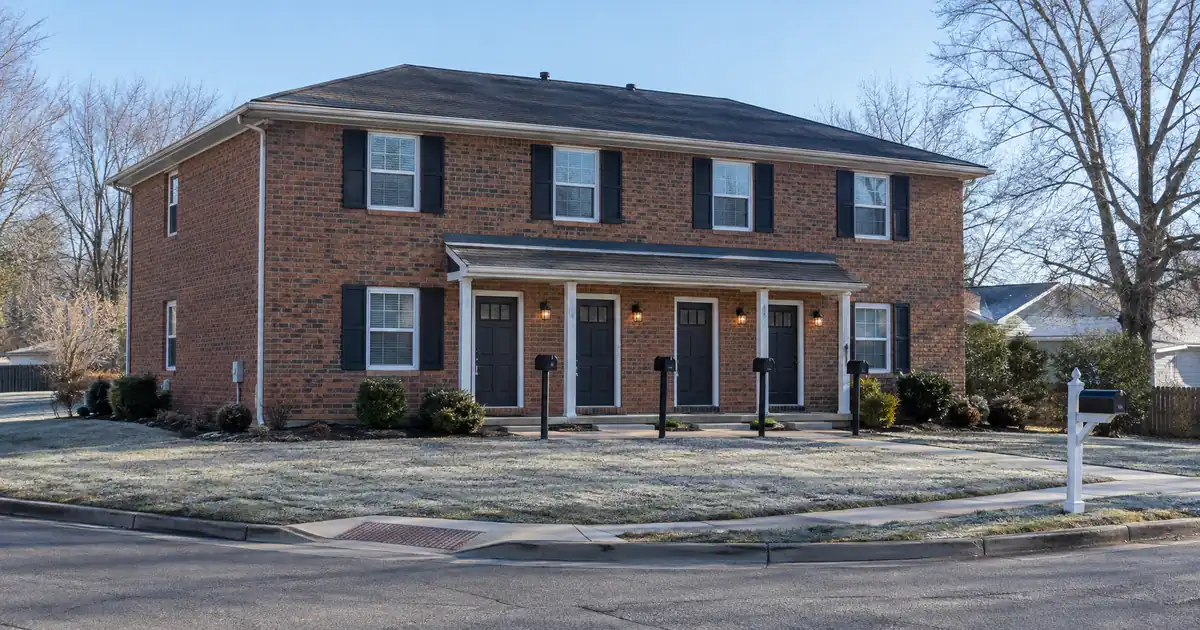
The Quick Read: To buy a fourplex with a conventional loan, you finance it as a primary residence by living in one of the four units. That can allow as little as 5% down on an automated approval. The key is occupancy. A fourplex you live in is underwritten as a principal residence, and one you don’t is treated as an investment property with a much lower leverage cap. The other three units can help you qualify, but only part of their rent counts, and you will usually need cash reserves on top of the down payment.
Key Takeaways
- Owner-occupied two- to four-unit purchases reach 95% LTV on the conventional programs. Investment property on two to four units tops out at 75%.
- The 95% ceiling is an automated-underwriting result. Manual underwriting is far tighter.
- Rent from the unit you live in never counts toward qualifying. Rent from the other units counts at a reduced percentage.
- Expect a reserve requirement and mortgage insurance above 80% LTV.
- Occupancy is a promise you make at closing. It is not a flexible label. Final terms depend on the lender’s guidelines, the property type, and the borrower’s complete credit picture.
What Does “Fourplex” Mean to a Conventional Lender?
A fourplex is a two- to four-unit property, and lenders treat it as residential, not commercial. That is why a conventional loan can finance it at all. Five or more units move into commercial lending, which is a different world.
Conventional payment estimate
The starting figures are an example price at the first-time buyer’s minimum down payment. Replace them with yours.
Editable benchmark: 7.32% as of October 22, 2026 · Freddie Mac 30-year average via FRED®. A conventional market reference, not a conventional loan quote.
Estimate seeded at the low end of Fannie Mae’s published range (0.58%–1.86% a year); the insurer prices the actual premium on the score and the leverage. Applies only above 80% loan-to-value.
Illustrative starting assumptions: a $350,000 price, the first-time buyer’s minimum down payment, a thirty-year term at the current Freddie Mac benchmark, mortgage insurance at the low end of Fannie Mae’s published range, and property taxes and insurance estimated at typical national rates. Every field is editable.
Illustrative estimate only — not a Loan Estimate, approval, quote, or commitment to lend. The rate field carries the weekly Freddie Mac thirty-year conventional benchmark, a market reference and not a conventional loan quote; your rate is set by the lender at lock. The mortgage insurance figure is an editable estimate seeded from Fannie Mae’s published typical range, not a premium quote; the insurer prices the actual premium, and the cancellation month assumes scheduled payments with no extra principal and no change in value. Taxes, insurance and dues are editable estimates; closing costs are not included. Conforming loan limits apply by county. Licensed in sixteen states for consumer mortgages.
Across the wholesale programs Lendmire places files with, the dividing line is always the same: do you intend to live there? If yes, the loan follows owner-occupied rules. If no, it is an investment purchase, and the leverage drops to 75% on two to four units. That single choice moves the down payment from roughly 5% to 25%.
Lendmire’s conventional loan programs cover this owner-occupant lane. A fourplex you won’t live in belongs to a different kind of financing, and this article does not cover it.
How Is a Conventional Fourplex Loan Underwritten, Step by Step?
The process follows a fixed order. Each step feeds the next, and a weak spot at one stage tends to show up at another.
Step 1: Pick the occupancy
You must intend to live in one unit as your principal residence. With more than one borrower on the loan, only one has to occupy and take title, per Fannie Mae’s occupancy rules. Lenders check occupancy closely because the incentive to misstate it is built into the pricing difference. Treat it as a commitment, not a formality.
Step 2: Land on the right underwriting path
The 95% leverage on a fourplex is a result from automated underwriting, the system lenders run your file through. Per the Fannie Mae Eligibility Matrix, the manual path is much tighter: 85% on two units and 75% on three to four. Each figure is subject to lender guidelines and a complete review of property type, leverage, and credit.
Most wholesale conventional programs start at a 620 decision score, and the automated finding governs most files, with a total debt ratio ceiling of 50%. If your file only works manually, the fourplex math changes sharply. Subject to lender guidelines and full file review, a borderline file can lose its low-down option here.
Step 3: Qualify with the other units’ rent
This is where fourplex buyers get surprised. Rent from the unit you occupy cannot be used to qualify. Rent from the other three units can count, but not all of it. The standard calculation credits 75% of the gross monthly rent, with the remaining 25% covering vacancy and operating costs. Where there are no existing leases for those units, lenders use market rent from the appraisal.
On a principal-residence purchase, the full housing payment goes into your debt-to-income ratio. The rent is added to your income. It is not netted against the payment. So the rent helps, but it does not replace your own income.
Fannie Mae has also restricted subject-property rent for buyers with little rental or property-management history. The details have changed over time, so ask your loan officer how the current rule applies to you.
Step 4: Verify reserves
Fannie Mae’s reserve rules call for six months of reserves on a two- to four-unit principal residence. A one-unit home has no minimum. Automated underwriting can ask for more based on your overall risk. Reserves are cash you keep after closing, so plan for them separately from the down payment.
Step 5: Order the right appraisal
A fourplex is appraised on a multi-unit form, not the standard single-family report. The appraiser also produces a rent schedule with comparable rentals, and that schedule supports the rent figure the underwriter uses. This report takes more work than a one-unit appraisal. Appraisal waivers are generally not offered on two- to four-unit properties.
Step 6: Assemble the documents
Expect the usual income, asset and credit file, plus the purchase contract and any existing leases for each unit. Fannie Mae’s Quality Insider reports that miscalculated rental income or loss is a top issue in its random loan quality reviews, which is why lenders are strict about leases and worksheets.
How Much Down Do You Actually Need?
The floor on an owner-occupied fourplex is 5%, because leverage reaches 95% LTV. The 97% first-time-buyer option applies to one-unit homes, not fourplexes. On two- to four-unit loans above 80% LTV, some programs also require part of the down payment to come from your own funds, with the rest from other eligible sources. Leverage, reserves, and pricing vary by lender and program; the final terms follow the full file review.
Here is the tradeoff. A 5% down fourplex means a bigger loan, mortgage insurance and a thinner cushion if one unit sits empty. Putting 20% down removes the insurance and improves your margin for error. Either path can be right, depending on how much cash you want to keep in reserve.
| Factor | Owner-occupied fourplex | Investment fourplex |
|---|---|---|
| Max LTV (automated) | 95% | 75% |
| Typical down payment | 5% minimum | 25% minimum |
| Reserves | Required (six months at Fannie Mae) | Separate requirement |
| Own-unit rent counts? | No | Not applicable |
| Occupancy promise | Yes | No |
Does Mortgage Insurance Apply?
Yes, above 80% LTV. Mortgage insurance protects the lender and is added to your monthly payment, as the CFPB explains. Published typical annual premiums run from 0.58% to 1.86% of the balance. That is a range, never a quote, and your actual cost depends on your credit and leverage. Terms vary by lender guidelines, property type, leverage, credit profile, and full file review.
It does not have to last forever. You can request cancellation at 80% of the original value with good payment history, no subordinate liens and no decline in value. The servicer must terminate it automatically at 78%. The Federal Reserve’s Homeowners Protection Act summary notes that these rules do not apply to high-risk loans. Ask whether a two- to four-unit property is covered before you count on the cancellation date.
Where the General Rule Breaks
The 95% headline holds in most cases, but several edge cases can change the answer.
- Manual underwriting. As in Step 2, leverage on three- to four-unit homes drops to 75%. Fannie Mae’s loan limits page shows that limits also scale with unit count and county, and the four-unit limit is far above the one-unit limit.
- Income-limited programs. HomeReady and Home Possible carry an income limit of 80% of area median income. HomeReady restricts borrowers to two financed properties, and its two- to four-unit option excludes condos and co-ops.
- Condos in a four-unit building. The appraisal form covers them, but the project gets its own eligibility review.
- Other financed properties. For a standard principal-residence loan, Fannie Mae sets no cap on how many properties you finance, and a multi-unit building counts as one.
- FHA as a comparison. FHA is not conventional, but buyers often compare it. HUD publishes separate four-unit limits in its annual announcement.
If you are not moving in, skip this article’s path. An investment fourplex is capped at 75%, and those loans work differently.
What Gets Fourplex Files Denied (and Fixes)
| Problem | Typical fix |
|---|---|
| Debt ratio too high after adding the payment | Pay down debts or raise down payment |
| Not enough reserves | Delay purchase, or use eligible gift or asset sources |
| Rent not documented | Get leases for each unit |
| File only works manually | Improve credit or reduce debts |
| Loan too large for the program | Raise down payment or pick a different price tier |
Most denials come down to three things: reserves, the debt ratio and rent documentation. All are visible before you make an offer, which is why a preapproval that models the fourplex specifically is worth more than a generic one.
What Does the Process Look Like in Practice?
1. Get preapproved, and tell the loan officer it’s a fourplex you’ll occupy.
2. Shop for properties with leases or a rent history you can document.
3. Write the offer, then order the multi-unit appraisal.
4. Submit leases, assets and reserve documentation.
5. Review your Loan Estimate and, later, the Closing Disclosure.
6. Move into your unit as planned.
Budget for a first-year operating picture too: taxes, insurance, vacancy, repairs and tenant management all fall on you. The 25% rent haircut in underwriting acknowledges those costs, so don’t treat the remaining 75% as profit.
A lower down payment makes the fourplex reachable sooner, but the strongest buyers are often the ones who hold back cash for reserves and a vacant unit. Wanting the 5% minimum is understandable. Needing it to make the deal work is a signal to look harder at price.
After Closing
Your occupancy commitment is real, so plan to live there. What happens after that depends on your circumstances and the lender’s terms, so confirm the specifics of your note. Once you reach 80% of the original value, mortgage insurance cancellation is something to ask your servicer about in writing. Some buyers repeat the strategy on a later primary residence, which is another reason to keep your reserves healthy.
If you are weighing leverage choices, Lendmire has a piece that walks through the mortgage-insurance tradeoffs in more depth, titled Can a First-Time Buyer Skip PMI on a Low Down Payment Conventional Loan?. For a related angle, there is Lendmire’s piece Is One Extra Payment Worth It on a Low-Down-Payment Conventional Loan?.
Key Terms Defined
LTV (loan-to-value): the loan amount divided by the lesser of price or appraised value.
Automated underwriting: the system that scores your file and determines the leverage you can use.
Reserves: liquid assets you hold after closing, counted in months of housing payments.
PMI (private mortgage insurance): coverage that protects the lender when you put down less than 20%.
Gross rent haircut: the 25% reduction applied to other units’ rent to account for vacancy and costs.
Super conforming: a loan above the baseline limit in a high-cost county, which can carry tighter leverage.
Frequently Asked Questions
Can I buy a fourplex with a conventional loan if I’m a first-time buyer?
Yes, if you live in one unit. The 97% first-time-buyer option applies to one-unit homes, so a fourplex typically tops out at 95% LTV, or 5% down. Subject to lender guidelines and full file review, your credit score and reserves will decide how the file lands.
Can I count the rent from my own unit?
No. Only the other units’ rent counts, and typically at 75% of gross. That rent is added to your income, while the full housing payment goes into your debt ratio.
Can gift funds cover the down payment?
Often yes, within the agency guides. Some programs also require a portion of the money to be your own. Confirm the current rule with your loan officer.
Does a fourplex need more reserves than a single-family home?
Yes. Fannie Mae calls for six months of reserves on a two- to four-unit principal residence, while a one-unit home has no minimum. Automated underwriting can require more depending on your overall risk profile.
What happens if I can’t live in the building?
It becomes an investment property, capped at 75% LTV on two to four units, and the owner-occupied options no longer apply. Occupancy is a commitment you make at closing, so only use this path if you intend to move in.
If you are buying a home and want to see whether a conventional loan fits your file, Lendmire can help you compare the options and what each one asks of the file. Lendmire is a mortgage broker, so it arranges these loans through wholesale lenders, and nothing here is a commitment to lend. You can reach the team at 828-256-2183.
For your own numbers, request a scenario review with Lendmire.
About Lendmire
Lendmire (NMLS# 2371349) is a mortgage broker licensed for consumer lending in 16 states. Lendmire arranges FHA, VA, conventional and jumbo purchase and refinance loans through wholesale lenders; every file is underwritten by the lender under the applicable program guidelines. Scotsman Guide named Lendmire a Top Mortgage Workplace in both 2025 and 2026.
Get Started
Ready to find the right loan for you?
In about 30 seconds you can review financing options available for your home or investment property. No commitment required.
Informational only. Not a Loan Estimate, approval, or commitment to lend. Program availability and eligibility are subject to lender guidelines, credit approval, property review, and underwriting.
References
1. Fannie Mae’s occupancy rules
2. Fannie Mae Eligibility Matrix
3. Fannie Mae Selling Guide B3-4.1-01, Minimum Reserve Requirements
5. CFPB, Private Mortgage Insurance Guidance
6. Homeowners Protection Act summary
7. Fannie Mae’s loan limits page
8. HUD
This article is part of Lendmire’s conventional loan program — full qualification details, guidelines, and scenarios live on the program page.
Related reading: Smaller vs Larger Down Payment on a Conventional Loan for a 2-4 Unit · How to Qualify for a Low Down Conventional Loan Using Gift Funds · How Much Down Payment a Conventional Second Home Loan Needs
Brandon Miller
Founder & CEO, Mortgage Loan Originator, Lendmire LLC
- Mortgage Loan Originator · NMLS# 1129696 · Verify on NMLS Consumer Access
- North Carolina Real Estate Broker · License# 343312 · Verify on NCREC
- North Carolina Insurance Producer · License# 19053198 · Property, Casualty, Life, Health · Verify on NAIC SBS
- Lendmire LLC · Firm NMLS# 2371349 · Verify firm licensure
Disclosure information. Lendmire is a state-licensed mortgage brokerage under NMLS# 2371349. Lendmire is not a depository institution, direct lender, or financial advisor — all loans referenced are placed through wholesale lender partners and are subject to each lender's underwriting standards. This article is provided for general informational purposes and is not a commitment to lend, nor does it constitute financial, legal, or tax advice. Loan programs, terms, rates, and qualification standards change without notice and depend on borrower profile, property type, and the state in which the subject property is located. Equal Housing Opportunity provider. NMLS Consumer Access: nmlsconsumeraccess.org.