
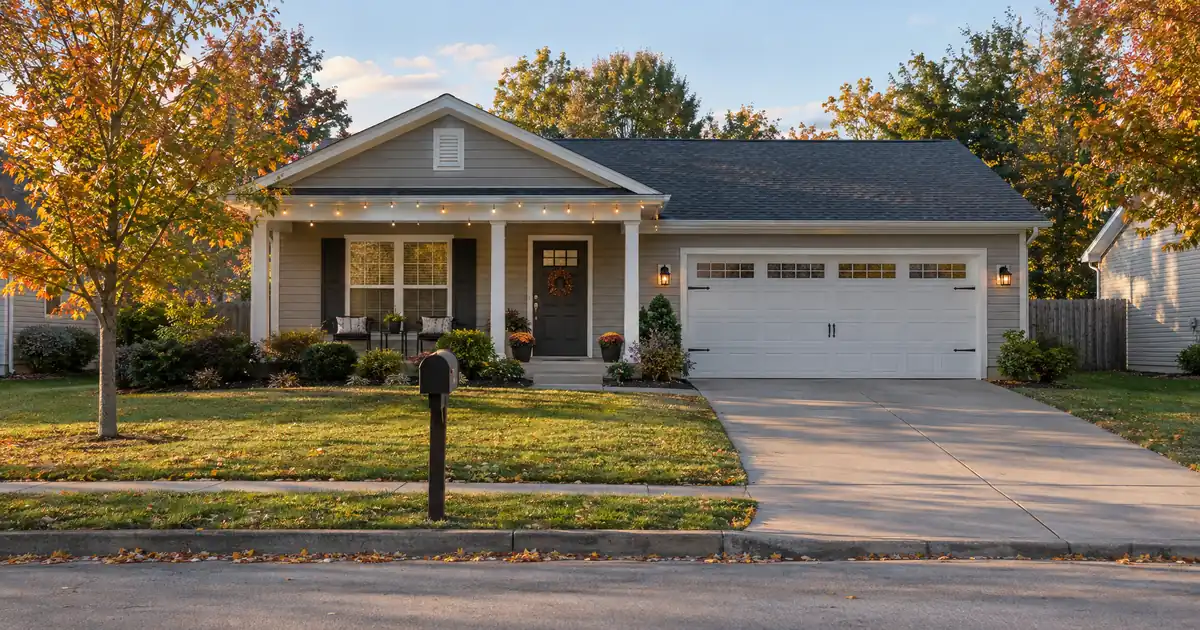
The Quick Read: You can buy a second home on a VA loan, but only as a second primary residence, not as a vacation or rental property. Partial entitlement means VA’s guaranty on the new loan is smaller. That can turn a zero-down purchase into one that needs some cash down, depending on the price. The lender still tests your income, credit, and residual income with both mortgages in the picture.
What “Second Home” Really Means on a VA Loan
A VA loan finances a home you will live in. Period. You certify that you intend to occupy the property, and that certification is a legal requirement under VA’s lender rules. A beach house, a ski condo, or a rental purchase does not qualify.
VA payment estimate
Starting assumptions reflect an example price with no down payment and a first-use funding fee. Replace them with your own figures.
Editable benchmark: 7.32% as of October 22, 2026 · Freddie Mac 30-year average via FRED®. A conventional market reference, not a VA loan quote.
Illustrative starting assumptions: a $350,000 price, no down payment with full entitlement, a first-use funding fee financed into the loan, a thirty-year term at the current Freddie Mac benchmark, and property taxes and insurance estimated at typical national rates. Every field is editable.
Illustrative estimate only — not a Loan Estimate, approval, quote, or commitment to lend. The rate field carries the weekly Freddie Mac thirty-year conventional benchmark, a market reference and not a VA loan quote; your rate is set by the lender at lock. The funding fee follows VA’s published table for the use and down payment entered; the residual-income figure is VA’s guideline for the region and family size, and the rough residual shown subtracts only the housing payment and the debts entered, while VA also deducts taxes, maintenance and utilities. Taxes, insurance and dues are editable estimates; closing costs are not included. Licensed in sixteen states for consumer mortgages. Lendmire is not affiliated with or acting on behalf of the Department of Veterans Affairs.
So “second home” here means a second VA-financed primary residence. Picture a service member who bought a house on a VA loan, then gets orders to a new duty station. The first house stays owned. The new one becomes home.
If the question is whether a VA loan can buy a pure investment or vacation property, the answer is one sentence: occupancy decides the leverage, and VA is an occupancy-only program.
Lendmire is a mortgage broker that arranges VA loan programs through wholesale lenders. Everything below reflects how these files tend to work across those programs, subject to lender guidelines and full file review.
Key Terms Defined
Entitlement: The amount of VA guaranty available to back your loan. It protects the lender, which is why it can support zero-down lending.
Full entitlement: No VA benefit is tied up in an existing loan. There is no VA county loan limit on the new purchase.
Partial entitlement (remaining entitlement): Part of your benefit is still attached to a home you own. Only the unused portion backs the new loan.
Certificate of Eligibility (COE): The VA document showing your eligibility and how much entitlement you have already used.
Residual income: The money left each month after debts, taxes, and housing costs, meant to cover family living expenses.
Funding fee: A one-time VA fee that can be financed into the loan. Some borrowers are exempt.
How Partial Entitlement Happens
Most people land here in one of a few ways.
- An open VA loan. You still own the first home, so its entitlement stays used.
- A loan assumed by someone who is not a veteran. The buyer takes over your loan, but your entitlement stays tied up. If an eligible veteran assumes it and substitutes their own entitlement, yours can come back.
- A VA claim after foreclosure or short sale. Entitlement used by that loss may not be fully restored.
If you sell the first home and pay off the loan, your entitlement is generally restored and the partial-entitlement math goes away. That is why sequencing matters on a move.
How the Math Works, Step by Step
VA’s Buyer’s Guide lays out the method. It is simpler than it sounds.
1. Get a current COE. Your lender pulls it from the VA portal. It shows how much entitlement is already used.
2. Find the county limit. Use the one-unit conforming loan limit for the county where the new home sits. The FHFA publishes the table. VA’s Lenders Handbook says lenders use only the one-unit column, even for two-to-four unit homes.
3. Take 25% of that limit. That is your total entitlement for that county.
4. Subtract what is used. The remainder is your remaining entitlement.
VA’s own worked example uses a round county limit and a chunk of entitlement already used. The result is a small remainder. The point is that a high-priced county gives you more room than a low-priced one.
Current county limits live on VA’s loan limits page. Check it for the county you are buying in. Limits change, so this article does not quote dollar figures.
What the Remaining Entitlement Buys
A practical shorthand: multiply remaining entitlement by four. That is roughly the price you can buy with nothing down. Above it, expect cash down covering about a quarter of the gap.
Three pictures, with no dollar figures:
- Price under the ceiling. Zero down is still possible, as long as the price is not above appraised value.
- Price slightly over. You put down a modest slice, about 25% of the overage.
- Price far over. The down payment grows with the gap. Full-entitlement buyers do not face this.
Notice what does not happen. Partial entitlement does not cap what you can borrow. VA says you can still buy at any loan amount. It changes how much cash the guaranty replaces.
Underwriting Two Mortgages at Once
This is where most files are decided. Across the wholesale programs Lendmire places VA loans with, entitlement is only the first gate. Then the lender asks whether you can carry both homes.
The old payment stays in your ratios. If you keep the first home, its full payment counts against you unless rent offsets it.
Rent offsets, it does not add income. Under the handbook, the departing residence’s rental income only offsets that property’s mortgage payment. It is not added to your qualifying income.
The 75% factor. When rent counts, the lender uses 75% of the lease amount, unless you can document a higher percentage.
A lease is required. No rental agreement, no offset. A home you plan to rent “someday” is treated as a full payment today. That hits both your debt-to-income ratio and your residual income.
Reserves. Borrowers using rental income to qualify are typically asked for reserves. The treatment varies by lender, so confirm it up front.
Residual income is the controlling test. The 41% debt-to-income figure is a guideline, not a cap. A higher ratio needs residual income well above the table. VA’s handbook says inadequate residual income alone can be a basis to turn down a loan. After the new home’s costs, your family still has to have room to live.
Credit matters too. VA sets no minimum score, but the wholesale programs Lendmire works with start at a 580 decision score. Some lenders set a higher floor.
Occupancy: What You Are Promising
You certify that you will personally occupy the new home. VA’s handbook uses a “reasonable time” standard, not a hard day count. Lenders generally accept the certification unless evidence contradicts it. If a lender cannot resolve a concern, it has to report it to VA.
Some edge cases:
- Deployment. A deployed service member can still meet occupancy, since deployment is temporary duty.
- PCS timing. For an active-duty veteran who cannot move in within a reasonable time, a spouse or dependent child can satisfy occupancy.
- Plans change. If you never intended to live there, that is misuse of entitlement. If a real job change happens after closing, talk to your loan officer early.
When It Works, When It Depends, When It Does Not
| Situation | Outcome |
|---|---|
| New primary residence, keep the old home | Allowed, with partial entitlement |
| Vacation or investment property | Not allowed |
| Two-to-four unit, you live in one unit | Allowed |
| Keep the old home with no lease | Allowed, but full payment counts |
| Sell old home, pay off loan | Entitlement restored |
For the multiunit case, you must occupy one unit. The guaranty math still uses the one-unit county limit.
Restore Entitlement or Keep Partial?
If you are keeping the first home, you have two broad paths.
| Factor | Keep partial entitlement | Restore entitlement |
|---|---|---|
| Down payment | May be required above the zero-down ceiling | Often none, with full entitlement |
| Old home | Keep it | Must be sold, or one-time restoration used |
| Old loan | Stays open | Paid in full |
| Flexibility | Works with any COE | Depends on VA eligibility |
The one-time restoration. It lets you restore entitlement without selling, when the earlier VA loan is paid in full and you still own the home. It can be used only once, and it does not work on multiple properties. Refinancing the old loan does not automatically free anything. Restoration is a separate request.
If you are weighing a cash-out refinance as part of the plan, Lendmire’s piece Can You Use VA Cash-Out for the Next Home on Partial Entitlement? walks through that angle.
Costs and Trade-Offs
Down payment. Partial entitlement can turn zero down into a real down payment. The shortfall is the share of the loan above what the guaranty supports.
Funding fee. For subsequent use, the fee is 3.3% with less than 5% down. Put 5% to under 10% down and it drops to 1.5%. Ten percent or more down brings it to 1.25%. First use is lower at 2.15% with less than 5% down. Veterans receiving compensation for a service-connected disability are exempt, along with other exempt groups. The fee can be financed. VA publishes its chart on its funding fee page.
No mortgage insurance. VA loans carry none, which keeps the monthly budget lighter than it would be on many other programs.
Appraisal. VA requires its own appraisal, which also checks minimum property requirements. If the price goes above reasonable value, the extra comes from your pocket.
Monthly budget. Two mortgages mean the old payment lingers in your ratios. Residual income then has to cover living costs in the new home.
Common Mistakes
- Assuming entitlement means approval. Lenders still review income, credit, residual income, and appraised value.
- Using a stale COE. Your entitlement may have changed.
- Counting rent as income. It only offsets the old payment, and only at 75%.
- Skipping the lease. No agreement, no offset.
- Using the wrong county. The limit comes from the new home’s county.
- Treating the old loan’s status as a given. Confirm whether it is open, paid, or assumed.
A Pre-Application Checklist
1. Request your COE and note the entitlement used.
2. Look up the one-unit limit for the county you are buying in.
3. Calculate remaining entitlement and the rough zero-down ceiling.
4. Decide what happens to the first home: keep, rent, sell, or have it assumed.
5. Line up a lease if you plan to rent it out.
6. Gather documents for both homes and ask about reserves.
7. Ask your loan officer for a residual income estimate before you shop.
For veterans with restored or partial entitlement looking at cash-out, Lendmire’s article VA Cash-Out Limits for a Veteran With Partial or Restored Entitlement covers the limits in more depth.
If you are buying a home and want to see whether a VA loan fits your file, Lendmire can help you compare the options and what each one asks of the file. Every program figure here is subject to lender guidelines and full file review, and none of it is a commitment to lend.
Frequently Asked Questions
Can I use a VA loan to buy a vacation home?
No. A VA loan finances a home you intend to live in, and you certify that intent. A vacation home or pure rental does not qualify. The workable version is a second primary residence, usually after a move.
Do I need a down payment with partial entitlement?
Sometimes. If the price sits under the zero-down ceiling, no. Above it, you typically cover about 25% of the gap. Speak with a loan officer, since the county limit and your COE drive the answer.
Can I rent out my first home after I move?
Yes, if you buy the new home as your residence. With a lease, the lender counts 75% of the rent to offset that home’s payment. It does not count as added income.
Can I hold two VA loans at once?
Yes. That is exactly what partial entitlement allows. You still have to qualify on income, credit, and residual income with both payments in the file.
How do I get my entitlement back?
Sell the home and pay off the loan, or have an eligible veteran assume the loan and substitute entitlement. One-time restoration is another route if the loan is paid in full and you keep the home. It can be used once.
For your own numbers, request a scenario review with Lendmire.
About Lendmire
Lendmire (NMLS# 2371349) is a mortgage brokerage serving homeowners and home buyers in 16 states. FHA, VA, conventional and jumbo purchase and refinance loans are arranged through wholesale lending channels; Lendmire brokers the financing and the lender underwrites each application. Scotsman Guide named Lendmire a Top Mortgage Workplace in both 2025 and 2026.
Get Started
Ready to find the right loan for you?
In about 30 seconds you can review financing options available for your home or investment property. No commitment required.
Informational only. Not a Loan Estimate, approval, or commitment to lend. Program availability and eligibility are subject to lender guidelines, credit approval, property review, and underwriting.
References
1. VA Home Loan Guaranty Buyer’s Guide
2. FHFA
3. VA Lenders Handbook Ch. 4 Credit Underwriting
5. VA funding fee and closing costs
This article is part of Lendmire’s VA loan program — full qualification details, guidelines, and scenarios live on the program page.
Related reading: VA Jumbo Loan Down Payment Requirements With Partial Entitlement · Can a Civilian Assume Your VA Loan If You Already Used Entitlement? · Can You Use a VA Loan With Partial Entitlement and No Down Payment?
Brandon Miller
Founder & CEO, Mortgage Loan Originator, Lendmire LLC
- Mortgage Loan Originator · NMLS# 1129696 · Verify on NMLS Consumer Access
- North Carolina Real Estate Broker · License# 343312 · Verify on NCREC
- North Carolina Insurance Producer · License# 19053198 · Property, Casualty, Life, Health · Verify on NAIC SBS
- Lendmire LLC · Firm NMLS# 2371349 · Verify firm licensure
Disclosures. The information presented in this article is general market commentary, not financial, legal, or tax advice. Lendmire is a mortgage brokerage (NMLS# 2371349) — not a direct lender or depository institution — and loan placement is subject to lender underwriting. Nothing in this content represents a commitment to lend. Loan terms, pricing, and program availability vary based on borrower qualifications, property characteristics, and state of subject property, and are subject to change at any time. Lendmire complies with Equal Housing Opportunity requirements. Consumer access: nmlsconsumeraccess.org.